
A couple living a life less ordinary as tenant farmers of a 17th-century farmhouse

Ian Pearce and Paulo Standing seem a little like old souls living in the modern world. They have an uncompromising desire to tread lightly on the soil that nurtures their lives in West Sussex, and a disregard for anything disingenuous or superfluous. Describing themselves as ‘country lifestylers’, they apply this spirit wholeheartedly to their business, with its mix of growing produce, cooking, styling and the regular hosting of appealing informal events.
Five years ago, Ian and Paulo combined their passions to launch Hector and the Fox. At the time, they were renting a lodge in Petworth Park and were searching for an allotment to grow the fruit, vegetables and flowers that would serve as the ingredients for their business. A friend suggested an acre of land that was available to rent at nearby Woolhouse, a 17th-century farmhouse in the heart of the South Downs. On his way to a meeting with its owner, Dr Christabel Barran, Ian bumped into her walking her rare-breed cattle back from the surrounding common land. ‘She was carrying her machete-cum-walking stick and our tête-à-tête was brief and almost otherworldly – an unexpected and charming character,’ he recalls with a smile.
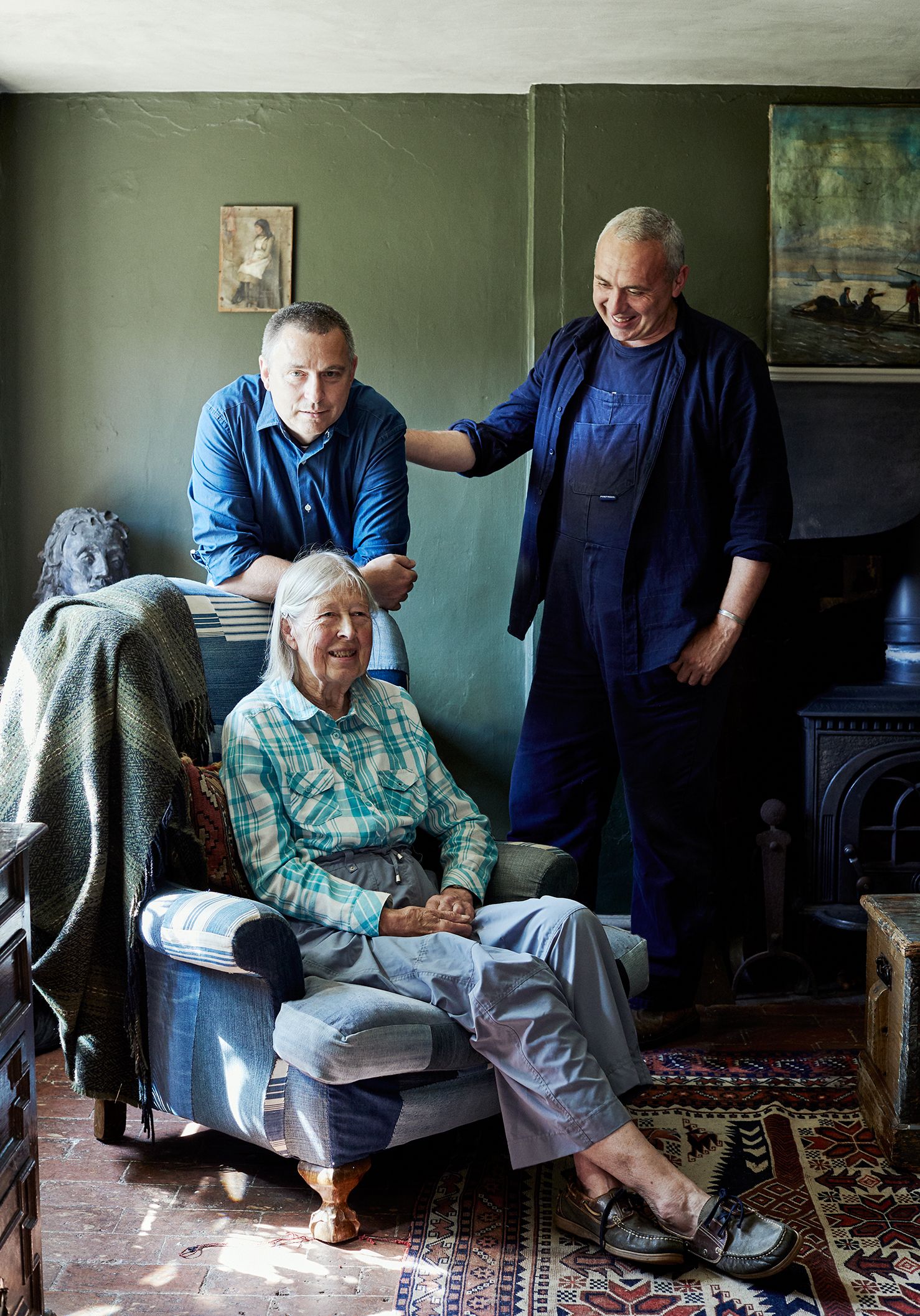
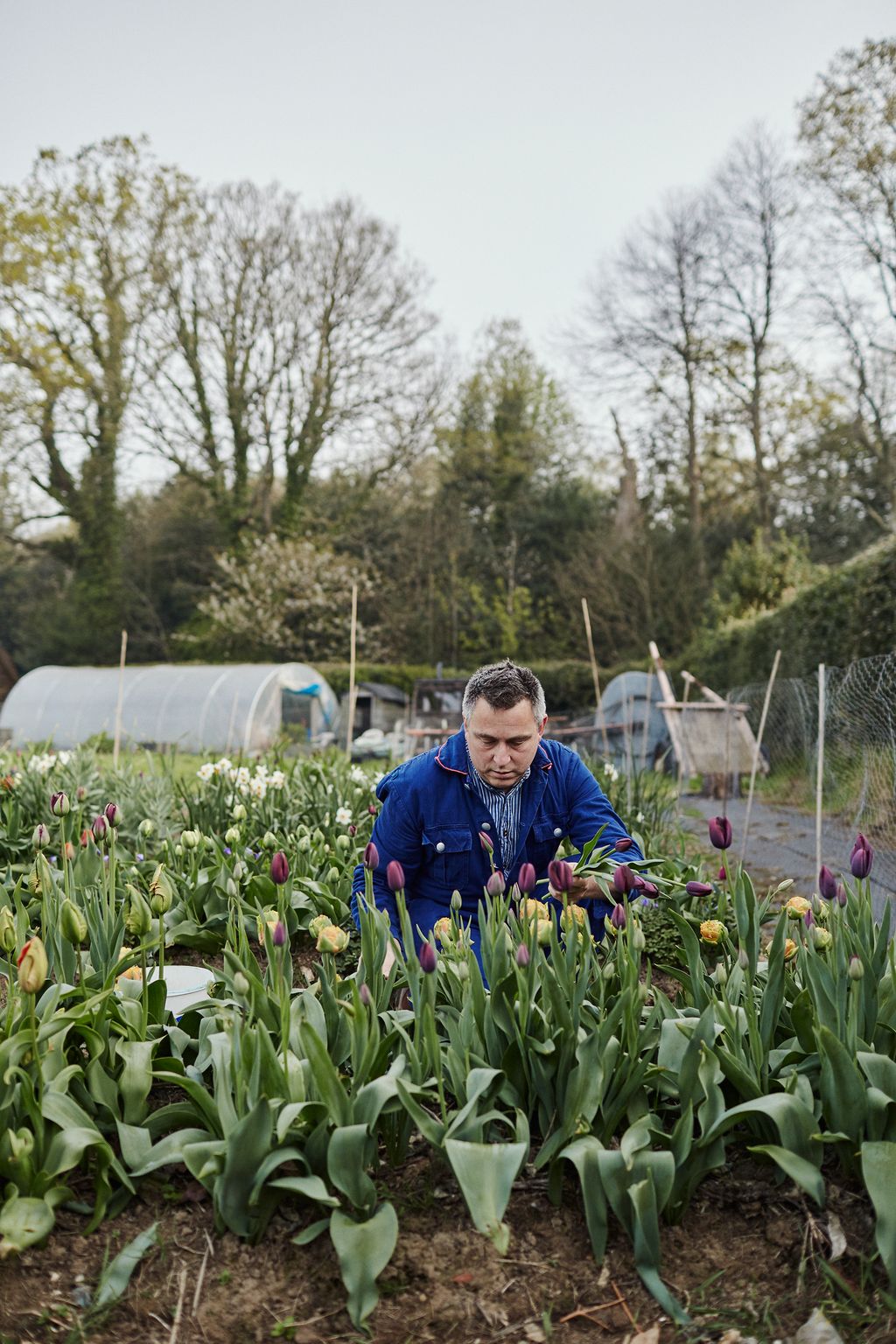
A deal was agreed and, since 2017, the previously untended land has been transformed into a thriving garden. ‘Growing up, I loved spending time with my grandfather, who was passionate about his allotment. He taught me so much about growing fruit and vegetables, and it is lovely to put that knowledge into practice,’ says Paulo. ‘Cooking with ingredients I’ve nurtured from seed is very satisfying.’ Ian and Paulo have since also taken over the tenancy of a section of the farmhouse itself; Christabel lives in the other part. Woolhouse is now the setting for their understated, bohemian lunch and supper events, along with occasional pop-up sales and creative workshops. While these have attracted word-of-mouth attention locally and internationally, the business still feels like an insider secret. As Ian says: ‘The right people find us – that’s how we like it.’
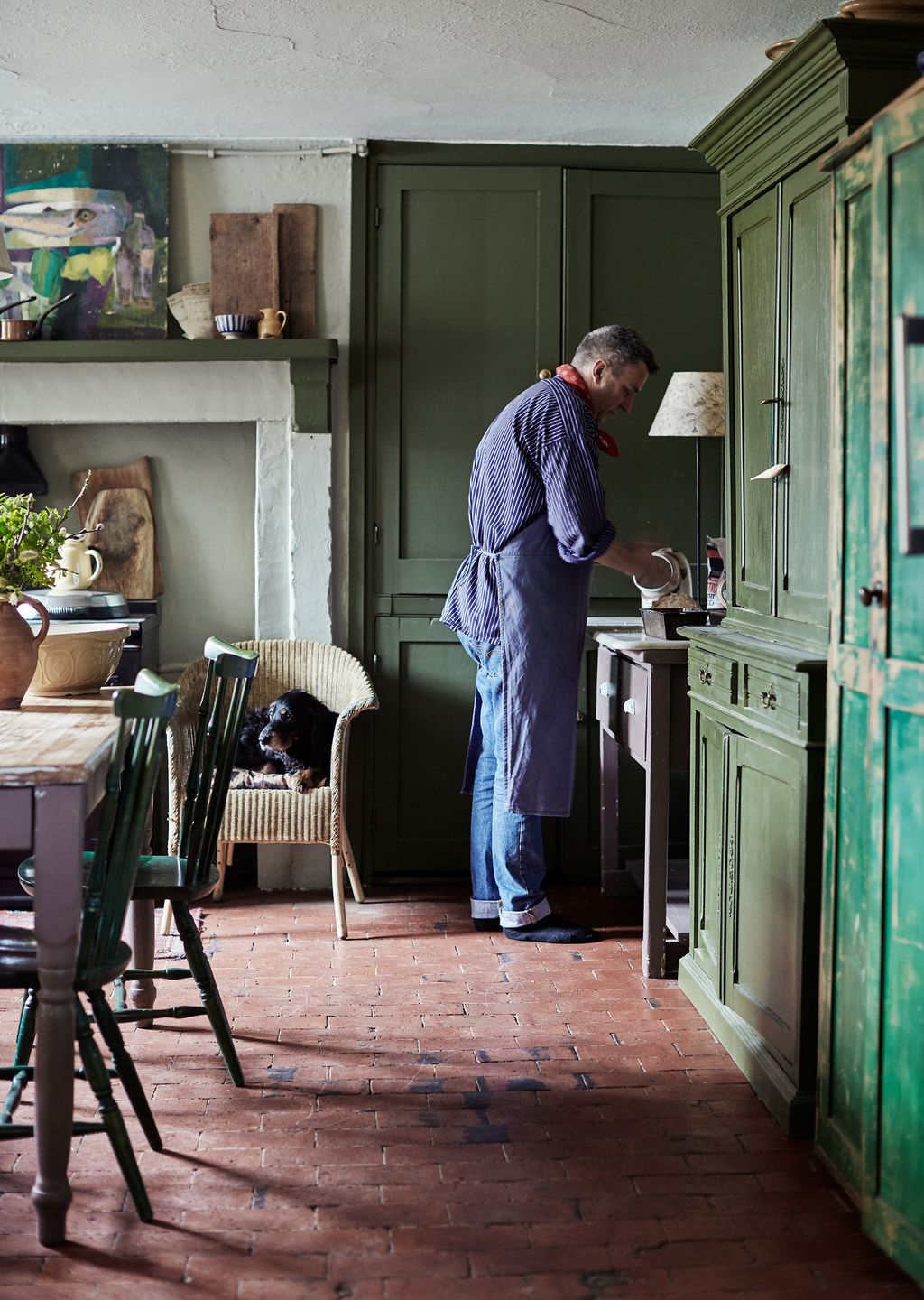
The pair share a light-hearted spirit but Ian is the more theatrical and front-of-house, and Paulo is quieter, preferring to stay behind the scenes. Sitting around the kitchen table, with their spaniel Robbie asleep next to the Aga, they chat about their younger years. Paulo grew up in a more suburban environment, but Ian was e immersed in all things rural from an early age as the son of a farm worker, with ancestors rooted in the land across West Sussex. ‘My childhood was fairly liberal,’ he says. ‘My parents encouraged independent thought and my mother ensured that my education was bolstered by a pair of bluestocking villagers, who shared their love of history, travel and stories. They informed my love of the real and the authentic.’
He and Paulo had both trained and worked as chefs before they met 16 years ago, when they were pursuing new ventures: Paulo as a cheesemonger at The Hungry Guest in Petworth; Ian at the Weald & Downland Living Museum near Chichester, teaching children about history, food and farming. He went on to work for Petworth House, assisting the National Trust with event organisation. ‘Neither of us has ever felt confined by the idea of a job for life,’ says Ian. Situated at the base of a bowl-shaped valley and built over a natural spring, Woolhouse has a mellow sandstone façade that dates back predominantly to the 17th century. Step over the threshold, however, and you discover sections of 15th-century wattle and daub. The house had been gifted to a woman named Ruth Scrimgeour in the 1800s by her father, a wealthy stockbroker.
Drinking tea by the Aga, later in the day, Ian recounts what he has learnt of this intriguing-sounding woman. ‘She was apparently quite a character, loud of voice and strong of opinion, a peerless horsewoman and a generous benefactress to her many friends and dependants. And notorious for never settling bills.’ The attic is crammed full of historic, dusty correspondence that charts Ruth’s time at Woolhouse. She farmed the land and bred Dartmoor ponies for riding and export. When she died, she was buried under an oak tree in the meadow behind the house, which was left to a friend of the family – Christabel’s mother. Woolhouse continued as a working farm, occupied by tenants, before Christabel in turn inherited it in the Seventies.
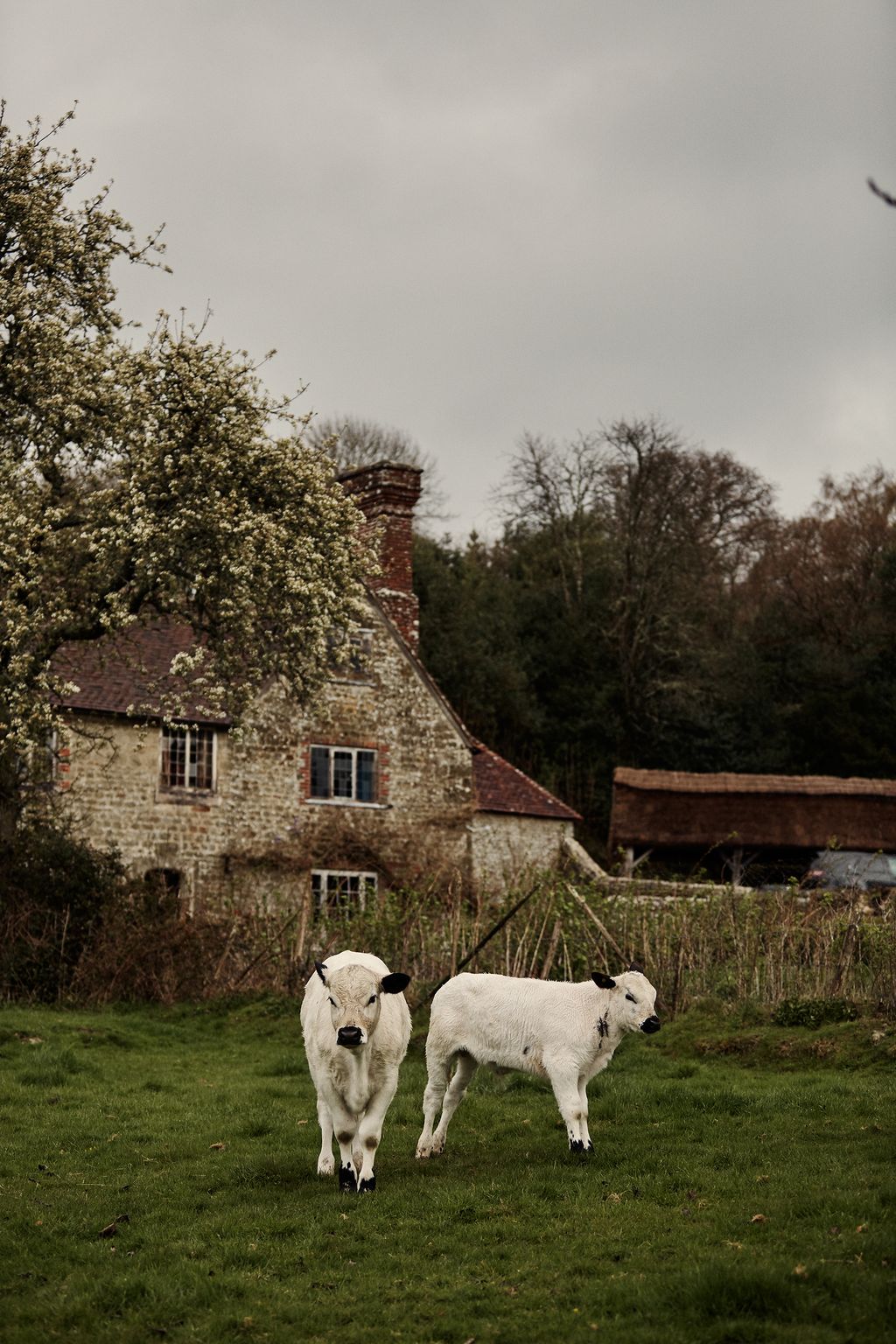
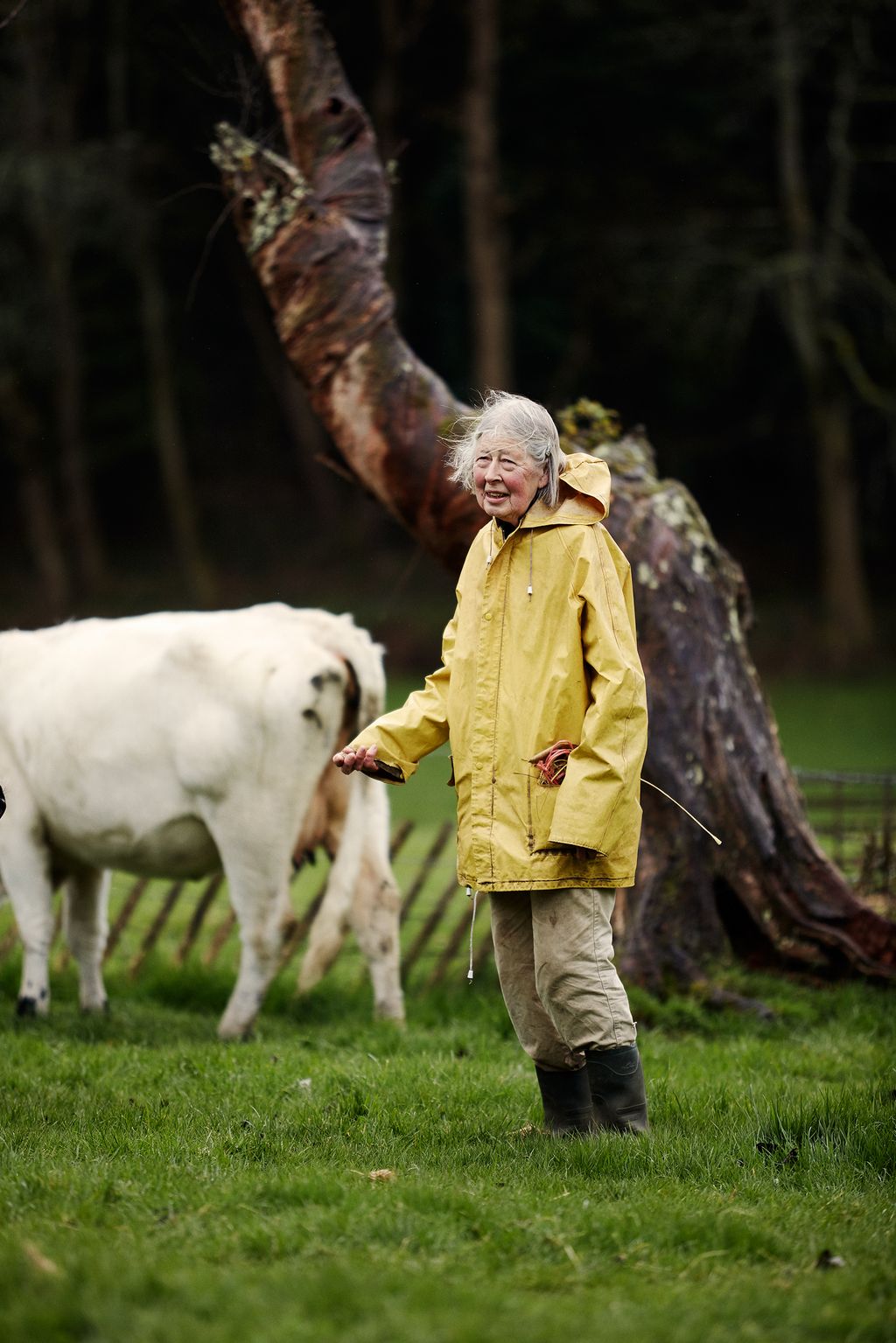
Having swapped London life and a career in medicine for farming, Christabel has also taken over the spiritual legacy of what Ruth had started. Although devoted to horses, Christabel chose to concentrate on the revival of a swiftly dwindling breed of cattle, the British White. ‘At 81 years of age, she continues to stride across the fields and carry fodder for her animals, and she is a perennial feature at agricultural shows,’ Paulo says. ‘Both Christabel and Ian have taught me a lot about being confident around animals, and about the rigours of farm life.’
MAY WE SUGGEST: Catherine FitzGerald and Dominic West's home in Ireland
When they are together, it is easy to see the deep respect between Christabel, Ian and Paulo. ‘There is nothing sentimental or philanthropic about sharing your farm with tenants,’ explains Ian. ‘We are part of the mix – helping with the continuous daily demands – but the emotional connection and the friendship we now have with Christabel is rare and very special.’
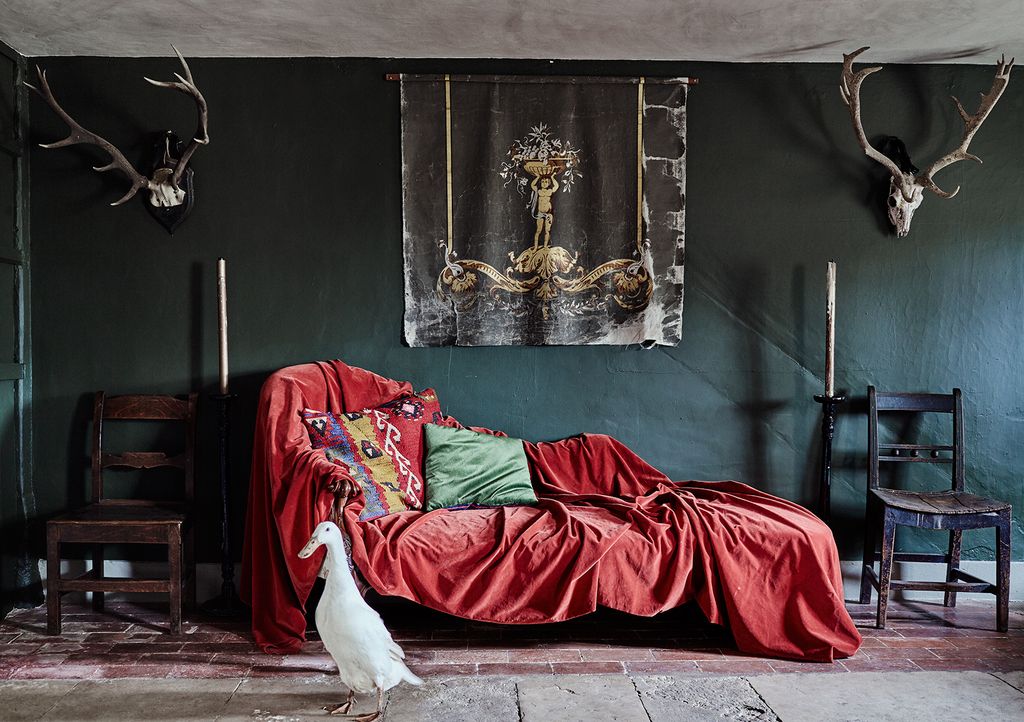
Entering through the farmhouse’s low portico entrance, you could feel as though you had stepped onto the set of a period drama. The smell of a log fire burning and food cooking is mixed with the tangible history that seems resistant to the allure of modern conveniences. There is an earthy, mysterious ambience that blends with the marshy landscape beyond. Dark paint tones, rich velvets and aged kilims are offset with eclectic collections of pictures, books, china, handmade ceramics and original Woolhouse ephemera. The drawing room and the dining room take centre stage for Hector and the Fox’s intimate at-home events that encourage guests to relax and enjoy the simple pleasures of good food.
At other times, Ian and Paulo’s kitchen table is surrounded by a lively set of artistic types, among them many local creatives who have become firm friends. The fertile ground around the house nourishes a microcosm in which traditions have stood still and maverick choices are celebrated, and where chickens, ducks and cattle roam free. As Ian says, ‘We feel extraordinarily fortunate to have met Christabel and to be part of Woolhouse’s rich tapestry and gentle progress’.
 Brent Darby1/17
Two calves in a field near the house.
 Brent Darby2/17
In the kitchen, Paulo makes bread, while Robbie the spaniel sits on
a chair nearby.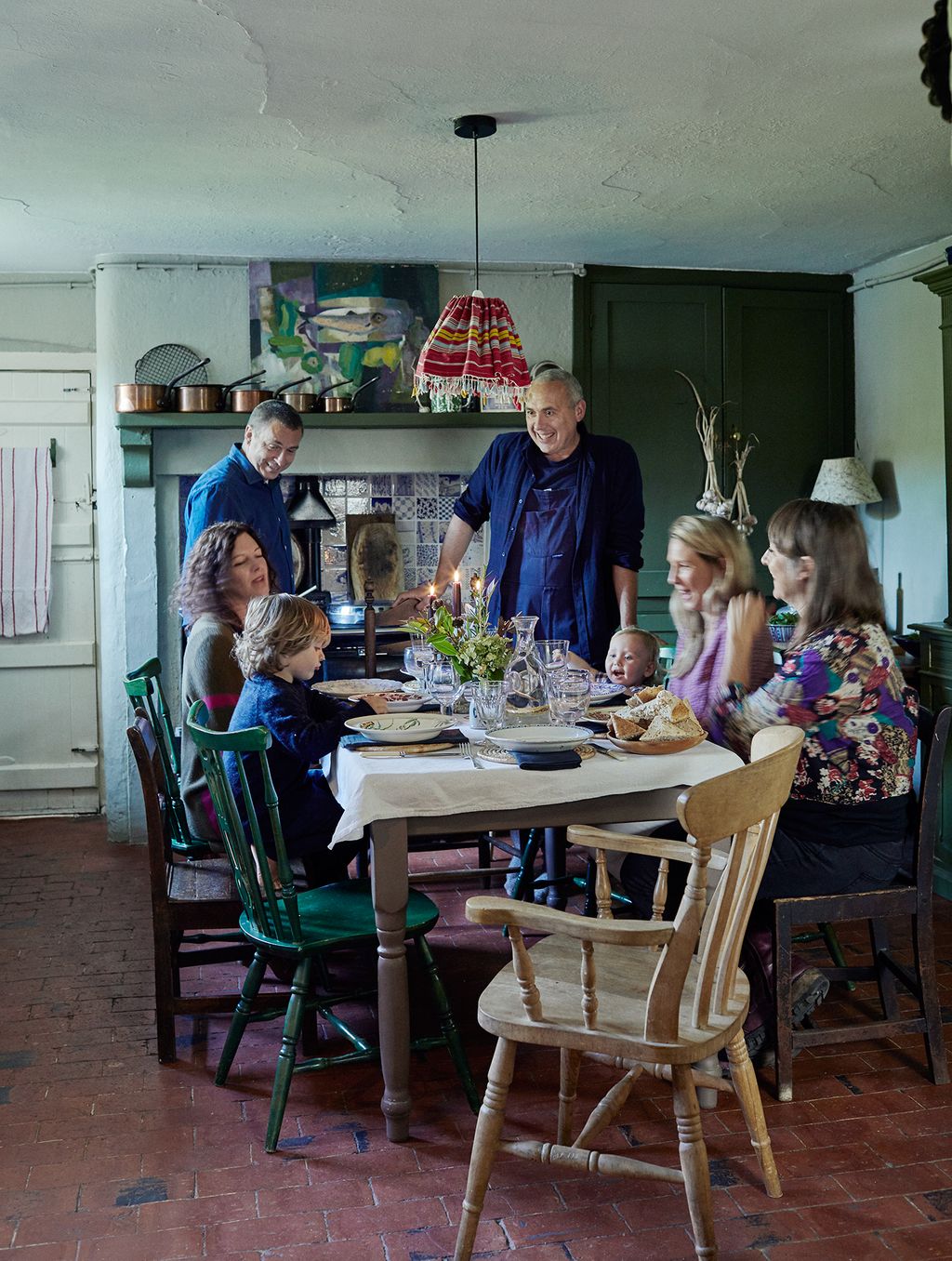 Brent Darby3/17
Friends often stop by for informal lunches – seen here are Jo, Sarah, Katie, Monty and Alana with Paulo and Ian
 Brent Darby4/17
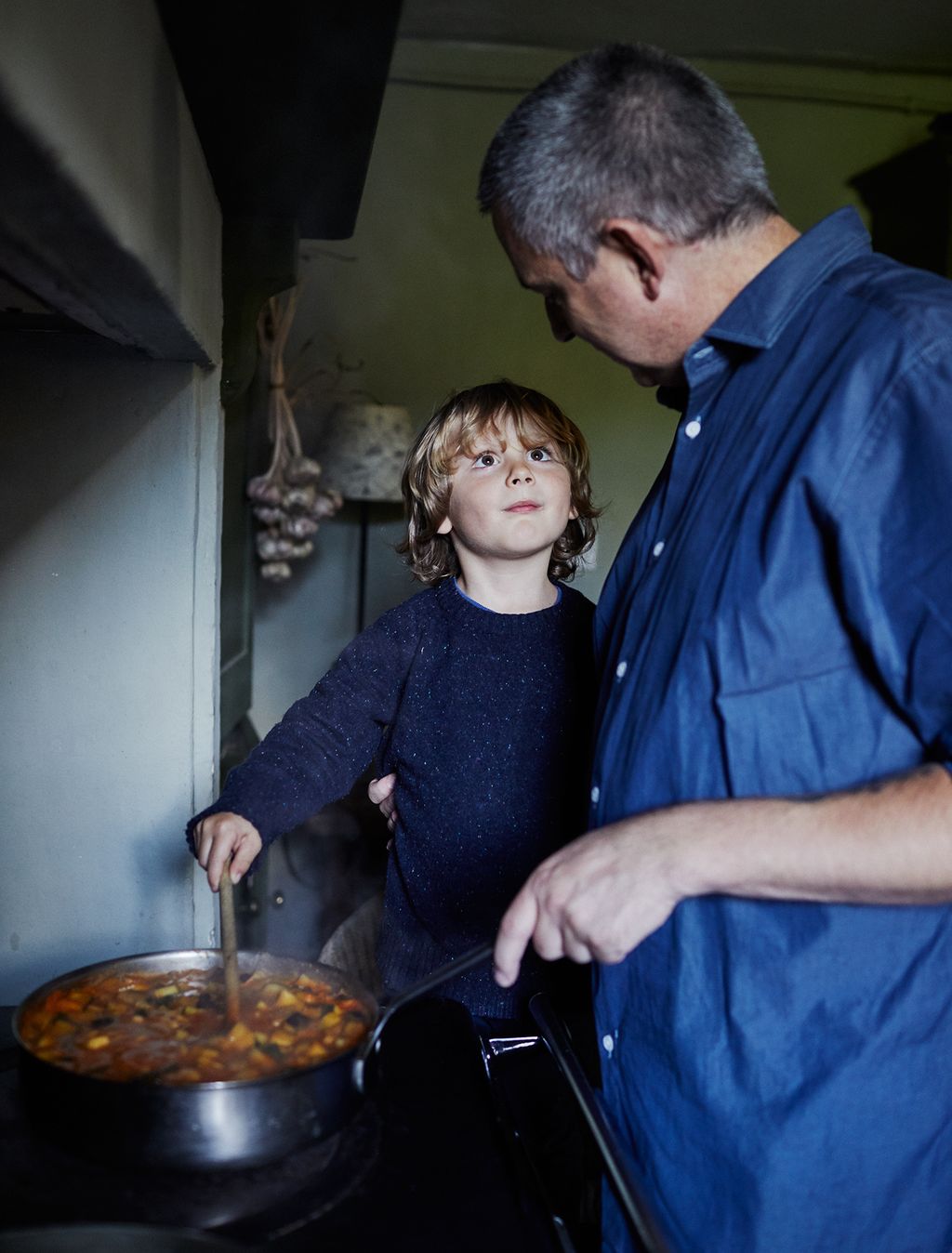
A friend’s son, Monty, helps Ian to prepare a hearty bean cassoulet.


 Brent Darby5/17
 Brent Darby6/17
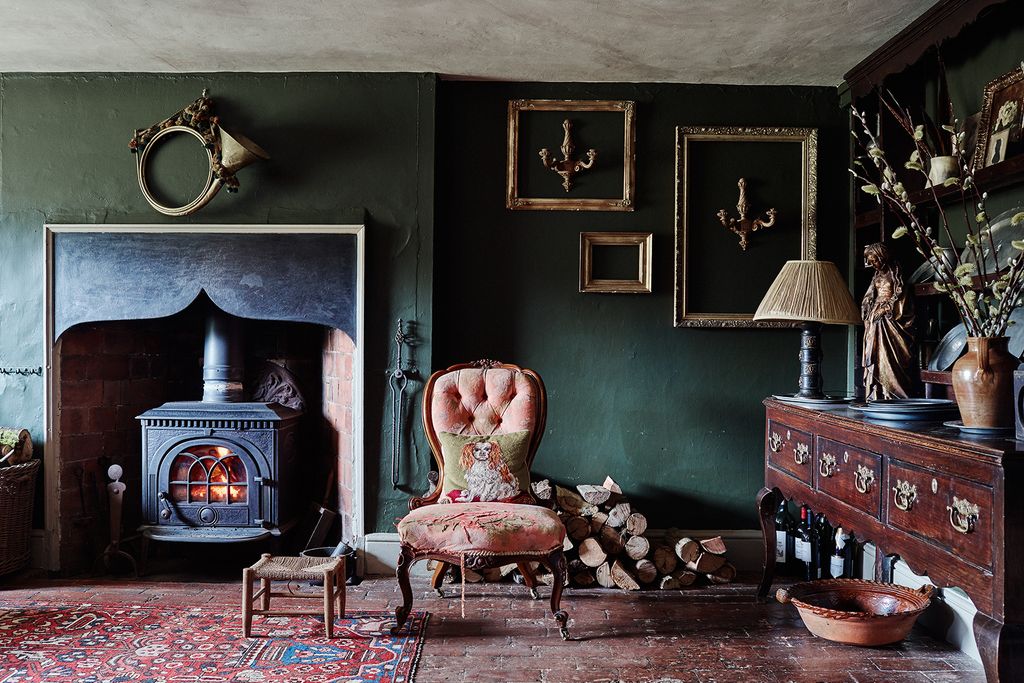
The dark-green drawing room is heated by a wood-burning stove. The brick floor tiles and Victorian balloon-back chair belong to the house.
 Brent Darby7/17
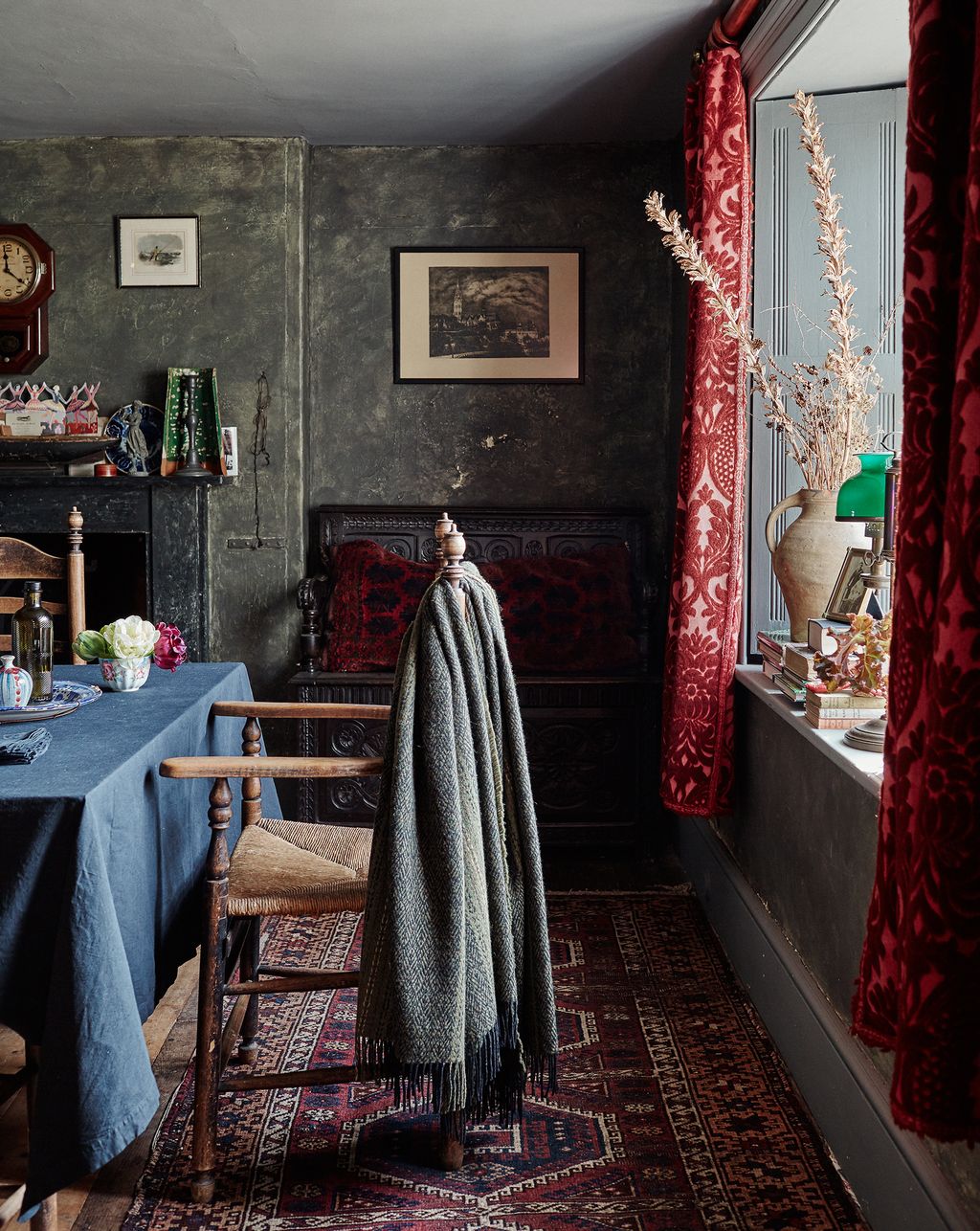
In the dining room, a hand-mixed, highly pigmented paint creates an earthy feel.
 Brent Darby8/17
A duck from the farm wanders into the drawing room, where a Victorian chaise is covered in silk velvet.


 Brent Darby9/17
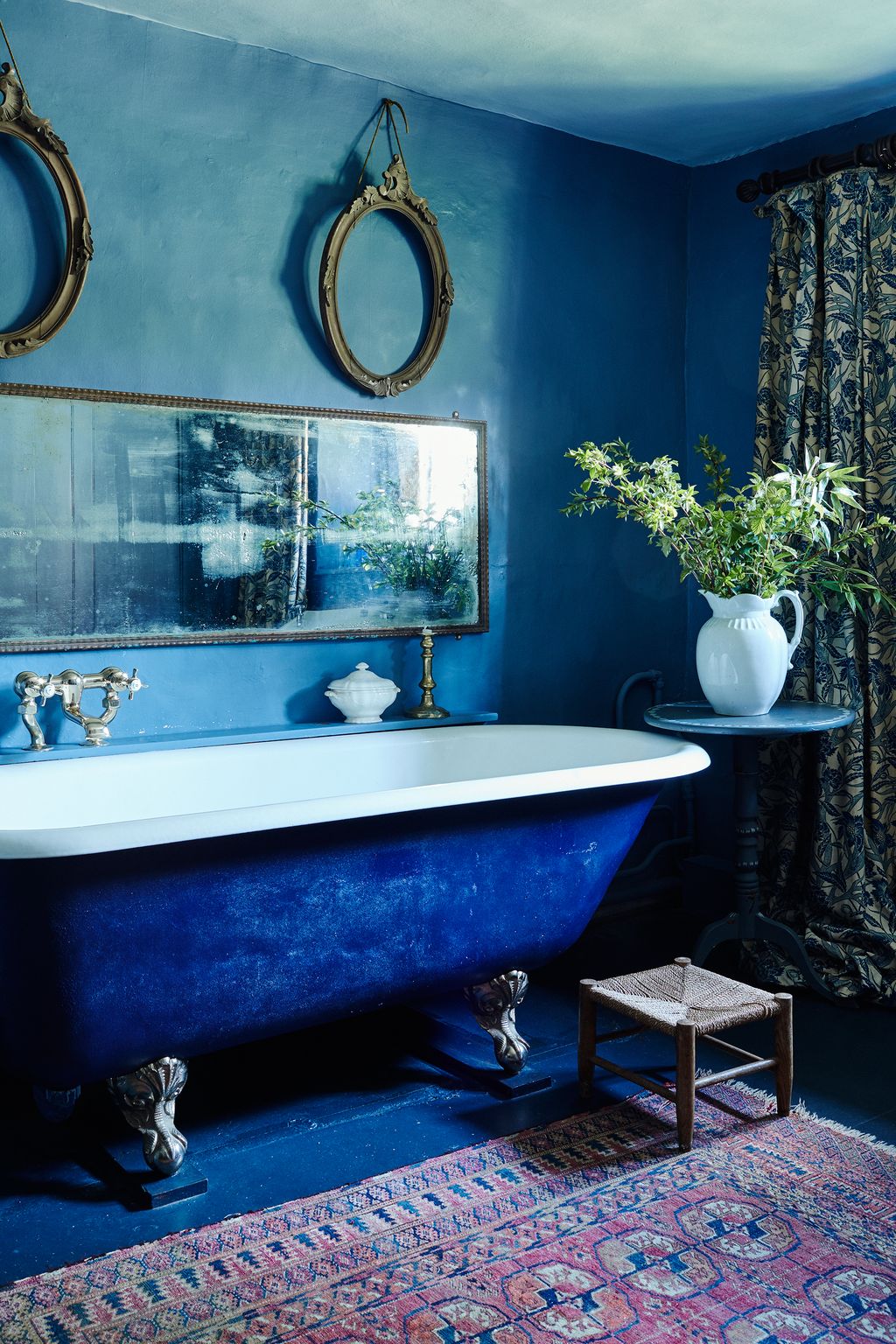
Bathroom walls in ‘Blue Blood’ by Paint & Paper Library set off the cobalt-blue exterior of a roll-top bath original to the house.
 Brent Darby10/17
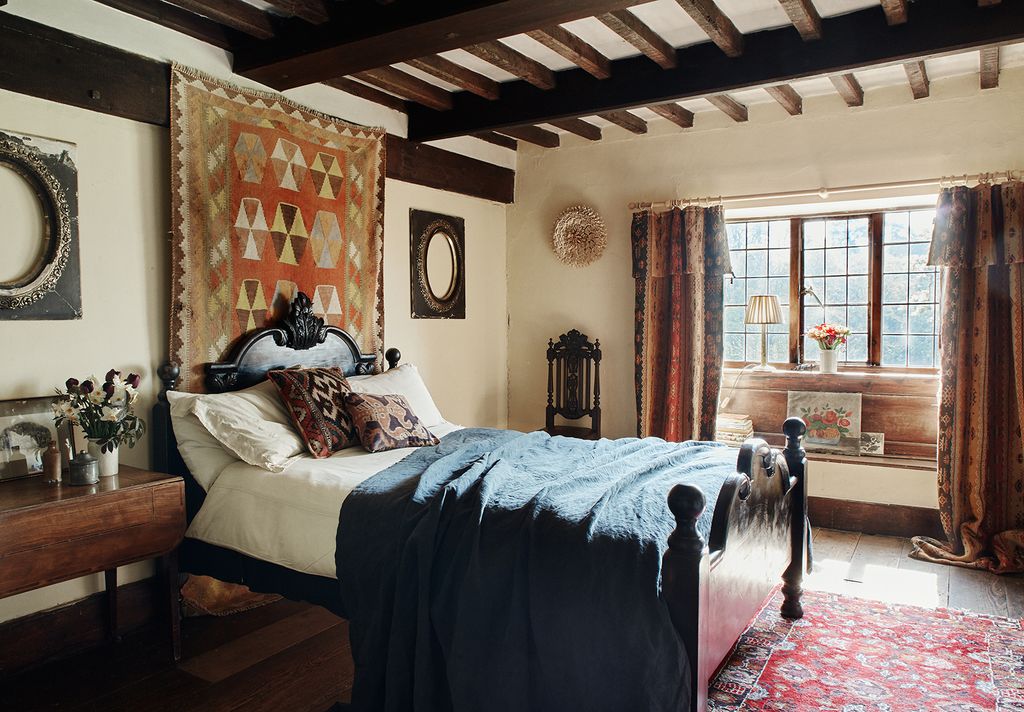
In Ian and Paulo’s bedroom, an Afghan kilim creates a statement headboard for a bed they found in a junk shop.
 Brent Darby11/17
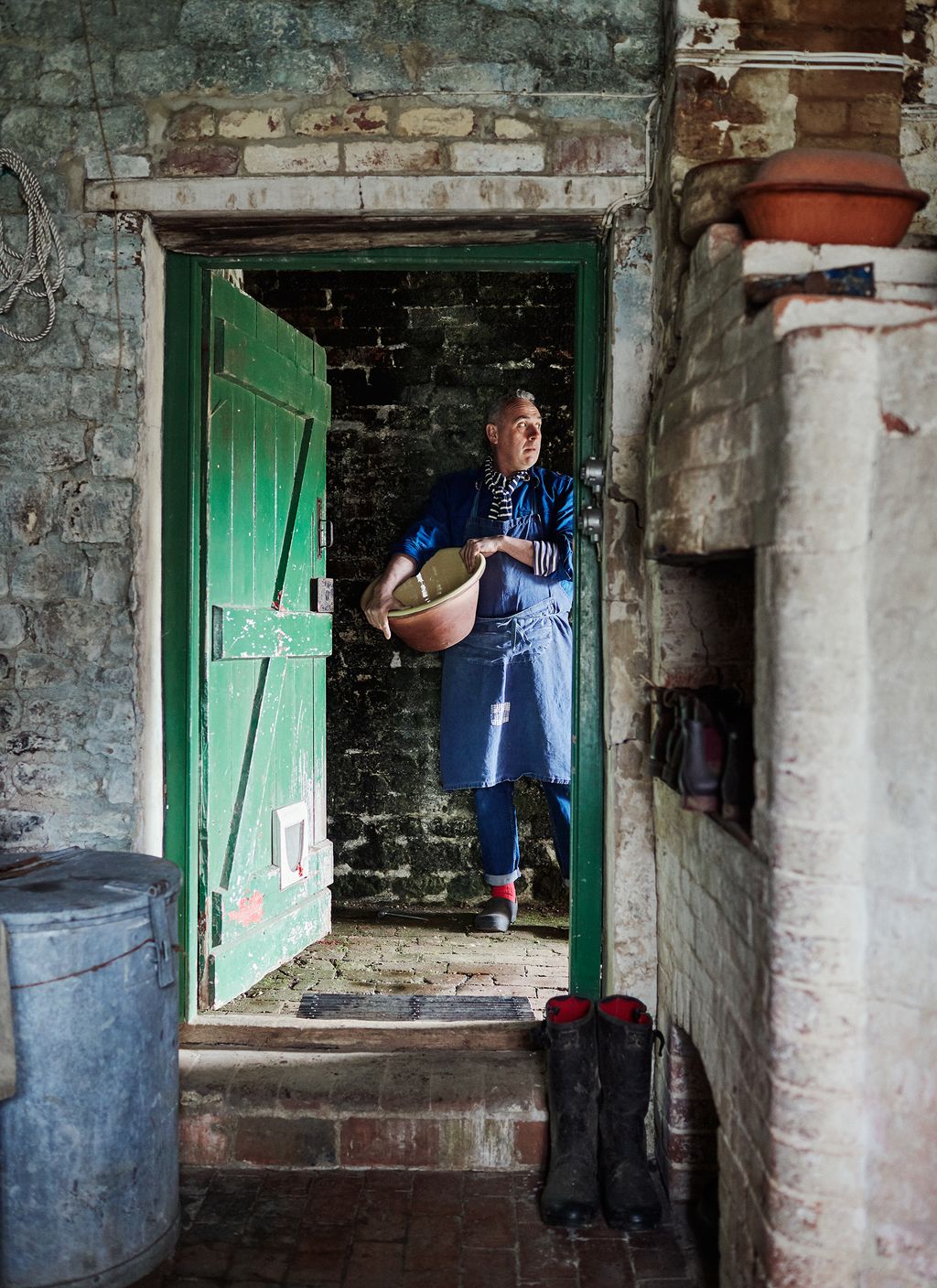
Ian in the scullery.
 Brent Darby12/17
Paulo gathering tulips in the garden.


 Brent Darby13/17
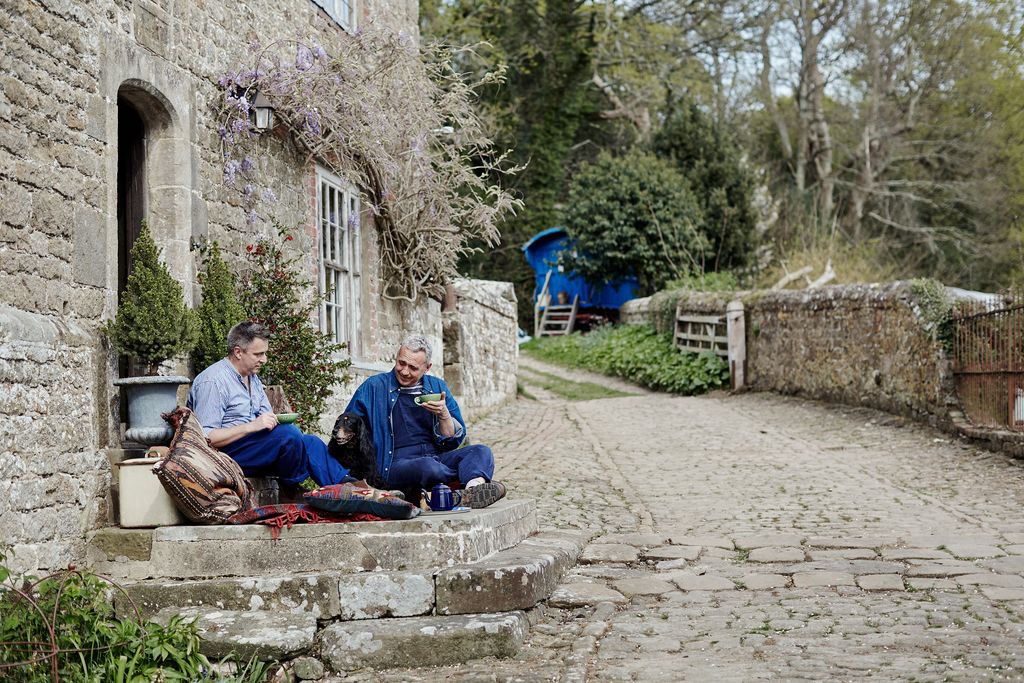
Paulo and Ian sitting on the front doorstep with their spaniel, Robbie; the blue gypsy caravan in the background was gifted to Woolhouse in the Thirties.
 Brent Darby14/17
Christabel keeps British White cattle, a rare breed that she is helping to revive.
 Brent Darby15/17
 Brent Darby16/17
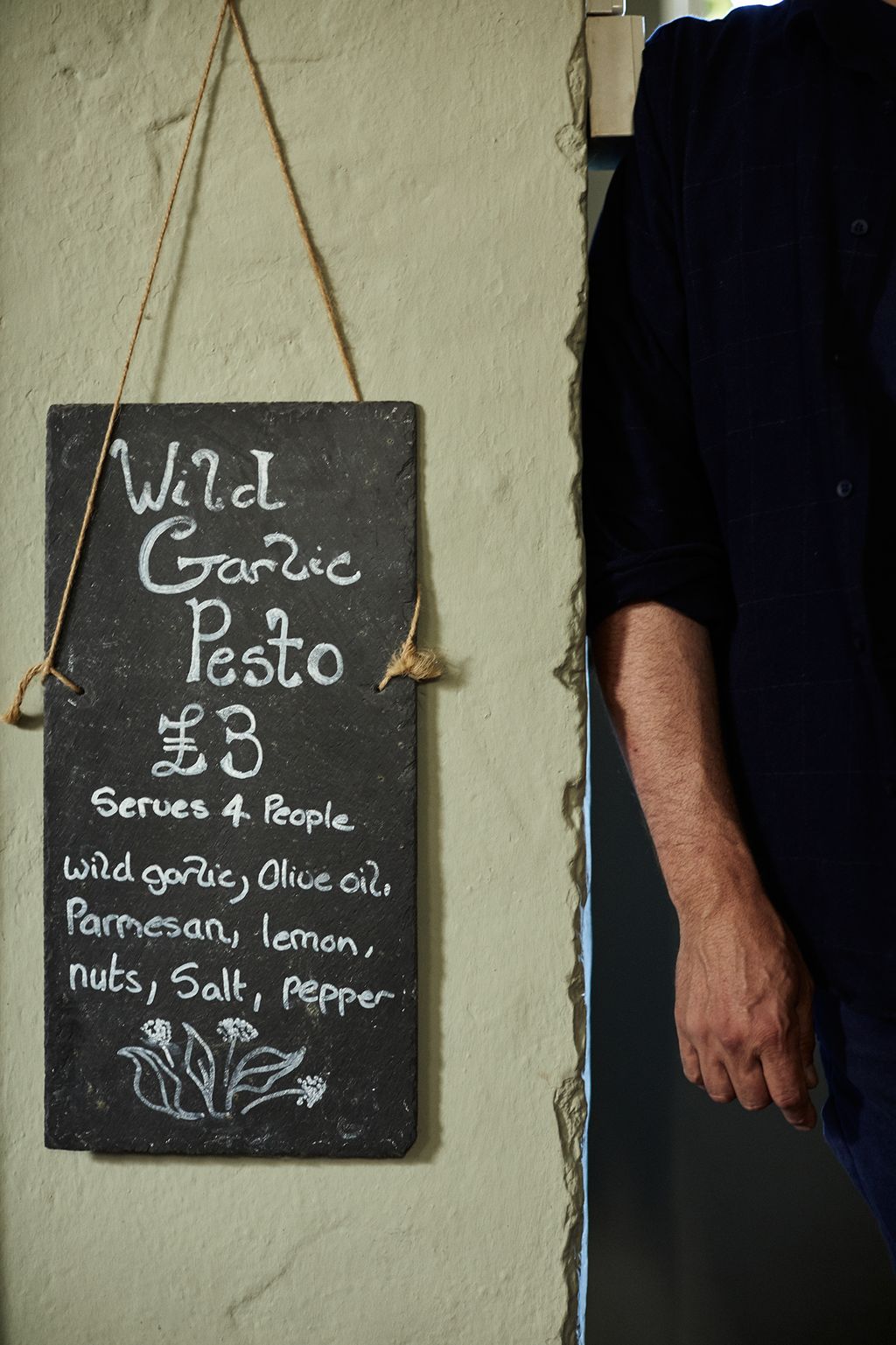
Wild garlic pesto is a Hector and the Fox speciality and a favourite with the locals, along with flowers from the cutting garden.


 Brent Darby17/17
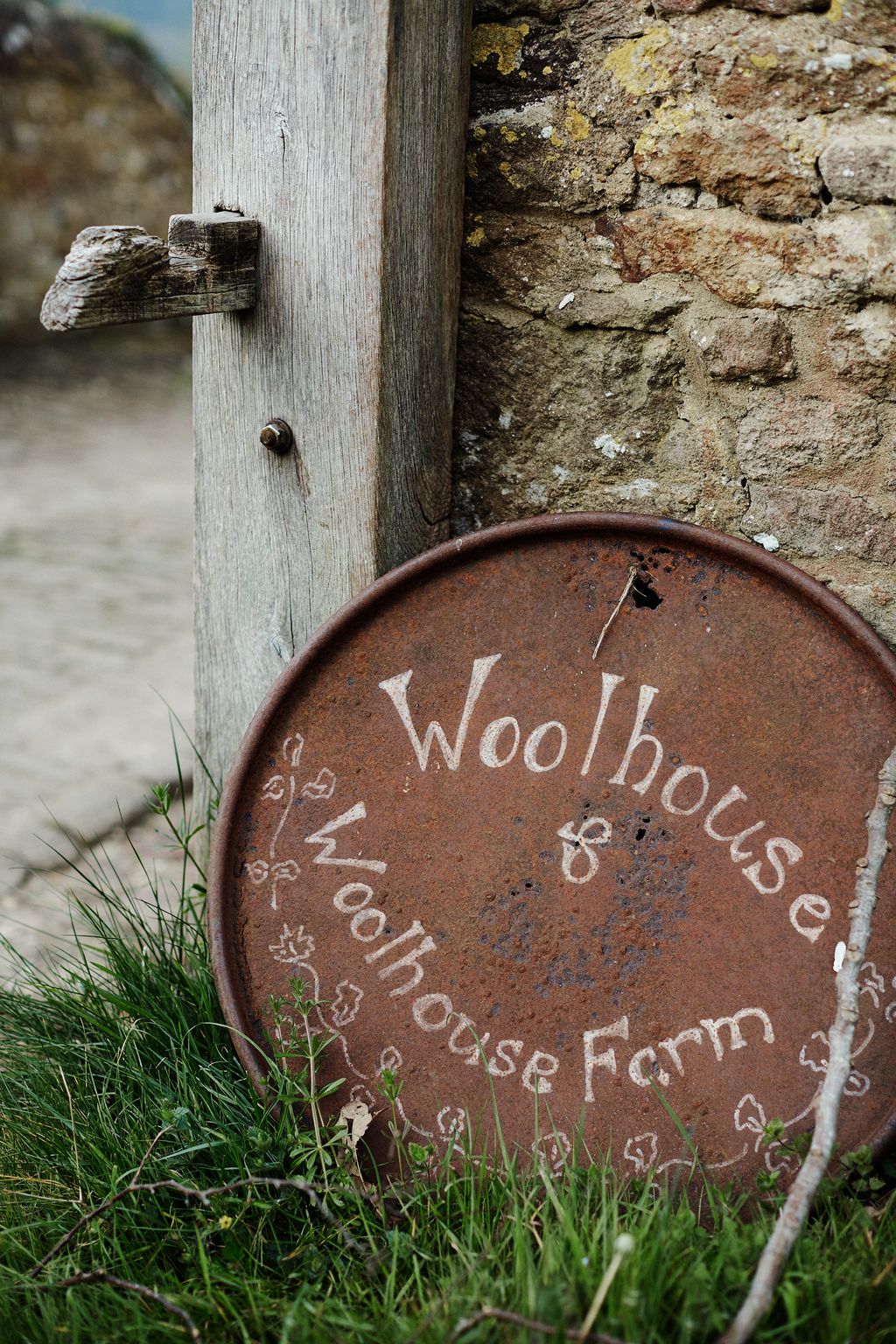
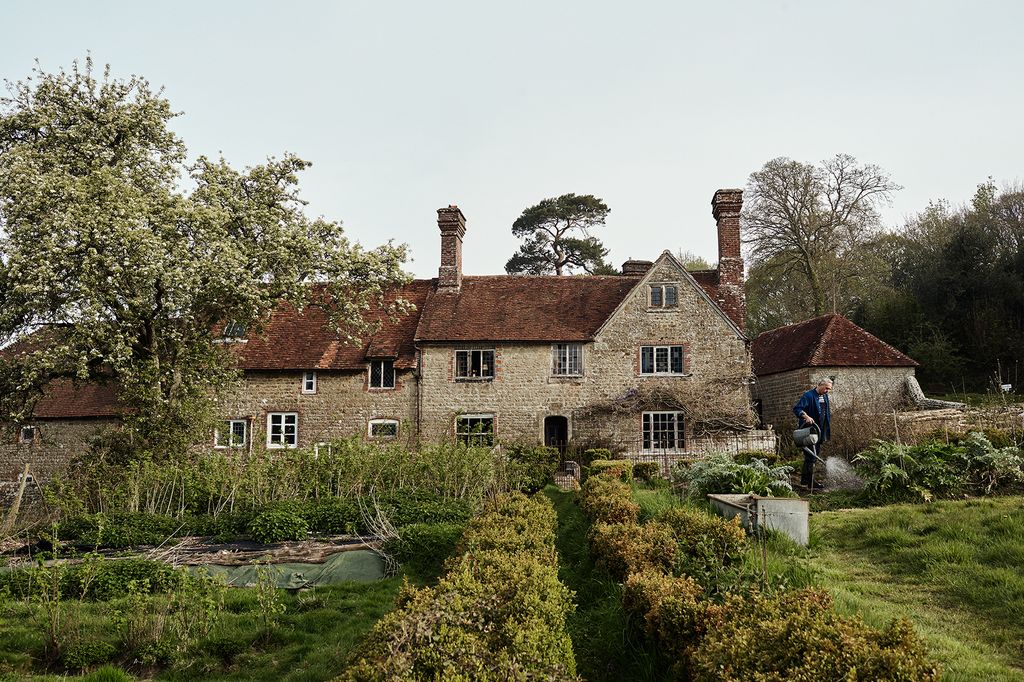
Woolhouse has a sandstone façade that dates back to the 17th century.
Ian is seen at work in the produce garden, a previously untended one-acre plot that now supplies fruit, vegetables and flowers for Hector and the Fox’s bohemian events.


