
A soulful, restrained take on a Victorian end-of-terrace house in north London

When Ronojoy Dam was an English student at the University of Cambridge, Kettle’s Yard was a haven for him. The brand consultant and former Burbery executive would often visit the local house-turned gallery, founded by curator Jim Ede, admiring the work of 20th-century British artists like Ben Nicholson and Alfred Wallis. ‘It became an influence during a formative time in my life,’ he says. Little did he know that, years later, Kettle’s Yard would influence the deeply personal interiors of his own home, too.
It was 2017 when Ronojoy and his wife, Danni, a gardener, bought their end-of-terrace Victorian house in Tottenham, which they now share with their children, Lara and Rye. Situated between the brutalist Broadwater Estate and the wild green of Downhills Park, the two-up, two-down had modest proportions, dimly lit rooms and an overgrown garden. It had also been stripped of its original features. ‘It required some imagination,’ he says. Fortunately, the interior designer he called on, Hollie Bowden, who is known for creating bewitching spaces around the world, has imagination aplenty.

Hollie and Ronojoy had been running in the same circles for years, but it wasn’t until a chance encounter at the wedding of mutual friends that the pair finally met. ‘I’d admired Hollie’s esoteric, intuitive approach from afar, but you get a different understanding of someone when you meet in person,’ says Ronojoy. ‘Hollie is luminous. She’s opinionated but open; she takes things seriously without being serious.’ From that moment, Ronojoy and Hollie began an evolving, rich conversation that proved to be fruitful for both parties.
The timing couldn’t have been better. Ronojoy and Danni had a simple idea – ‘we wanted to create a family home that was respectful of our surroundings and reflective of who we are’ – which Hollie ran with. She was excited by Ronojoy’s references to Kettle’s Yard and his own extraordinary art collection, which includes works by Ben Nicholson, Alfred Wallis, Frank Auerbach, Antoni Tàpies and Lynn Chadwick. ‘I could see how the house could shape up,’ she says. ‘At first, Ronojoy said it might just need a lick of paint, but then we began looking at the layout.’

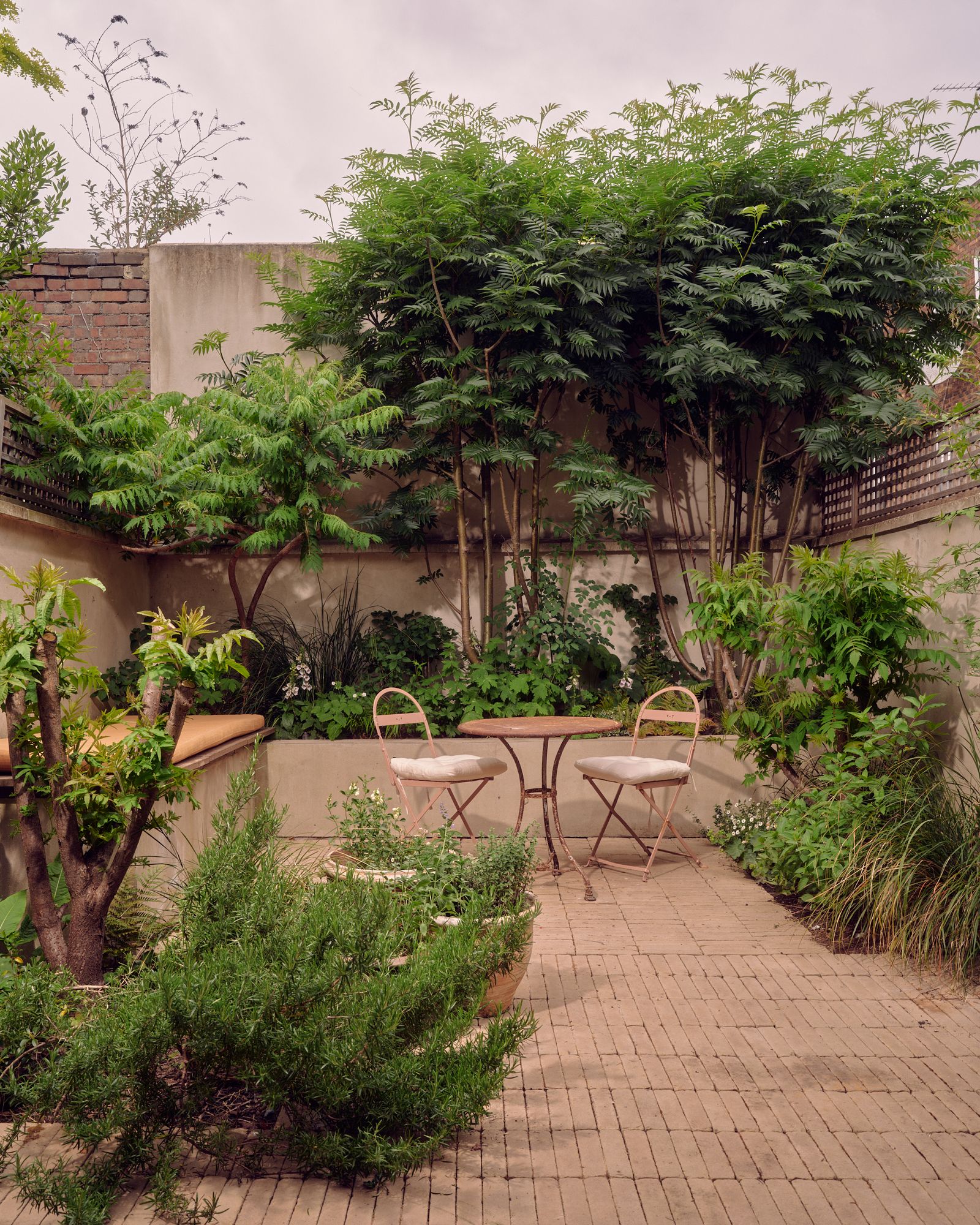
In collaboration with architect Lucas Facer, the pair embarked on a project far bigger than a paint job in 2020, converting the loft to create a third storey for the study, a second bathroom and a third bedroom and adding a rear extension. This offered space for the kitchen and dining area – ‘the beating heart of the home,’ says Ronojoy – with sliding doors that reveal a Japanese-inspired garden. ‘Now, when you open the front door, you can see straight through to the trees,’ Hollie explains. Elsewhere, they maximised space with beautiful bespoke shelving, making room for objets d’art. ‘We didn’t want it to feel like a standard Victorian terrace,’ she continues. That it does not.
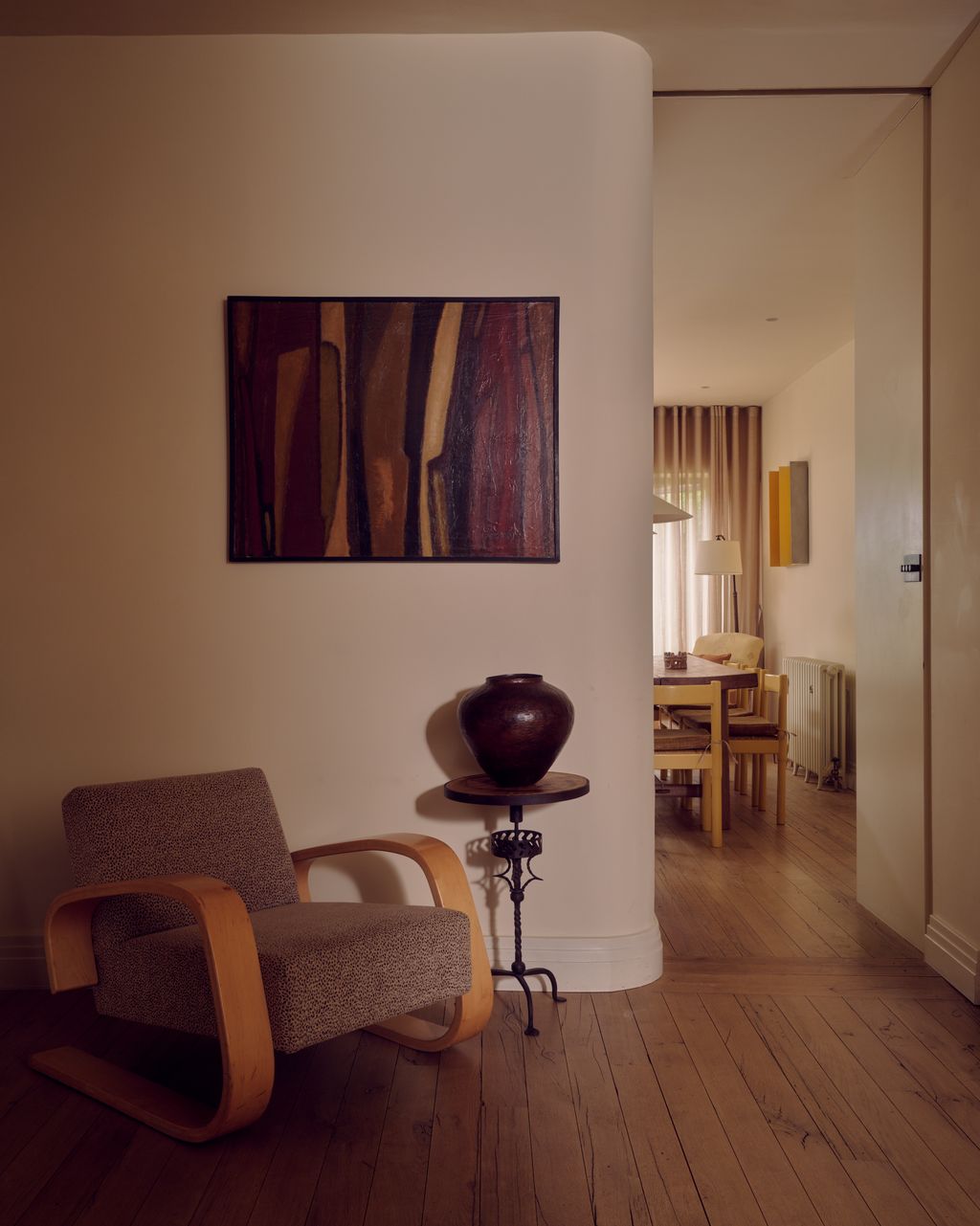
That is in part due to the interiors, characterised by raw, honest materials, such as wood, steel, stone and iron. The oak beams, sourced from an 18th-century monastery in France and laid by master woodworker Carlos von Biemers, that run underfoot are particularly pleasing. ‘They were hell to get in, but they make the most beautiful floor,’ says Hollie. They used the same oak to reconstruct the staircase, built storage in the hallway and a built-in tub by the window in the bathroom. ‘There’s also lots of linen and jute carpet in the bedroom,’ Hollie continues. ‘These natural materials make you feel calm.’


So does the colour scheme. Every room has been painted ‘Lime White’ by Farrow & Ball, which ‘presents ever-changing shades of yellow and chalk throughout the day and the seasons,’ says Ronojoy. This fresh, doughy white – so lovely that Hollie has since painted her own home in the shade – is the backdrop to vibrant pieces, such as an antique lime green rug in the living room. ‘I was not convinced by it at first,’ Ronojoy says, ‘but I trusted Hollie and she was right.’ The perfectly sized farmhouse table, another gem sourced by Hollie, is anchored by tumeric yellow Vico Magistretti chairs, while in the study, a Guillerme et Chambron L’Etudiant desk has been retopped in oxblood leather.
The restrained, neutral backdrop allows Ronojoy’s art to command attention. The works of artists-cum-writers who inspired Ronojoy as a student – Wyndham Lewis and the Bloomsbury Group – fill the space, as do those that pay homage to his Bengali heritage, such as a portrait of the Bengali poet Rabindranath Tagore. ‘My parents had a picture of Tagore in their home, too,’ he says. Danni’s Irish heritage is also evident, such as in the landscape by Irish painter William Crozier. Some of the most remarkable pieces were selected for his children: a Le Corbusier dinosaur etching; a signed Edvard Munch tiger and bear lithograph, completed during the artist’s stay in a sanatorium.
Almost every artwork and object tells a story, but the house is rooted in reality. ‘This wasn’t a dream commercial project. It was a pragmatic, domestic one with a very low ceiling,’ says Ronojoy. ‘But Hollie took me and Danni to a place we could never have imagined. The house has slowed us down – in the best way. There’s more softness in the way we live as a family.’ To this day, Hollie and Ronojoy’s conversation is ongoing. ‘I still send Ronojoy pieces now,’ says Hollie. ‘The house is always evolving,’ Ronojoy adds. ‘It’s not a finished project – and I hope it never is.’
 Jasper Fry1/10
A cognac Cab chair by Mario Bellini chimes with the reupholstered Tuscan red seating.
 Jasper Fry2/10
‘There was nothing to work with – no cornicing, nothing,’ says Hollie. ‘Reinstating that didn’t make sense. Instead, we made neat interventions, such as introducing a beautiful curved wall that flows from the living room to the kitchen and dining area.’ The painting was found by Hollie and Ronojoy during a shopping trip in Paris.
 Jasper Fry3/10
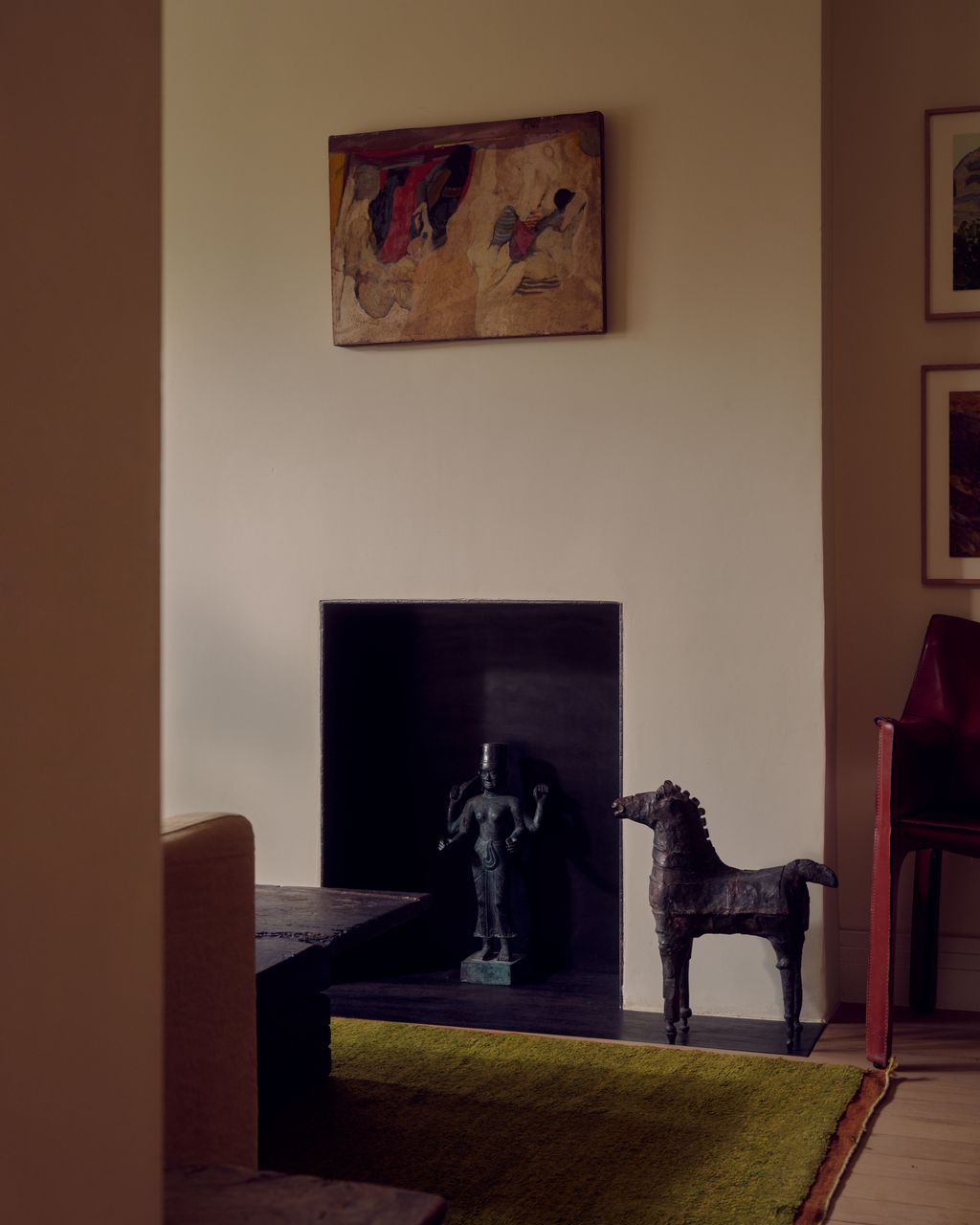
‘We designed areas that are filled with objects, but then balanced that with more minimal areas, such as the fireplace with no mantelpiece,’ says Hollie.
 Jasper Fry4/10
A 19th-century Jain cosmological map of the universe sits above the sofa in the living room.


 Jasper Fry5/10
This painting by Jared Ginsburg was gifted to Ronojoy by his friend James Brown, founder of Blue Mountain School. ‘I adore this piece,’ Ronojoy says. ‘It’s brought in so much light.’
 Jasper Fry6/10
An Alfred Wallis artwork by the tub is a homage to Kettle’s Yard, where a painting by the same artist is positioned similarly in the bathroom. ‘I love that it’s not meticulously placed above a mantlepiece,’ says Ronojoy.
 Jasper Fry7/10
Overlooking the Japanese-inspired garden, the bespoke, built-in bathtub is one of the house’s loveliest features.
 Jasper Fry8/10
‘There are strong accents of colour throughout,’ says Hollie, such as the burnt orange headboard in the bedroom – a hue that runs throughout the home.


 Jasper Fry9/10
A portrait of poet Arthur Rimbaud, a poster of whom looked over Ronojoy’s desk as a teenager, hangs above Ronojoy’s Guillerme et Chambron desk, which has been reupholstered in rich, oxblood leather.
 Jasper Fry10/10
As Hollie explains, the roof light above the stairwell was one of the most ingenious updates they made with architect Lucas Facer. ‘It floods light down the stairs,’ she says. ‘We’ve turned a dark, unimpressive house into something beautiful and bright.’


