
Behind the scenes of artist David Dawson's studio
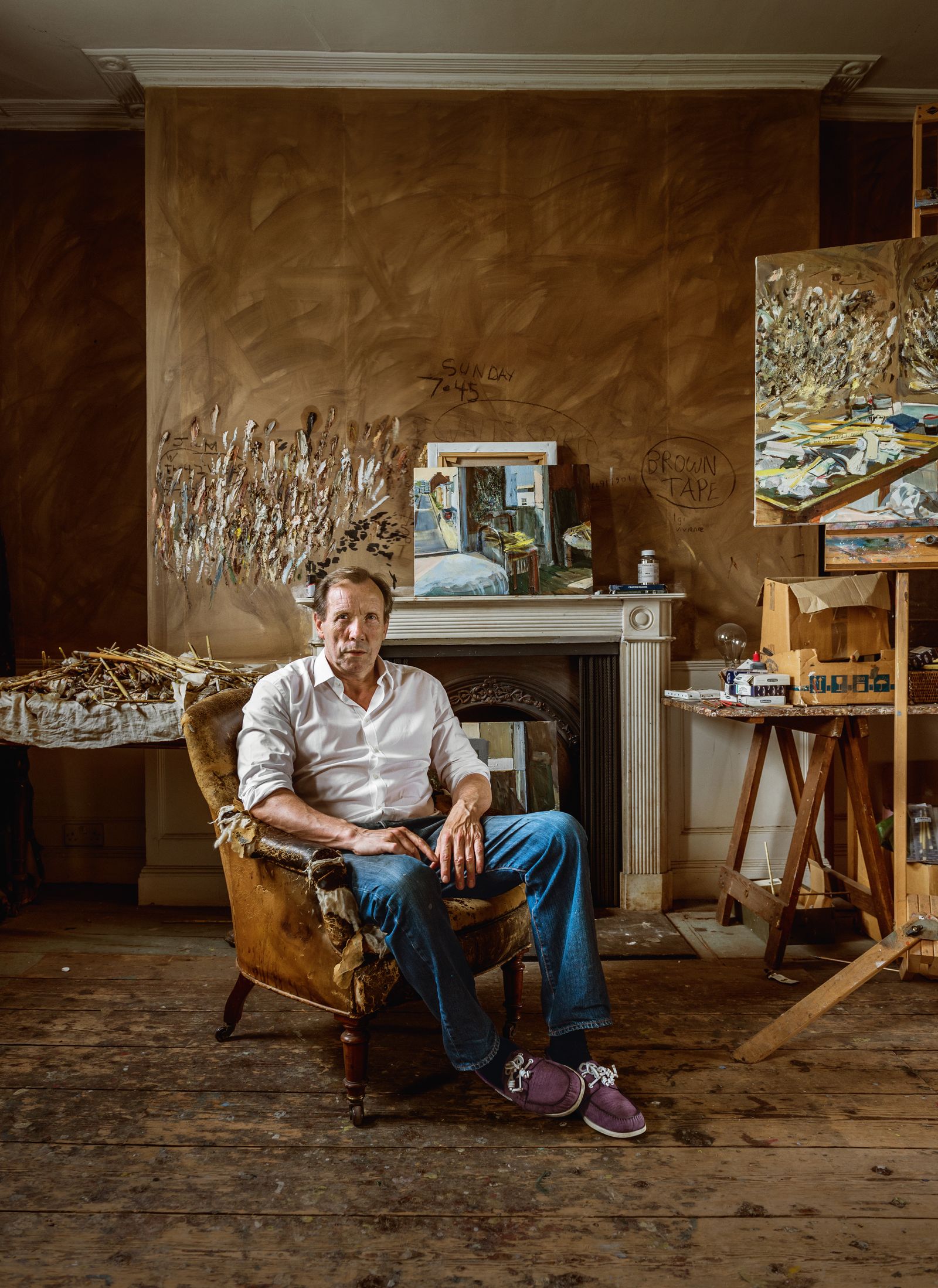
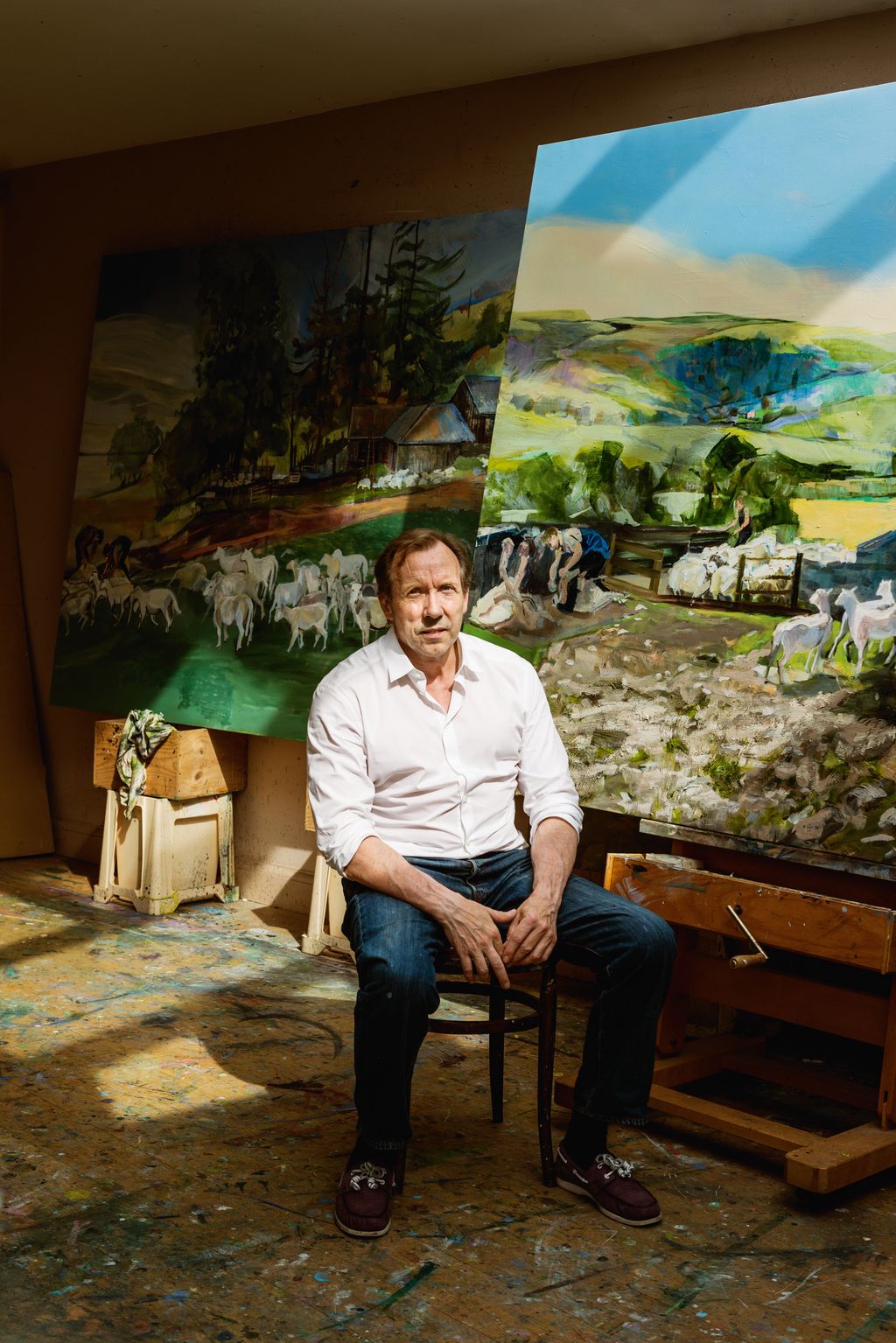
‘My work is a response to the land I know,’ says David Dawson, gesturing to vast canvases propped on easels in his studio in Kensal Rise, which combine rolling hills with agriculture and autobiography. He grew up in Wales on a remote farm overlooking a valley. ‘It’s not pretty landscape – it’s land that’s working,’ he adds. ‘But I’m connected to it and I understand it, and I understand my scale to it.’ He begins a painting en plein air and on site – he has a cottage in those hills – with size partly determined by the reach of his outstretched arms. He then transfers it to this London studio for further work: ‘To make it stand on its own as a landscape.’
It is a journey that mirrors the move David made aged 20, when his father asked him to make a choice between staying and farming, or the family selling up: ‘We agreed that, if I wanted to be an artist, I’d need to take it seriously.’ David coincided with Tracey Emin and Jake and Dinos Chapman at the Royal College of Art, but he has never swerved from his devotion to figurative work, even through the years when a more conceptual approach dominated the conversation, certainly among his YBA friends.
Arguably, his attitude that ‘painting is worthwhile pursuing’ was reinforced by the parallel commitment of the other artistic milieu that he has been part of, the older generation’s School of London artists – Lucian Freud, Francis Bacon, Frank Auerbach, et al. David was Lucian’s studio assistant from 1991 until his death in 2011, sat for some of Lucian’s most powerful works and, using a camera, recorded Lucian at work. A group of these photographs is in the permanent collection of the National Portrait Gallery.
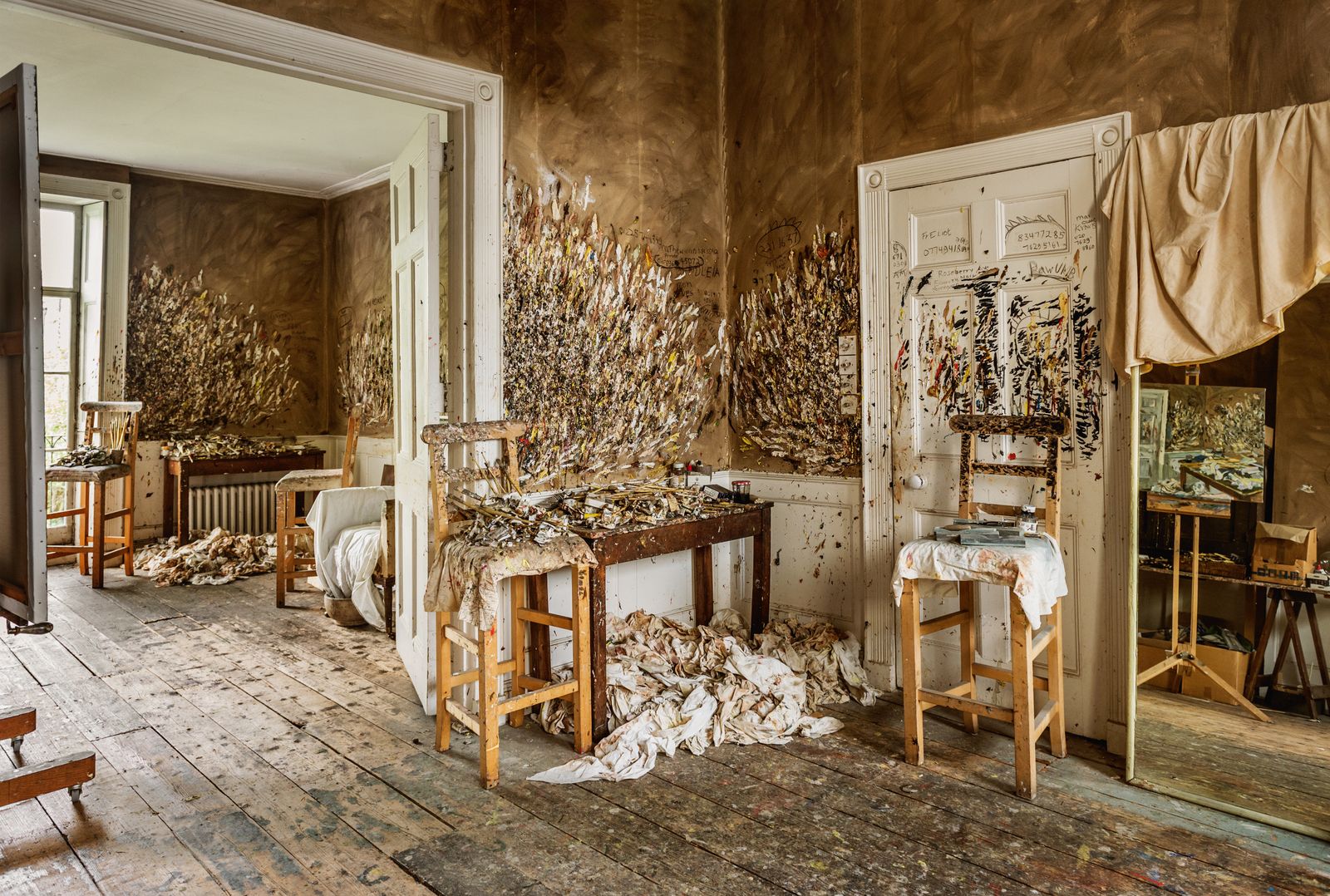
Lucian made David director of his archive and left him the Kensington house in which he lived and worked from 1997. David now lives there himself and uses Lucian’s former studio, where another body of work is in progress – portraits of the room he has known and worked in for so long. They are smaller than his land-scapes, with their size determined by a desire for preservation. ‘It is not a museum, but if you remove my canvases and paints from the studio, it’s exactly as it was when it was Lucian’s,’ David explains. Those familiar with Lucian’s work will recognise the furniture, including the chair Andrew Parker Bowles sat in for The Brigadier and the daybed David himself lay on, naked, with his whippet Eli. The walls retain Lucian’s notes and appointment reminders – among them ‘HRH 11 October Robert F’, referring to a sitting for his famous portrait of Queen Elizabeth II – and vertical sculptural masses created by his brush-cleaning method.
It is tempting to look for similarities in their studio practice beyond paint-spattered floorboards and collections of spent tubes of oil paint, but the main thing David has taken from Lucian, he says, is ‘the commitment to the paint and focus and prolonged concentration’. That is now applied to his work, all day, every day.

The Kensal Rise studio is in David’s former home and, since he moved out, paintings have spilled into every room. The whole house is now imbued with the spirit of the Welsh hills and the rhythm of the seasons, which provides a foreground to the patchwork slopes – cows being let out to pasture, or sheep being sheared.
By the time this issue goes to press, the paintings currently in his studio will be installed at Galleria Lorcan O’Neill, in Rome, for a solo show. ‘It was hard, but I had to follow my own path,’ he says, of the decision he made all those years ago. ‘It has worked out’.
‘Landscapes and Waterfalls’ is at Galleria Lorcan O’Neill Roma, until September 21: lorcanoneill.com. For his photography, David is represented by Hazlitt Holland-Hibbert: hh-h.com
 Joshua Monaghan1/6
David with his paintings.
 Joshua Monaghan2/6
David’s Portrait of Lucian’s Studio is on the easel above a portrait of him by Lucian on a copper etching plate, which rests on the floor
 Joshua Monaghan3/6
David in his Kensal Rise studio, in a purpose-built extension to his former home, between The Boys Shearing on an easel and The Boys with their Sheep.
 Joshua Monaghan4/6
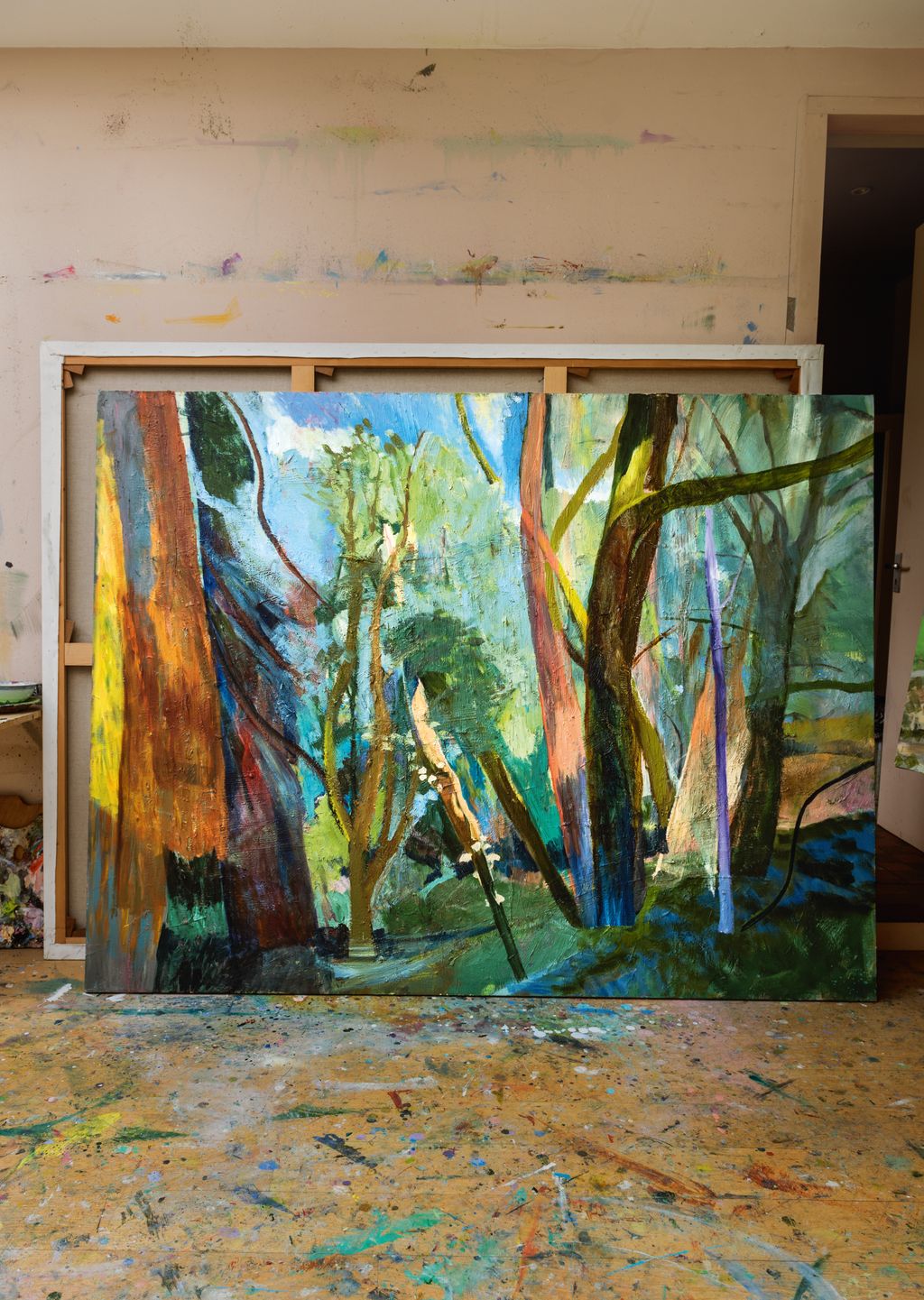
Looking into the Wood.


 Joshua Monaghan5/6
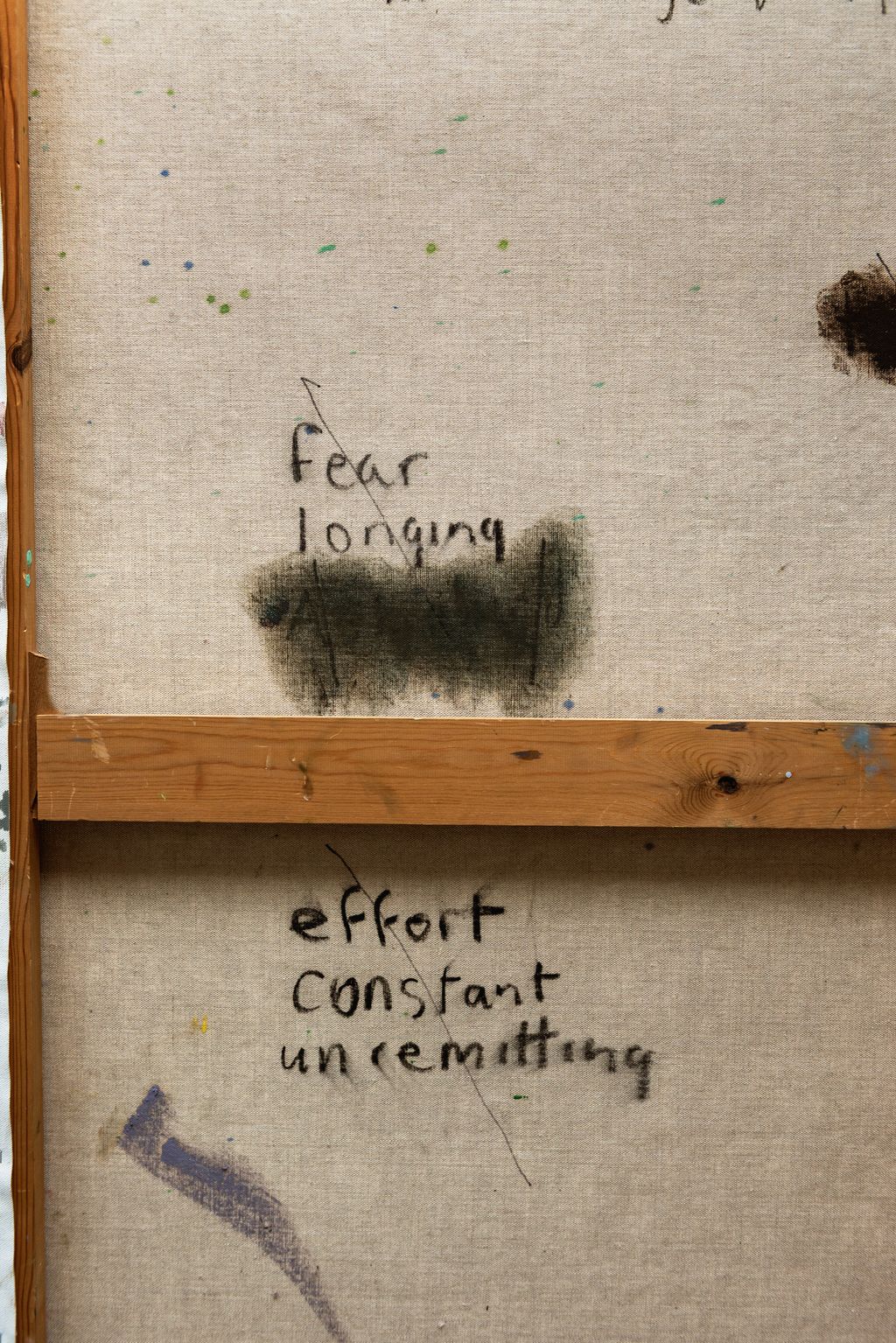
The reverse of a canvas; ‘I sometimes put down words on the back as a mental note of how I approach painting and what is needed to make a painting,’ the artist explains.
 Joshua Monaghan6/6
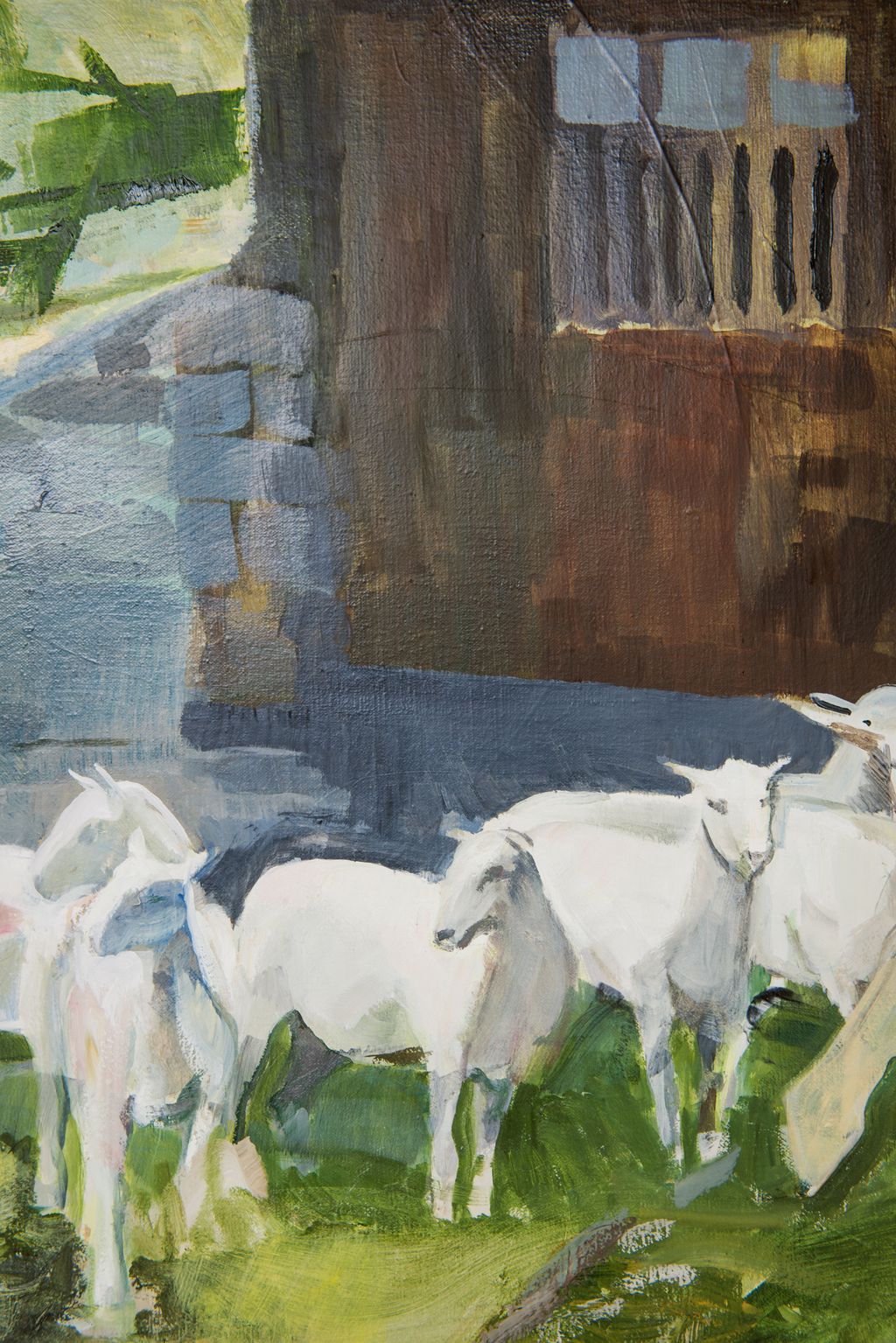
Detail of sheep from The Boys of Shearing.


Comments
Back to Top


