
Kate Guinness draws an airy and stylish interior from a new build house in the Cotswolds

Situated behind some farm buildings on a well-manicured stud in the Cotswolds, The Pavilion is a master of disguise. It is not actually a cricket pavilion, but a single-storey steel portal-framed building, which on the inside reveals itself to be a light and voluminous house, with a high vaulted ceiling. The cricket pavilion that once stood on this site had become dilapidated after the village team ceased playing. Overlooking fields and rolling countryside on the husband’s family farm, this was the perfect place for the owners to build a weekend and holiday home. ‘It was in this beautiful setting – as children, we used to lie here in the summer, just taking in the view,’ says the husband.
The building’s location in a designated Area of Outstanding Natural Beauty resulted in the initial planning application being rejected. Luckily, this new unassuming design was unanimously approved at committee, when it was recognised that it would blend seamlessly with the farm’s agricultural buildings and was replacing a derelict sports building.

The owners, a London-based family with two young sons and a daughter, had a specific brief for the architect, who also designed their house in the capital. ‘The Pavilion is close to the farmhouse where my parents still live and what we wanted was somewhere with amazing views that we could lock up and leave, in which we could just be with family,’ says the husband. ‘We didn’t necessarily need a house where we could entertain lots of people. We just wanted to enjoy being together in a light-filled space with plenty of windows, and with doors that slide back to make the most of the setting.’
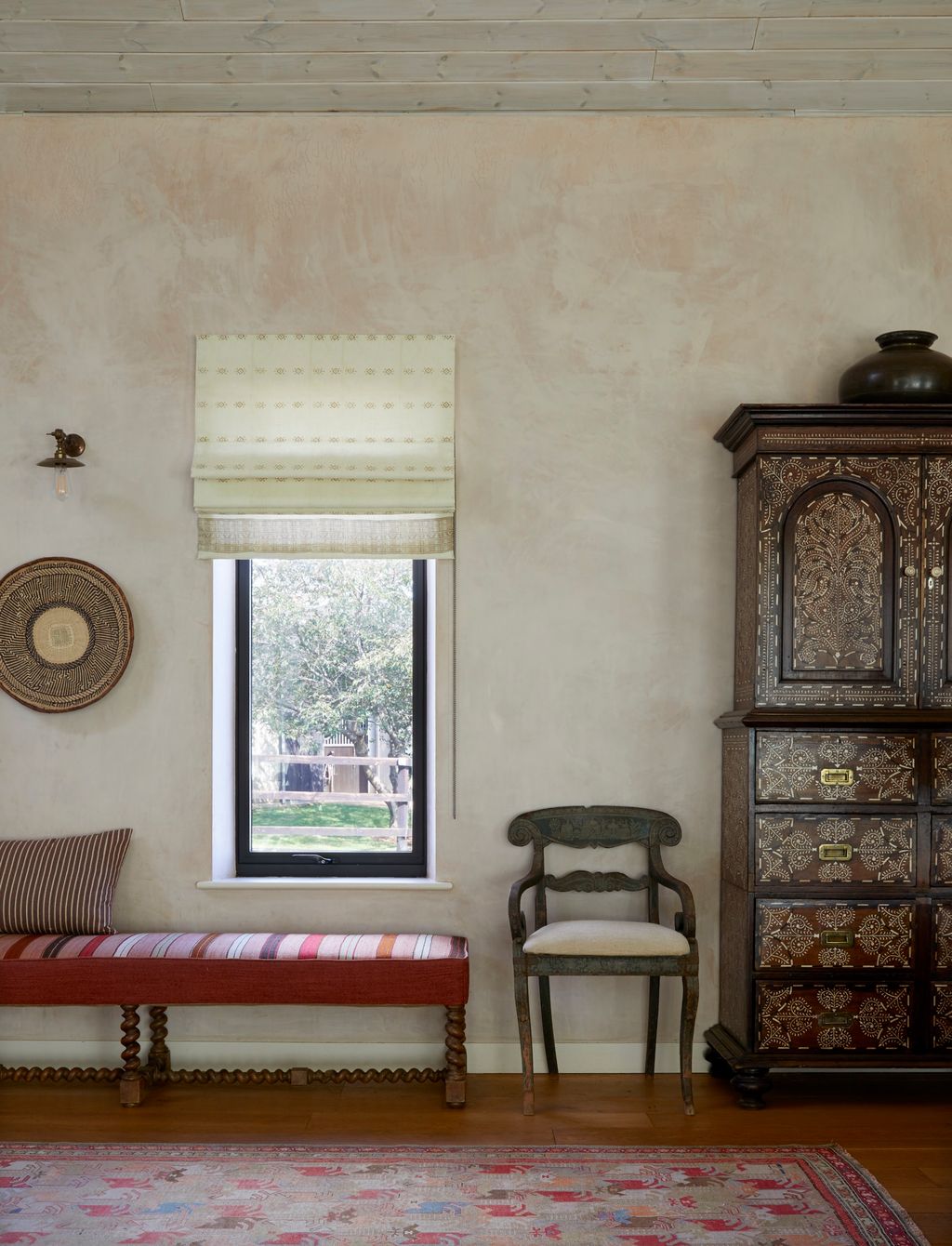
The couple decided to enlist the help of the interior designer Kate Guinness, who had also previously worked on their house in London. The huge living space is the beating heart of The Pavilion and was put to the test when the family temporarily relocated here during lockdown. The husband describes the interior style as a ‘converted weekend beach house’, which is evident in the relaxed vibe and unpretentious decoration. The walls in the open-plan kitchen, dining and sitting room were left unpainted, as the owners fell for the warm pink of the plaster, which blends well with the timber cladding used on the ceiling and the wooden flooring, both sourced from a local sawmill.

Most of the furniture was either inherited by the owners from their parents or came from flats they lived in before moving in together. ‘We weren’t sure if it was going to work,’ says the wife. ‘But it was strange – when the furniture was unloaded from the removals van, it was obvious where everything should go.’
For Kate, the way to pull it all together was with textiles. ‘We wanted to bring in different patterns and textures,’ she says. ‘The main pieces of upholstery and curtains are neutral, and all the other textiles, like the cushions and rugs, create interest in various ways. Some are antiques, some come from different countries, some are woven and some are prints.’

The wife is from South Africa and there is a detectable African influence peppered throughout the schemes, with items such as an inlaid Zanzibar campaign chest, Ethiopian Coptic crosses and the large African baskets on the kitchen units.
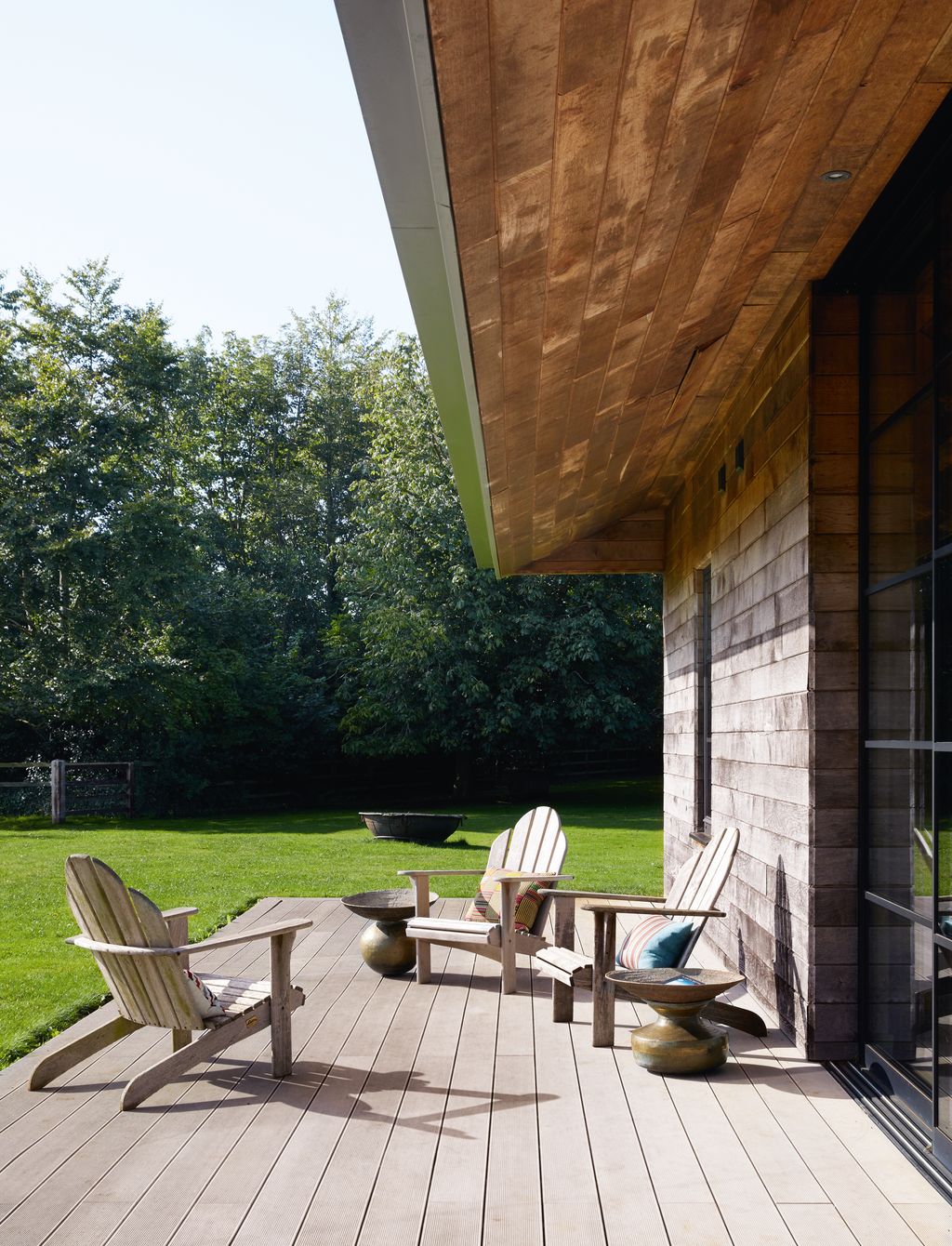
In warmer months, the doors are always open and there is a feeling of being outdoors even when inside. A ha-ha replaced a fence at the end of the garden, so views are uninterrupted. ‘It’s lovely in spring when foals are out in the field,’ says the husband.

Although the footprint is only 150 square metres, there is a clever degree of separation, with the main bedroom at one end of the house and the children’s rooms at the other. Light pours into the main bedroom through large windows, with sweeping curtains in Guy Goodfellow Collection’s ‘Piedmont’ fabric in sea foam. While most of the house has a neutral palette, the children’s rooms feature welcome splashes of colour. Walls painted in a mint-green stippled effect brighten the daughter’s room while, in the boys’ room, custom-made bunk beds in a vibrant green pick up on the bicycle design of the wallpaper border.
‘Our children absolutely love this place and they want to move here permanently,’ the wife enthuses. ‘Any time when they are not at school, we spend here.’ Which proves the old adage – that often the simplest designs are the best.
 Paul Massey1/8
 Paul Massey2/8
 Paul Massey3/8
 Paul Massey4/8
This airy space is enlivened by a mix of patterns and textures, including a headboard in a suzani from Susan Deliss, a kantha quilt, vintage rugs and cushions from the Kate Guinness Design shop.


 Paul Massey5/8
Other fabrics include ‘Chilton’ on the bed and ‘Ewe Kente’ on the woven-rope ‘Joshua Tree’ chair from Ralph Lauren Home.
 Paul Massey6/8
A Moroccan rug and a blind in Duralee’s ‘72087’ red/blue linen mix pick up on the base of the bath painted in Farrow & Ball’s ‘Hague Blue’.
 Paul Massey7/8
Cole & Son’s ‘Fornasetti II Multiplette’ wallpaper border, bunk beds in a vibrant green and chairs in Peter Dunham’s ‘Bukhara’ linen make a bold statement.
 Paul Massey8/8
Teak Adirondack chairs from Gloster are positioned to make the most of the sun and the views of the countryside on the south side of the house.


