
Bewitched by a derelict 18th-century palazzo a writer sold up and moved to Malta to restore it
There are few certain ways to make an impression on posterity. Architecture is likely to survive longer than interior design, but who can say whether a Shard or a Poundbury will be loved and lived in 200 years from now? A more modest and possibly more lasting way to leave your mark is to restore an old building. Author and designer Paul Golding has spent seven years renovating an exquisite late-eighteenth-century palazzo on Malta. ‘As the work progressed,’ he says, ‘what might originally have contained a seed of vanity became a matter of integrity and aesthetic responsibility – and of how any changes I made would ultimately suit the house itself. The palazzo long predates me and will long outlive me.’
Eight years ago, living in London but looking for a project and a change of scene, Paul was inspired by a newspaper article that praised Malta’s architecture, heritage and climate. He started researching property online and found four houses that appealed to him. When he got to the island, though, only one tugged at his heart strings. ‘It needed a huge amount of work, but its location was perfect, and I couldn’t resist its romantic decay,’ he says of Palazzo Nasciaro.
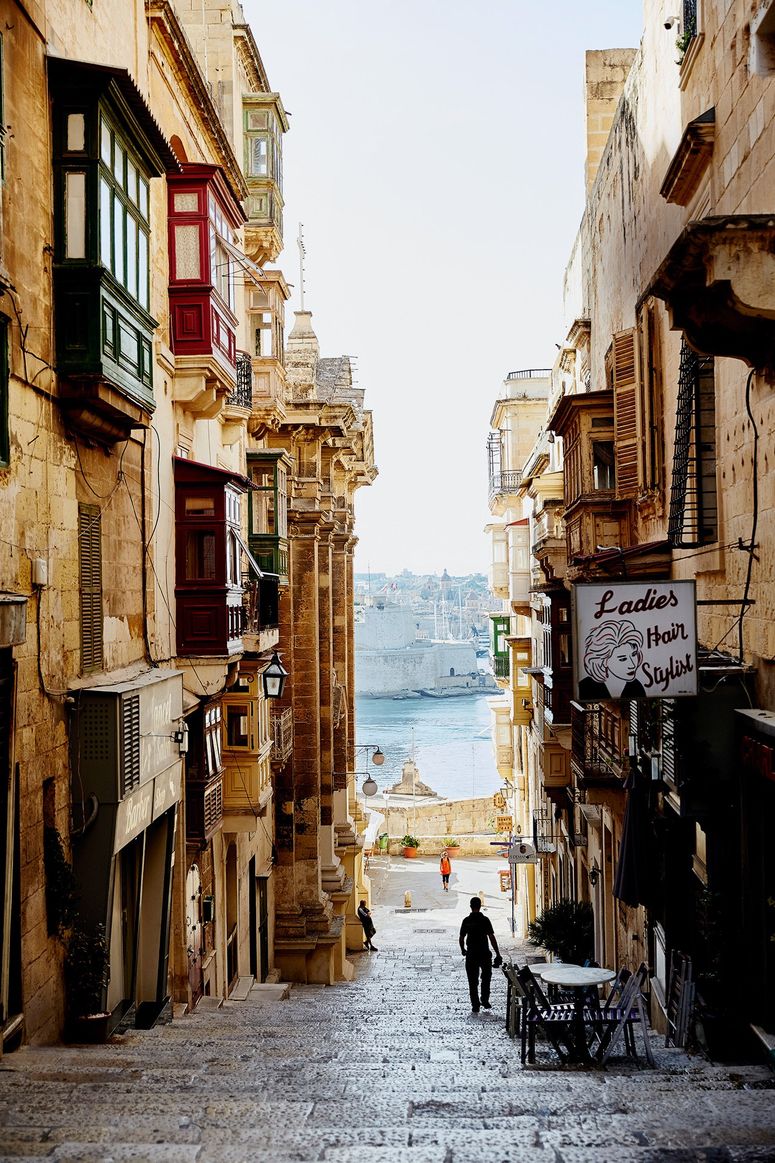
Set down a secluded side street in the chic inland village of Naxxar, the house was badly in need of rescue. Built by the distinguished Maltese architect Francesco Sammut, it was further embellished by his son Giovanni, who moved in with his bride and made it their home. However, Nasciaro’s subsequent history was less rosily domestic. In the past century, it was a school and then later a police headquarters. During the Second World War, when Malta was heavily bombarded, tunnels and chambers were hollowed out beneath it to serve as a maternity hospital. When the police left, the house was abandoned and lay mostly empty for 20 years.
It seems extraordinary that somewhere so beautiful should have been so neglected. The façade is enough to make the heart beat faster, with a double flight of steps leading up to an elaborately decorated stonework doorway and honey-coloured walls. But it is not until you step into the vaulted entrance hall, where the same golden stone lines the walls and erupts into carved consoles, mirror frames and overdoors, that the real beauty of this house is revealed.
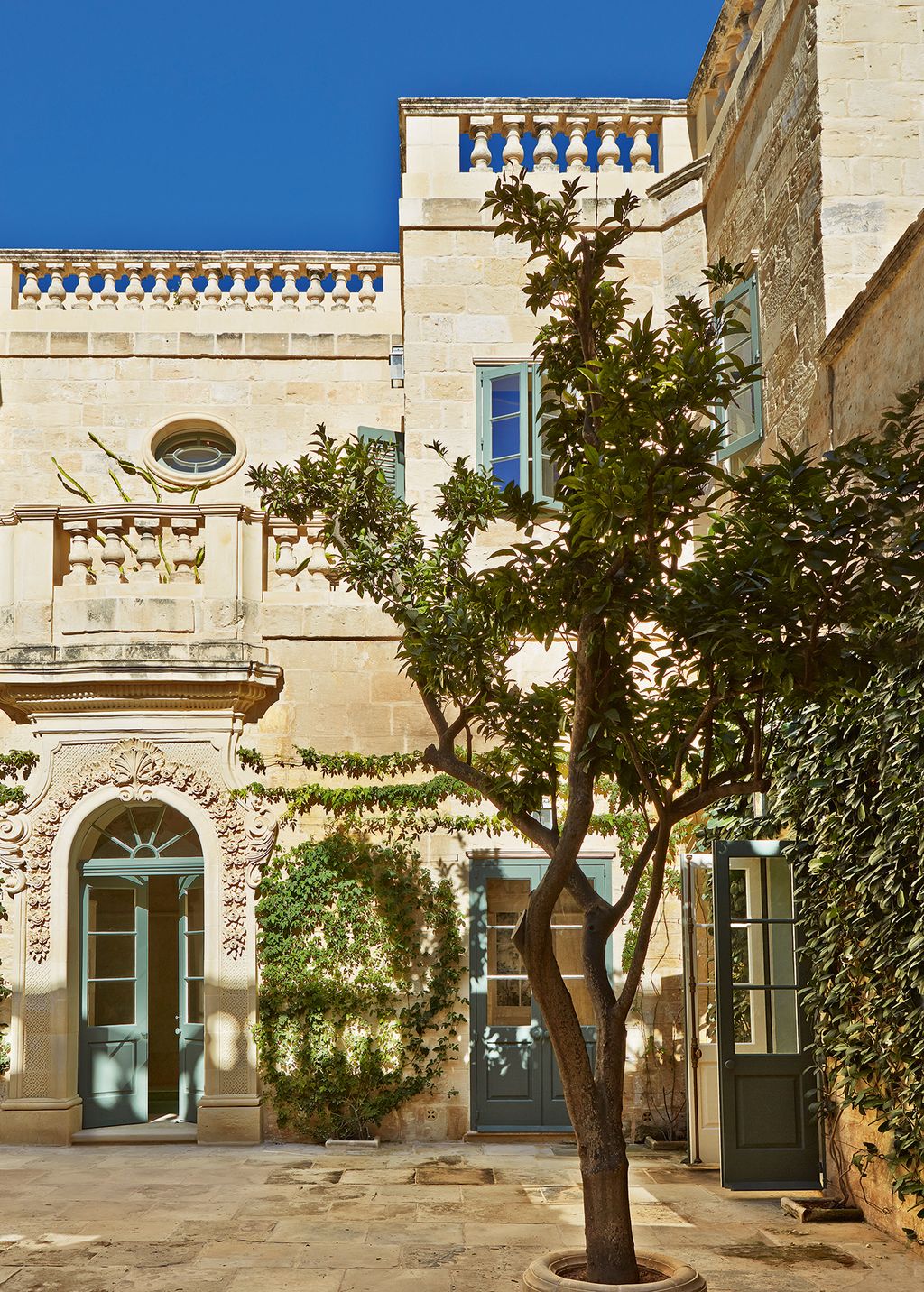
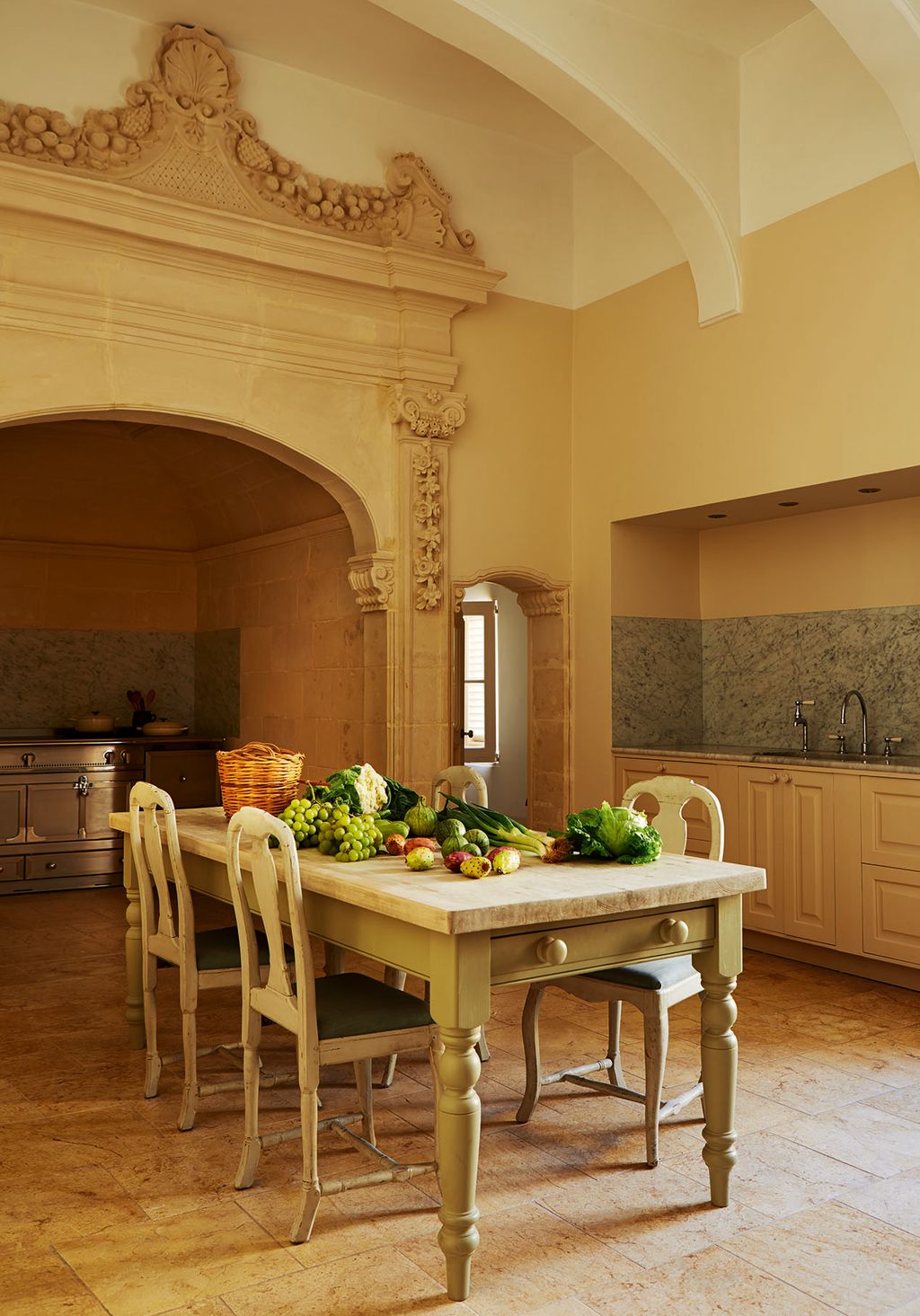
Ahead, sunlight drops onto a wide paved courtyard, scented with stephanotis and old climbing roses, and shaded by orange trees. French windows stand open, allowing piano music to drift into this private, tranquil space, around which the rest of the rooms in the house are arranged. At the front is the kitchen, which was once a chapel and is a room of exceptional elegance, with a range cooker installed in an arched niche with a decorative stone surround. Across the hall is a comfortable drawing room, while leading from the kitchen along one side of the courtyard is an enfilade comprising the dining room, study and television room.
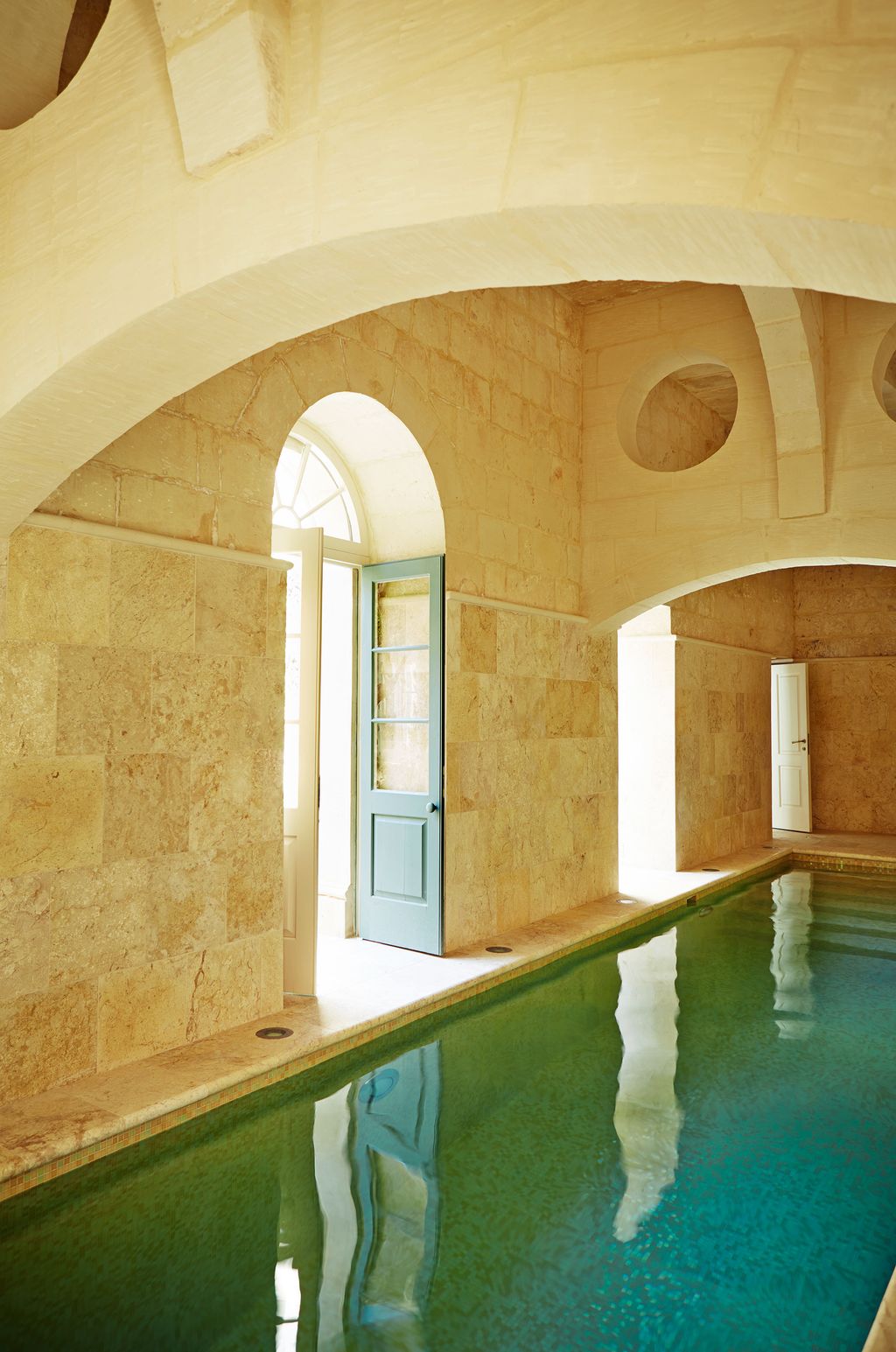
In the opposite wing is a cloakroom and a corridor leading to the fourth side of the courtyard where, parallel to the road, is a glorious indoor pool with high-vaulted stone ceilings, which is bordered by three sets of french windows. Upstairs, the splendid main bedroom and vast interconnecting bathroom are at the front of the house. Spare bedrooms and bathrooms are at the back and have their own balcony, with a library, dressing room, laundry and, on a mezzanine floor that used to be a dovecote, further bedrooms and a bathroom. There is also a separate apartment, accessed by stairs behind the kitchen, and a huge roof terrace.
It’s a big house, but because of the layout, it feels intimate rather than intimidating. Paul has done more than repair and update: he has re-established symmetry, added architectural details where they were missing and preserved the original proportions. He has also installed underfloor heating, air-conditioning, Wi-Fi and solar-powered hot water, ensuring that every wire and pipe is invisible. He even insisted the guttering was chased into the stone.
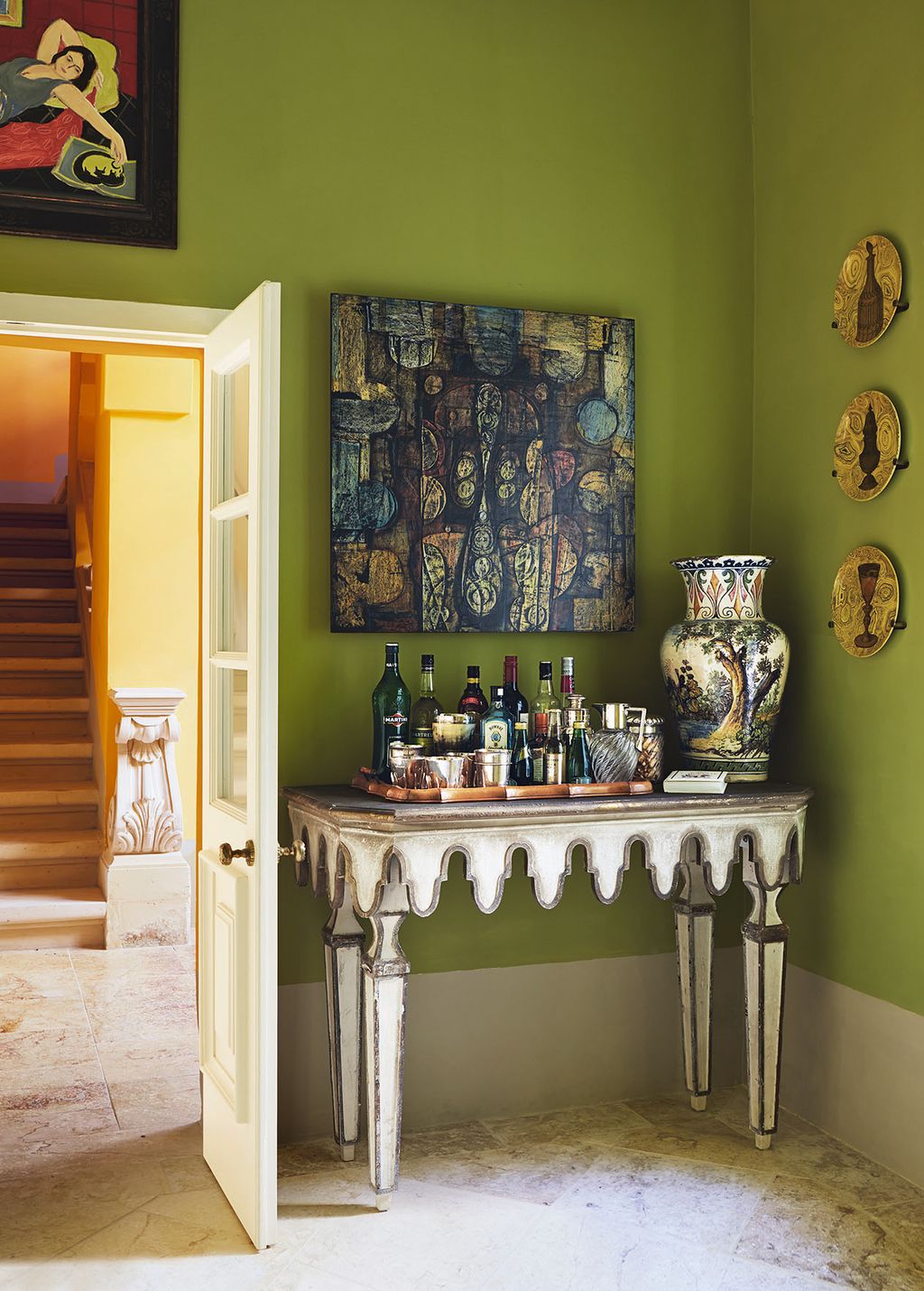
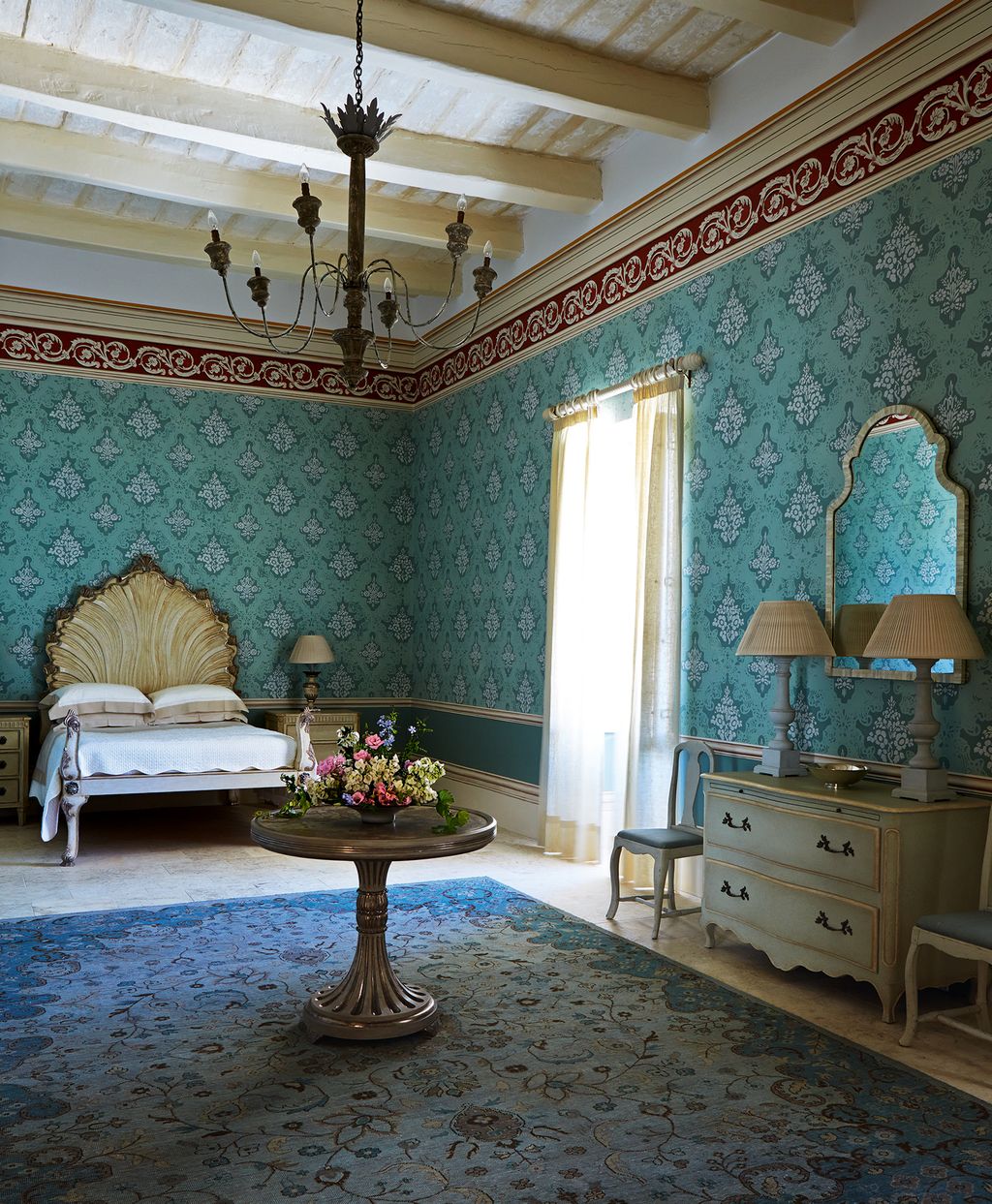
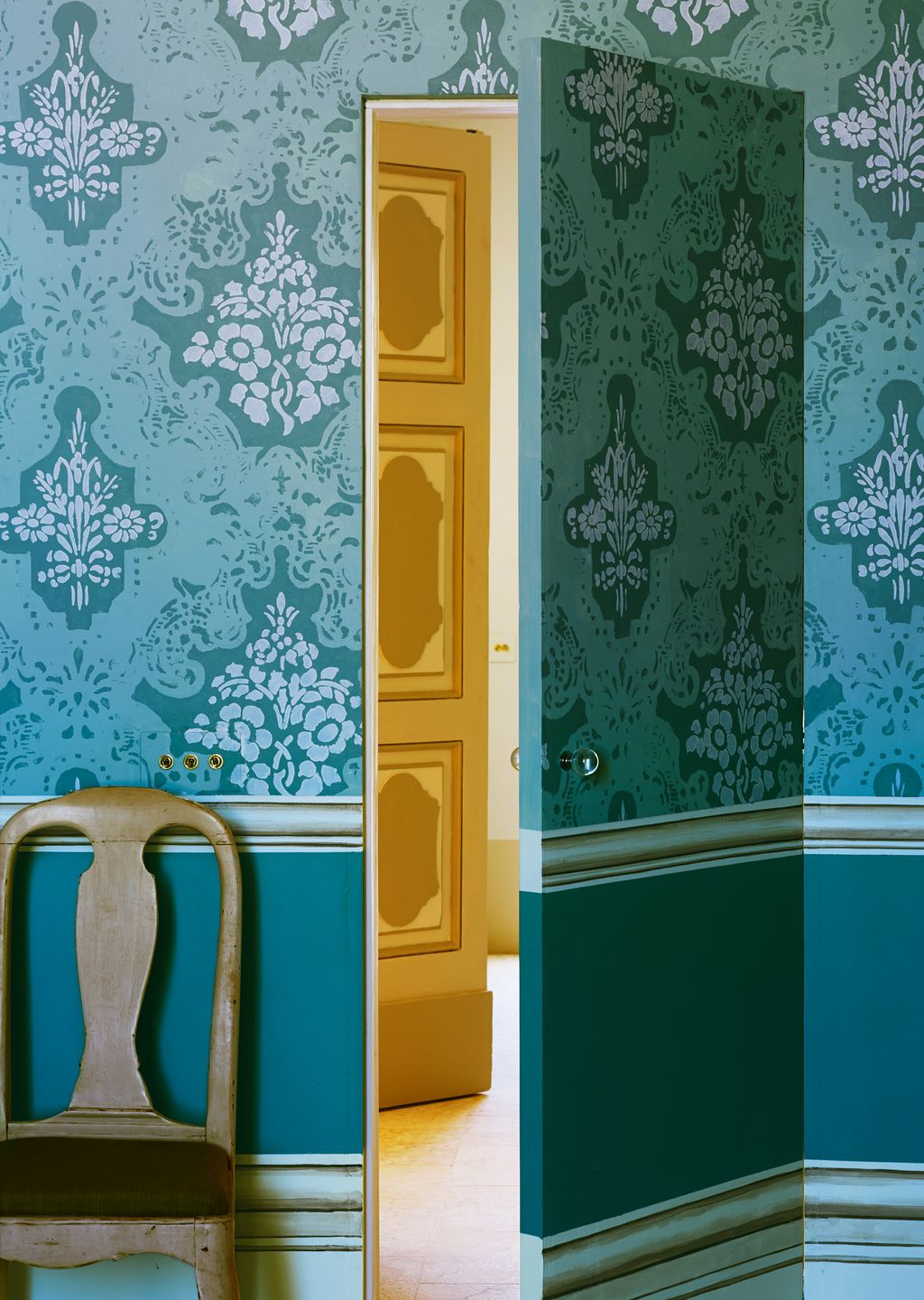
Aside from the main bedroom, which has walls stencilled with a punchy, large-scale pattern copied from the refectory in a Carmelite convent in nearby Mdina, the handsome interior architecture is emphasised by the use of plain colours. Sometimes these are vivid, as in the acid-green walls of the ‘drinks’ room, or on the stairs and landing, where the walls are a warm ochre.
MAY WE SUGGEST: A palazzo on Venice's Grand Canal decorated by Jacques Grange
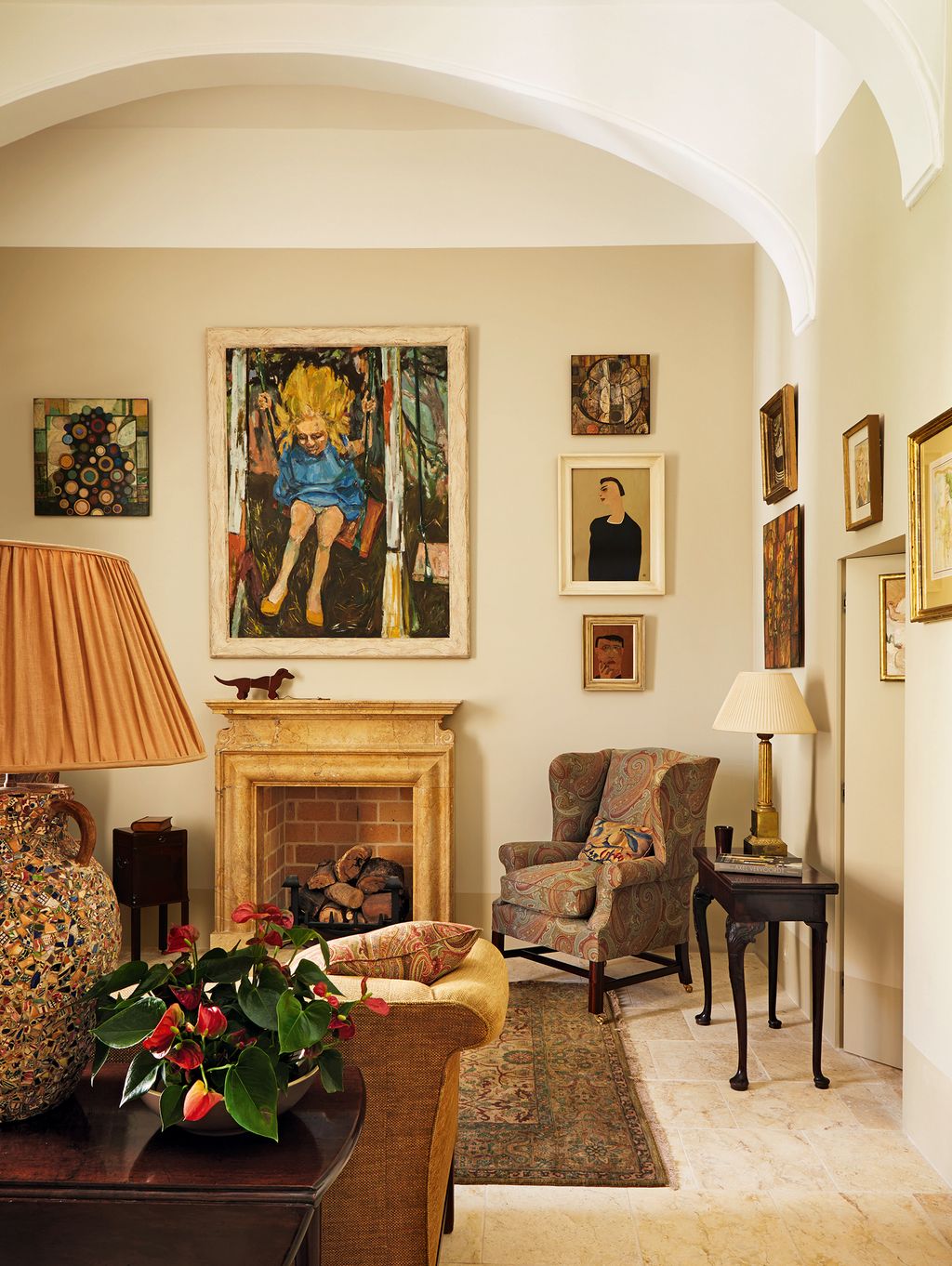
A few fine antique pieces and paintings by his favourite contemporary artists, including Isobel Brigham, John Craxton, Leslie Duxbury and Anne Rothenstein, enrich the reception rooms, while the carved shell-shape bed, in gesso and silver gilt, and the centre table in the main bedroom were commissioned from Brighton-based furniture maker Lincoln Cato.
‘I couldn’t possibly have done it on my own,’ says Paul, who had endless help and advice from friends. The interior designer Charlotte Crosland was ‘brilliant with space management’, while the architect Ban Shubber helped with ‘all the technical stuff’. Jessica Ridley, ‘a genius colourist’, worked on the stencilling in the main bedroom and Charlotte di Carcaci shared her ‘prodigious knowledge of art history’. The Maltese Azzopardi brothers were the builders that made it happen. It’s an impressive team. But it is Paul himself who should take the most credit for transforming this Cinderella into the belle of the Maltese ball.
 Jan Baldwin1/13
French windows provide access to the internal courtyard from most of the rooms on the ground floor, while orange trees offer a little shade from the sun.
 Jan Baldwin2/13
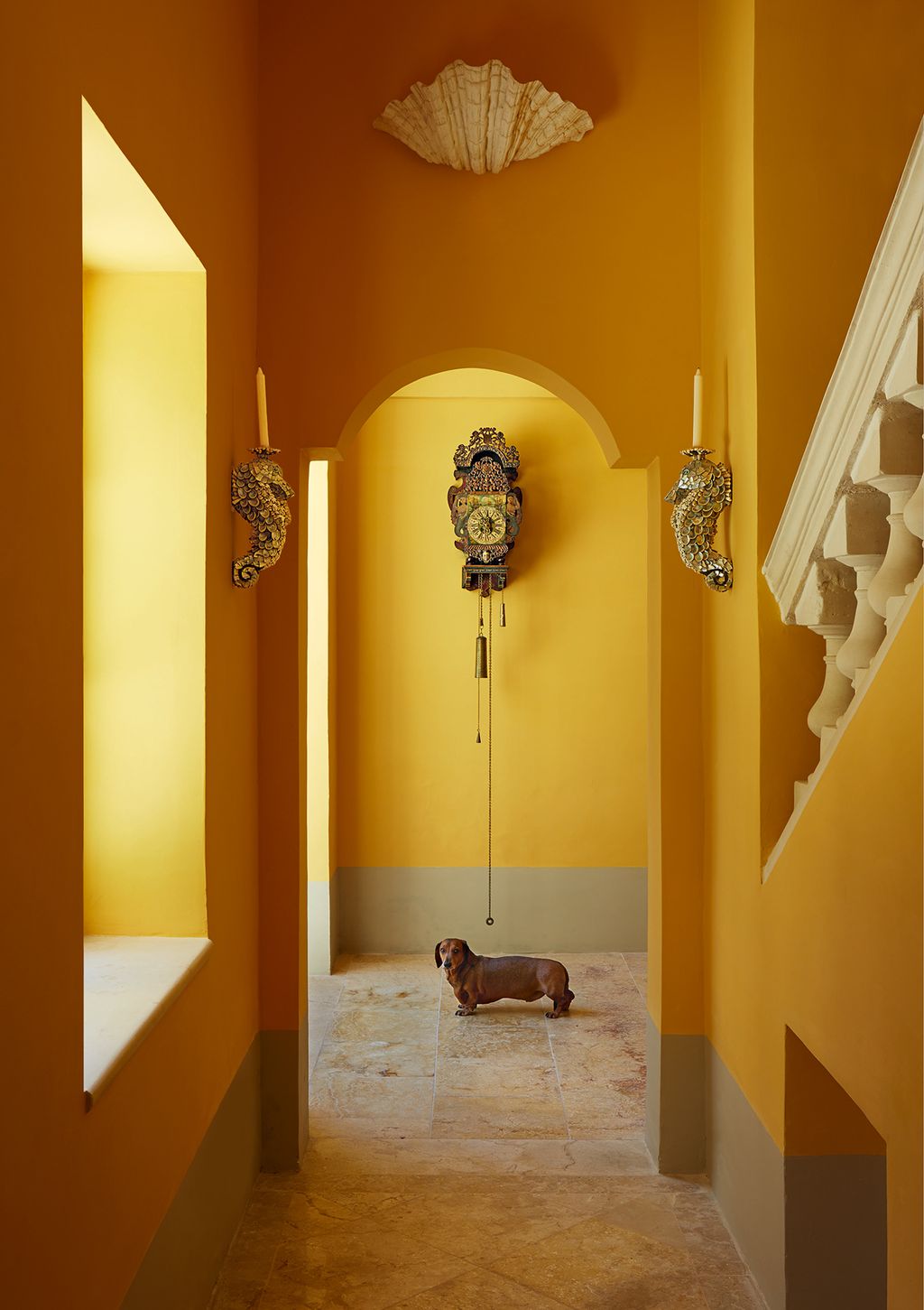
Seahorse candle holders by Belinda Eade and an eighteenth-century Dutch stoelklok (clock) hang in the rear hall.
 Jan Baldwin3/13
In the drawing room, modern artwork by Leslie Duxbury, Anne Rothenstein and Isobel Brigham contrasts with the bolection stone chimneypiece.
 Jan Baldwin4/13
The dining room has an ‘Oak Leaf Chandelier’ from Charles Saunders and chairs from The Swedish Chair upholstered in ‘Petit Parc’ by Pierre Frey.


 Jan Baldwin5/13
The 13-metre pool runs along an entire side of the house, in a room that used to be three granaries.
 Jan Baldwin6/13
An ornate table from Oka and artwork by Don Woodford and Isobel Brigham decorate the compact ‘drinks’ room.
 Jan Baldwin7/13
A pine table, made locally, reflects the pale colour of the limestone kitchen floor.
 Jan Baldwin8/13
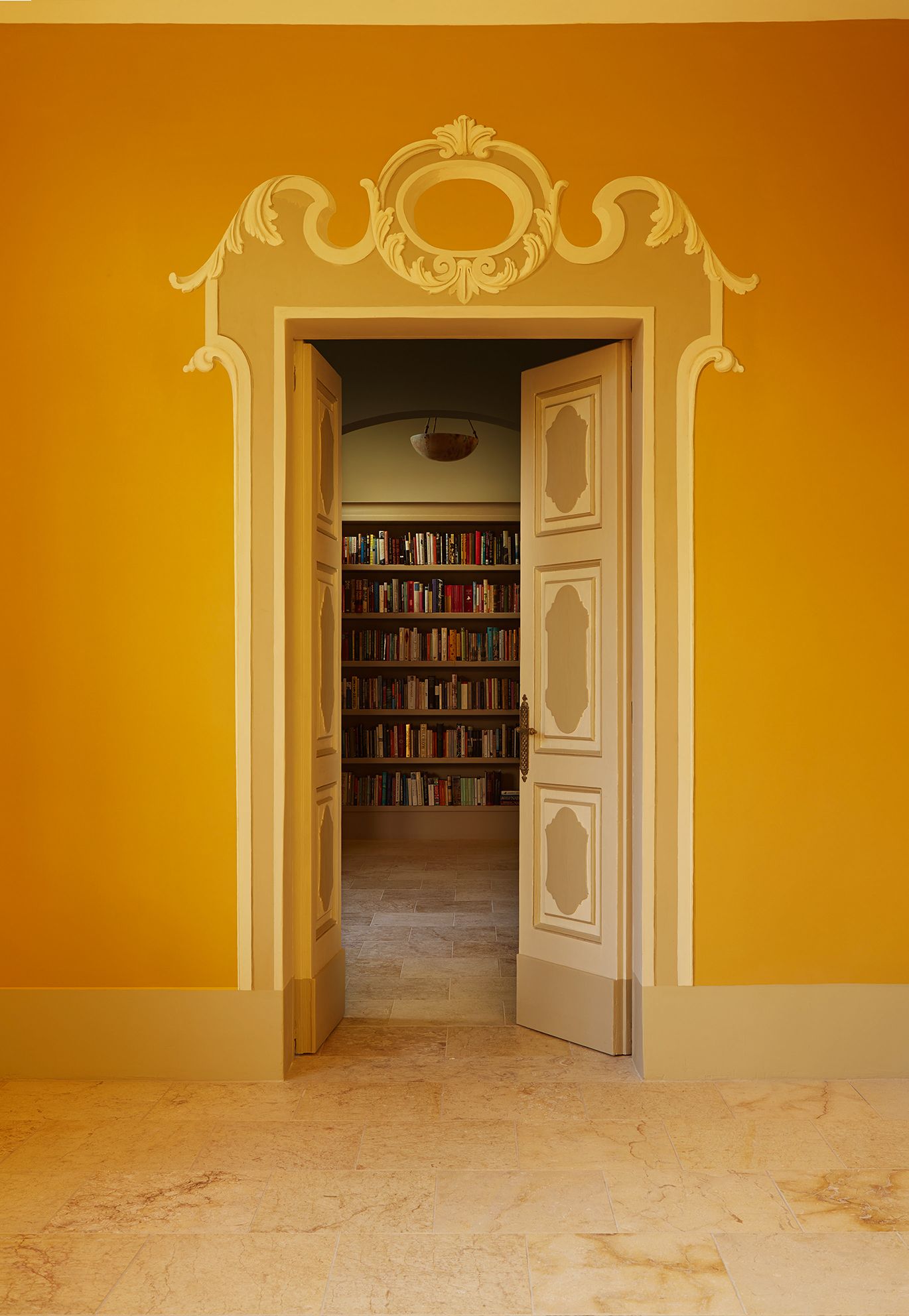
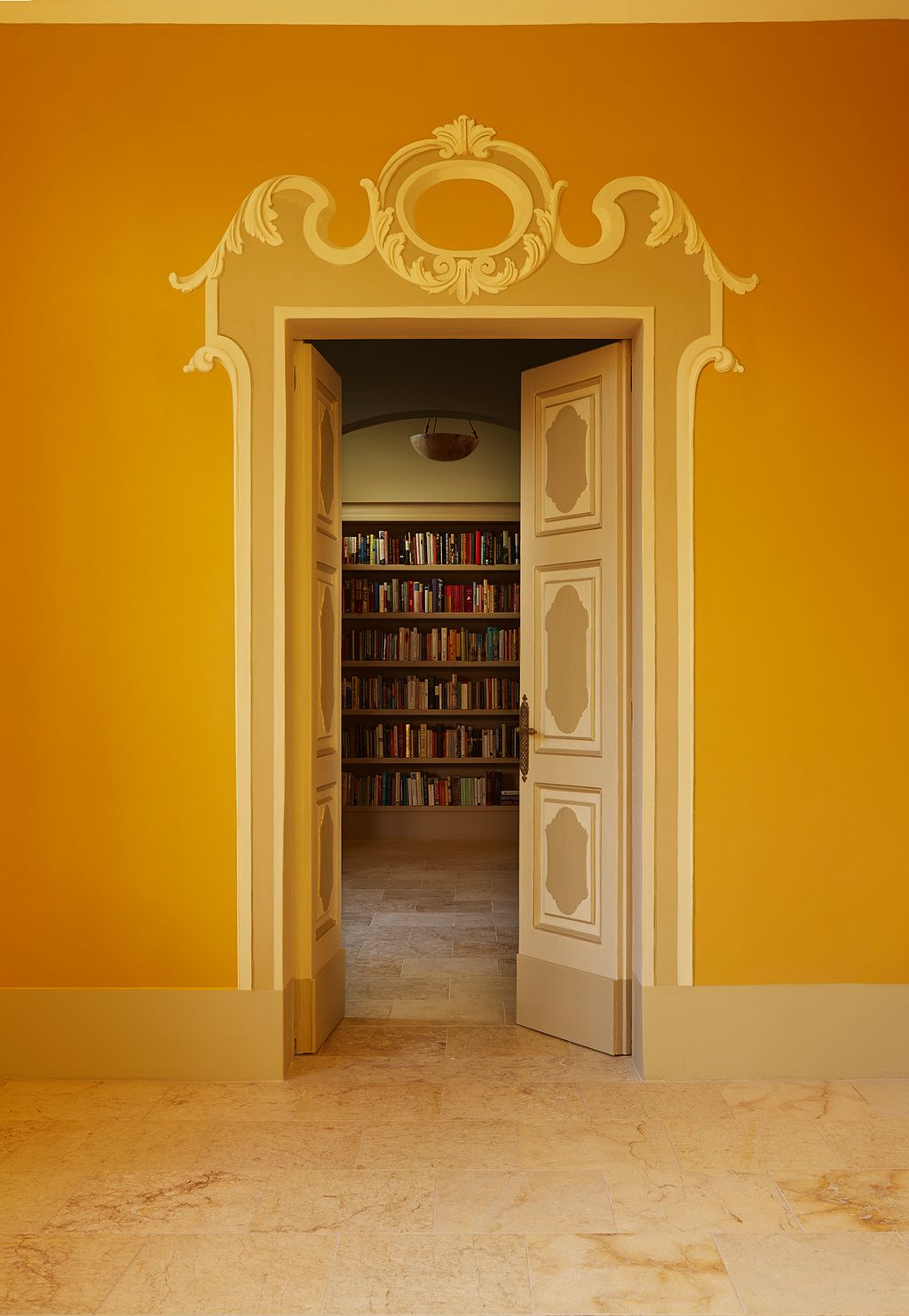
The library, which is at the top of the stairs on the first floor, is accessed through this decorative doorway.


 Jan Baldwin9/13
The bedroom has a chandelier from Julian Chichester and a shell-shape headboard by Lincoln Cato.
 Jan Baldwin10/13
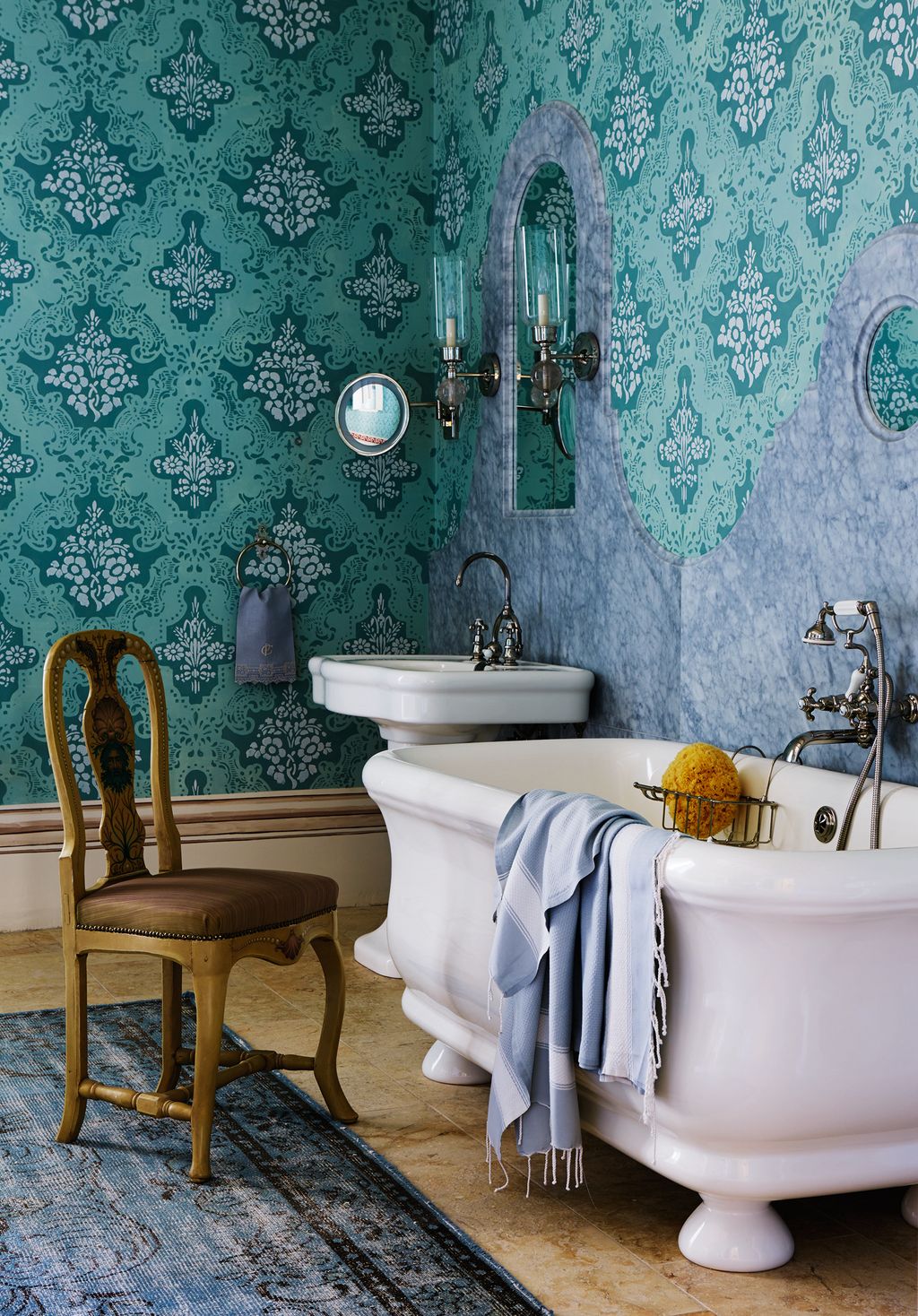
In the bathroom Carrara marble surrounds one of two mirrors.
 Jan Baldwin11/13
The walls of the main bedroom and adjoining bathroom, situated at the front of the house, have been stencilled with a pattern copied from the refectory in a convent in Mdina.
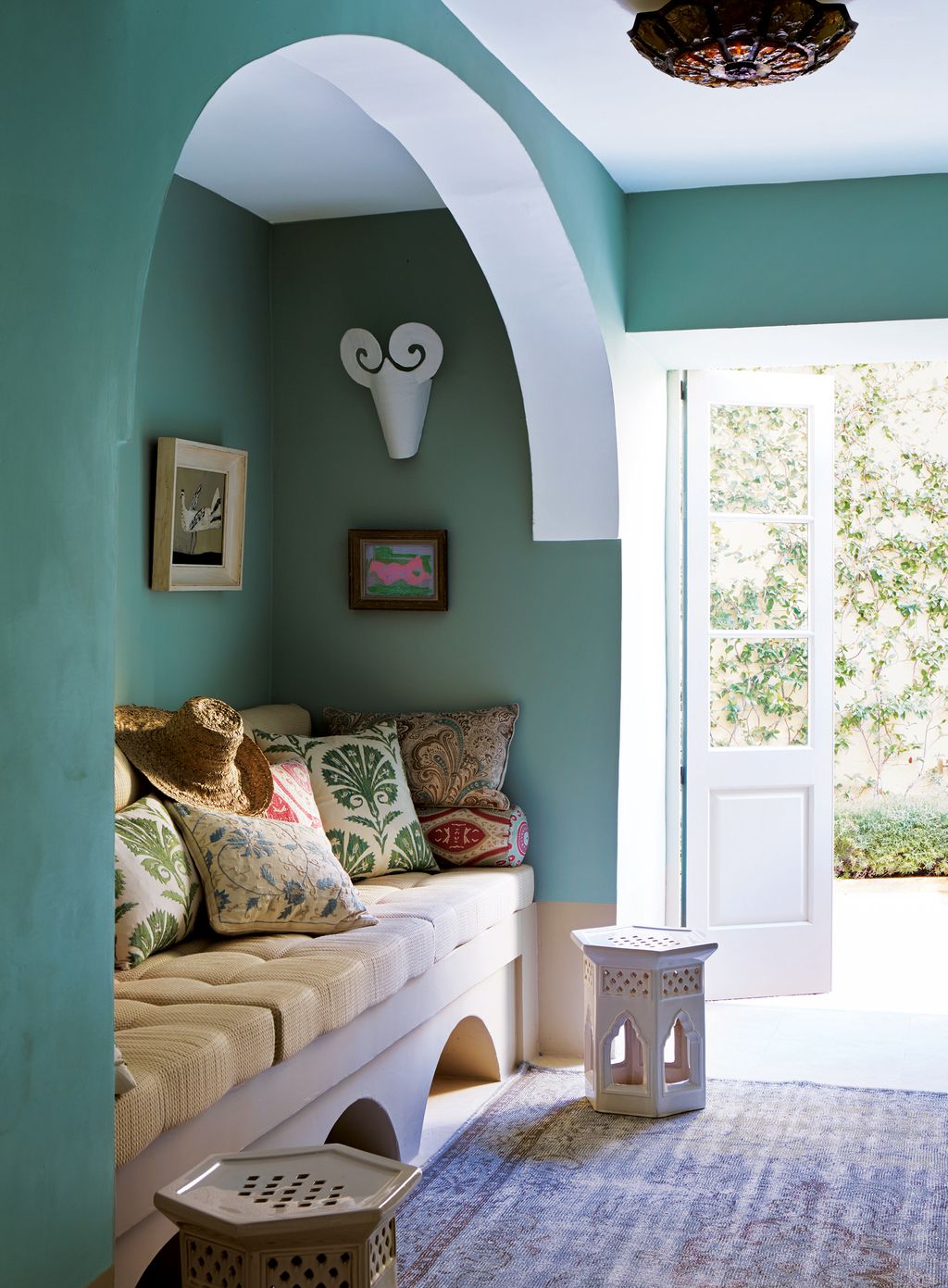 Jan Baldwin12/13
In the adjoining television room, a banquette bench and cushions covered in fabric by Robert Kime and Manuel Canovas create a cosy seating nook.


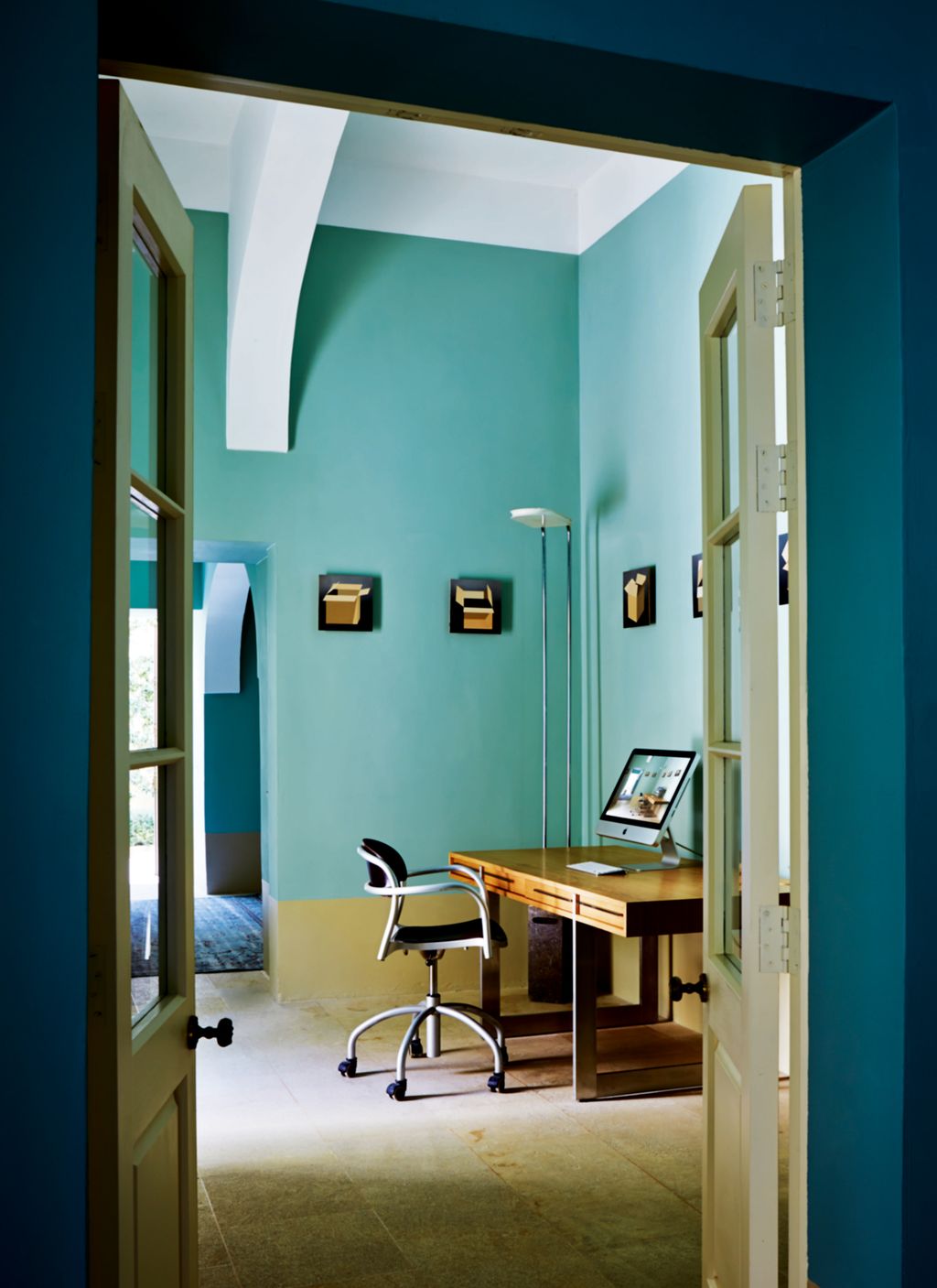 Jan Baldwin13/13
An Aksel Kjersgaard desk furnishes the study.


