
A father and son team turns a dilapidated byre into a characterful home
Rupert Charles-Jones first appeared in my orbit as the creator of a secret kitchen door cunningly disguised as a spice rack in a friend’s kitchen. It was a beautifully carpentered nod to Cluedo made from salvaged wood. I needed more. I was renovating my own cottage in the Cotswolds and discovered, serendipitously, that he lived just 20 minutes away. So, one day, I made my way along the winding Oxfordshire lanes to meet Rupert and discuss what magic he might create at my house. And, while I was there, he showed me his latest project.
As a boy, Rupert was going to be an artist. While still at school, he studied under Raoul Millais, grandson of Sir John Everett Millais. But a Saturday job changed all that. When he was just 14, his mother’s friend, the Maltese baron Nicholas de Piro, employed him to paint and decorate 18th-century Painswick House in Gloucestershire. It was there Rupert met the decorative artist Arthur Rose. ‘He was one of the best fakers in the world,’ explains Rupert. ‘Furniture, paintings, faux marble, faux bois… he did it all. And I just tagged along.’
Rupert swiftly picked up the skills and was put to work on Bubbles Rothermere’s flat on Eaton Square, SW1, and her Villa le Roc (previously owned by Greta Garbo) at Cap d’Ail near Monaco. ‘It involved a lot of marbling, dragging and ragging – it was the Seventies,’ Rupert says with a chuckle. By his twenties, Rupert had progressed to interior designing entire projects, working with the Timpson family, owners of the keycutting empire. ‘They would give me the keys to a house they had bought and the date they wanted it to be finished by, and just let me get on with it,’ explains Rupert. ‘They trusted me – I never had a budget.’
MAY WE SUGGEST: The DIY restoration of an old tailors workshop, using vintage and reclaimed pieces
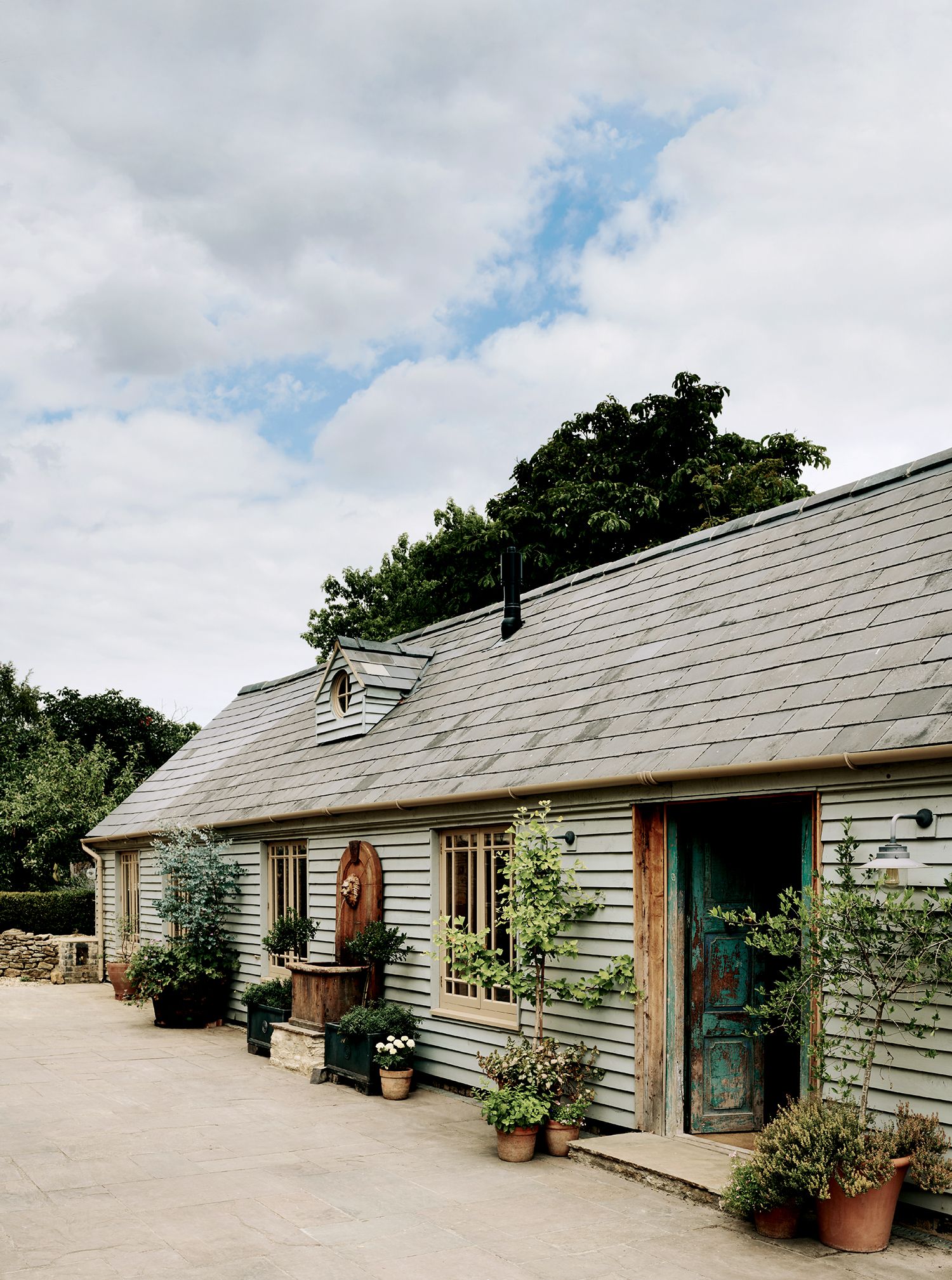
By this stage, Rupert and his wife Anna had two children and were outgrowing their own Cotswold cottage, when they learned that a cluster of derelict barns in the village was for sale. ‘They were a complete mess – cowshit, rats and barrels of chemicals. But I could see the potential,’ he says. They spent every last penny on buying the buildings. ‘Luckily, I had a few big jobs on at the time, including Dodington Park and Pewsey House.’ The main run of barns was converted into their house, while the buildings opposite, originally calf pens and a tool shop, became pony stables and a tack room.
Time passed; the children grew up and grew out of ponies. The couple’s son Myles, who now works for Rupert, was married and needed a new home. The old calf pens were due another incarnation, so father and son toiled together to make a one bedroom, bathroom, open-plan kitchen and sitting-room affair. They divvied up the jobs between them. ‘Myles is better at pointing,’ admits Rupert. ‘It’s a horrible job that takes the patience of a saint – picking out all the cement with a tiny axe.’
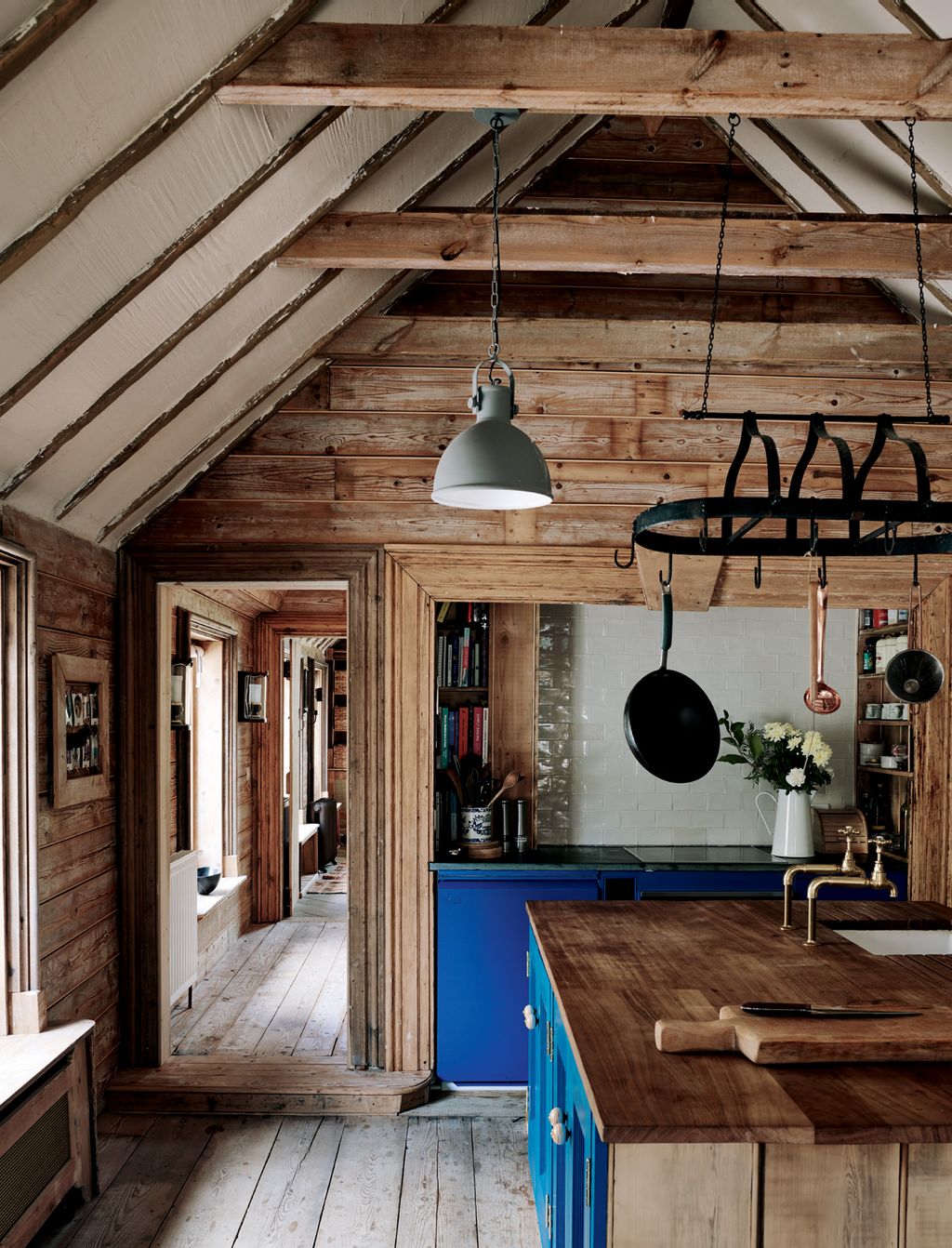
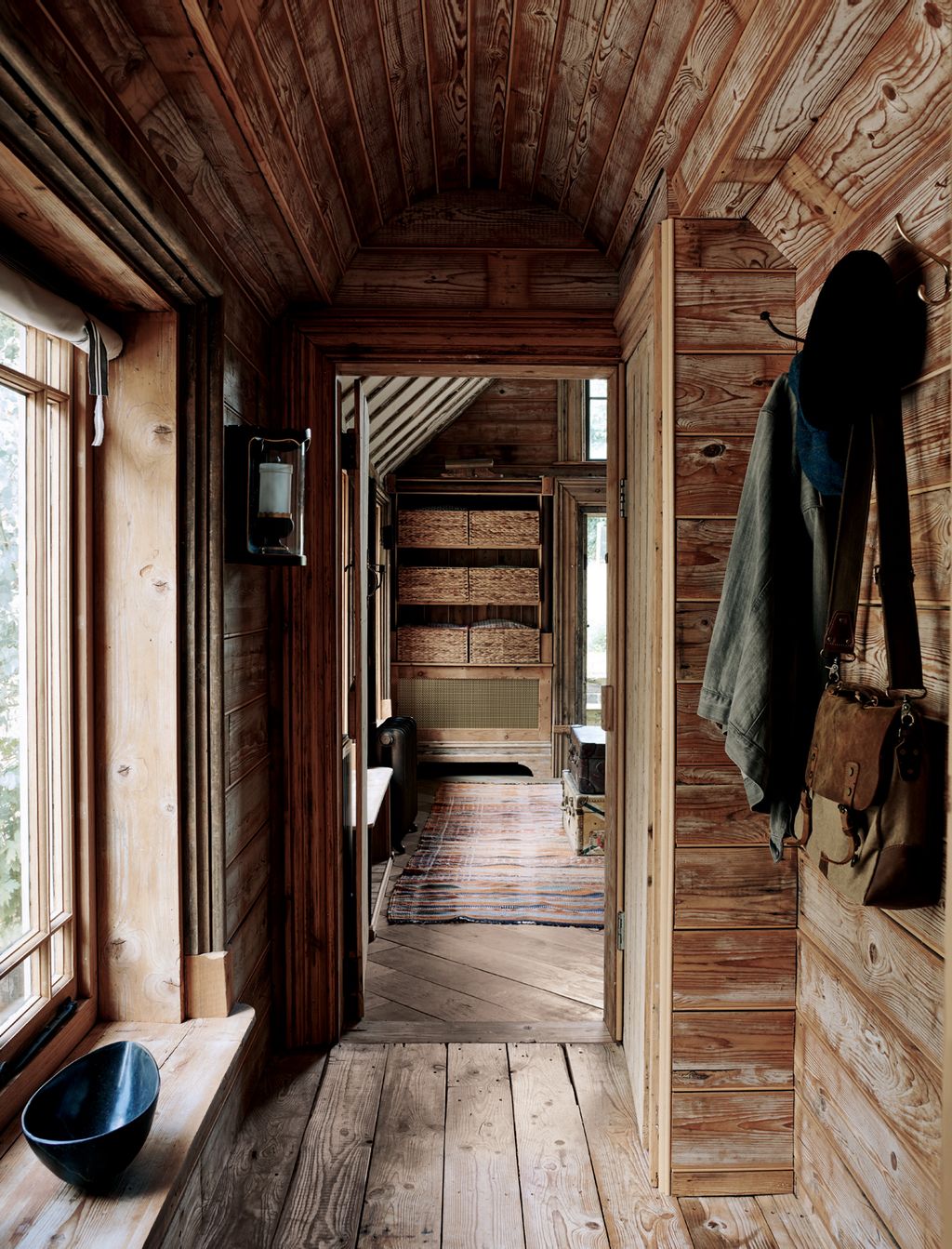
The woodwork was Rupert’s domain: the tongue-and-groove boards made from the original roof planks; the kitchen, where yacht-like design ensures every spare inch is used for storage, and the vaulted ceiling in the corridor between the living space and the bedroom. ‘I’d never done this before but it was surprisingly easy. I made plyboard templates and pinned the chamfered boards,’ he says. ‘Making this cabin was a voyage of discovery.’
MAY WE SUGGEST: Caroline Holdaway's dream Cotswold cottage
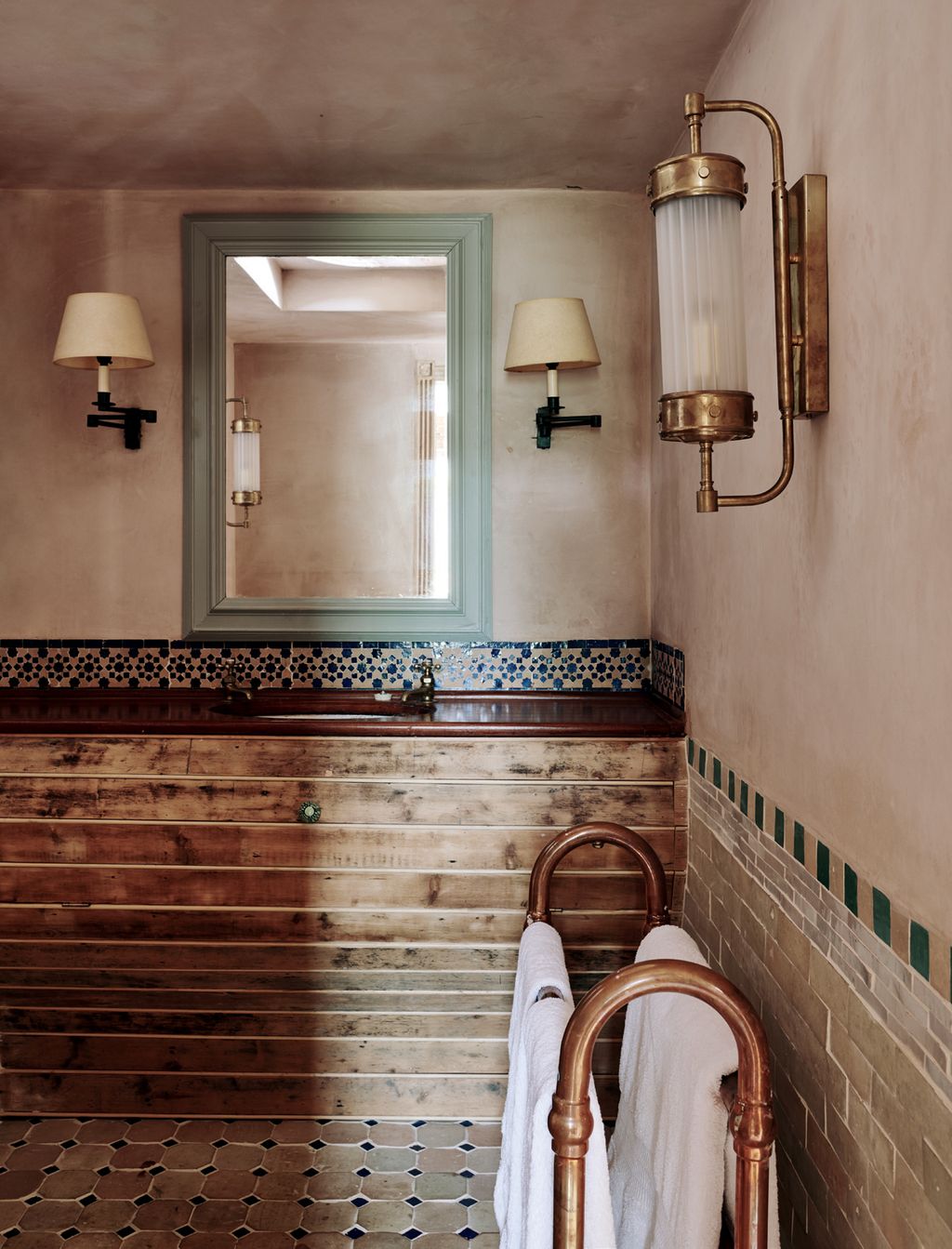
The curved motif is repeated in the bathroom – in both the wooden sink surround and a wood-lined funnel that snatches precious daylight from a rooftop window. ‘Carpentry is my first love,’ says Rupert. ‘Each wood has its own properties – some split, some are easy to carve, some take stains and others develop a beautiful patina. Wood is always surprising.’
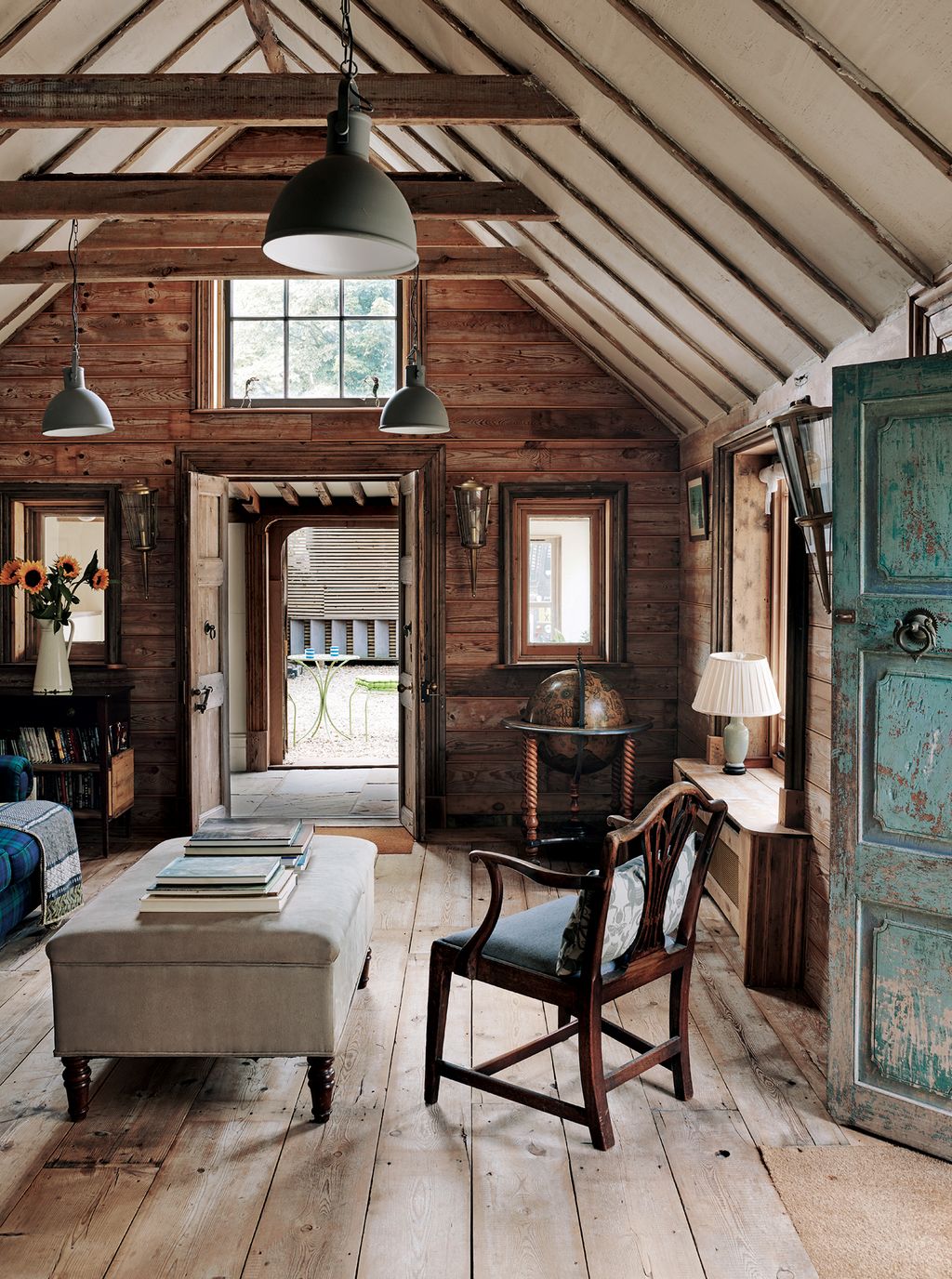
A key reference for him was the 19th-century log cabin that was home to Abraham Lincoln’s father in Illinois. In a quest to present something that looked older than it was, Rupert built the front wall dead straight then ‘pushed it out four inches at the top, so it leans a bit’. Other fakery includes pinning old roofing battens to the plaster ceiling as trompe l’oeil rafters and creating a window seat by pushing the glass right to the outside edge. ‘It gives the illusion of a much thicker wall,’ he says.
Almost nothing in the cabin is new. ‘Although we demolished the original structure, every piece of wood from the old barns was cleaned up, preserved and reused,’ says Rupert. ‘I often get furniture from the antique market at Kempton Park in Surrey and visit the reclamation yards every few months. So all of the architraves, doors and light fittings are things I’ve collected over the years. I was upcycling before it was fashionable,’ he adds. ‘Old things are precious. I treasure them’.
Rupert Charles-Jones Interiors on Instagram: @rcjinteriors
 Michael Sinclair1/7
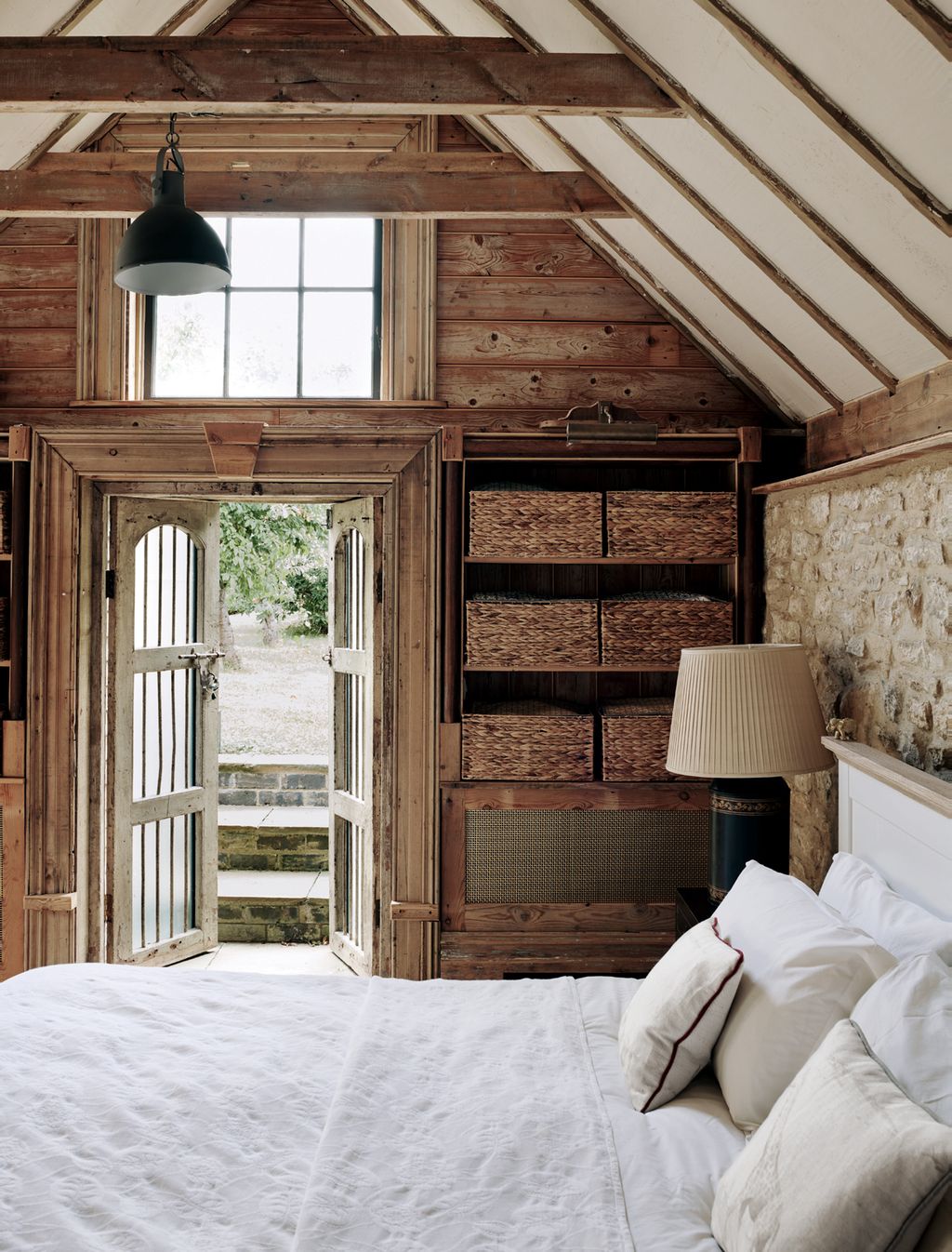
Old roofing battens were fixed to the plaster ceiling to create the impression of rafters.
 Michael Sinclair2/7
 Michael Sinclair3/7
A keen carpenter, Rupert took charge of the woodwork – he used tulipwood to make the kitchen units and island, which are painted in ultramarine blue. Reclaimed laboratory surfaces were used for the worktop and salvaged pine for the floor.
 Michael Sinclair4/7
The open-plan living space leads through a corridor, with a barrel-vaulted ceiling in reclaimed pine, to the bedroom and the bathroom.


 Michael Sinclair5/7
Rupert sourced light fittings from reclamation yards and auctions, and furniture from the Kempton Park antique market. All fabrics are offcuts from his sister Lucy Lane Fox’s curtain workshop.
 Michael Sinclair6/7
 Michael Sinclair7/7
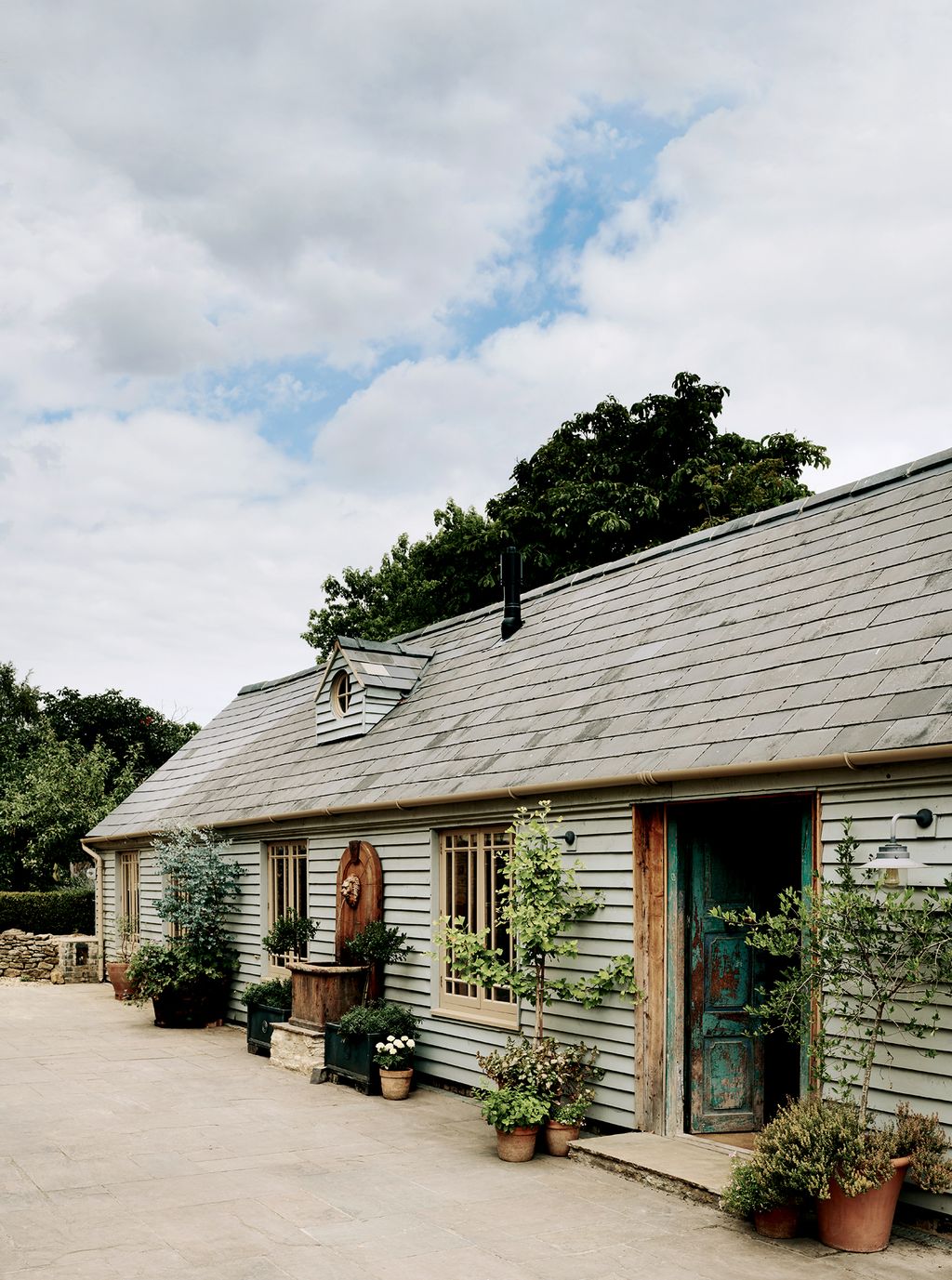
The cabin is clad in standard feather board coated with eco-friendly, breathable paint, which Rupert and his son Myles mixed themselves using powdered pigments. Carpenter Alex Dury made the sapele wood windows and the doors are from Wells Reclamation in Somerset.


