The hidden European islands to head for this summer

A whispering sea breeze, wiggling sand from between the toes after a beach day, a sense of truly being away from it all; ringed by lapping waves, with distinct identities and wild landscapes, European islands offer unrivalled escapism when it comes to a summer holiday. This year, eschew the well-trodden paths — and boat routes— swerve the crowds and make for a lesser-known European island. Whether it’s catching a glimpse of whales and dolphins gambolling through the waves, coastal cuisine, basking in dappled forest sunlight, or hiking through olive groves which appeals, these European islands are worth the journey says island devotee Ianthe Butt.
- CAHKT1/7
Porquerolles, Iles d’Or, Provence, France
For those who fancy a French Riviera escape with an arty twist, make for the Iles d’Or, or golden islands, a 20 minute boat ride from Hyères. Beeline for crescent-shaped, car-free Porquerolles, the largest of the three islands (7 km by 3 km), the so-called ‘pearl of the golden isles.’ Here, some 320 days of sunshine a year are complemented by cycling and walking trails winding through Aleppo pine forests, silvery sands cascading towards the Mediterranean Sea, and heavyweight contemporary art — by the likes of Roy Lichtenstein and Jean-Michel Basquiat — on show at the Fondation Carmignac (open April-Oct). There are activities to suit all paces; leisurely vineyard tours of renowned estates such as Domaine de l’île and Domaine de la Courtade through to thrilling scuba diving, SUP and sailboat adventures. Family-run hotel Le Mas du Langoustier, a cluster of terracotta-hued buildings with jaunty sky blue shutters, ringed by eucalyptus and lemon tree-filled parkland in western Porquerolles has its own petite private beach and top-notch Provencal food at its La Pinède restaurant. To reach the isle, fly to Paris and on to Toulon-Hyères, or combine the Eurostar to Paris with a four-hour train to Toulon, and short ferry.
Room-only from £290/night;.langoustier.com/en/
- Studio RedAutumn2/7
Fanø, Wadden Sea Islands, Denmark
If watching grey seals loll on the beach, oystercatchers skitter along intertidal mudflats, and hunting for amber chunks on the shore appeal as much as kite buggying along stretching white sands, Danish island Fanø is just the ticket. A 12-minute ferry from Esbjerg on the mainland, Fanø sits in the heart of the Wadden Sea National Park on the western coast of Jutland. Carpeted with attractive dunes, marshland, heathland rich in vibrant purple heather and beaches, the 15km by 5km island is reached by a short flight to Billund airport, bus to Esjberg and then onward ferry. The atmosphere here is welcoming and relaxed, with Danes flocking here during the summer months, and migratory birds arriving in spring and winter (it’s a haven for birdwatchers year-round, thanks to with resident dunlins, nightjar and sea eagles). Fishing villages Nordby and Sønderho’s thatched cottages and brick farm buildings ramp up the charm factor, and there are walking and biking trails island-wide. Stay at Fanø Krogaard, a 25-room boutique inn on Fanø’s, eastern side, which has front-row views out to the Wadden Sea, and has been decorated in enviable style, reflecting owner Mette’s former life as a fashion and interiors buyer: think vintage Villeroy & Boch plates from local flea markets adorning the walls, orb-shaped rattan lighting in the glass-walled orangery, and armchairs upholstered in Colefax and Fowler florals.
Rooms from £170 B\&B; fanoekrogaard.dk
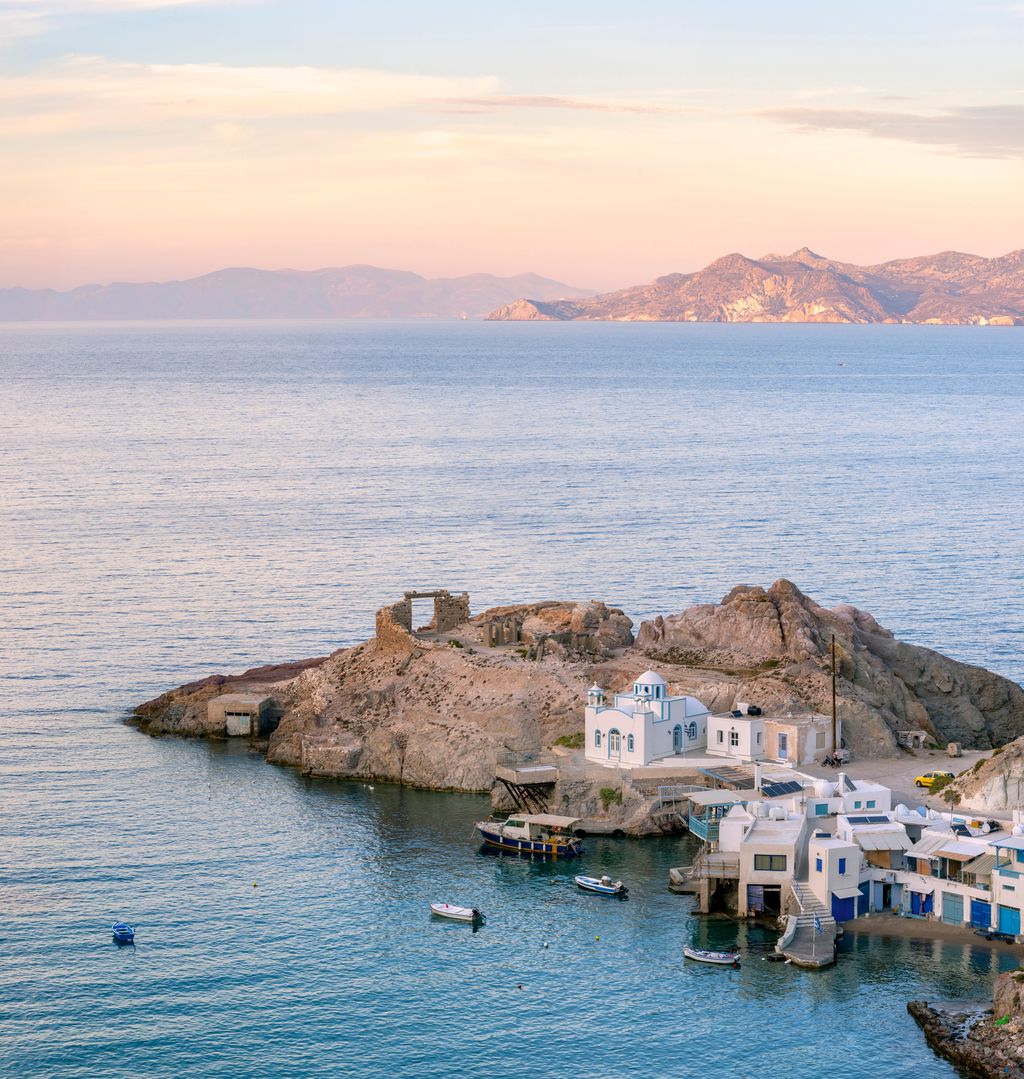 © Salem Kamel/4Corners Images3/7
Kimolos, Cyclades, Greece
Charming and unspoilt, 14-square-mile volcanic island Kimolos mightn't be as famous as its fellow Cycladians Santorini and Mykonos, but packs just as much Greek charm, and is blissfully crowd-free. Reached either by a flight-ferry combination from Athens then Piraeus, or by boat from Santorini, gleaming white and turquoise architecture, golden sand-and-silvery pebble-mix beaches and azure waters are all present and correct, and winding cobblestone streets and chalky hills lead to gardens bursting with myrtle and fig trees. As well as Kalamitsi, Aliki, and Prassa beaches, spot submerged ruins at Ellinika whilst snorkelling, or soak up culture at lively outdoor cinema, Cine Kalisperitis. Best of all, the Greek culture of philoxenia — the practice of welcoming friends or strangers with warm hospitality — runs deep on the island. The most unique place to stay is architecturally striking Windmill Kimolos Hotel, a restored windmill dating from 1852, where boutique bedrooms have stable-style doors which demand to be flung open to invite the breeze in, and breakfasts of ladenia — a traditional flatbread — come with panoramic sea views.
From £95, B\&B; ariahotels.gr
- Enrico Pescantini4/7
Sao Miguel, The Azores
Some 600 miles northwest of Madeira, scattered in the Atlantic Ocean, the Azores — a chain of nine islands and autonomous region of Portugal just a four hour flight from the UK — are as wild-at-heart as it gets. Sperm whales and dolphins cruise the waters surrounding its largest island São Miguel and millions-of-years old volcanoes dot the landscape. As well as the twin sapphire and emerald-hued crater lakes Sete Cidades to discover, do geothermal spa days in Terra Nostra Botanical Park’s steamy hot spring pools, and scuba dive into the cobalt-blue depths, with PADI dive school Season Challenge, to SS Dori wreck, a US cargo vessel turned artificial reef. Solar Branco Eco Estate, a 19th-century farmhouse in Livramento, transformed into an adults-only, sustainably-focussed boutique hotel, ringed by citrus orchards is the most tasteful place to stay. Its bedrooms and cottages channel quiet luxury, with riga pinewood and polished silver micro-cement details, raw-edged sequoia slice tables and studio Nosse ceramics. Plus it’s home to a 2000-bottles strong Gin Library, and hidden speakeasy and sushi spot, Senhor Raposa; don’t miss sipping a Senhor Raposa’s Secret Gin Tea and tonic, the house-made spirit is infused with delicate hysson green tea from the legendary and local Gorreana Tea Factory.
From £130, inc B&B and a daily gin cocktail; solarbranco.com,


- Peter Adams5/7
The Koster Islands, Bohuslän archipelago, West Sweden
Swedes have been summering in The Koster Islands for generations, with many having second homes on the islands, which sit in an 8000-strong archipelago in western Sweden. Now international travellers are cottoning on to the Koster Islands’ go-slow appeal. A couple of hours by train or bus from Gothenburg to Strömstad, then a 45 minute boat to either North or South Koster, don’t come expecting frills and polish, the allure here lies in its rugged granite cliffs, coastal fishing villages and laid-back pace. Both islands are car-free and their flower-filled meadows, farmland, and beaches are best explored on foot or by bike. On busier South Island, at marine park Kosterhavet, spot lobsters and mackerel on snorkel trips which take in the country’s only coral reef, admire the terracotta, fern green and buttermilk yellow facades of fishermans’ houses and feast on just-caught Koster langoustines and rhubarb pie. Hopping between the two islands is easy, either by boat or, in summer time, by cable ferry. Dishing up boutique flair —bedrooms with maximal wallpapers and jewel-toned furnishings — stay at whitewashed former farmhouse Kläpphagen on South Koster, which does excellent cooked-over-flames fare, has its own farm and a soon-to-open brewery.
From £250 a night, klapphagen.se,
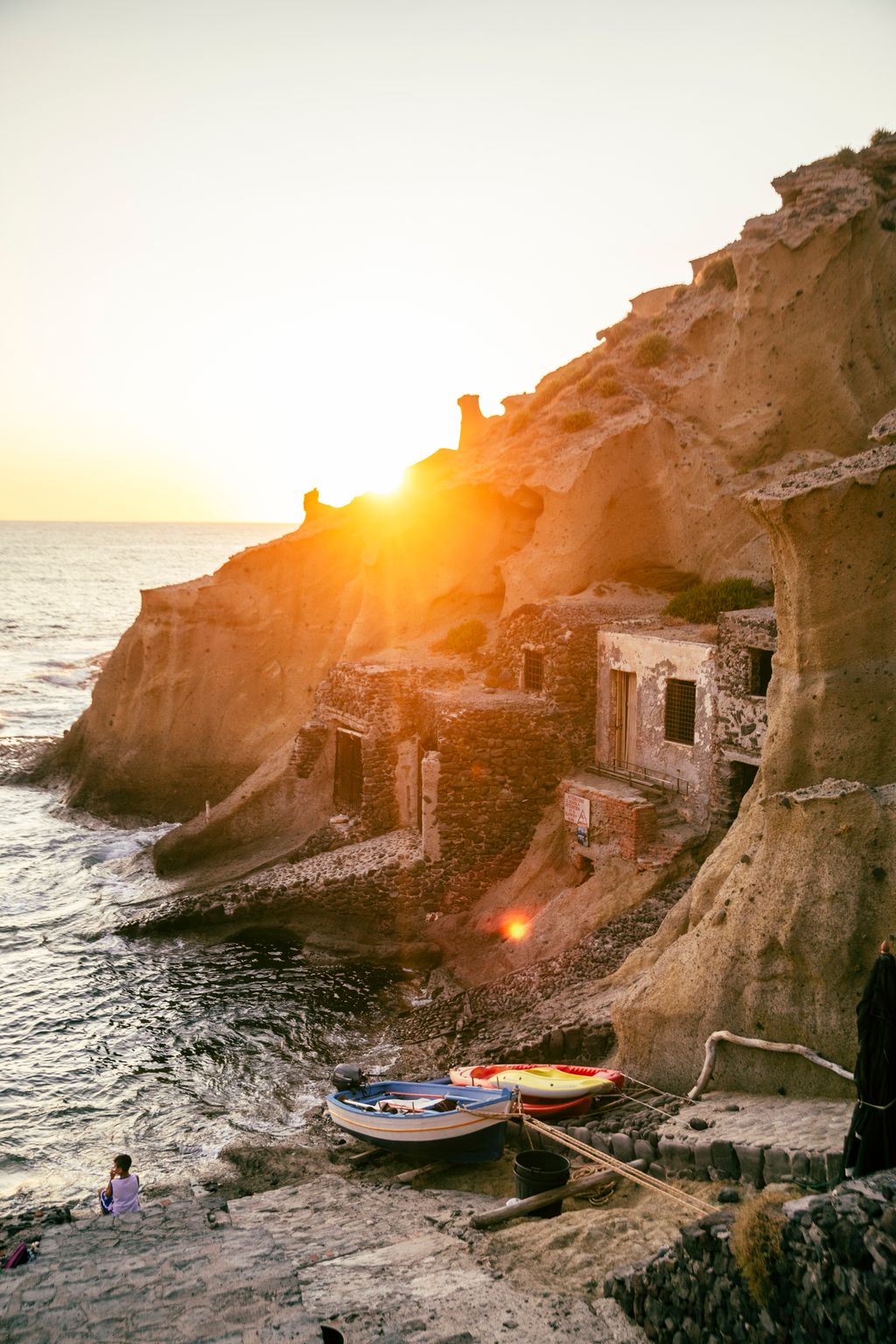 © Antonino Bartuccio/4Corners Images6/7
Salina, Aeolian Islands, Italy
Fly to Catania airport, travel a few hours overland to Milazzo in Sicily’s Messina, then embark on an hour and forty minute whizz across the shimmering Tyrrhenian Sea by hydrofoil; it’s fair to say that getting to Salina, in the Aeolian archipelago, requires more than a little bit of effort. The reward? One Italy’s most authentic island escapes, pairing a sunkissed Mediterranean climate with flourishing volcanic-soil vineyards, caperberry bushes, and olive and citrus groves. As well as winery-hopping (there are 11 on Salina) to sample distinctive floral-note Malvasia wine, explore port town Santa Marina’s lively promenade, hike up the Aeolian’s highest peak, the 962m Monte Fossa Delle Feici (962m), lick mulberry granita in Malfa’s main square, or lounge on pebbly beach sweeps at Punta Scario and Lingua. Bed down at 14-room boutique hotel Principe de Salina; this 14-room, family-run boutique hotel does seasonal Sicilian dishes, such as cacio e pepe with saffron, and baked ricotta-pistachio cannoli with aplomb at its convivial ristorante della casa. Balmy evenings spent by the infinity pool, underneath scalloped parasols sipping limoncello, or exploring nearby swimming spots by private boat are heavenly.
From £230, B\\&B; principedisalina.it
- © Pascal Boegli7/7
Dugi Otok, Zadar archipelago, Croatia
Bringing together rugged stone cliffs, abundant vineyards, orchards and sheep-filled fields, swathes of cypress forest and scrubland, and the blinding-white sugarsoft 300m-long Sakarun beach, Dugi Otok is an island of contrasts. The nearly 45 km-long isle, which sits some 13 nautical miles off the Croatian coastline, is reached by an easy hour and a half ferry hop from Zadar, yet remains rather tantalisingly — for those after a peaceful back-to-nature escape — one of Croatia’s least-visited islands. Telašćica Nature Park, a picturesque islet-dotted bay is all about outdoor pursuits, with a circular trail to hike around the bold blue waters of Lake Mir, and snorkelling in Tripulijak Bay. Bed down at Villa Nai 3.3 just outside Žman, an arresting Leading Hotels of the World property dug into the hillside, built in excavated stone and designed by Croatian architect Nikola Bašić to follow the contours of the land. Its vast, 500-year-old olive grove, tasting room — hello house-made award-winning olive oil — and a 23m saltwater infinity pool, looking out to the islets of Kornati National Park, add further appeal.
From £530, room-only; villanai.com