Meaning ‘much in little,’ the Latin adage ‘multum in parvo’ has long been used to praise surprising richness contained within a small space. Alexander Pope applied it to the art of concise expression, while John Ruskin invoked it to commend the compressed beauty of ornament. Few things, however, embody the idea as unexpectedly — and as perfectly — as the elaborate dolls’ houses crafted in the Netherlands during the 17th Century.
Contrary to what one might assume, these creations were no children’s pastime. At the time, Amsterdam was one of Europe’s most vibrant port cities, with goods flowing daily through its busy canals from South America to the Far East. Behind the tall brick façades that still define the cityscape, merchants who had amassed fortunes through trade assembled exotic objects and rare natural specimens in cabinets of curiosities. This was, however, largely a male domain. So what could an affluent woman do to rival such displays?
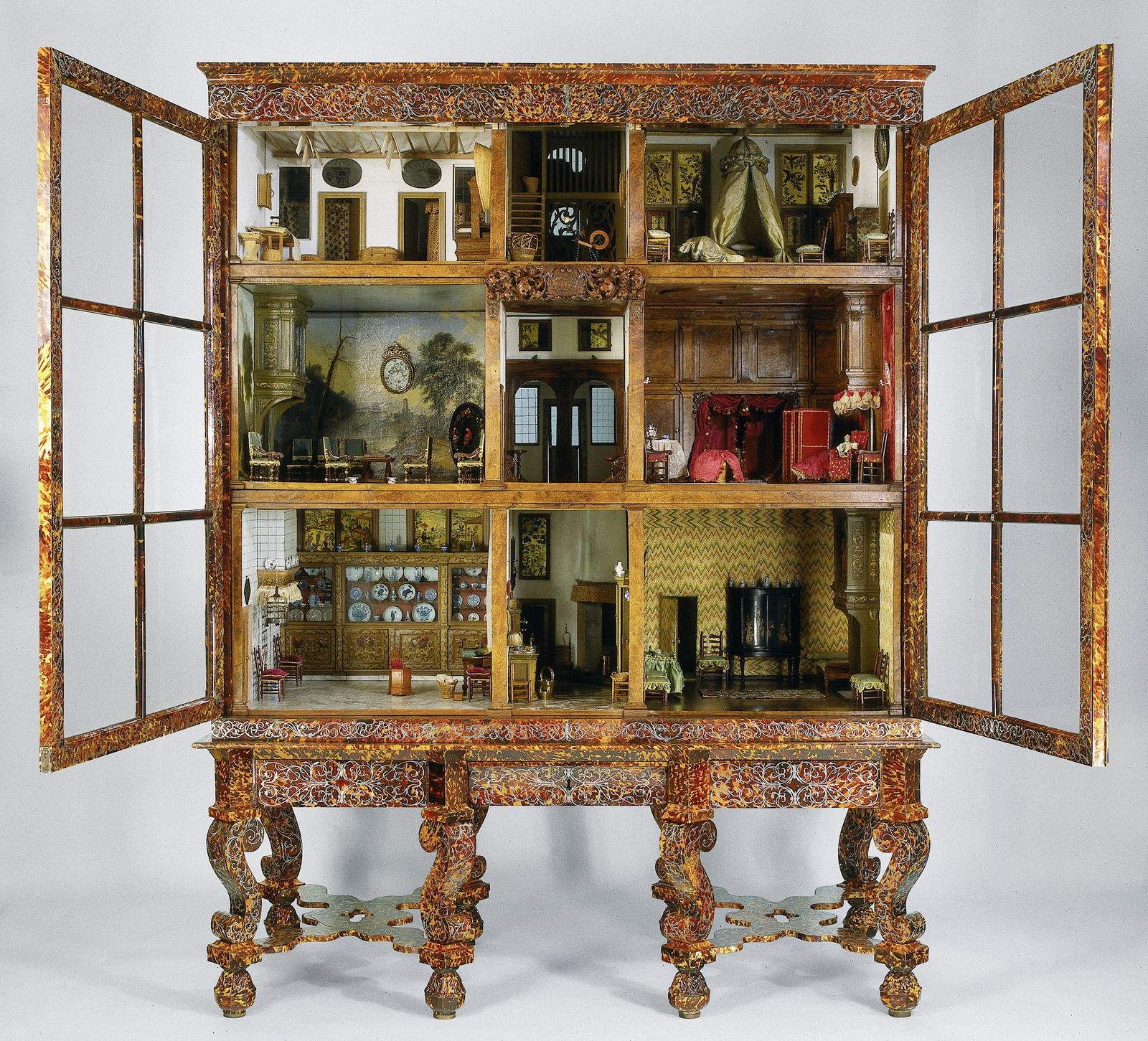
For Petronella Oortman, wife of silk merchant Johannes Brand, the answer was to create a domestic microcosm in the form of a dolls’ house — one far from ordinary. Standing almost ten feet tall, it recreated a wealthy Dutch Golden Age home in meticulous detail, from cabinets filled with chinaware and fine linens to a library of 83 leather-bound books.
Between 1686 and 1710, Petronella poured a considerable fortune into this extravagant project, commissioning specialised woodcarvers, basket weavers, silversmiths, and glassblowers to produce miniature furnishings for the rooms spread across three floors. She even enlisted the painter Cornelis Dusart to create tiny works of art for the walls. By the time it was complete, her dolls’ house was said to be worth 20,000 to 30,000 florins — enough to buy a real canal house in Amsterdam!
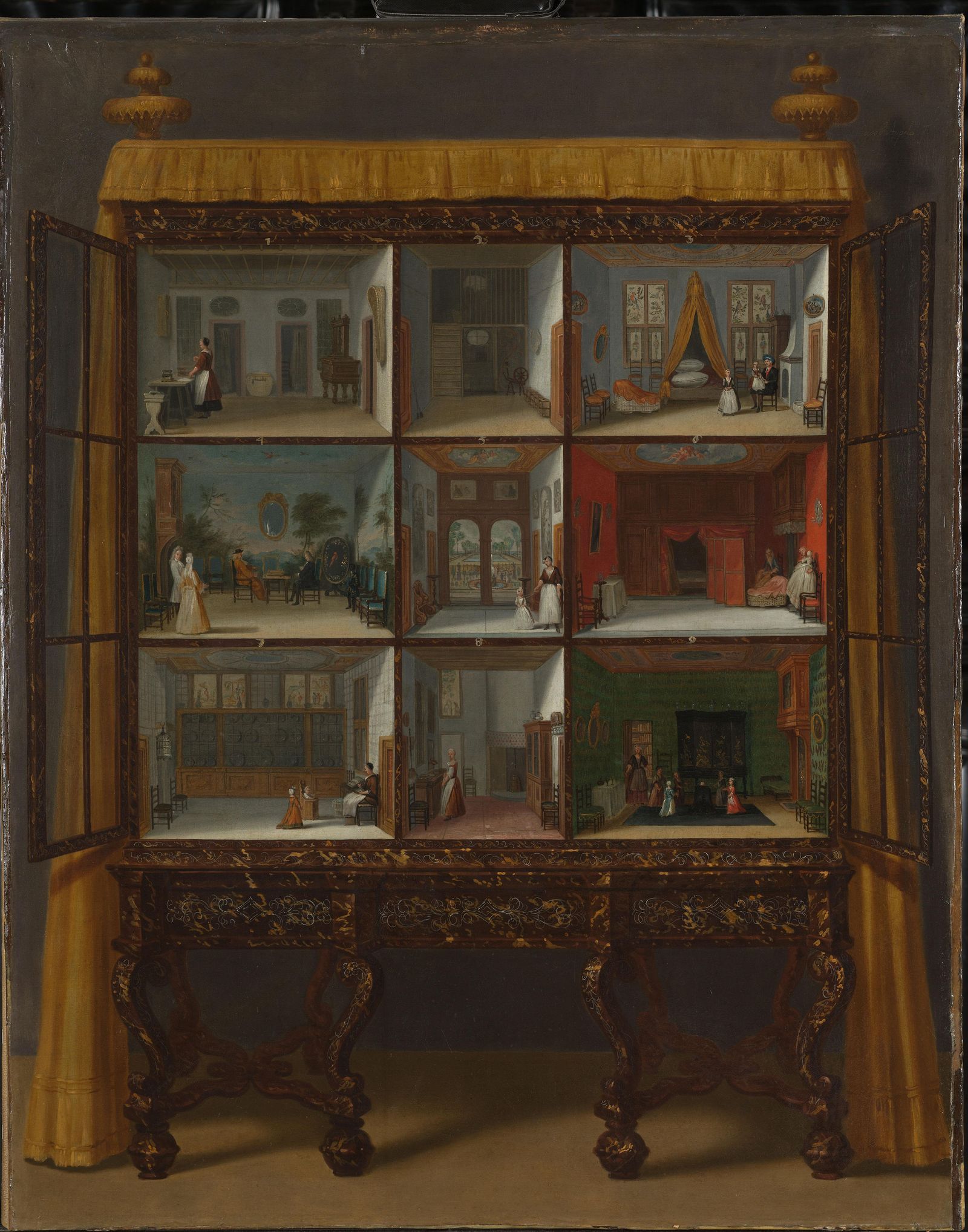
Petronella’s dolls’ house caused a stir even in her lifetime. Stories tell of Tsar Peter the Great trying, without success, to buy it — proof that its fame reached far beyond Amsterdam. Jacob Appel was commissioned to capture it in paint, depicting the house framed by yellow silk curtains, just as Petronella would present it to her guests. When visitors arrived, she would draw them aside, unveiling her miniature creation to an audience already half in love with it before they had even stepped closer.
Petronella was not the only woman in the Dutch Republic to pursue such an eccentric — and extravagantly costly — passion. By coincidence, two other surviving examples from her time belonged to women who also shared her name — Petronella Dunois and Petronella Oortmans de la Court — though neither was related to her. Both furnished their miniature houses with gilded leather wall coverings, silver tableware, and imported porcelain of the finest quality. A generation later, Sara Rothé merged two earlier houses into a grander one, updating it to reflect the latest fashions.
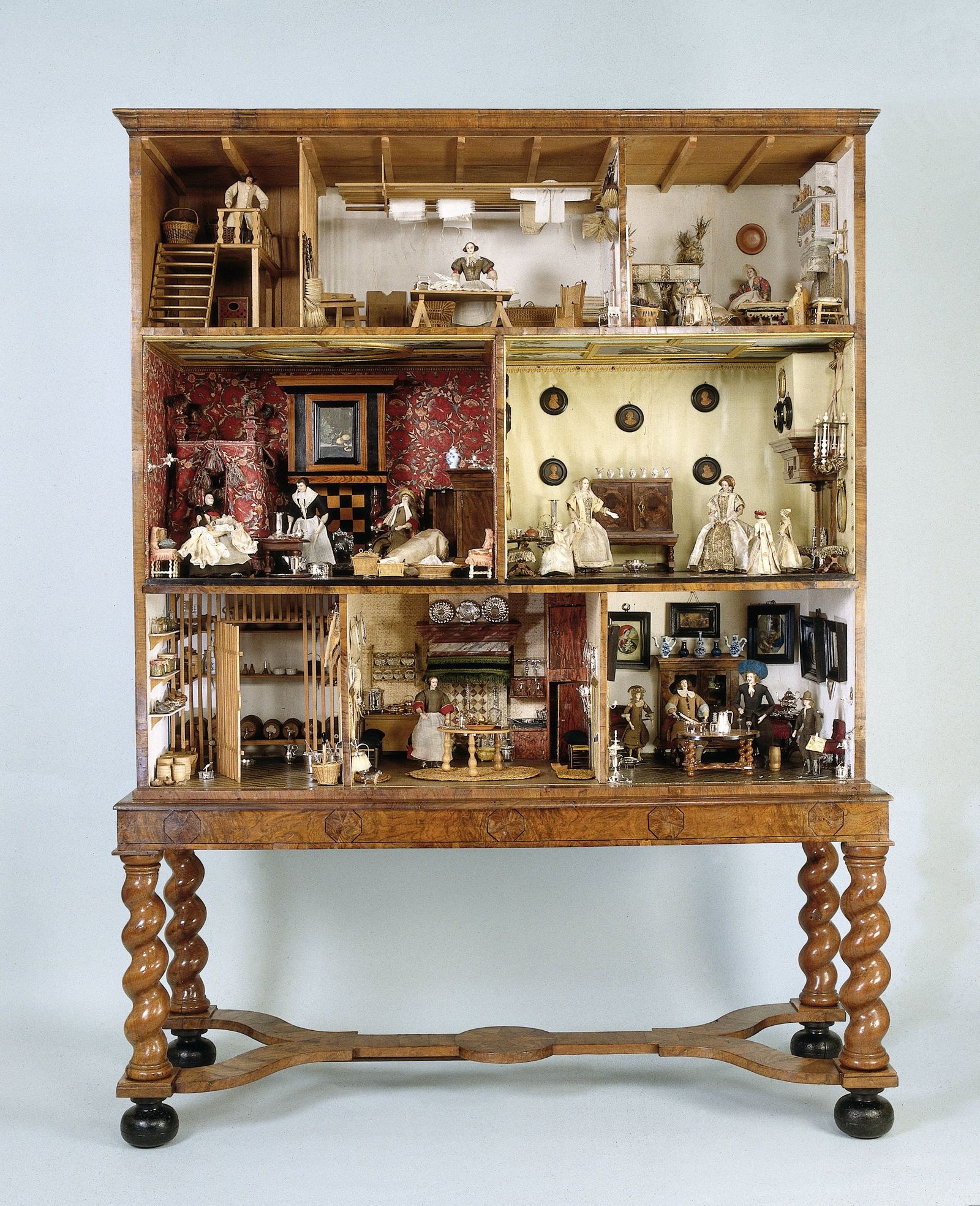
One of the most striking features these dolls’ houses share is their cupboard-like form, giving no hint of the treasures within when the doors are closed. This unusual format, closer to a collector’s case than the pitched-roof dolls’ house we know today, speaks to the same impulse: to arrange, to refine, to present a world in perfect order. In their lilliputian kitchens, libraries, and lying-in rooms, Petronella Oortman and her peers could express their taste with complete freedom, creating miniature worlds that were both a mirror of their privileged lives and an idealised vision of them.