

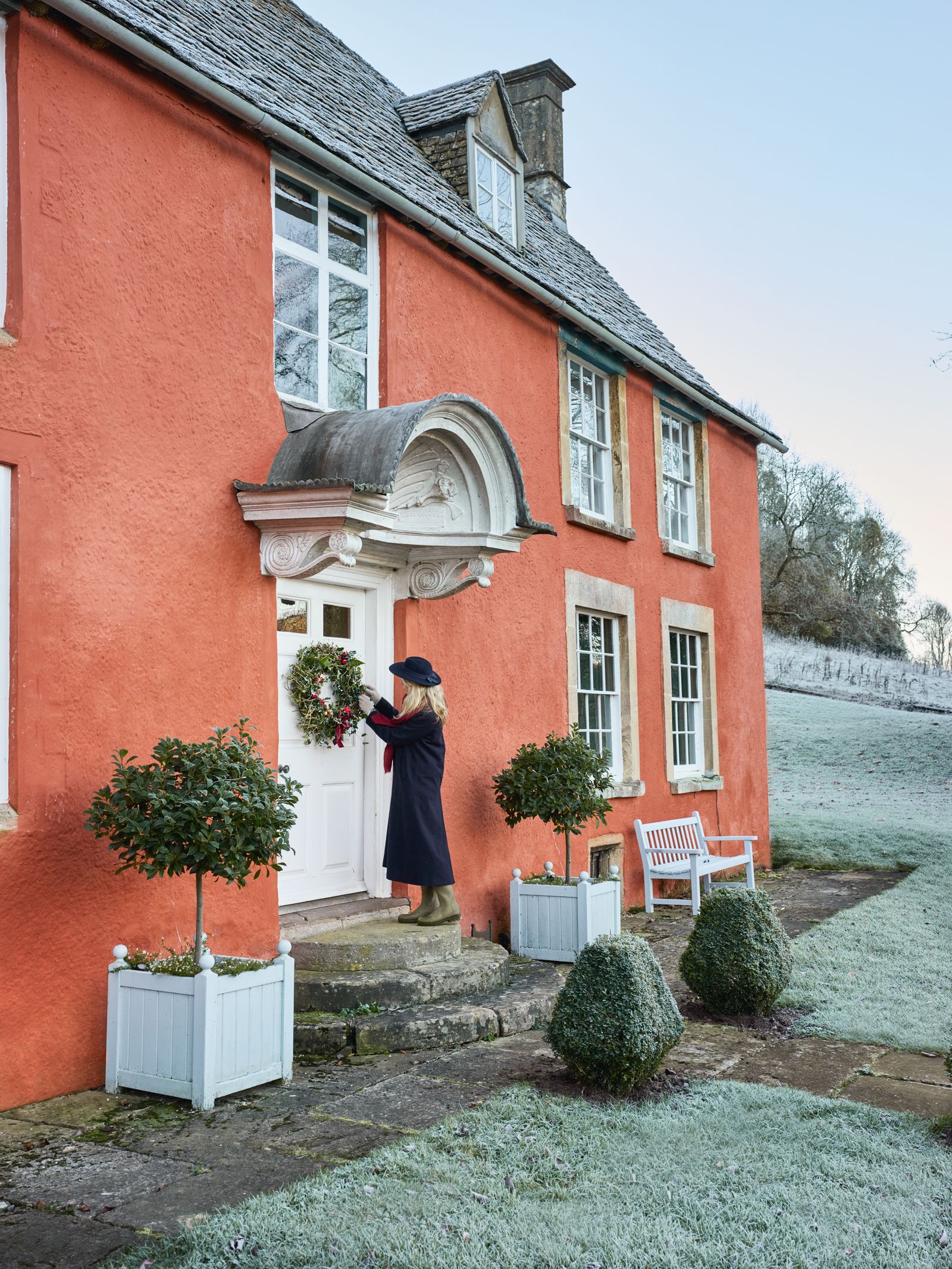
Lots of people have self-imposed work uniforms; they’re useful for taking away early morning decision paralysis. For about four months of the year, mine consists of sheepskin-lined boots, coat and hat, layered over combinations of thermals and near-antique woollens – which only seems excessive when I explain that my job is very much of the indoor variety. The issue is that ‘indoors’ is an ill-insulated Victorian terrace on the East Sussex coast where the temperature of my study typically hovers around 12 degrees, unless we’re having a cold snap, whereupon it drops further. And here I’m far from alone: the artist Phoebe Dickinson and her husband Luke Rodgers have yet to get through a winter in their house without the pipes freezing and bursting, meaning there’s neither heating nor hot water until it’s fixed. Moreover, until very recently, every time it rained a lake formed in their dining room. Phoebe’s 10th wedding anniversary present from Luke was “a hideous – but amazing – battery-powered heated gilet.”
You might think that interior designers would manage to avoid such material inconvenience, but Chloe Willis, associate director at Sibyl Colefax & John Fowler reports that in her house, “rotten, single glazed sash windows lead to a healthy breeze indoors, while the radiators groan but fail to reach the top of the house.” Lucinda Griffith describes her previous Welsh cottage as “renamed ‘Seldom Warm’ by my friends, and perennially damp. One evening, when sitting on the sofa, all the plates that I had hung on the wall slid off. The disc hangers that they were held up with had soaked through and come unstuck.” Then there’s Daniel Slowik and Benedict Foley’s Dedham Vale cottage, which floods every time the River Stour rises.
It's a situation we’re renowned for: even in the fantasy that is Nancy Meyers’s The Holiday, Cameron Diaz shivers in tonal cashmere at Rosehill Cottage. Nonetheless, it can surprise those who didn’t grow up in such circumstances. Brandon Schubert, who was born and raised in Texas, reveals that he’d never actually seen a hot-water bottle until he moved to the UK. “When I first climbed into the Tudor-style four poster in the guest room of my now in-laws’ house in Devon, I jumped in fright at the hot objects nestled down in the sheets.” Since, he’s learnt to wear wool socks regularly, “especially when visiting older houses. If your feet are warm, then your body will be too,” and says that he finally understands the British obsession with all-day tea drinking – “there’s nothing that warms you up faster.” But how did it get to the point where oft-visited topics of conversation include best dehumidifier practice, and maintaining fingertip circulation (of which more, later)?

A major contributing factor is, of course, Britain’s cold, damp climate – but a host of neighbouring countries suffer the same, and their homes don’t quite so universally reflect it. However, in our good fortune to have experienced less damage to our infrastructure during the First and Second World Wars, we have the oldest housing stock in Europe. Happily (or unhappily, depending on your perspective) there exist offices dedicated to preserving the original fabric of these buildings. This includes refusing planning permission for various attempts at insulation – and thus the current cost of fuel renders radiators an exercise in futile extravagance. But even our newbuilds aren’t immune; in terms of square footage, they are some of the smallest in Europe - roughly half the size of an American newbuild – and crucially, come with an almost ubiquitous dearth of specially ventilated drying rooms for laundry.
And yet the situation isn’t wholly universal: “our house in London is well insulated and draft-proofed, with nice underfloor heating to keep things warm, and I wouldn’t suggest for a minute that we’d want it any other way,” says Brandon. Which suggests that the final reason some of us live as we do is because we choose to – or at least, we don’t choose not to.
Lucinda wonders if a demonstration that we can cope, “even when the chips are down”, is innate to our national character – and describes pulling her shopping up a hill on a toboggan when snowed in, and bathing a baby in warmed Perrier in the kitchen sink because frogs wintering in the outlet pipe had cut off the water supply. Alongside, connecting with nature has traditionally been seen as a means of nourishing creativity – leading to nature’s appearance in our houses being less unwelcome than it might be, whether it manifests in matching the outside temperature, an indoor water feature, or bats. (“Just switch the lights off, open the window and they’ll find their way out,” says Lucinda.) Notable is that within our canon of literature is a tendency to attach a heady charm to this type of discomfort, and the prioritisation of aesthetics over amenities. In Dodie Smith’s I Capture the Castle, one of the most widely-loved novels of the 20th century, Cassandra confesses that she never grows used to beauty of their titular abode, though “anyone who could enjoy the winter here would find the North Pole stuffy.”
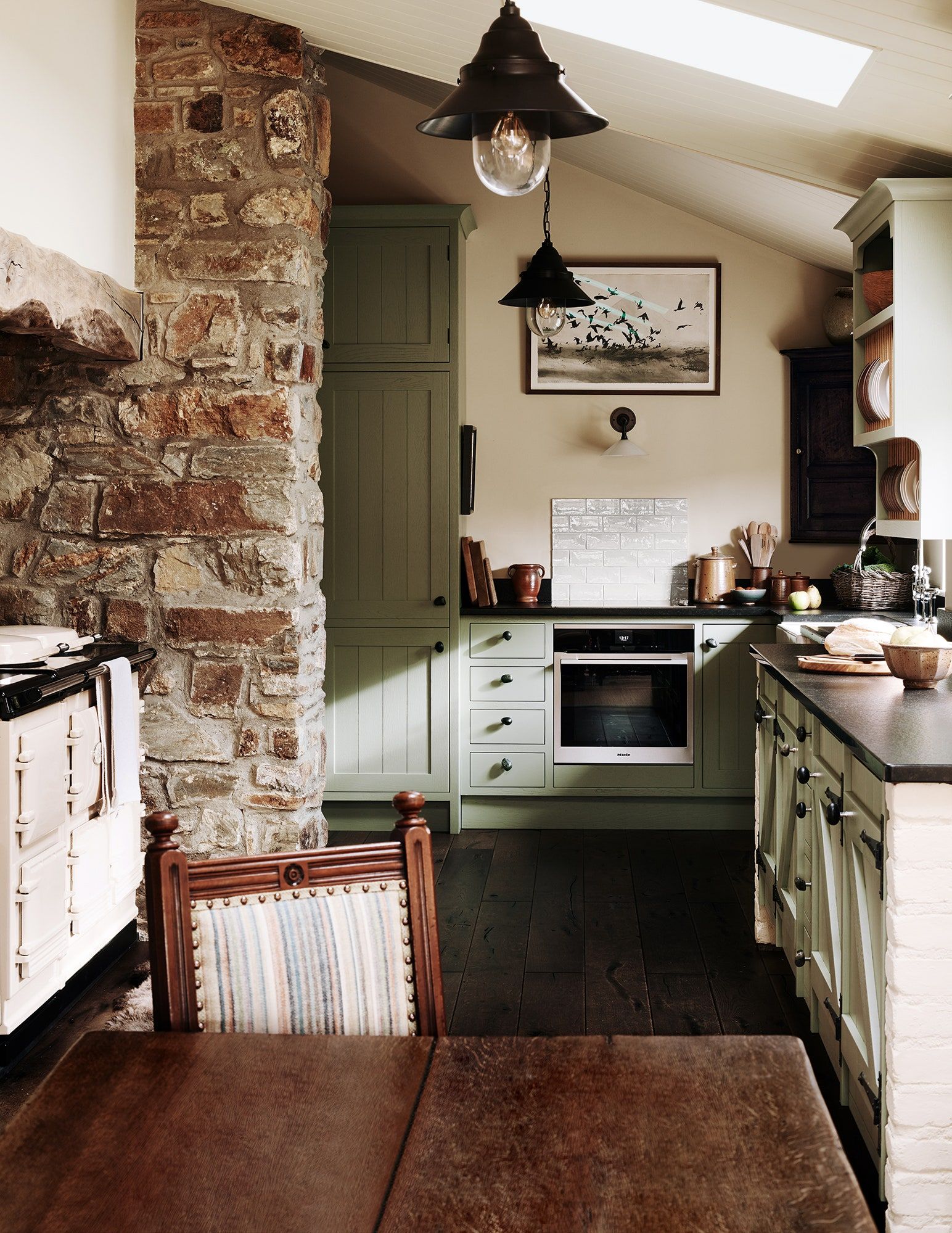
Certainly, the visual payoff for those suffering such hardship in an older home is a major advantage, and there are others. In the absence of efficient central heating, cut flowers and Christmas trees survive for weeks. It’s better for antique furniture, too, points out Chloe - because wood dries out in low humidity. Furthermore, it’s living in cold, damp houses that has arguably driven the evolution of the English country house style of decorating, with kitchens designed around AGAs, and the layering of curtains and carpets, quilts and blankets, “which really does make a huge difference when it comes to staving off drafts,” Chloe continues. Finally, it’s a bonding opportunity for our children – who can make dens in the airing cupboard à la Mitford sisters.
And so, recounts Benedict, we become accustomed to wearing wellies on the ground floor, and shifting rugs and furniture from the path of incoming tributaries. Alternatively, “my mother-in-law’s house used to flood, and she put wellies on the legs of the dining room table, and then it could stay there,” says Phoebe. Even those of us who don’t live on flood plains rig up dehumidifiers (damp exacerbates cold) delighting in the idea that, come summer, they can make a heatwave more bearable. Alongside, we obsess about breathable restoration materials (the damp has to be able to get out), and sleep with open windows even in subzero temperatures.

We maintain well-stocked candle-cupboards, not only for power-cuts, but because “several candles dotted about an (admittedly minuscule) flat can be quite an effective way to provide warmth,” maintains Christabel Chubb, House & Garden’s News Editor. We huddle by fires and range cookers, set timers to perform jumping jacks before we get cold, and line up pebbles on our old-fashioned portable paraffin heaters to act as hand warmers when our fingers freeze up, literally. (Just don’t stand too close to those paraffin heaters, or you risk a singeing. Several of my skirts are dotted with burn holes – but in that they coordinate with the moth-eaten woollens.) Then, when we’ve failed to do those jumping jacks, and the hot pebbles won’t cut it anymore, those of us with the appropriate plumbing luxuriate in steaming mid-afternoon baths, knowing that the pleasure would be markedly less intense if we hadn’t been so miserably cold beforehand. See also hot-water bottles - “who knew how completely amazing they could be?” says a converted Brandon (Lucinda uses four simultaneously as a matter of course) - and electric blankets: “they’d be my Desert Island Discs luxury” says Phoebe.
And, by and large, we seldom get around to doing much to alter the situation, which brings us back to that earlier point about choice. Brandon, who despite the comparative luxury of his flat, professes to now enjoy being in “houses where you have to get dressed up in a few layers just to get out of bed in the morning,” reasons that “when our houses become factors we have to adjust to, whether that is in wardrobe or drinking hot drinks all day, they become another character in our lives. It’s what has always been so romantic about English homes.” And who wants to lose that? Even so, some might like to know that there are currently special offers on various battery-powered heated gilets – and apparently, the battery can last up to ten hours.


