

If the white picket fence is the American shorthand for suburban contentment, what is the British equivalent? The semi-detached house, perhaps? Despite the rise of new housing types, from warehouse conversions that evoke New York’s cool lofts to new-build flats encased in staggeringly tall glass towers, the ‘traditional’ house in the ‘traditional’ layout (rooms stacked vertically – bedrooms upstairs, living spaces down) continues to dominate in the U.K. For all the romantic pull of the quiet rural cottage, fewer than one in five of us actually lives in the countryside. The townhouse, in its terraced or semi-detached form has long been the more common reality, with an aspirational allure all of its own.
Across Europe, the picture is strikingly different. In the big cities, like Paris, Rome, Copenhagen, or Barcelona, the most prestigious homes are often apartments, whether they are expansive, lateral spaces with soaring ceilings and shared courtyards or cleverly configured bijou flats with mezzanine floors. According to Eurostat, nearly half of Germans live in flats, as do 44% of the French. In Spain, two-thirds of people live in apartments, in Britain fewer than 15 per cent do. Clearly, on the continent city living is associated with the flat. But in the UK the flat is considered transitory, a stop on the way to a house.
It has rarely been more difficult or expensive to buy a house in the UK, and practical and attractive alternatives exist. Yet our national attachment to the traditional townhouse structure endures. Why is this?
Familiarity might be one answer. Terraced and semi-detached houses are the most common form of housing stock in the UK, a legacy of Victorian and Edwardian building booms and the great post war push for suburban development. As a result, the majority of the population still lives in houses and bungalows.
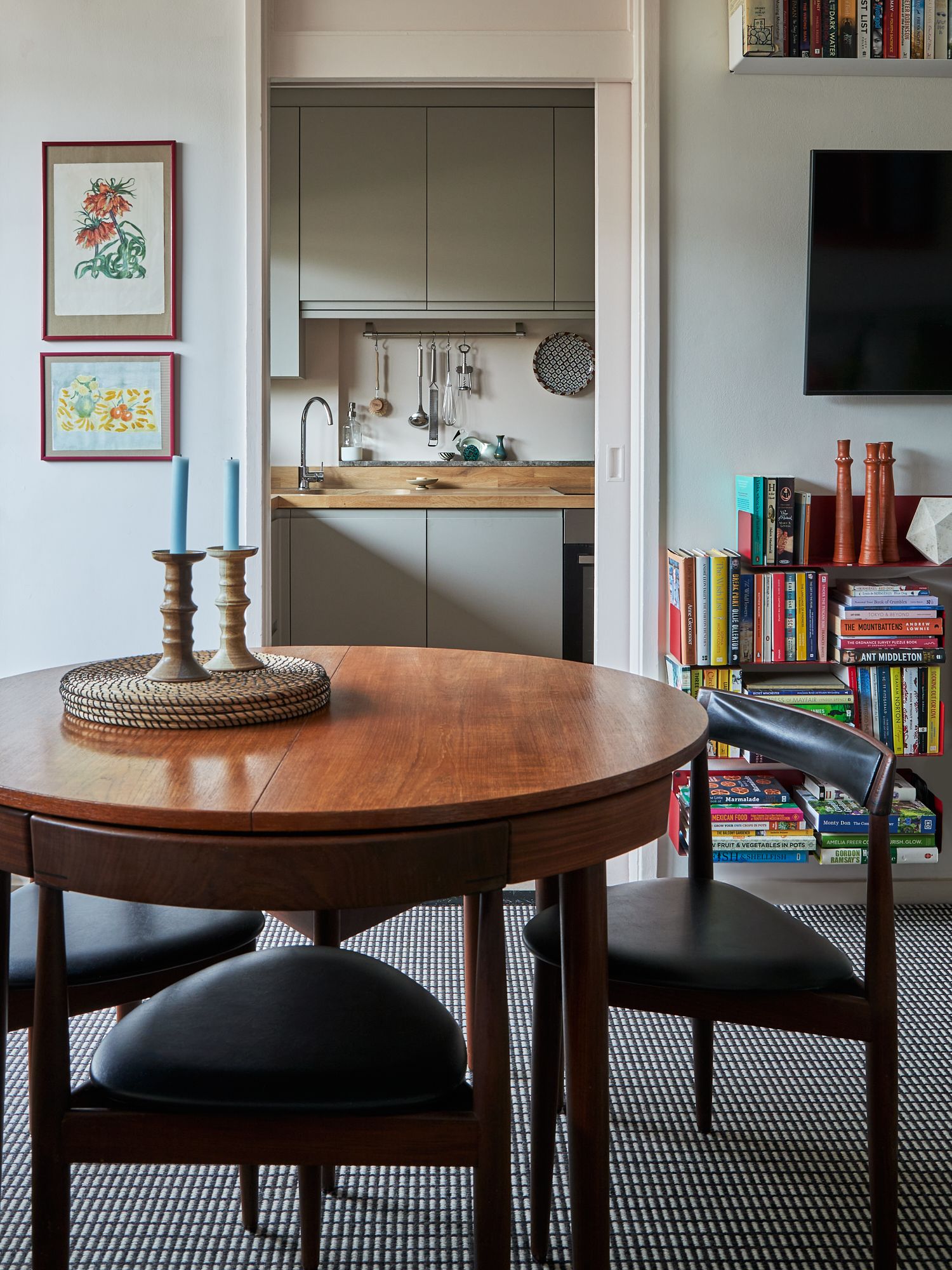
Writer and stylist Martha Ward describes how, after 15 years of lateral living in a one-bedroom basement flat in an old Victorian terrace, she longed to climb a staircase. ‘It makes a huge difference now, being able to go upstairs and put the day behind me.’ The stairs and multiple levels become a physical marker of the separation between work and rest.
But for others, lateral living holds the stronger appeal. Ellie Rees, co-founder of estate agency Brickworks, lives in a set-up she calls ‘unusual’: ‘the home I share with my husband and two daughters is a pair of adjacent 1970s bungalows in rural Wiltshire,’ she says. ‘While it's an unusual setup and not for everyone, I love lateral living: open-plan rooms that feel naturally zoned, with no need to climb stairs in the middle of the night for a glass of water or a midnight snack.’ For Ellie, practicality, flexibility, and accessibility come to the fore. Interestingly enough, Martha’s experience actually complicates the usual dichotomy between flat and house: ‘My living room goes into my office, which goes into my dining room, which goes into my kitchen, so you can actually see from the front door all the way through to the back, she says. ‘So, in a sense, I still do have that kind of open plan lateral existence. And I do really like that.’
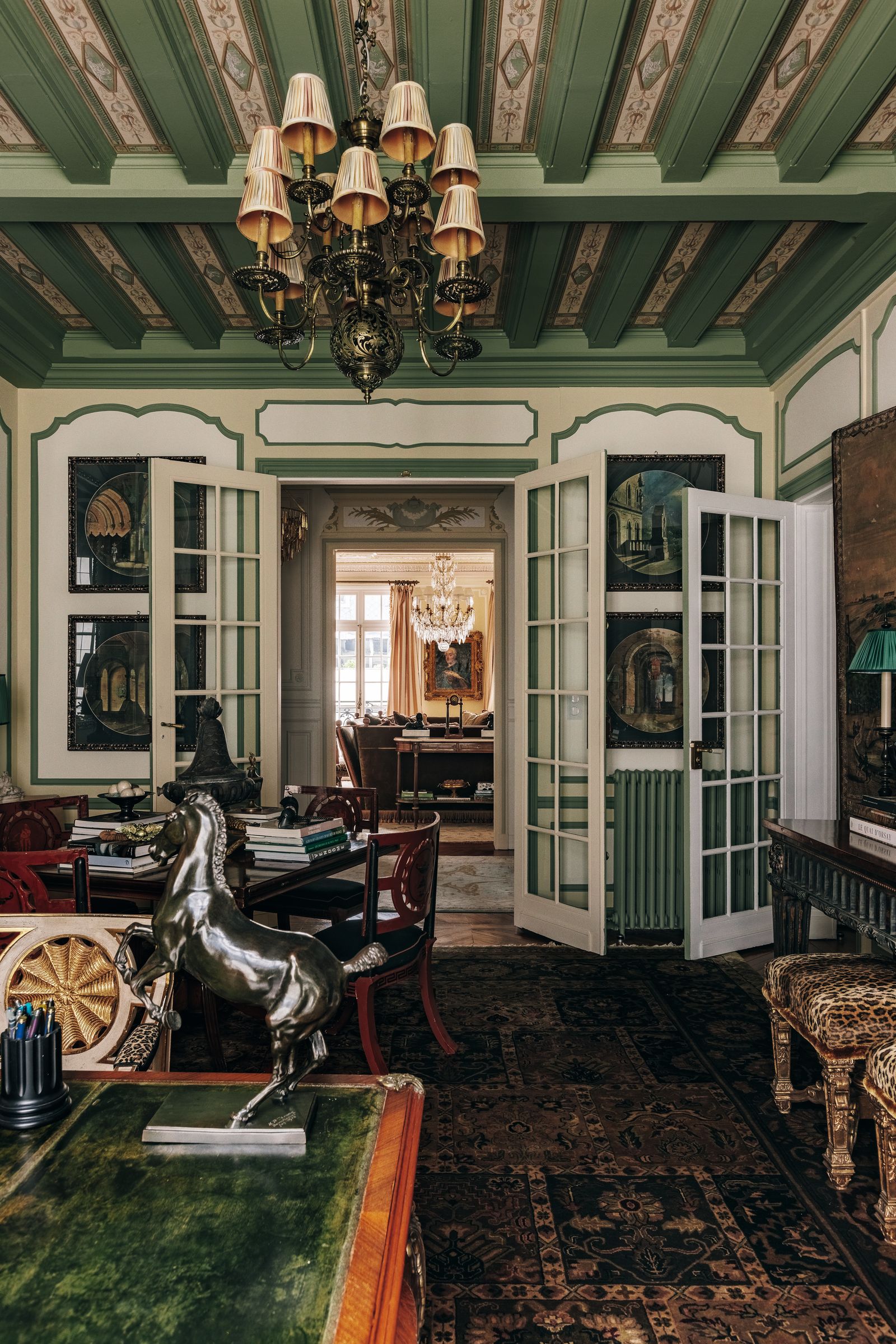
If Britain’s devotion to the townhouse seems unshakeable, it is not because alternatives have never been attempted. The twentieth century in particular offered a series of evolutions in architecture that in other contexts, might have rewritten national taste. The bungalow, for instance, promised lateral living long before it was fashionable. Originating from colonial India and adapted for inter-war suburbs, it offered single-storey ease and a direct connection to outdoor space. Yet it quickly became coded as being for retirees—the “last home” rather than the dream first one. The stigma has never really lifted.
Yet alternatives do deserve a second look. Lateral homes are often more accessible, easier to heat and cool. Upside-down layouts where bedrooms sit on the ground floor and living spaces upstairs can be extremely useful for houses that sit on slopes, ensuring living spaces have access to as much light as possible during the day. Liven Jansen, Associate at architecture firm Charlton Brown also notes ‘by elevating living spaces you make the most of views that would otherwise be lost from a ground-floor living room, whether it be countryside, coastline, or city skylines. This allows them to be enjoyed by everyone rather than being limited to bedrooms.’

However, the weight of tradition, reinforced by planning restrictions and reselling considerations, often makes deviation from the time-old layouts feel like a risky proposition. Even so, the reticence just shows the question of how we live is not just architectural but also cultural. The flat, the bungalow, the upside-down house: they may all solve practical problems, but they haven’t quite achieved the same status as they have in Europe.

Rising land prices, ageing populations, and the need for sustainable buildings may push us toward different layouts. Elsewhere in Europe, such layouts aren't viewed as compromises but as desirable, even prestigious. In Britain, however, the belief that only a house, however modest, represents permanence may have kept these alternatives in the margins. The popularity of the terraced and the semi-detached house is about more than their ubiquity; it reflects a mindset, and a social adherence to an ideal of home that has persisted across generations. The question is whether that will ever change? Your guess is as good as ours.


