
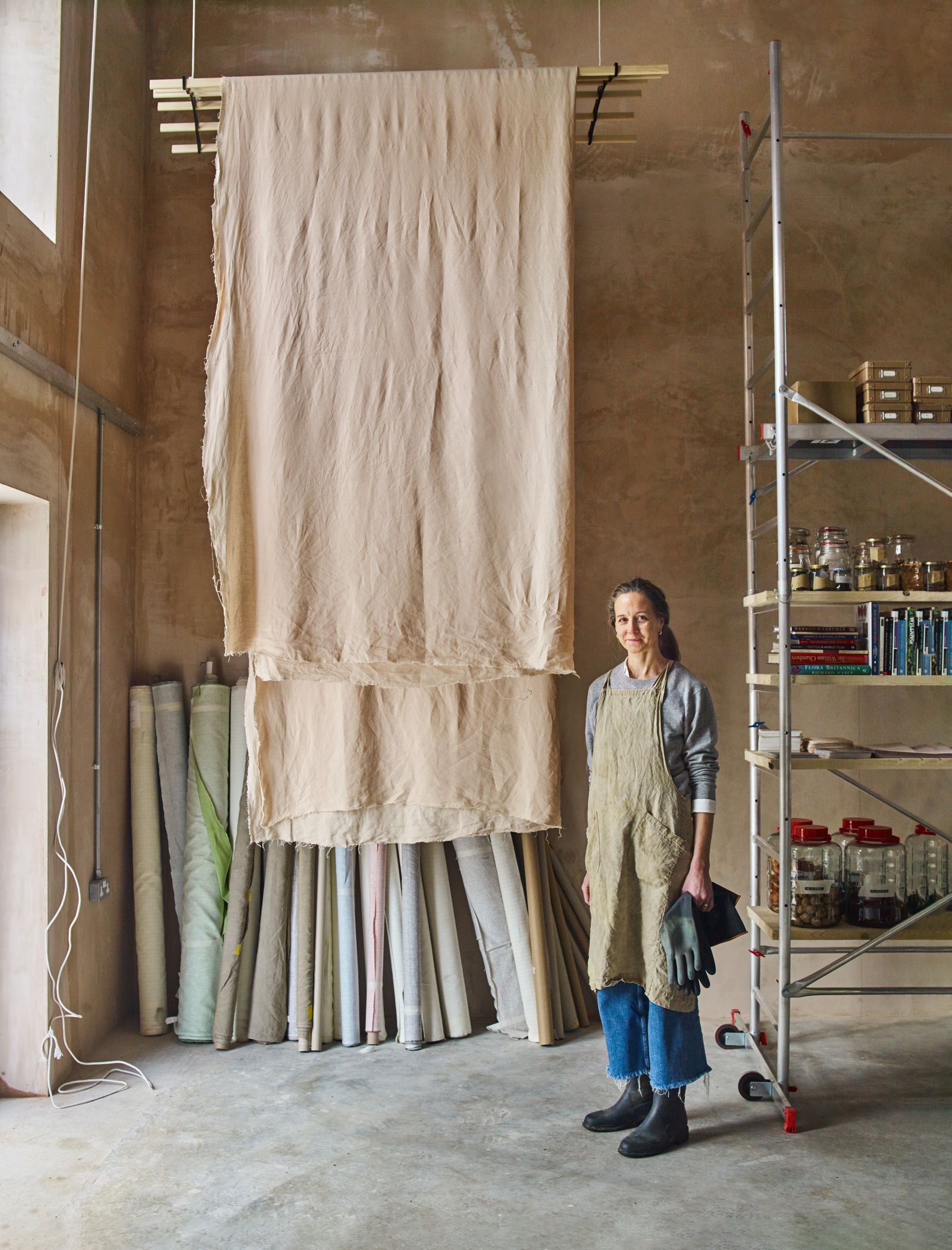
On a country lane in the Cotswolds, a stone’s throw from the village of Daylesford, sits The Grain Dryer – a large barn with views of a stream and fields where horses happily graze. This shared studio space houses a handful of creatives practising their crafts and they have recently been joined by Charlotte Lawson Johnston. Through her business, Cloth, she specialises in sustainable fabrics that she has dyed using her own seasonal, plant-based pigments.
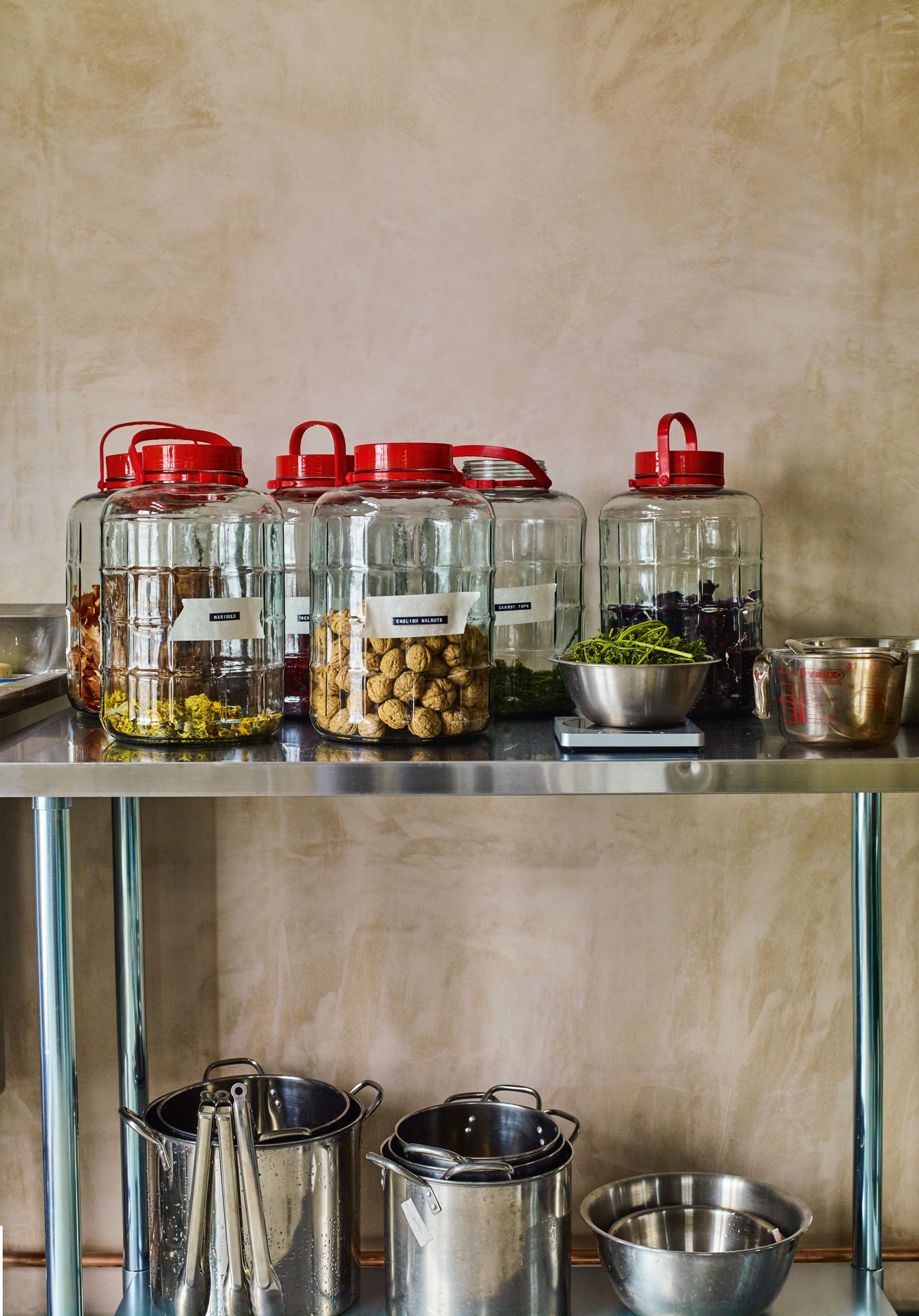
Along the bare plaster walls of Cloth’s workspace are large, stainless steel dyeing vats and scaffold towers repurposed as shelving units and lined with jars of dried food and plant waste. Cork boards show the progress of various projects, including a collaboration with Edward Bulmer Natural Paint. For this, Charlotte has developed a linen and hemp fabric collection colour matched to five paint shades (launching the week of April 24 at Edward Bulmer’s Pimlico shop and online). There are also samples of bespoke orders for interior designers, including a beautiful pale ecru linen for Laura Butler-Madden.
Charlotte, who was born and brought up in South Africa before moving to Jersey and going to school in England, studied liberal arts at Durham University. She attended the New York School of Interior Design and, later, Central Saint Martins in London, where she completed a short course in printed textile design. She went on to work for the interior designers Joanna Wood and Rabih Hage. In 2016, she launched CLJ Home, which sells machine-printed (and synthetically dyed) fabrics by the metre. Charlotte has been running this business alongside Cloth, though the latter will soon take over as her main focus. ‘There can be a misconception that natural dyeing is a bit hippy and all tie-dyed,’ she says. ‘I want to show that it can actually be incredibly sophisticated and refined.’ The main appeal, she explains, is the lack of toxicity. As with certain paints, many synthetic dyes contain VOCs (volatile organic compounds), which can cause a range of health issues.
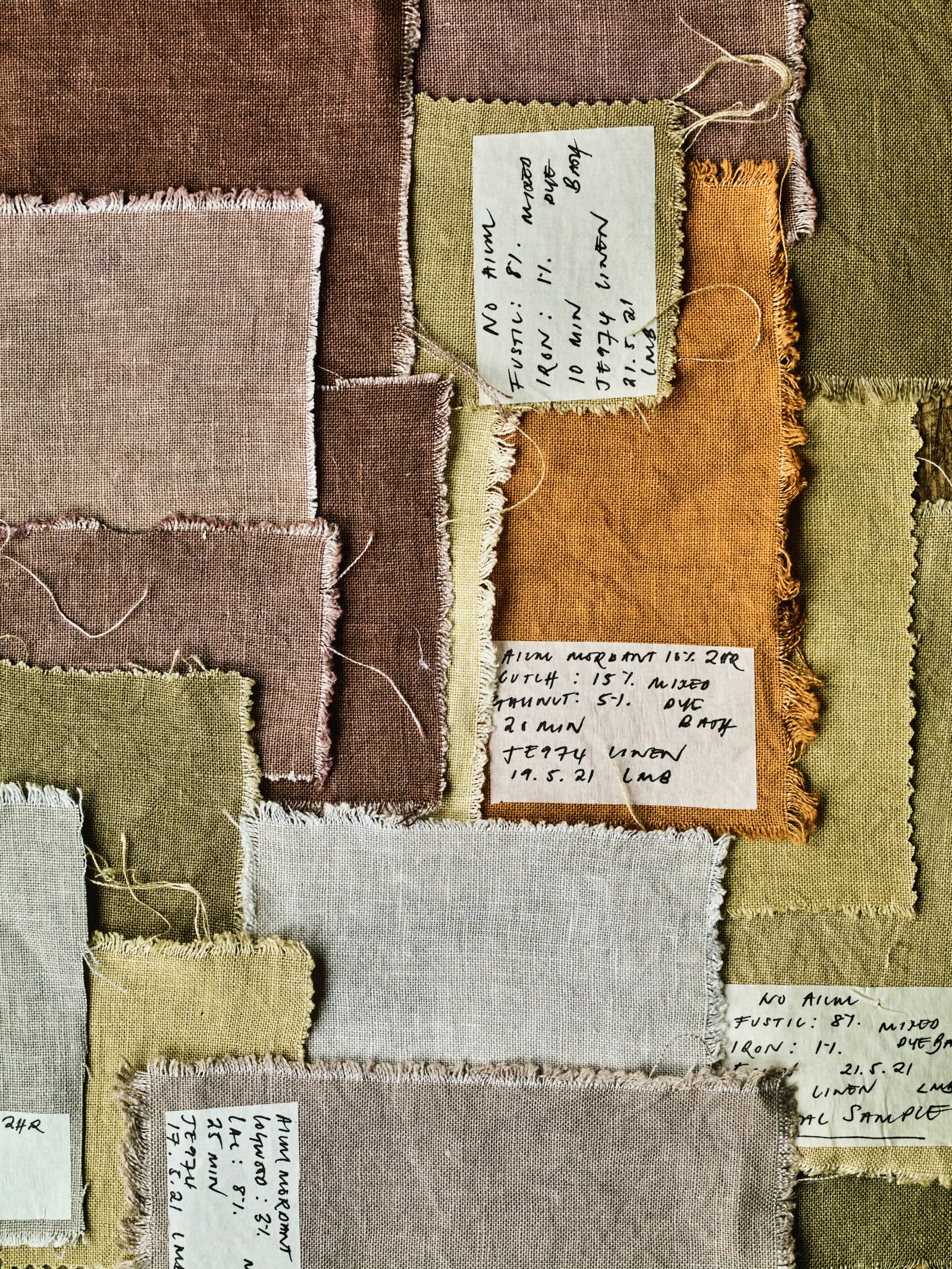
In 2020, determined to find a gentler method for fabric production, Charlotte began reading up on natural dyes, practising the techniques in her kitchen. A long and sometimes frustrating process of trial and error led to her developing her own recipes for natural dyes – a delicate alchemy that involves measuring the water-to-dried-substance ratio down to the tenth of a gram. ‘I was so taken by the depth of colour that you can achieve versus synthetic pigment,’ she explains.
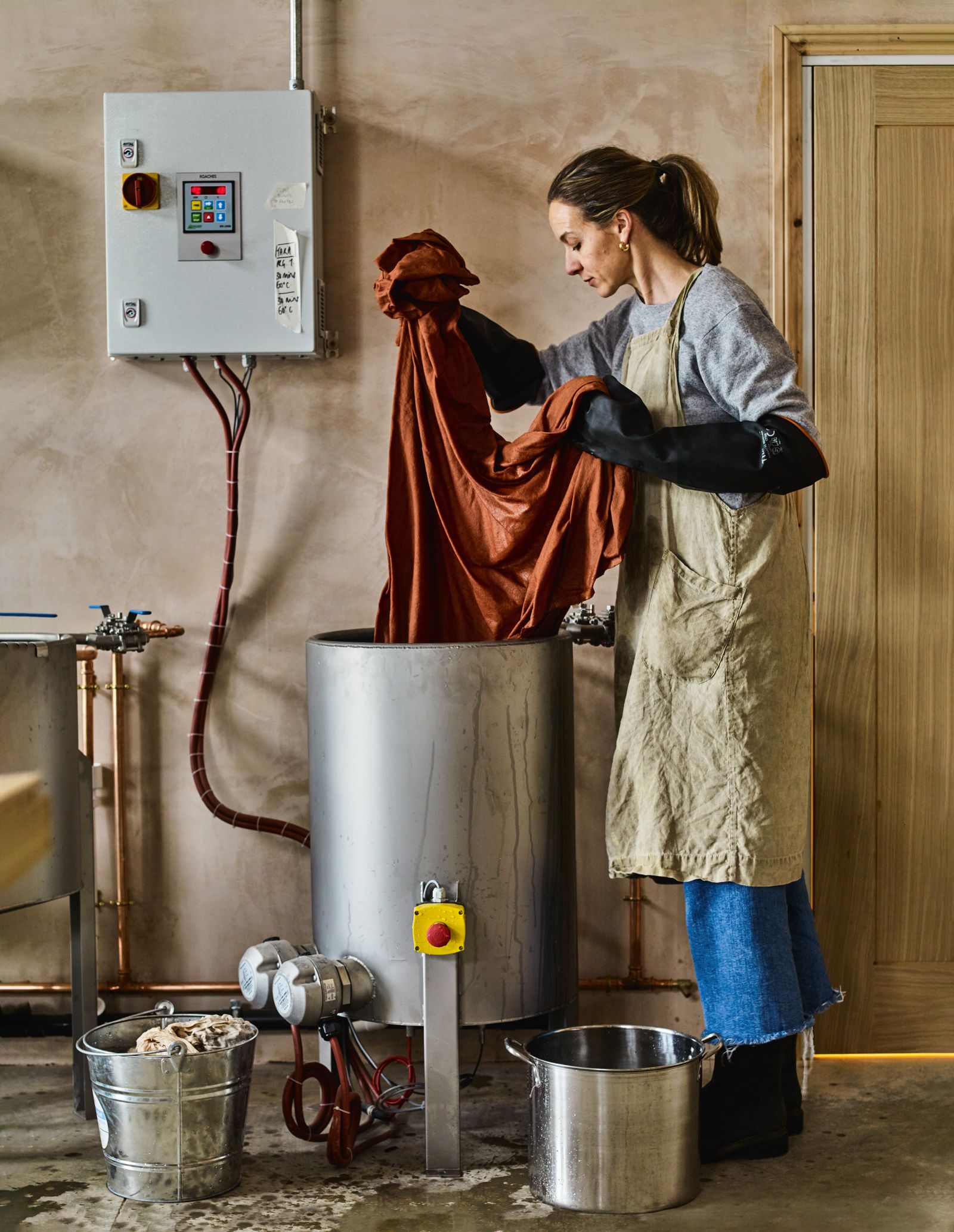
Natural dyes are not without challenges. A change in the pH of the water or its temperature, or the varying intensity of pigment from batch to batch can alter the finished colour, which will look different according to the fibre used. ‘My ambition is to show that naturally dyed fabrics can be produced on the same scale as their synthetic counterparts,’ Charlotte says. This may take some time to achieve. Earlier this year, she moved from a barn in her garden into her new studio, which, thanks to the three dye vats it holds, allows her to dye up to 12 metres of fabric a day.
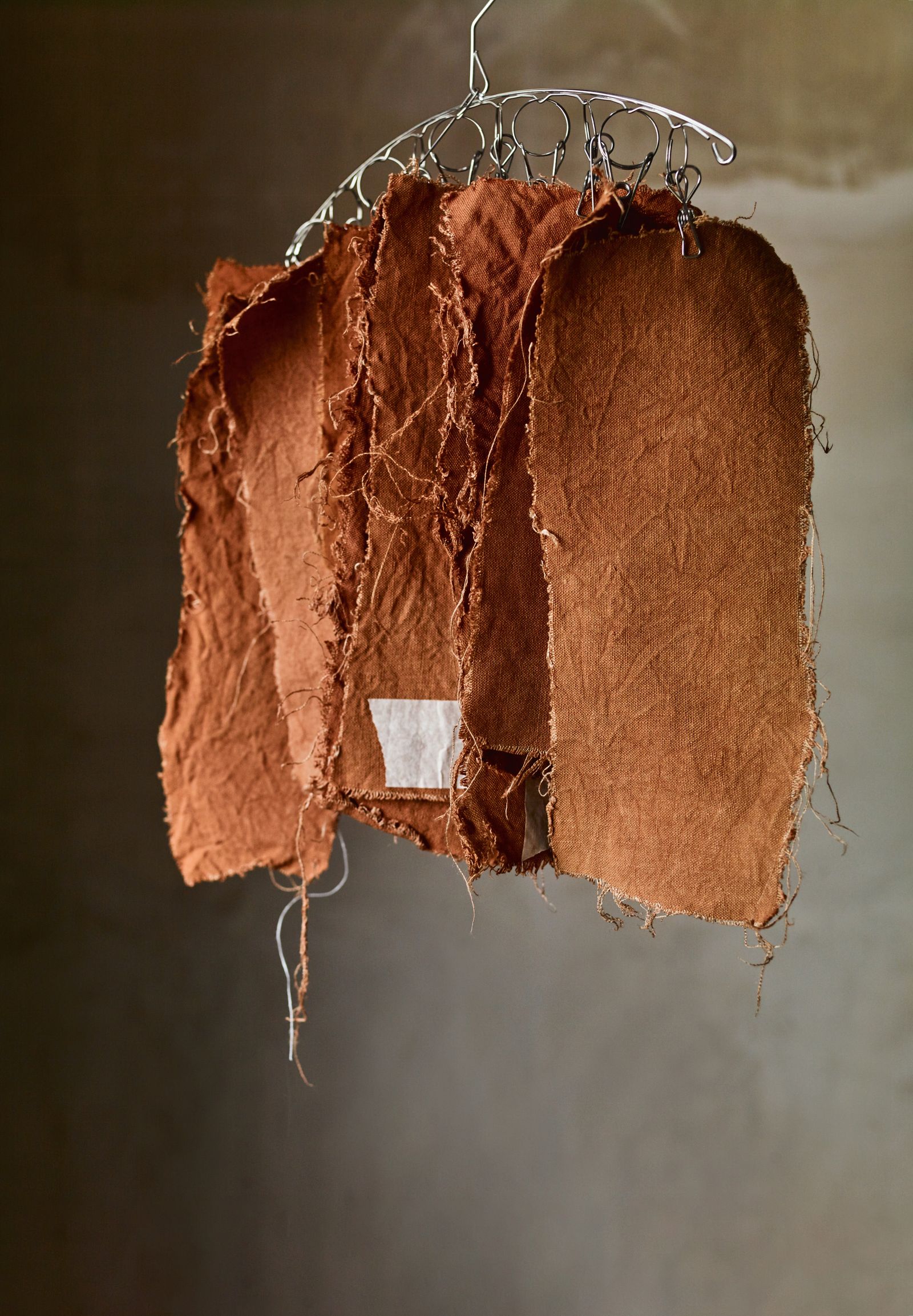
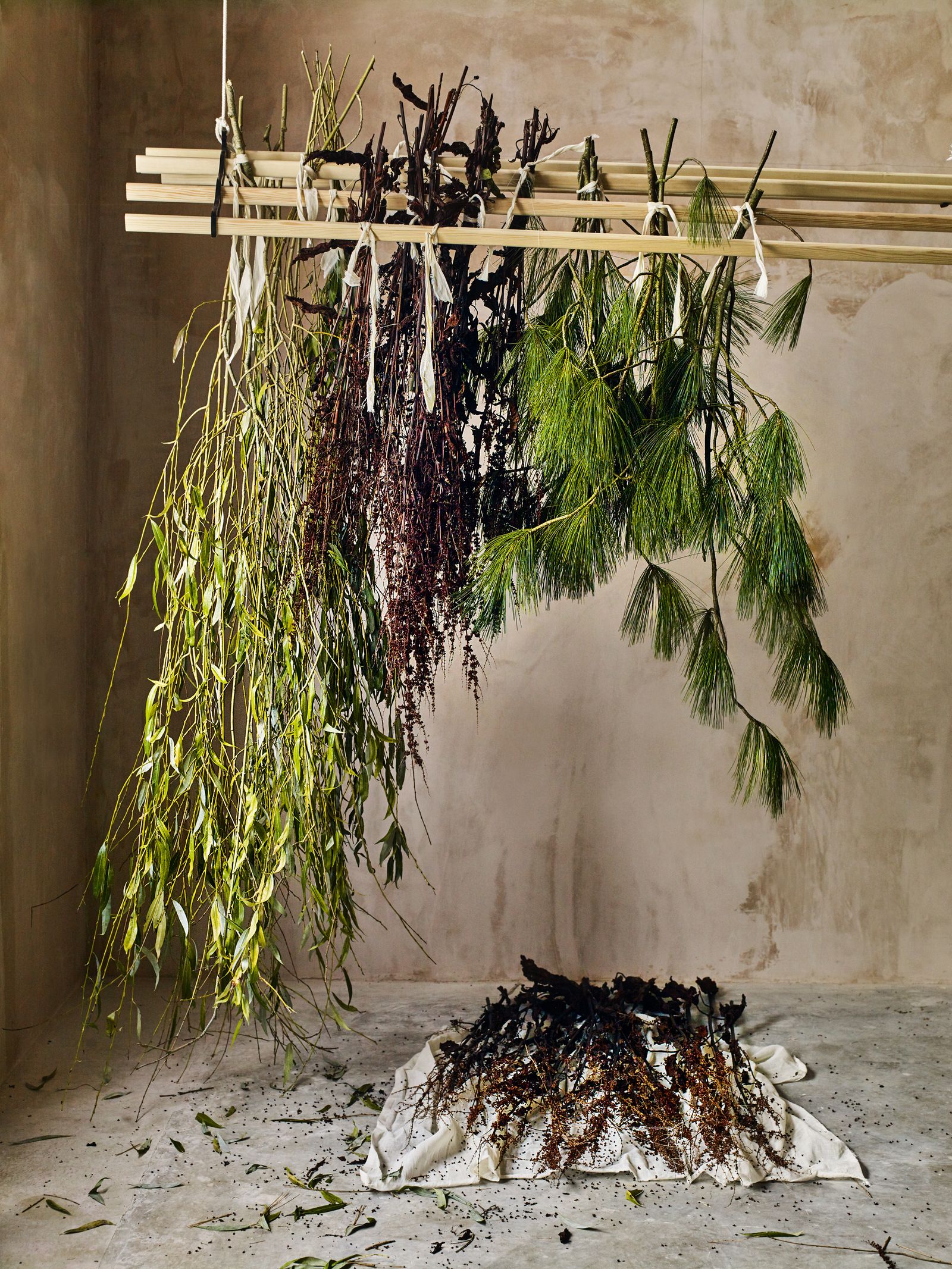
Her recipes are largely made up of foraged plant matter and food waste (much of which is donated from a local restaurant). Sometimes, it is dehydrated to create a dried extract rich in colour; in other instances, it is used in its original state. The ingredients are wrapped in muslin and steeped in water for a couple of hours to harness the colour. She uses different ratios of dyes to produce her signature colours – the process is an exercise in patience. ‘La Tierra’, for example, is a terracotta shade made using acacia tree dye mixed with red dye from the roots of the madder plant.
Charlotte works with fabrics made from sustainably grown fibres, including a mixture of linen and hemp, sourced from local producers. She hopes the latter, often avoided for its coarse quality, will become more popular: ‘It’s nothing like it used to be – it’s really refined now and could be grown all across the UK.’
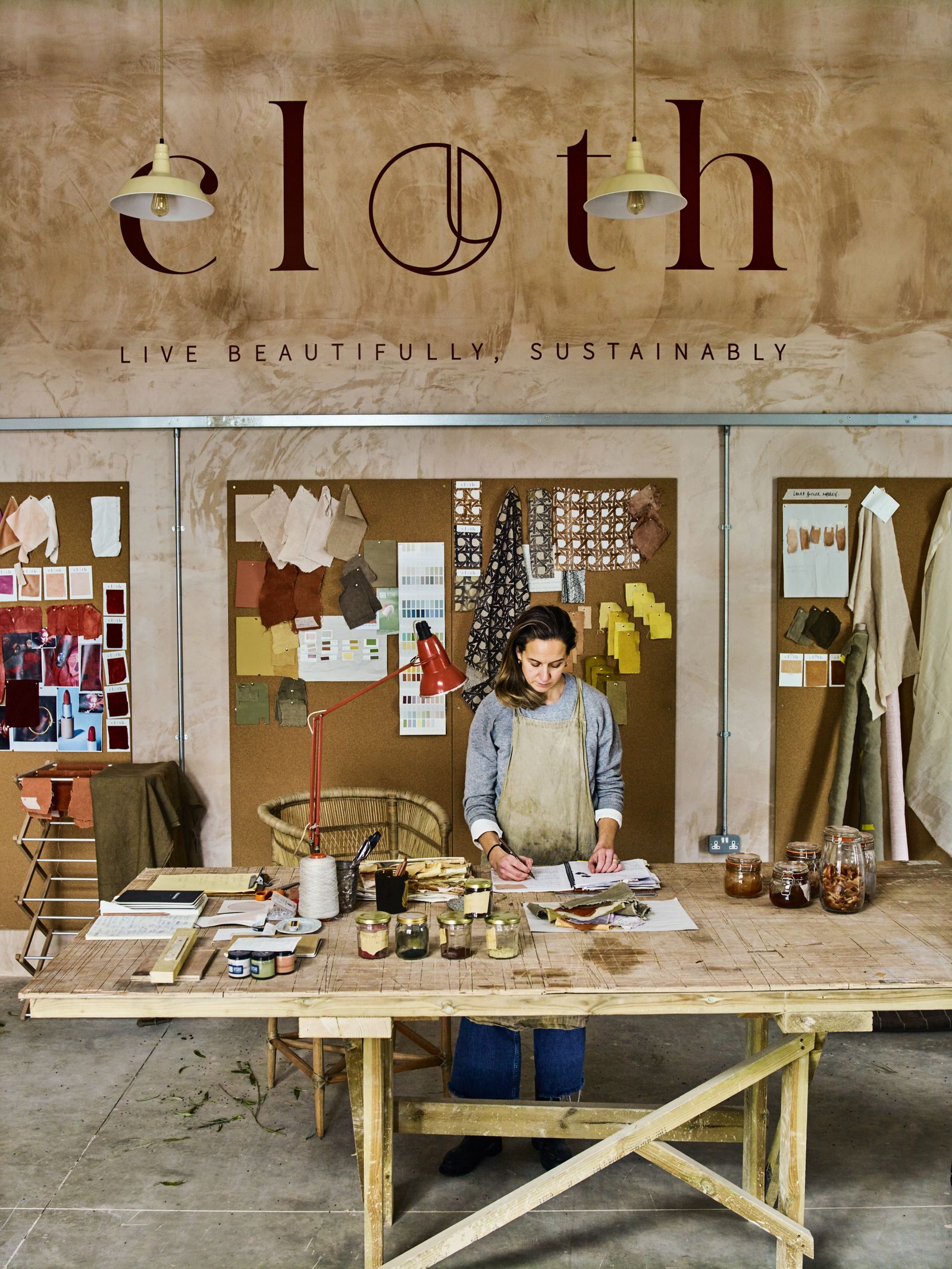
The fabrics sit in the 50-60°C dye vat for anywhere between 20 minutes to three hours, before being hung to dry on a rack suspended from the high ceiling, creating a delightful installation. Most are destined to be used for upholstery or curtains, though Charlotte is working on a specially dyed bespoke velvet for London-based shoe brand Le Monde Béryl to be turned into slippers.
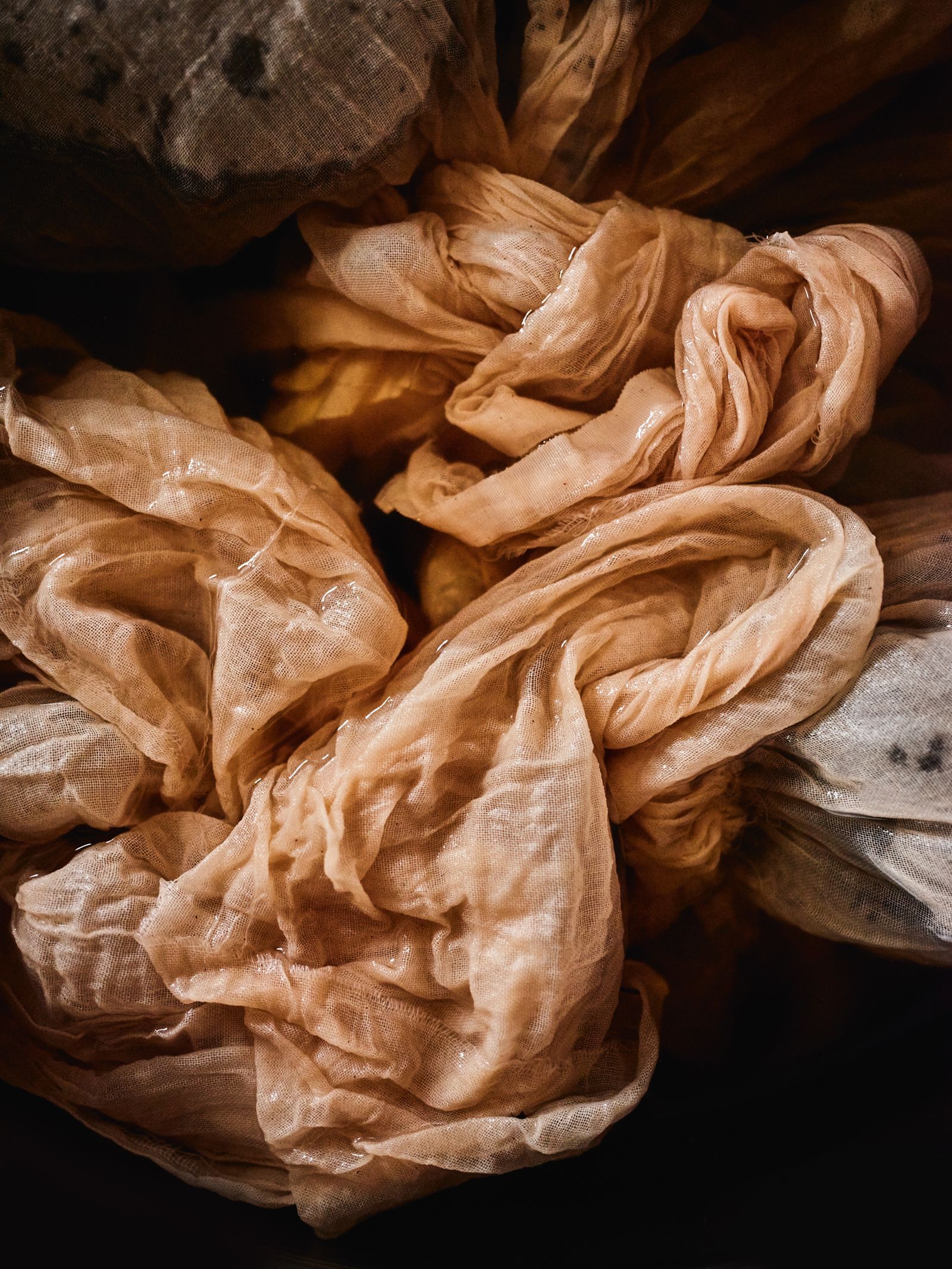
‘The colours sing,’ she says of her fabrics, which are indeed rich and calming, with a real sense of depth. ‘They have so many dimensions and are constantly changing in different light, simply by dint of the fact that they are a product of – and subject to – nature.’


