

They may have been popular in the past but now, a white kitchen screams rental. They were a byword for chic, clean, minimal expensive spaces, but as our tastes have gone more in the direction of a coloured kitchen cabinet, the poor white kitchen has been relegated to the sidelines. This is not so much the case in America, where a huge shiny white kitchen with acres of marble is still a (not so) stealth wealth symbol, but even there, there seems to be a move in the other direction.
Perhaps it's because we associate colour with expressing ourselves, or perhaps it's because white is so unforgiving when it comes to the mess of life, but a white kitchen can still be a truly lovely thing. If you still hold a candle to these bright, airy spaces, then let the below examples be a guide as to how to get them right.
Interesting shapes

All kitchens are not designed equally and it isn't just in our choice of worktops, cabinetry and paint that this rings true. In this modern townhouse by Ann Boyd, the white kitchen is all the more appealing for the shape of the cabinet doors. Stroud Furniture Makers in Gloucestershire built the kitchen units to Ann’s design and their curved doors makes them quite unusual and all the better for it. Even more intriguing at the overhead locker-style cabinets that hang at the bottom of the upper row, providing extra storage while also softening the entire space.
Open shelving
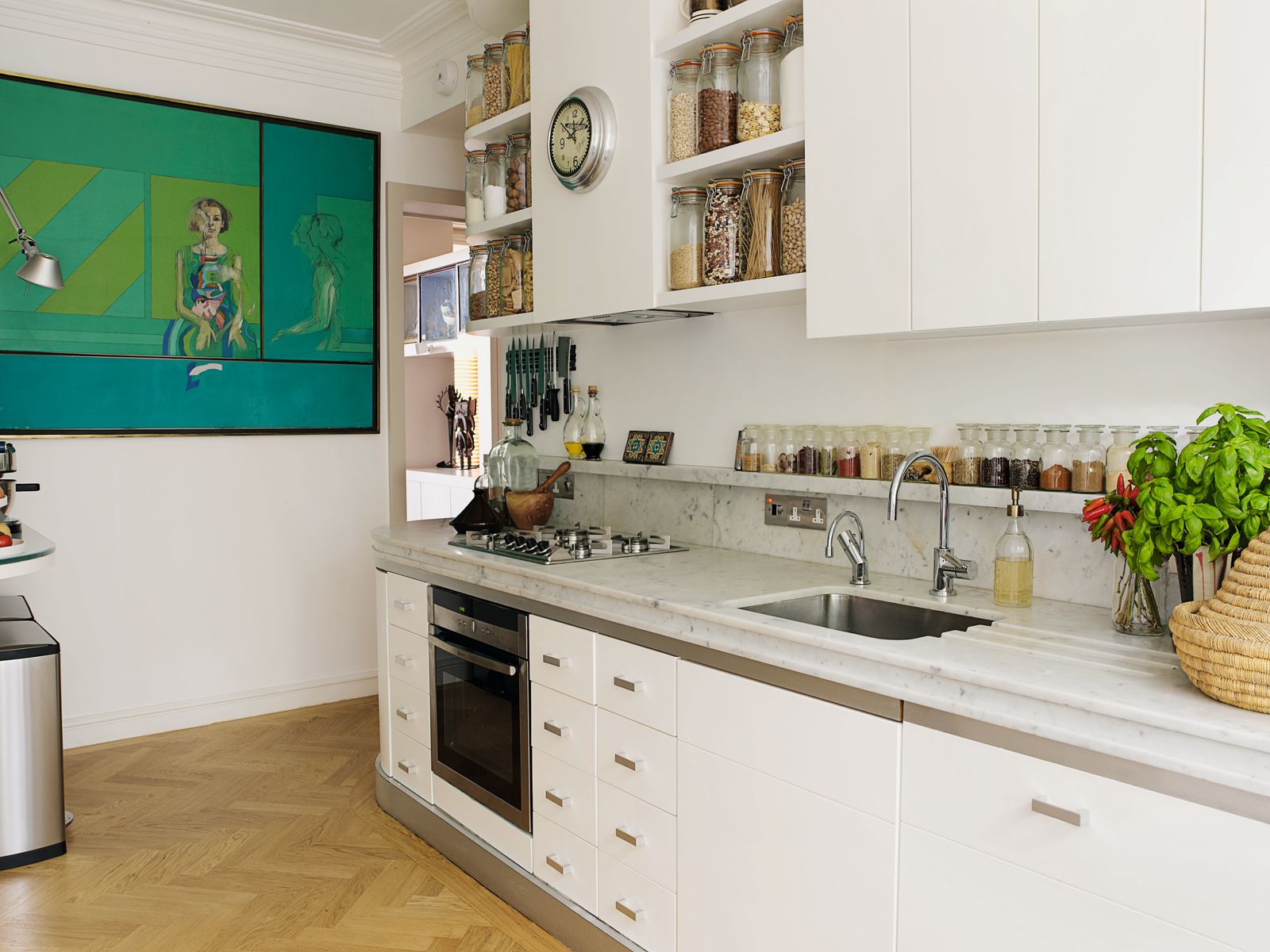
Curves also work to soften this kitchen by Jane Taylor but the real winning design element here (and there are a few) is the use of open shelving. On the top level, it stops there being an overwhelming expanse of white and adds some character via the kilner jars. The little marble shelf that tops off the backsplash is an absolutely genius idea and adds so much visual interest as well as truly useful space for spices and oils.

This compact galley-style kitchen in a 19th-century barn in the Cotswolds is also a wonderful example of how open shelving can be key to making a white kitchen work. The utter lack of any cabinets on the walls makes the space seem lighter and has given the owners spaces to hang art and interesting knick knacks and shelves which all bring personality to the kitchen, where otherwise there would be a flat expanse of white doors. The thin shelves on the other wall add a storage element and further space for ornaments and it all comes together to be a winning example not just of how to bring character to a white kitchen, but also how to get a galley kitchen right. The last thing worth noting is the wooden window frame and shutters – an excellent softening touch.
Change your hardware

There are two ways in which Emma Grant brought character to her white kitchen: wood and handles. The wooden shelves – like the window shutters in the previous example – are a brilliant tactic in a white kitchen, but her choice of ornate gold handles is the real winner here. It's such a small and easy swap – even in a rental – but it makes such a remarkable difference to the overall feel of the space, which is now pretty and delicate rather than cold and clinical (words often associated with all white rooms). As for the wooden shelves, they are once again open – meaning no white cabinets at eye level – but it is the sheer heft of them which makes a statement and adds a lot more to the kitchen.
Add some decorative flair
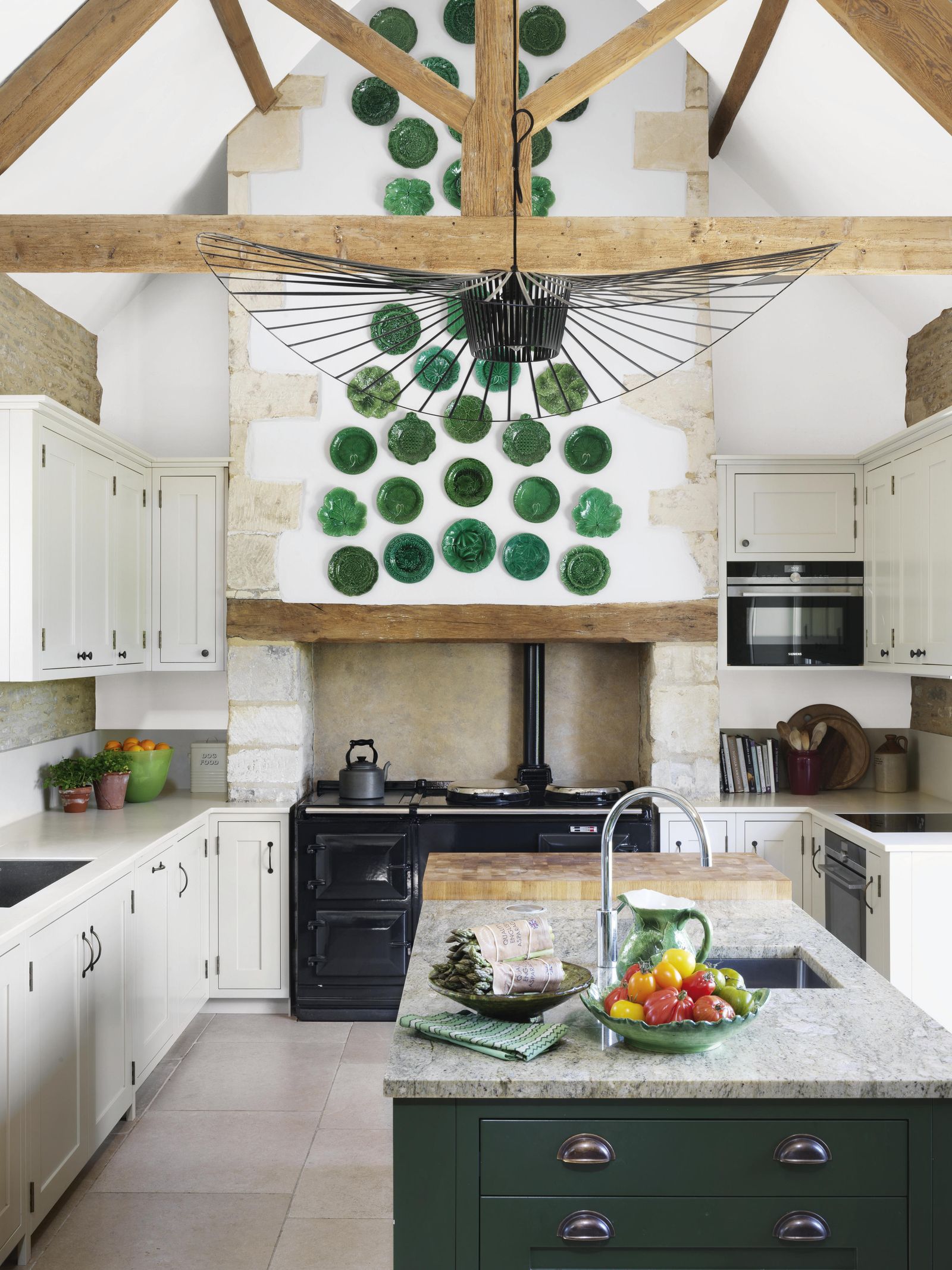
While this kitchen in a Cotswold house by Joanna Wood isn't entirely white, it is a good case study in how a relatively small decorative touch can have a large impact on a neutral kitchen. The antique leaf plates displayed on the tall chimneybreast above the Aga are such a clever touch, as adding art to a kitchen where there are walls full of cabinets is quite hard. This uses an existing space in a smart way while bringing a lot of colour and excitement to the room.

This example from a Chelsea townhouse by Studio Duggan also shows how a few well-chosen decorative touches can make an otherwise simple space sing. A mirror from Balineum and colourful vases and plates on the wall add a sense of fun, while the zellige tiles bring texture to the focal point of the room.


