

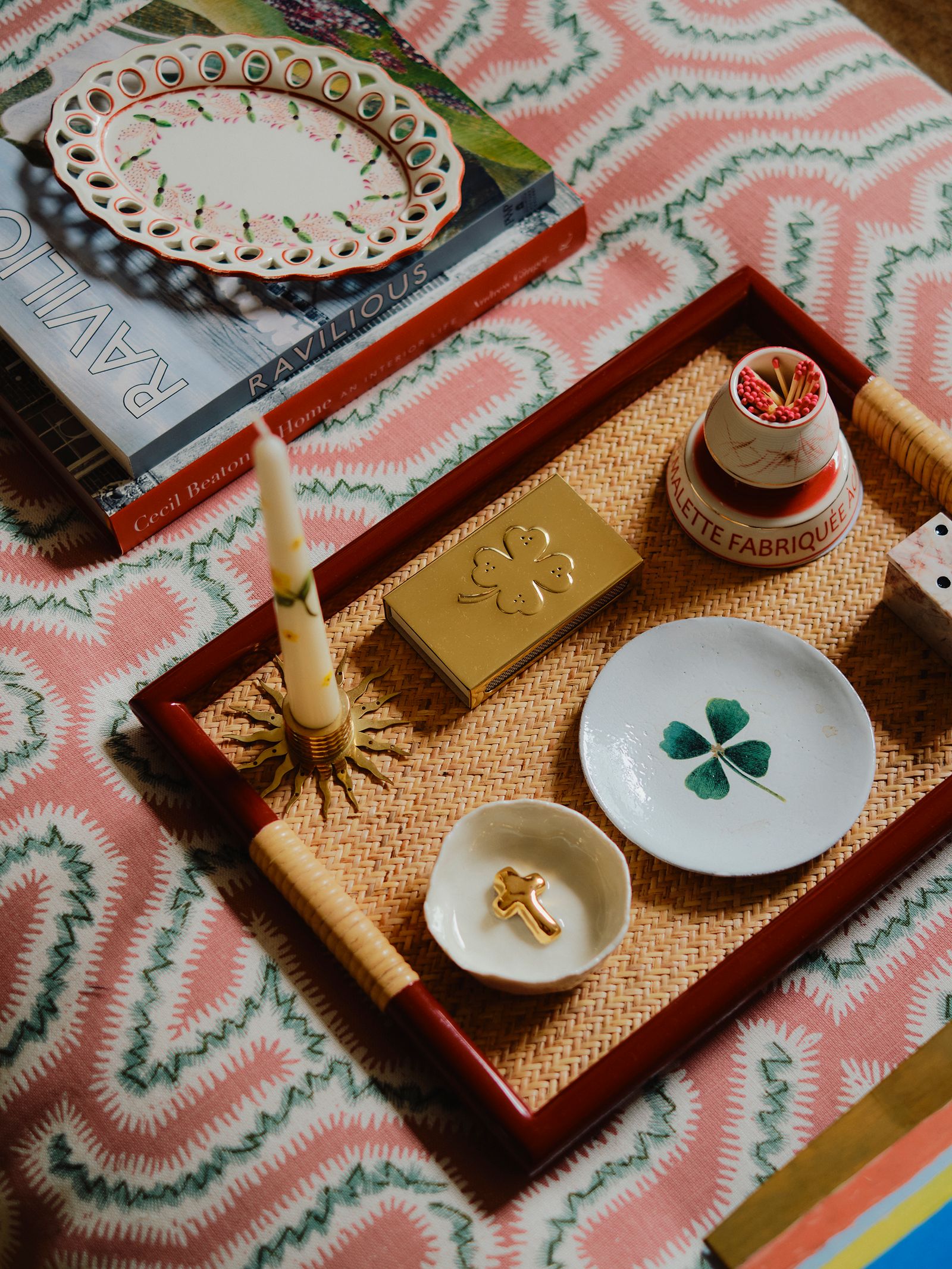
‘Put what you like on your shelf, your wall, your tabletop, your sideboard, but make certain that it is there because it pleases you and not because somebody else told you it ought to.’ These words of wisdom from House & Garden's 1960s decoration editor Olive Sullivan always stay with me when I'm doing a periodic rearrangement of bits and bobs in my flat. Nowhere is this more true than on an ottoman, that central surface that you know everyone will look at when they're putting down a cup of tea or wondering tentatively whether they can put their feet up. This is a place where it can be tempting to go for a status display of books, candles and objets, but ideally an ottoman should express something about its owner, while remaining a practical surface for drinks (and feet).
‘You can always tell the maximalists from the minimalists by their ottomans,’ says interior designer Uns Hobbs, who is often asked by clients to help with bringing personality to these surfaces, and indeed there is something about an ottoman, even more than a coffee table, that encourages a certain kind of display – partly because you have to put books or trays on it to make it a useable surface. Interior designer Sarah Walter Boyd remembers visiting a friend's parents' chalet where the ottoman contained something of a surprise. ‘I had only met the parents once, and had thought them terribly smart and grown up. One evening (when I’d given up on trying to learn backgammon) I was leafing through the small pile of high-brow coffee-table books placed on the ottoman when I came across a highly colourful, illustrated book about the Kama Sutra. It turned out to be part of a family joke – placed to be exactly what you wouldn’t expect to see in such a setting! Needless to say it gave me a far more rounded view of the parent’s humour and showed the collection was considered and personal rather than being bought for style – which is exactly how it should be!’
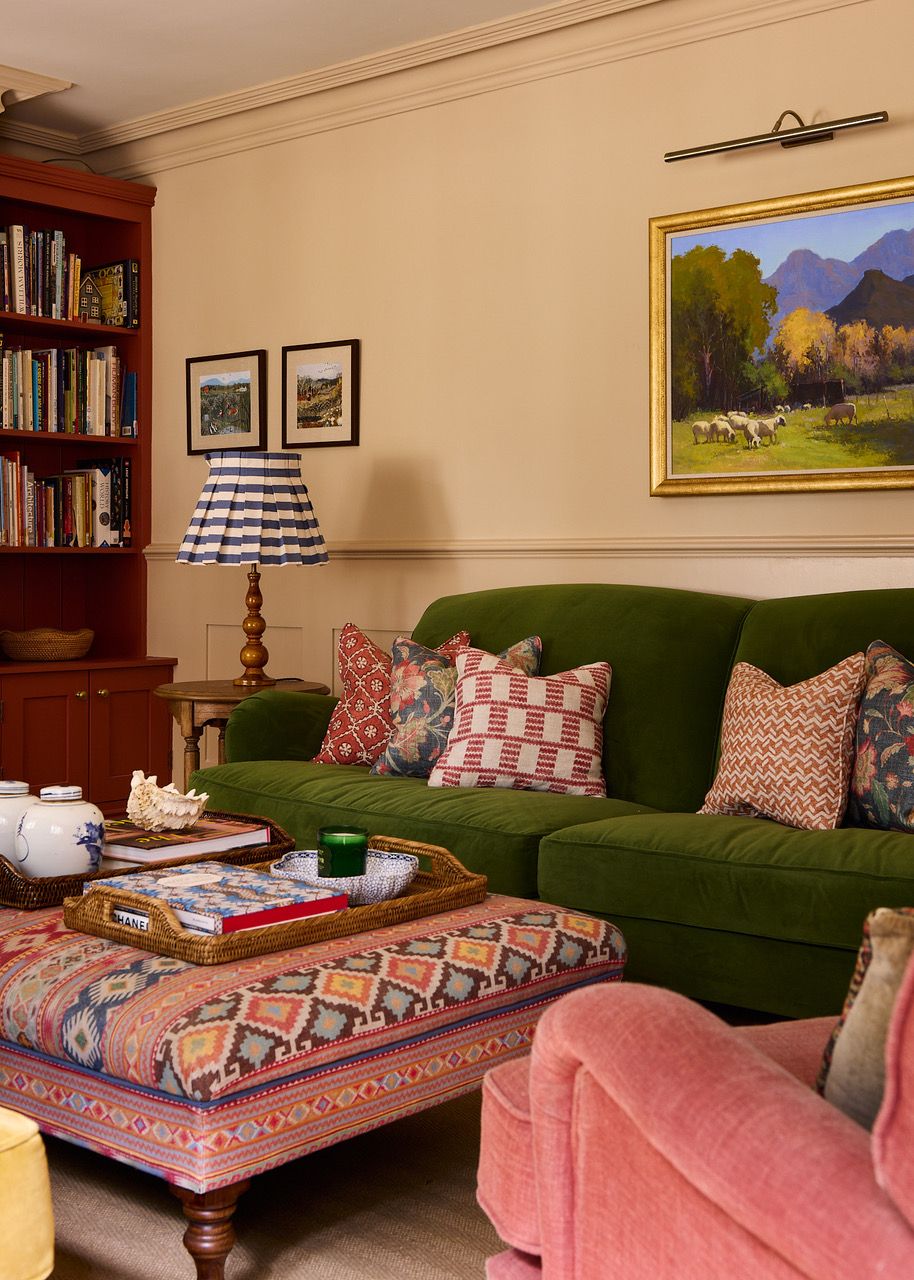
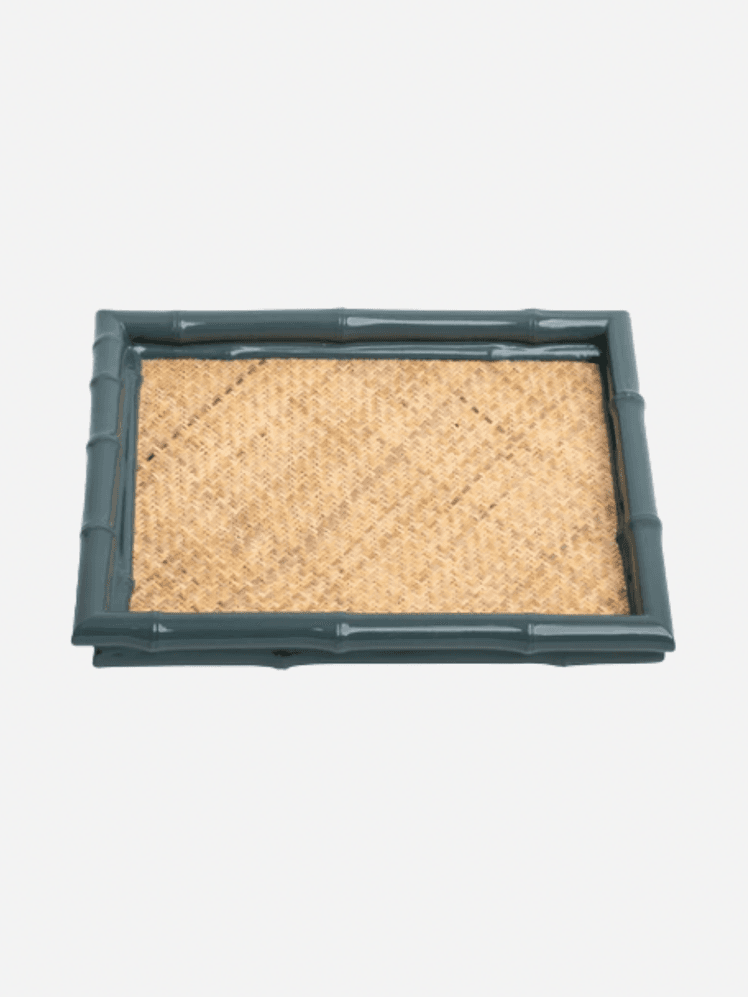
‘Due to the standard location in the centre of a room, anything displayed on the ottoman will be seen and most likely used or knocked in passing,’ says Sarah Walter Boyd, ’so anything that makes the cut should be practical and not overtly precious, but good looking.’ ‘I love stacking ottomans with books and magazines, not just for display, but so there’s always something to pick up on a quiet weekend,’ says Uns. ‘I almost always include a tray so you can safely plonk down a glass of wine, and I’ll add favourite objects like vases or vintage ceramics I’ve collected over time.’ Trays and books, as Sarah notes, are absolutely essential if you want to put drinks down on the ottoman. ‘You might choose an ottoman for extra seating, so the element of softness is important. But they also play the role of table very well if you simply add something to form a flat and stable surface. A soft ottoman can be easily transformed with a tray. Books can also serve the dual purpose of providing reading matter for whiling away the minutes while your host mixes the perfect negroni, while allowing a solid stable surface for a bowl of twiglets or a plate of canapes.’


‘Candles are another must for me,’ adds Uns. ‘They create a warm glow and subtle scent. A vintage shell always looks beautiful, and a small plant adds life, it’s such an easy way to make a room feel happier.’ If there is anything you should avoid on an ottoman, Sarah advises steering clear of ‘photo frames or anything directional. An ottoman will be in the middle of a space, so anything on it should look good in the round.’


Alternatively, if the primary purpose of your ottoman is as extra seating when you're entertaining, things need to be left as clear as possible. ‘The ottoman which has stuck in my head all these years was in the Yellow room at Brook Street when I started at Sibyl Colefax & John Fowler in 2009,’ says Sarah, who has since launched her own studio. ‘Huge and simple with clean lines, it was covered in unique piece of cloth and was in itself a work of art. Left clear and uncluttered, it encouraged people to perch in informal seating arrangements rather than all head to the deep sofas on either side of the fire and almost acted as a landing strip – showing off the beautiful fireplace and art above. All in all it was beyond chic.’
Much about your ottoman will of course depend on your lifestyle. Do you entertain? Are your parties the kind of parties where people will perch on the ottoman? Do you have children? Young children or teenagers who have to put their feet up on every available surface? This kind of thing will dictate not only how much stuff is on the ottoman, but also what fabric you use. Reflecting on decorating around children and dogs, Henriette von Stockhausen suggests either loose covers which can be regularly washed, perhaps in an inexpensive ticking fabric, or using a sturdy textile such as a rug, kilim or ‘vintage Anatolian fabric’. Woven fabrics, as our columnist Fiona McKenzie Johnston notes, are hardier than prints. If, on the other hand, you mainly need your ottoman to look pretty, then this is an excellent place to use a favourite print, as you won't need vast quantities of it (assuming you're not having a skirt made). Jodie Hazlewood, who makes custom ottomans via her business The House Upstairs, says ‘it's a great way to use a very fancy piece of fabric, or an offcut or an antique remnant. For busy family homes we try and encourage a pattern as it's so much more forgiving of small marks.’

Angus and Charlotte Buchanan, the couple behind Buchanan Studio, came up with an ingenious solution for the ottoman in the middle room of their London house. Angus designed it himself to have a frilly skirt that would hide the storage boxes of toys underneath, and it has two slipcovers that can easily be changed: one made from the studio’s ‘Ticking Rose’ fabric, and one in velvet for smarter occasions. ‘It has its day clothes and its evening clothes,’ jokes Charlotte. ‘We just whip the velvet on in the evening and the room takes on a totally different feel.’


