
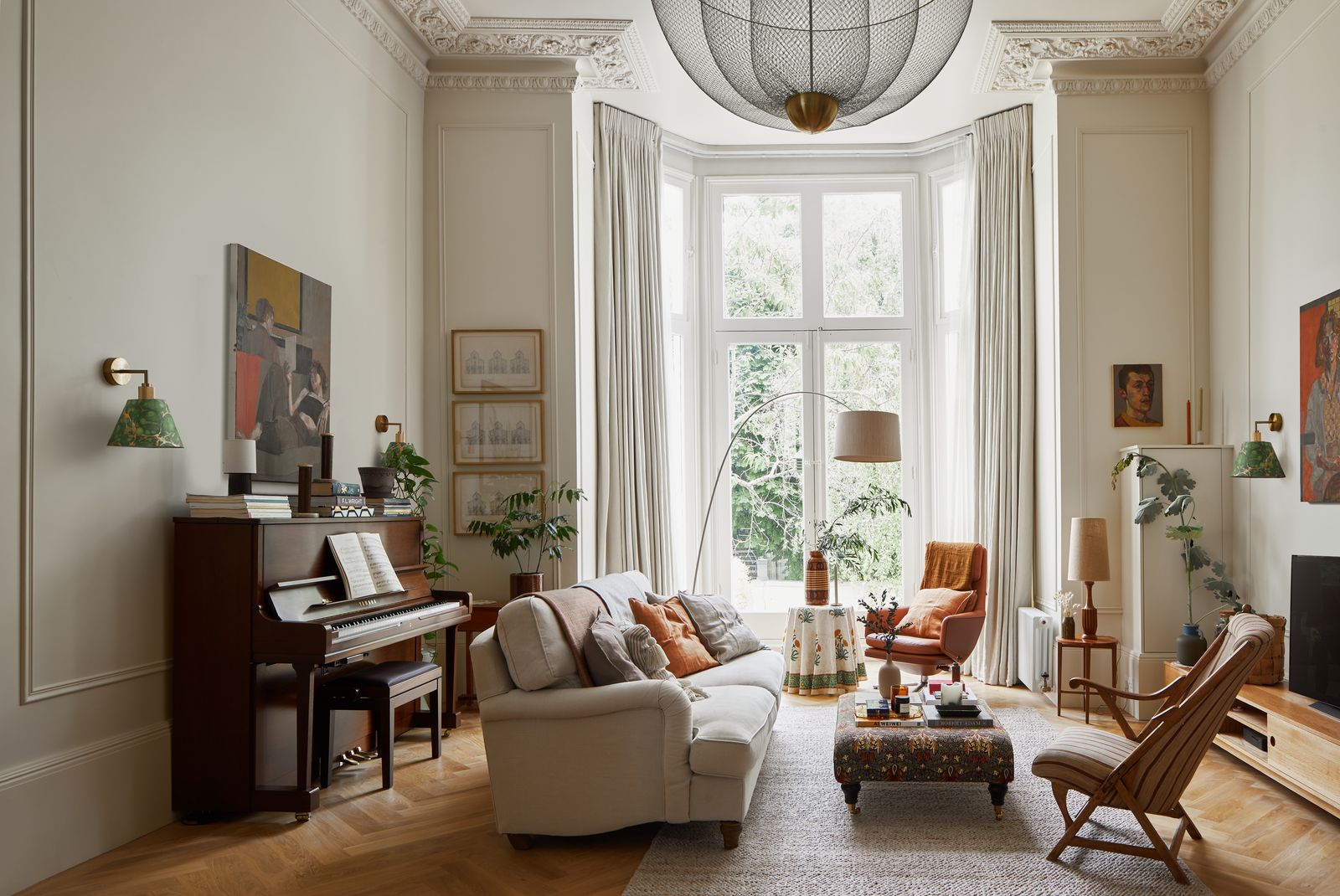
Sometimes the difference between a room that sings and one that simply hums is asking yourself the right questions. If a space feels slightly off, seasoned designers often start with a standard line of inquiry. Approach it as a design detective. Instead of rushing to replace a rug or repaint the walls, designers pause and look for clues, like a lamp throwing off the mood, an oversized sofa stealing the spotlight or a layout that just doesn’t flow. A Miss Marple level of observation can reveal what’s making a space feel unsettled.
The trick, designers say, is curiosity. Homes that feel considered and layered aren’t the ones that get everything 'right' at once – they’re the ones that have been quietly questioned over time. We asked four experts to share the prompts they return to when a room refuses to cooperate. It turns out that a little investigative thinking can turn almost any space around.

Do you have enough lighting?
When a space feels dull or lifeless, lighting may be the culprit. According to interior designer Nicola Harding, the first question to ask of any room is: ‘Does your room have enough lamps?’ The answer is probably: ‘No.’
‘Lighting, and therefore lamps, is the secret to a room’s success,’ she explains. ‘They should be a blend. Some large, some small. Some with shades that glow – such as those made of fabric or card. And some should have solid shades, such as metal or plaster, so that the light is focused, falling precisely where you want it to.’
That variety – both in scale and in quality of light – creates atmosphere. Without it, even the best-designed space can feel flat. As Nicola puts it, ‘This blend of types of light gifts a beguiling atmosphere to a space.’

Are you paying attention to height?
Both Rachel Aisling Walker of RAW and Christian Bense flag the importance of what Christian calls the Y axis. ‘Have you provided opportunity for your eye to lift up as you journey the room,’ he asks. ‘Or is everything sitting at the same height? So often it’s the lack of variance in vertical lines that make a room feel off.’
Rachel echoes his sentiment, saying, ‘If everything in a room sits at one level – say, all your tables and lamps are low – try introducing something with height, like a tall mirror or a mobile hanging from the ceiling, to draw the eye upward and create balance.’
The takeaway? Try playing with tall plants, layered artwork or a sculptural pendant to create a rhythm between high and low.
Are you letting the architecture lead?
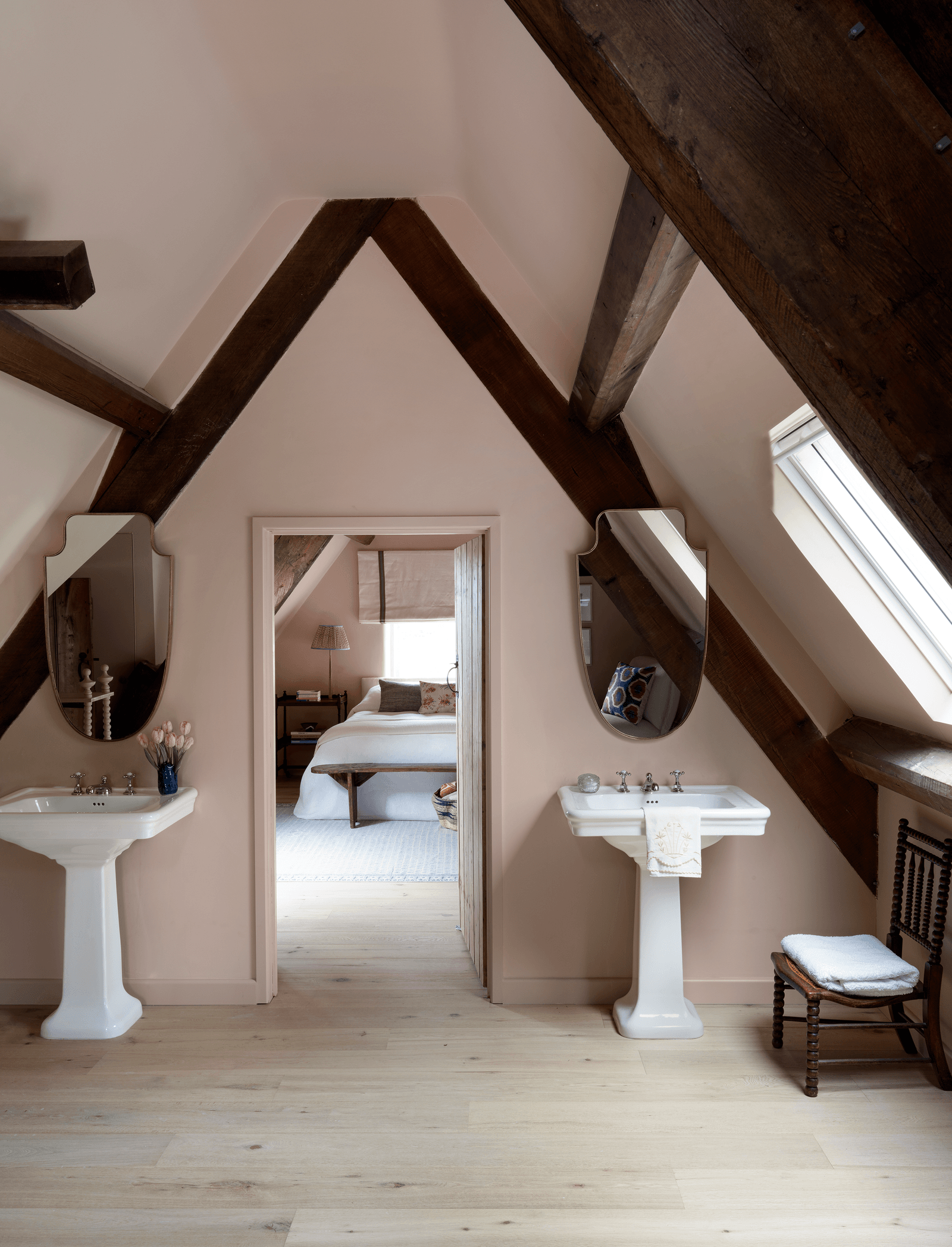
Next, Christian recommends considering whether the decorative elements are ‘fighting’ the architectural ones. ‘I would always advise that you let the architectural elements in a room dictate focal points and how the room is centred,’ he says. ‘If you ignore those, often a room feels off balance and the furnishings feel as if they haven’t been truly considered.’
It’s a reminder that the walls, windows and joinery were there before your furniture – and will likely outlast it. Let the room’s bones tell you where the emphasis belongs.
Could you swap things around?
Before buying anything new, try a gentle shuffle of what you already have. The perfect piece might already be in your house – just in the wrong spot. ‘Never feel constrained by the idea that a piece bought for a specific room has to stay there,’ says Nicola. ‘In my experience, some of the best spaces evolve organically, and swapping things around can completely change the energy of a room.’
She learned this firsthand on a Camden townhouse project. ‘The yellow cord sofa that now anchors the drawing room was originally destined for the family room. When it arrived during the install, I felt drawn to see how it might sit in the drawing room, and it worked perfectly there.’
It’s an elegant case for experimentation. That rug you’ve been staring at might be happier under the dining table. The armchair could sing in the bedroom. A small act of rebellion – where a piece was ‘meant’ to go – can lead to an unexpectedly harmonious result.

Are you editing, or are you just adding?
Once your furniture finds its flow, the next step is to refine. Rachel advises a layering approach. ‘When it comes to accessories, I always suggest layering and then editing. Add things in, then take them away one by one until the space feels harmonious,’ she says. ‘Surprisingly, it’s often the smallest detail, such as a coloured throw or a textured cushion, that ties everything together.’
Her philosophy pairs neatly with Christian’s counterintuitive advice to add before you remove. ‘This may seem like a slightly controversial question to ask yourself if you feel like a room feels a little off,' he says, ‘but I am a firm believer that you should add before you remove.’
He explains that when a space is evolving organically, newly added elements might seem jarring at first. ‘Whilst you wait for the rest, the room may feel a little off,’ he notes. ‘In these moments I always advise clients to hold fire, finish as planned, and then see if the room still feels like it needs an adjustment.’
In other words, don’t panic-edit. Sometimes balance emerges only when the room is fully realised.
Are your cushions causing chaos?
For Venetia Rudebeck, co-founder of Studio Vero, the problem often lies not with the sofa but with what’s on it. ‘Cushions are often where a room can start to feel a bit off,’ she says. ‘Too many, or all in the same size or fabric, can make a space feel chaotic rather than comfortable.’
Venetia’s strategy? ‘We always start with a common thread, usually a colour or material, and then build around it by mixing scale and texture,’ she says. ‘Our rule of thumb is one patterned, one textured, one plain, with a mix of shapes so it feels balanced and relaxed.’
‘We like contrast rather than coordination – linen next to velvet, a small check with a broader stripe – and we always let one or two cushions quietly pick up a tone from elsewhere in the room, whether that’s the rug, artwork or curtains,’ Venetia continues. ‘It’s about creating a mix that feels intentional and lived-in, not styled within an inch of its life.’

Are you letting the room evolve?
Ultimately, all of these questions share one throughline: patience. A truly great room doesn’t arrive fully formed. ‘Some of the best spaces evolve organically,’ says Rachel. Christian agrees, urging homeowners to see decorating as an iterative process rather than a one-day makeover. ‘When you reach that stage and are able to look at the room or all the elements as a whole, then you can see if it really needs an adjustment,’ he says.
So, is your lamp the wrong size?
Maybe. Or maybe you simply need more of them – tall and short, glowing and focused, working in tandem to layer the light just so. But that’s the beauty of these questions. They invite you to look, not to judge. The right answers will reveal themselves the longer you live with your space. In the end, decorating well isn’t about getting it ‘right’ once – it’s about asking, again and again: what does this room need now?


