

How many houses have you ever visited that have been a true reflection of the people who lived there? While it’s fairly straightforward for us to think of the way we dress as a visible way of expressing ourselves, it’s not always as easy to do it in a house. A house is bigger, for one thing, and it takes more time, more thought and usually more money to clothe it in a way that is individual and meaningful. But it is also the setting in which we live our lives, to which we invite our friends, and we will almost certainly inhabit it for longer than we do the outfit of the moment. But what does self-expression in an interior look like, and how can you get better at it?
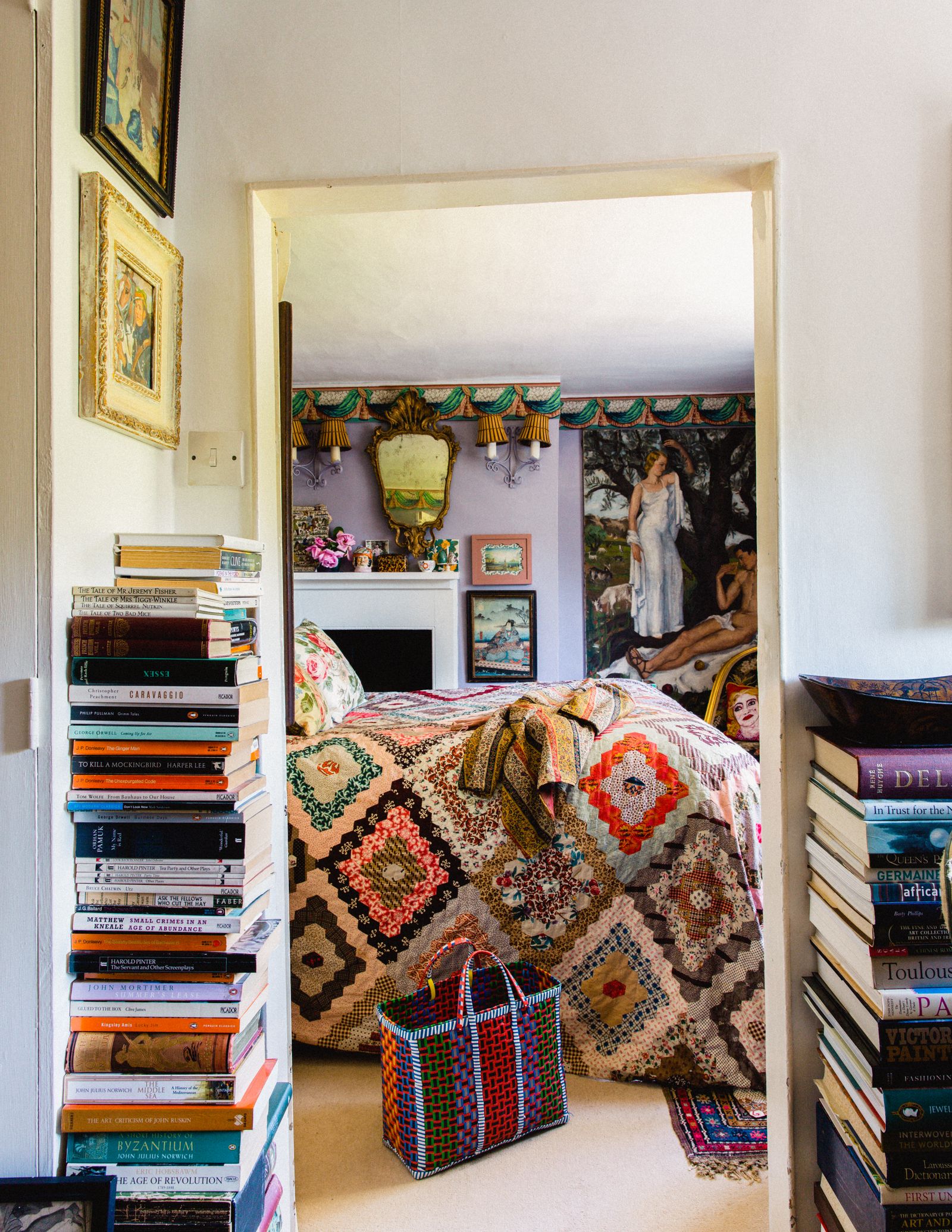
“The interiors we create serve mostly two key purposes,” says designer Benedict Foley. “One is simply display, showing other people what you can afford to have. That's less interesting for me as it's mostly done with the subtlety of a brass band. The second is almost like a diary, a record of a conceptualised idea of home, of what safety and comfort means to us, and our story of our journey through life.” This could be visualised in any number of different ways. Most people enjoy looking round historic country houses, for example, and they are particularly fascinating when members of the family to whom they have belonged still live there. The past seems to unfold as you move around the oldest family houses: the style of the furniture, the portraits, even the architecture, signals how the story has developed, and if you catch a glimpse of the TV, of a suspiciously modern-looking armchair or the family photographs on a side table, one has the sense that it is still developing now.
For the individual, it tends to be the objects we have collected over the years that are the most expressive of who we are: art, books, the things we buy on our travels, the objects we acquire through our interests. “I grew up in South East Asia,” continues Benedict, “and so I suppose travel has been part of my life for as long as I can remember. Stylistic influences and the intermingling of patterns through trade were a sort of puzzle I enjoyed working out as a child. I have always collected in a way where one thing led to another, enjoying a pattern of travelling from Greece to China, back to Iran, on to Europe, and then back to China to come back to Europe again. I have a collection of objects from all of those places that each have the same thread, a particular zephyr pattern, and I enjoy living with them every day. I enjoy being connected to all those other makers, even though I can't know them and they are long dead.”

Patrick O’Donnell, brand ambassador and colour consultant at Farrow & Ball, finds that books are a significant way of expressing something about your taste and your story at home (especially when you don’t have a huge budget). “Books are the key ingredient for me. Hopefully not in a contrived and edited way, although I do hopelessly have all my Greek & Roman A-level stuff on a bookshelf, while knowing I will never read Virgil’s Georgics again– who would?” For interior decorator Lucy Hammond Giles of Sibyl Colefax & John Fowler, it’s the art that gives people’s personalities and tastes away. “People are, I think, unexpectedly confident in using art. It’s a finished object, which makes it easier for people to decide on it. It doesn’t come with the endless choices that, say, a sofa does.”
When it comes to the more permanent parts of a house, the layout, the furniture, the colours, and so on, it is perhaps the sense of endless, hard to navigate choices, and the pressure of making expensive choices, that makes it difficult for people to stamp their own taste on their interiors. And while we all have experience with everyday forms of expression such as choosing our clothes, designing an interior requires a certain basic level of knowledge. “The daily exercise of dressing ourselves means this part of our personal style is consistently tried and tested,” explains interior designer Rachel Chudley. “Designing and decorating our homes feels bigger and harder to change, and it’s really a language of style most people haven’t explored. It can feel unattainable even for the most creative people with an established sense of personal style.”
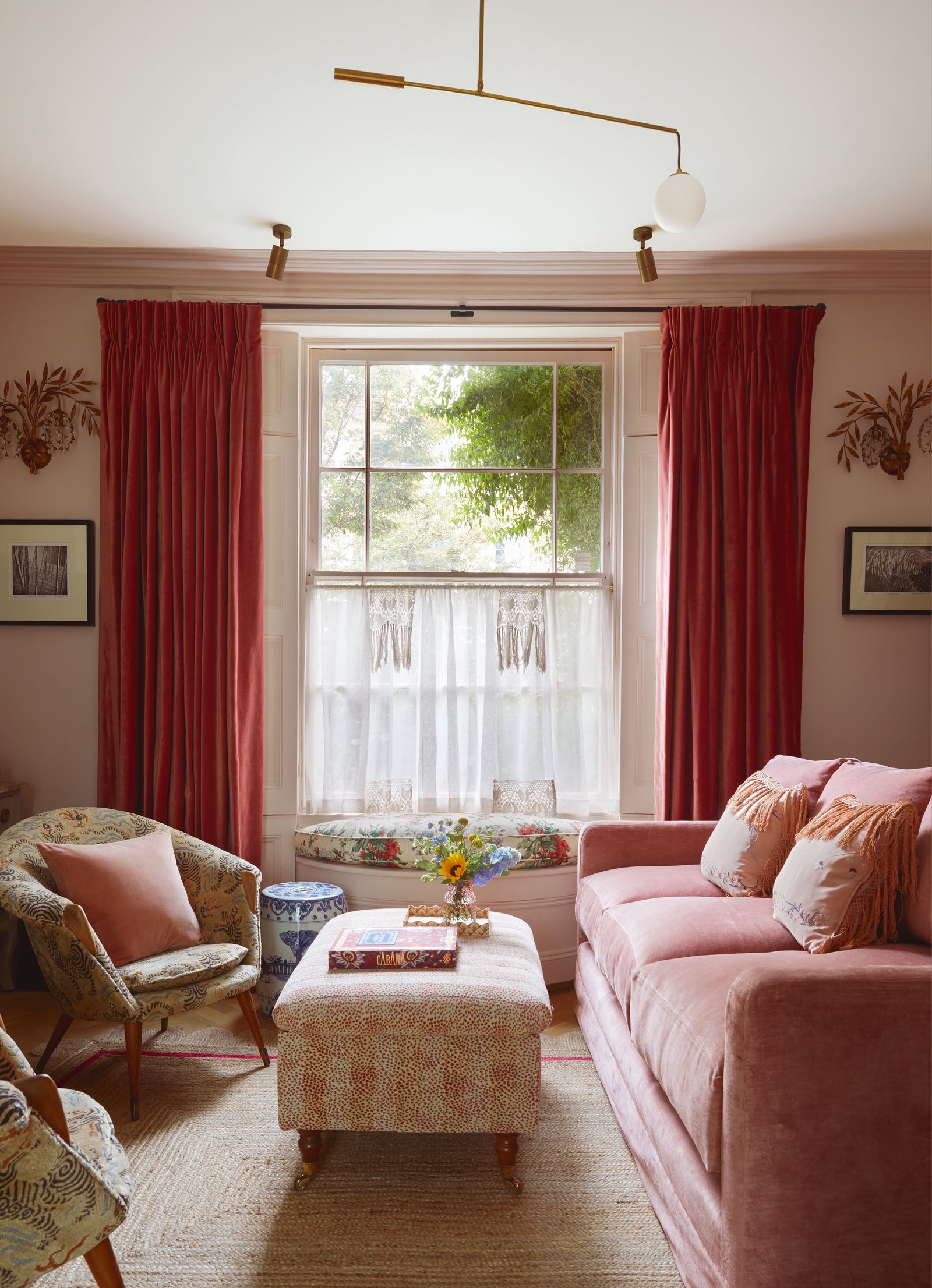
More and more people are coming round to the idea that their interiors should be as much a part of their self-expression as clothes, however. As fashion brands increasingly turn their attention to homewares, and interiors influencers proliferate on social media, it feels de rigeur that we should be happy to show off our rooms as extensions of ourselves. Nicola Harding compares it to the British cooking revolution in the 1970s and 1980s. “Supper at one point became a form of creative expression. Delia Smith’s iconic books were everywhere and everyone was suddenly trying to find glycerine to make a torte. I think the same sort of thing has been happening with interiors.”
But there are two sides to every coin. While Instagram might make it feel more natural for its audience to give as much consideration to their homes as to their wardrobes, are we just churning out a series of cookie-cutter interiors, keeping up with the Joneses rather than giving free rein to our personalities? To counter this possibility, Nicola advises “using Instagram to tickle your imagination rather than being slavish to it. Try and develop a good sense of what is going to be everywhere. I think it works when the bones of your house are classical and timeless, but you can have fun with some things that are in fashion like you would with a piece of jewellery, and let it be something easy to change or reinterpret down the line. Ultimately it’s a good thing that interiors are more in the public consciousness because there is more variety accessible now. It was the same with food; all the different herbs and spices you can get in a supermarket now always existed somewhere, but they weren’t user friendly or easy to access. Now there’s much more available to play with.”

If it’s that very variety that you find bewildering, then that is ideally where an interior designer would step in to help. As Nicola explains, “the role of the interior designer comes into its own when people don’t really know what they want. We have experience of understanding how people live. We will look into the subtext of how they enjoy living, how they want to feel when they’re coming home after a difficult day at work, or when they’re putting the kids to bed, and we know what’s available out there to help them achieve that feeling.” That idea of helping is a crucial, though not universal facet of working in interior design. “Broadly I would say there are two types of interior designer,” says Lucy Hammond Giles. “There are some who have a very established look, a very established brand, and their clients will know exactly what they are going to get. It is their job to create something beautiful, a finished product. And then there are interior designers who listen and who want to be a kind of conduit for helping their clients achieve what they want.” Rachel Chudley uses the metaphor of a sponge to describe the process. “I soak up the information from the client and the space we are decorating. These elements are then squeezed out through the rather funky sponge that is Rachel Chudley Interior Design, with a fair amount of marination on the way. Each of our projects consists of this unique mixture; it wouldn’t be possible without the client or the site-specific space we are designing. However somehow it is also recognisable as our work.”

“Self expression sometimes becomes easier in conversation,” emphasises Lucy, and the beauty of working with a good interior designer is in the dialogue. The dialogue, which might start with a question as simple as ‘do you like that sofa?’, can go in a multitude of different directions, and the exact ratio of the interior designer’s taste to the client’s taste that ends up in the finished interior will vary depending on the individuals involved. “It doesn’t really matter to me if I don’t like the room in the end,” says Lucy. “That can make it more interesting. I'm actually really proud of some of the rooms I consider the ugliest because the people who live in them really like them.”
Without the intervention of an interior designer, what are the qualities that allow people to express themselves well at home? For Lucy, the quality of thoughtfulness in her clients is one that enables her to work with them to create a meaningful interior. “It’s usually easiest to help someone who has spent a certain amount of time reflecting on themselves in general.” A certain level of orderliness and method, as she explains, can also be hugely helpful, simply because in the process of putting together an interior it is necessary to make decisions, and people whose lives and tastes are essentially chaotic find it difficult to create cohesion.
On the other hand, and perhaps more important when interiors are built up slowly over time, a little looseness and flexibility, a willingness to try different things and accumulate different influences, can be helpful, and this tends to overlap with other kinds of self-expression, such as cooking and gardening. “I’m definitely very freestyle in the kitchen,” says Patrick. “I’ll take the bones of a recipe and change stuff, add different spices, increase or decrease elements. My other half thinks it’s wildly arrogant that someone has slaved over a recipe only for me to embellish it, but where would the fun be in following the rules? Hopefully it’s that lack of being pigeon-holed that is my self-expression, and that results in the eclecticism and variety of the rooms I design.”
Benedict finds the same with gardening, which offers lessons in letting go and realising you can’t control how everything turns out. “I'm not a very 'good' gardener,” he says. “Half the time I only remember the common names for things, or not even at all, but I enjoy the slight chaos of it. I let things self seed and intermingle. Some things turn out really well and some things terribly and you don't have that much control over it, although you can move things round and keep the mix dynamic. It's an interesting endeavour to be both principal and understudy. Sometimes with interiors I feel people can lose sight of the idea that enjoyment is more important than perfection, and nature can help remind us of that. Perfect for me is happenstance guided by a collective will. I remember walking with Christopher Gibbs around his garden in Tangier and his talking about the movement of one area of planting to another, it all looked as if it could have just happened, in some ways it had, but he was playing a duet with nature which made it all the more beautiful.”
And finally, as with any form of self-expression, there is an element of bravery. “You do have to be OK with vulnerability,” says Lucy. “People will probably always judge you if you open yourself up to that, so you have to love your things so much that you don’t care if other people don’t like it.”


