


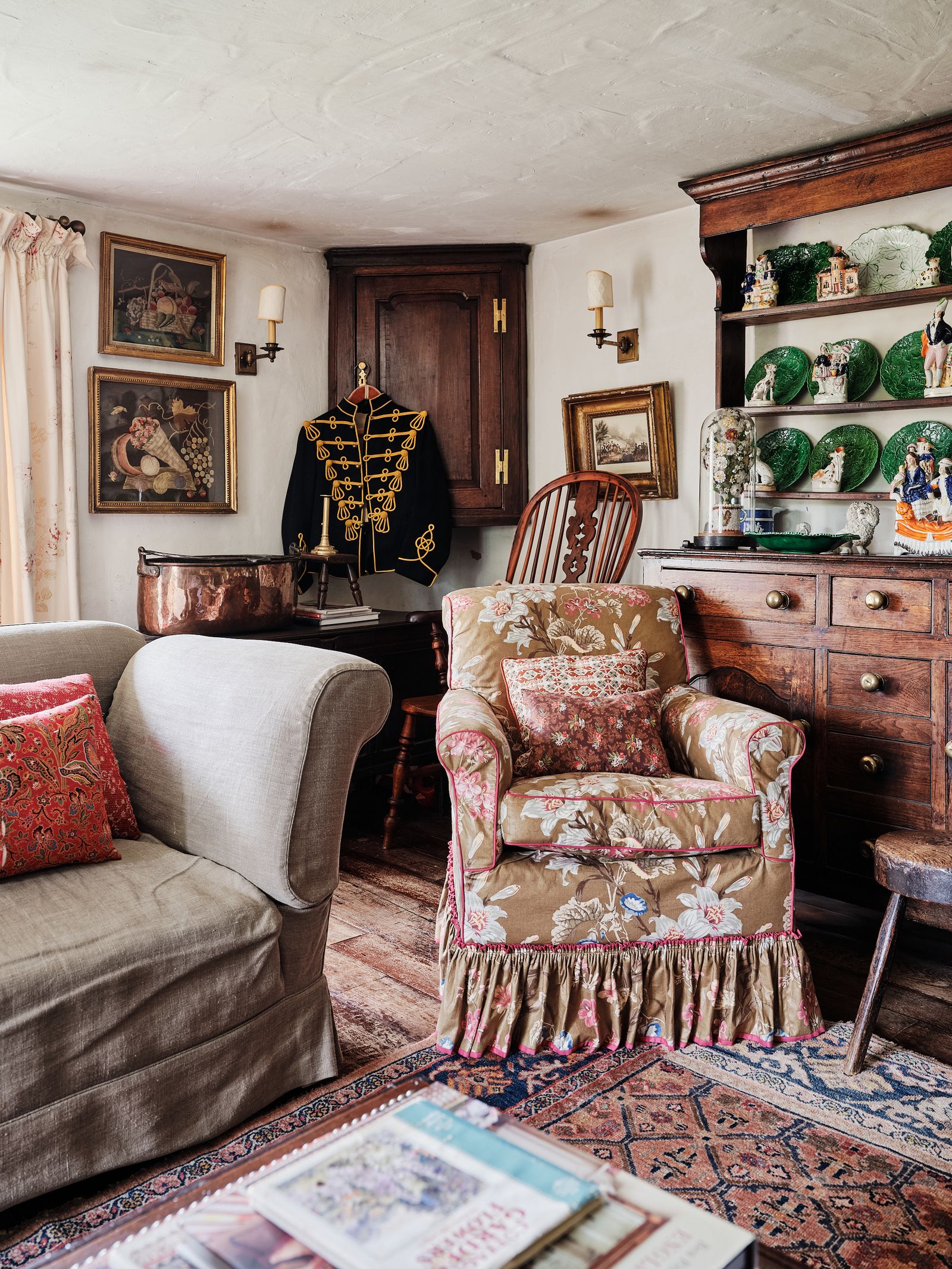
“Addiction is something that takes many forms,” says Benedict Foley. “In my particular case it is antiques.” For anybody who has seen photographs of the cottage in Dedham Vale (pictured top) he shares with Daniel Slowik, this admission won’t come as a surprise: the cottage is packed with pictures, porcelain, majolica pottery, a pair of Spelter ‘Marley’ horses that they explain they particularly love “because they were the worst copies we’d ever seen, and we found that very amusing” – and much more. Similarly, Alexandra Tolstoy’s homes in London and the country are veritable troves of unusual items of beauty, including an antique sheep, a large Polish foil nativity scene, sailors’ valentines, embroidered Uzbek coats, and heaps of china – to the extent that her sister refers to her cottage in Oxfordshire as ‘the museum.’
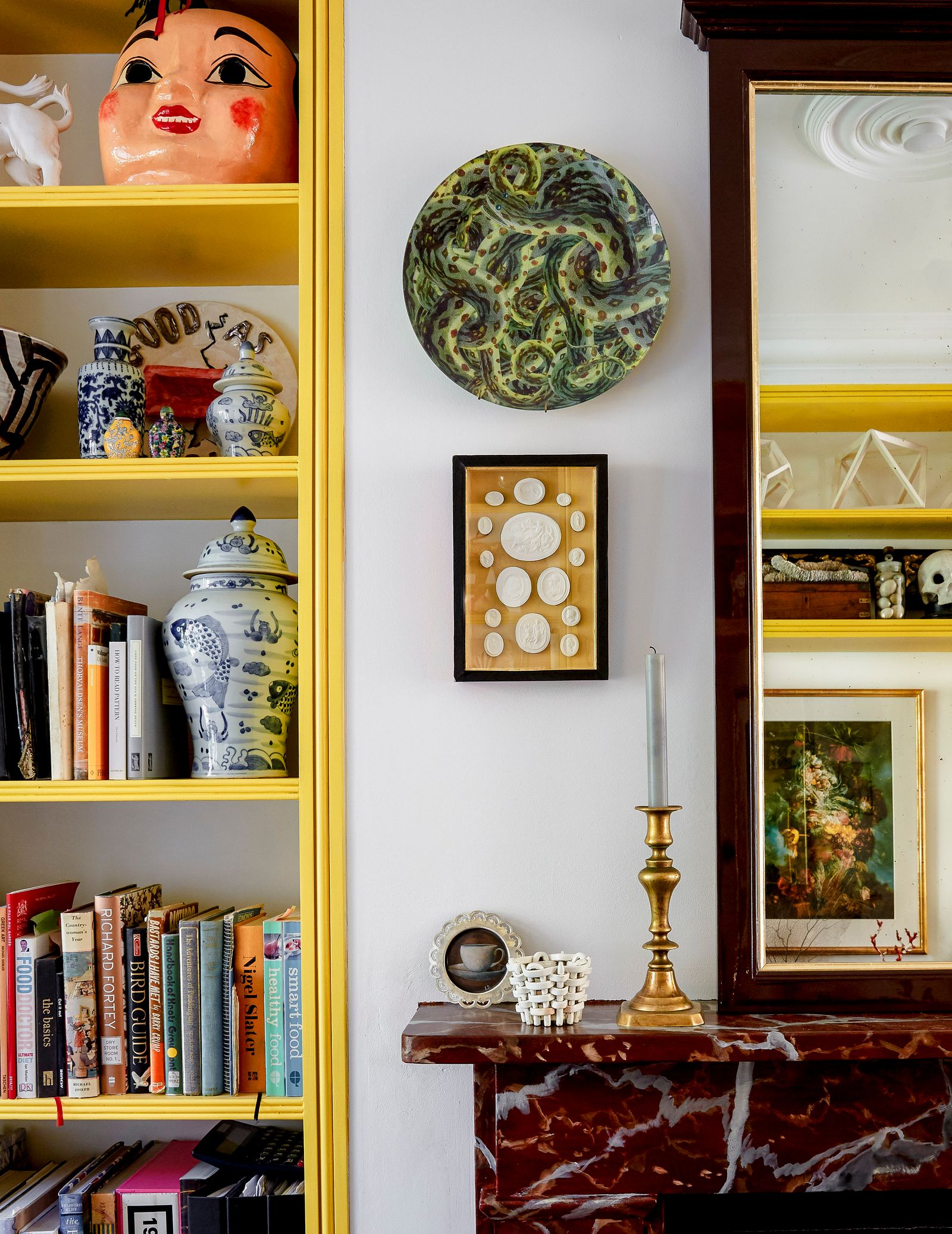
Meanwhile, the artist and maker Bridie Hall explains that she sees the Sir John Soane Museum as the domestic dream, and she doesn’t just collect, she collects collections – fifties miniature casts of the Elgin Marbles, death masks and Maori busts, Victorian-era accumulations of shells, Egyptomania textiles – and she combines them with her own works, such as intaglio cases displaying tiny plaster reliefs of famous works or Grand Tour souvenirs.
Interestingly, the houses mentioned above are some of the most popular on the House & Garden site – along with those of the architect George Saumarez Smith, where no surface is left bereft of Sunderland lustreware jugs or an assortment of mocha ware mugs, and former Sotheby’s specialist James Mackie, where stacks of books have grown up under tables. Evidently, we love stuff – others’ as much as our own, and it is often others’ that inspires our own amassing. Sir John Soane collected everything that you now see in the museum – it was once his actual home, where he had so many paintings that he had special hinged walls made, so that he saw different works at different times of day. There’s a variety of reasons for collecting, for Alexandra it is to learn more about something, to “fine tune her eye”; Bridie loves the tangible association to the past. Others form a connection to a particular genre – Ben Pentreath and Charlie McCormick have a huge number of Staffordshire flatbacks in their bothy in Scotland, which anybody who follows Ben’s Instagram will have spotted.

But, as we all know – and as Benedict hinted – collecting can equally be problematic, and the line between collecting and actual hoarding is not always distinct. Just as we lap up pictures of these maximalist abodes, so we watch Hoarding: Buried Alive on Netflix, even the title of which speaks to our deepest fears of our body one day being found underneath collapsed towers of – well – anything. It’s not something that wealth can insulate against either; you may remember the relatively recent account of the wife of the heir to a significant fortune, who lay dead for months under twelve layers of clothes. Admittedly, there were other addiction issues going on there alongside – but addiction is addiction. (Although to be clear, the compulsive collection of cushions has yet to be proven a gateway to casual cocaine use, but cushions can certainly lead on to art, and then to magazine articles about art, and then to more cushions, and to china, and to books about that, and so on, and so forth.) Perhaps this is why we so enjoy examining these particular homes: they teeter, rather, on the brink of what could be described as hoarder-chic. It's comparable to going on a fairground ride when you’re scared of heights, and we admire – from above – Bridie, Alexandra, Benedict et al’s ability to surround themselves with beauty, without it looking like they’re also running a shop from their house. The question, for the rest of us, is how?
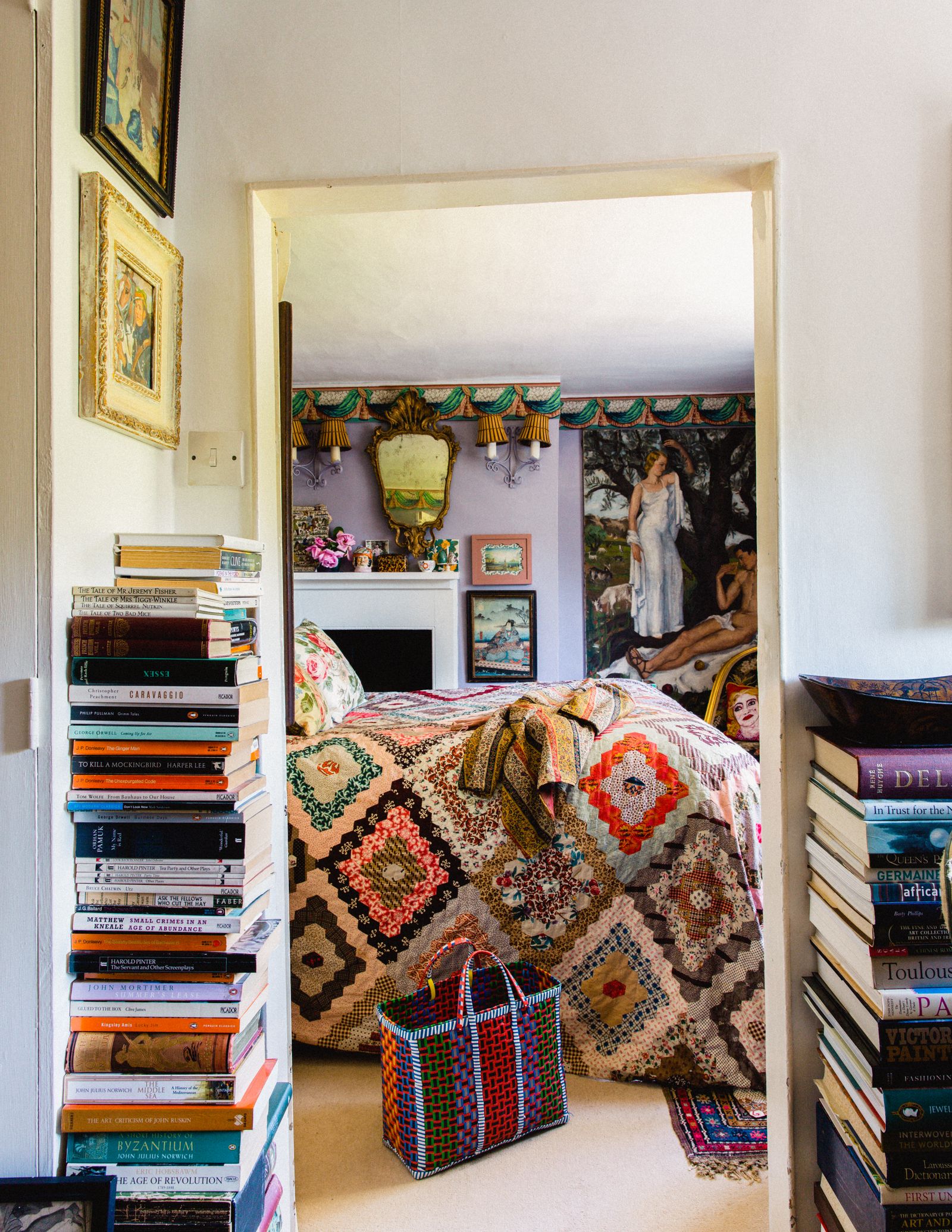
“Purge, purge, purge,” say Alexandra and Bridie unanimously – but even that comes with difficulties; Olivia Outred points out that “as a nation, we struggle with throwing things away.” Bridie admits that it is her inherent fear of genuinely becoming a hoarder that helps her keep tabs on things, while Alexandra confesses that “moving house for me was the best thing.” She was helped in packing by Susanna Hammond of Sorted Living, and “I was determined that I would never let anything build up ever again. I actually have empty cupboards,” she marvels. What’s worth remembering is that selling something is not the same as throwing something away, and Alexandra recommends developing a relationship with someone who deals in vintage or antiques who can move things on; she works with her cousin, Natalia Violet Antiques. Bridie, of course, has her own shop, in the form of Pentreath & Hall – although “sometimes I take something there, and then I bring it back home,” she says, making clear the danger of keeping things in your eyeline. But she describes the joy she gets from the circularity of collecting, “when somebody comes into my house, and says that they like something, that’s often when I know that it’s time for it to go and be enjoyed by somebody else. I can let go, having fulfilled my ownership need, knowing that somebody else will love it.”
Both maintain that there isn’t room (literally) for emotional ties to be indulged. “Especially if it’s not beautiful!” says Alexandra. Bridie claims to disregard who gives something to her – and then immediately contradicts herself by saying that she’s “a big believer in hanging onto to something that someone you love gave you, even if you don’t like it, because one day there might be a place for it.” Alexandra has one set of china; when she tires of it, or sees something that she likes more, she’ll sell it. Similarly, she doesn’t have groups of things – she’ll replace a figurine with a better version of the same, rather than keeping two (or more.) “It’s not exactly one in, one out, but I don’t have anything that I don't completely value and want. And I try not to buy utterly useless things in antique shops. A beautiful china pot will also have to function as a vase – anything that I bring into the house that needs to take up space on a surface has to have a practicality,” she says. And then she adds a get out clause – one we’re all familiar with - “unless I completely fall in love with it.”
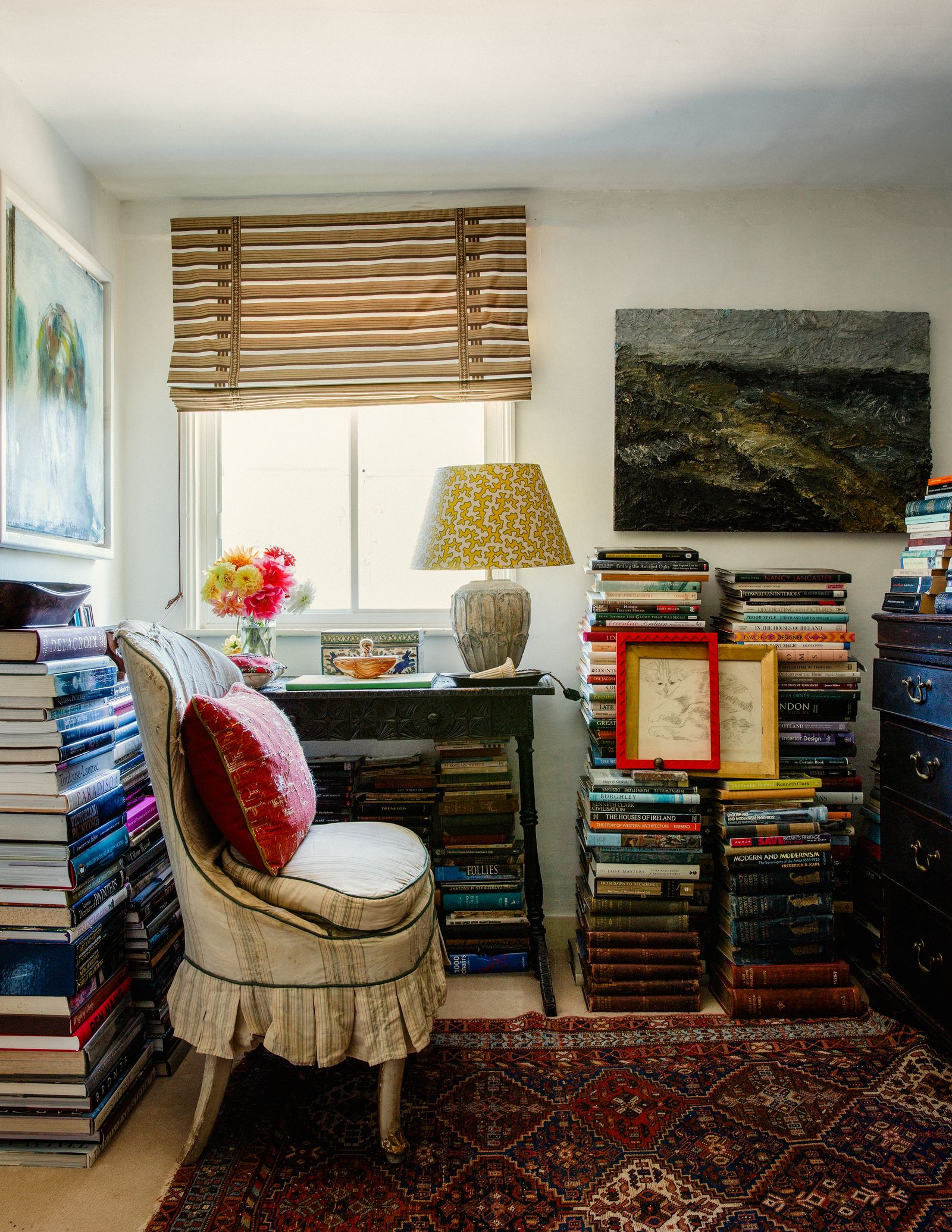
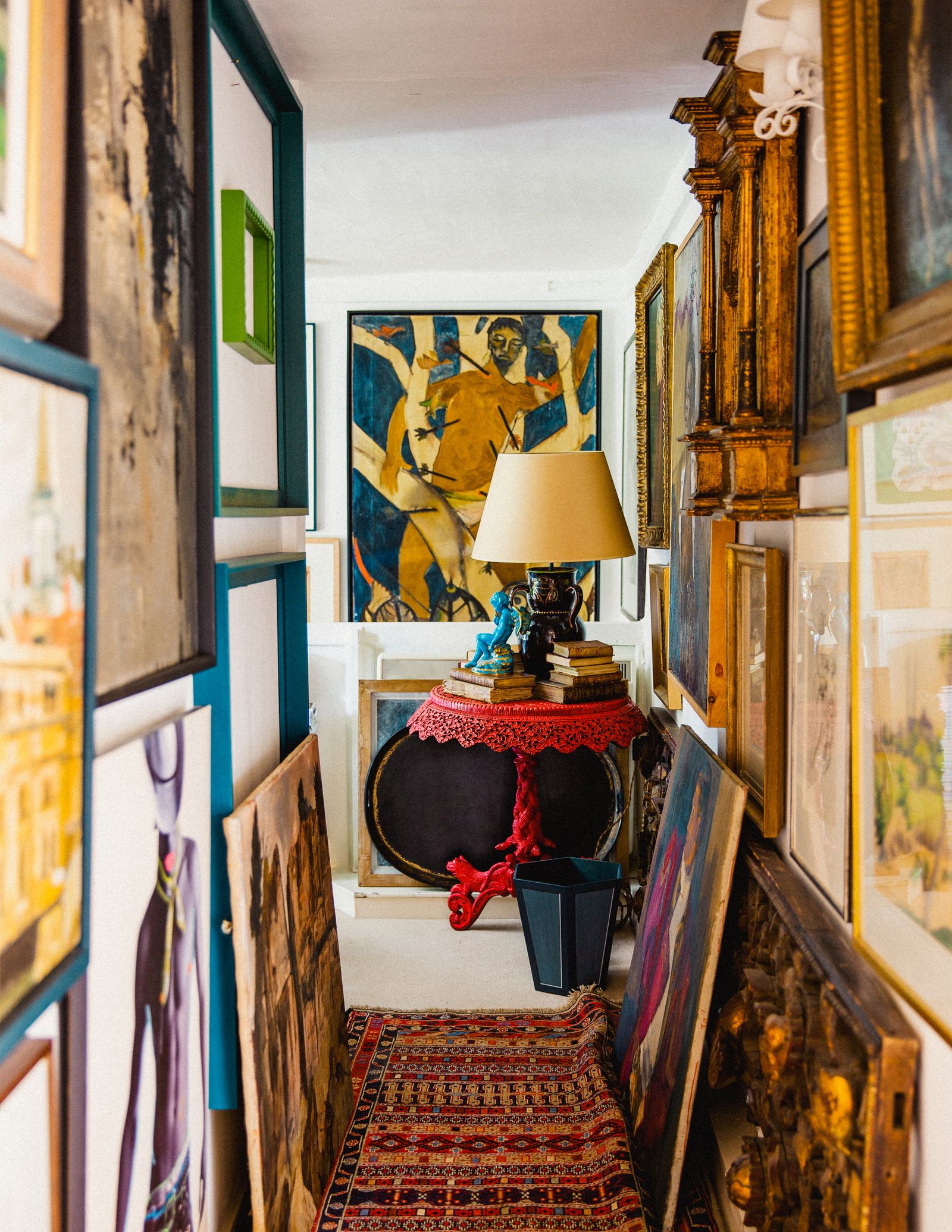
But largely, points out Bridie, it comes down to display. Alexandra reveals that she is exceptionally tidy, removes anything unattractive from view – “keys, a plastic washing up brush, anything like that” and places her belongings very precisely as if arranging a stage set. “I love having people to dinner, as sometimes I’ll move everything around a little bit, to make sure it looks its best.” Bridie has purpose-built shelves, groups like with like (as in a museum) “and I keep some areas empty. The negative spaces are as important as the positive. Also, the blank spaces hold promise; I’m holding out for the right things.” Alexandra agrees – “there’s space on my stairs. I love Soviet travel posters – and love knowing that I can fit a couple more in.” Benedict will struggle with this, having already hung pictures even on the backs of doors, but he has recently developed some rather exquisite wall brackets, which cleverly make horizontal space of the walls, thus potentially de-cluttering some surfaces. “They’re perfect for, say, an antique folk cockerel to sit on,” enthuses Alexandra.
Of course, key is knowing that we all have our own limits. Some people – presumably the late Lord Leighton among them – are happy to move a picture off a chair in order to sit down. Others would be driven quite demented and would want the picture on the wall. Benedict doesn’t mind that he doesn’t have any bit of surface in his kitchen to stack plates – he prefers the arrangement of objets that he’s created. For others, that would be non-workable. Both Alexandra and Benedict juxtapose their collections against colour and pattern – that pattern is total anathema to Bridie. And perhaps it’s also these details that induce us to pour over pictures of certain people’s interiors; it’s a means of working out if we, too, could live like them – and of establishing just how far we can push our own approaches to collecting, and a certain maximalist way of living.


