

Make no mistake- at House & Garden we have a tendency to worship at the altar of pattern and frill. Open any issue of H&G and you’ll find scores of pretty fabrics, bold wallpapers and ruffled cushions. But maximalism isn’t for everyone, and there’s no doubt that there’s something to be said for a more pared-back, sparse look.
As with most trends, this post-pandemic desire for a calming home has trickled through to the world of retail and can now be seen in the collections of contemporary, craft-lite products now available to buy on the high street- from reclaimed wooden benches at Zara Home to studio-pottery style ceramics from Arket. The question is, is this going to be the next big thing? And if our houses are becoming more and more refined, how do we avoid sacrificing their individual character, or making them look unfinished?
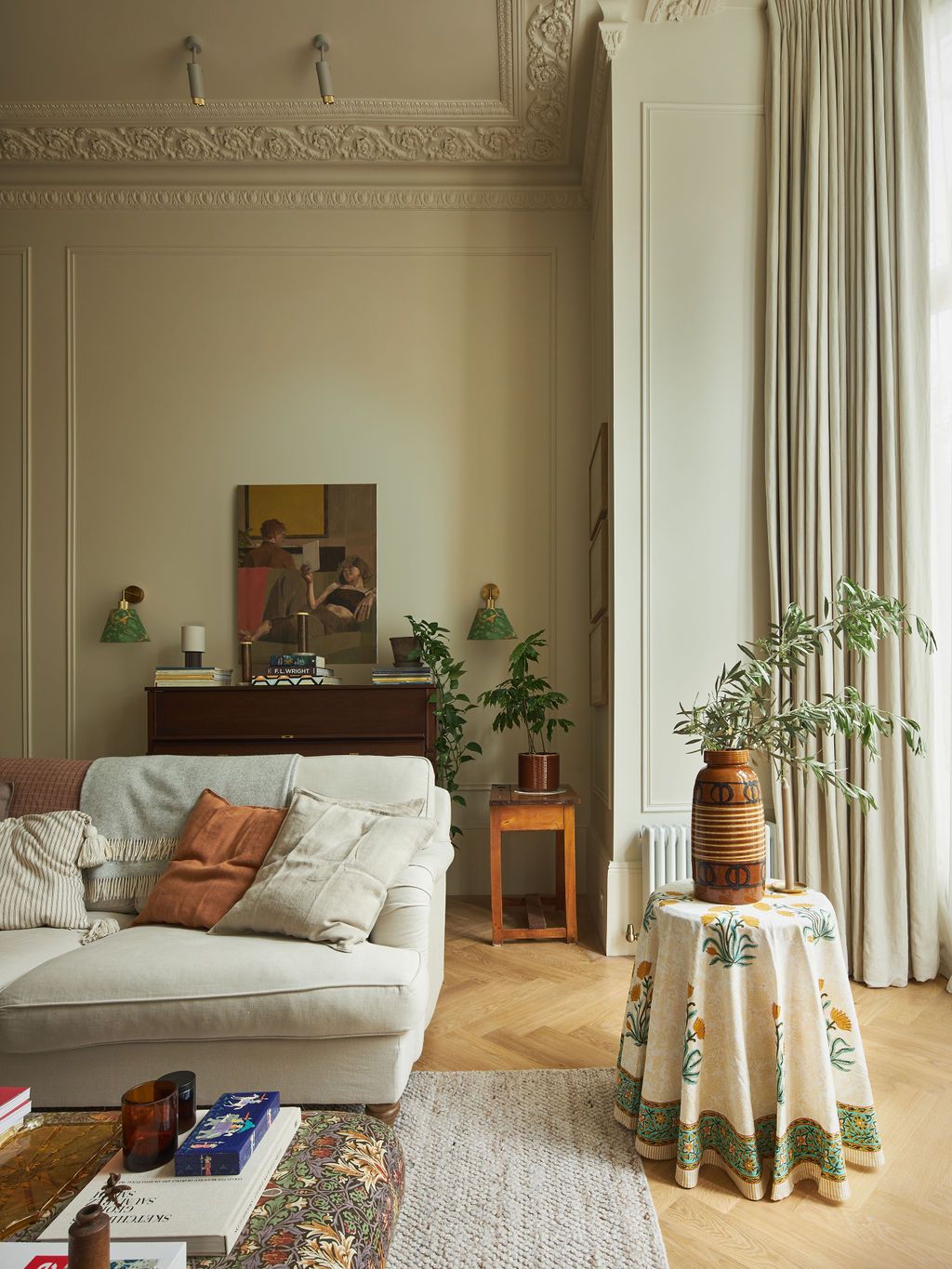
“Space in itself is so beautiful, light and architecture are so important and these elements need to be given room to breathe” says Thea Speke, whose time spent working with Rose Uniacke, a past master of understatedly luxurious interiors, continues to inform her projects today. “I am not afraid to use pattern or colour, but I think the canvas of a room should be pared back,” she explains. With a keen eye for antiques (which she also deals in), it is to these one-off pieces that she turns to add character to her spaces, while avoiding anything feeling too formulaic, claiming they “bring depth and energy to any room”.
“I find that generally people want a ‘sanctuary’” adds designer Alice Davies, “whether that’s traditional or contemporary, I try to introduce a sense of calm and order.” This sanctuary-like feeling doesn’t necessarily mean a space that’s lacking in colour or detail–in fact, Alice maintains that sometimes deepening a colour can make the space read better, but the trick is to limit your overall palate. “Removing subconscious micro-decisions can help to streamline a scheme: work with a restrictive palate and incorporate plenty of natural materials to bring visual texture”.
Angus Reid, whose West London-based design studio creates spaces which instil a sense of spa-like zen, believes that an appreciation for architecture is at the root of quieter interiors. The bones of the house can “dictate- not dominate the space” he explains. “We always want to honour the building’s architectural roots, choosing a colour palette and materials which allow it to sing.” A heavy sisal carpet paired with a textured paint finish on the walls, such as limewash or clay plaster, introduces an earthy sense of depth without distracting from what’s underneath it.
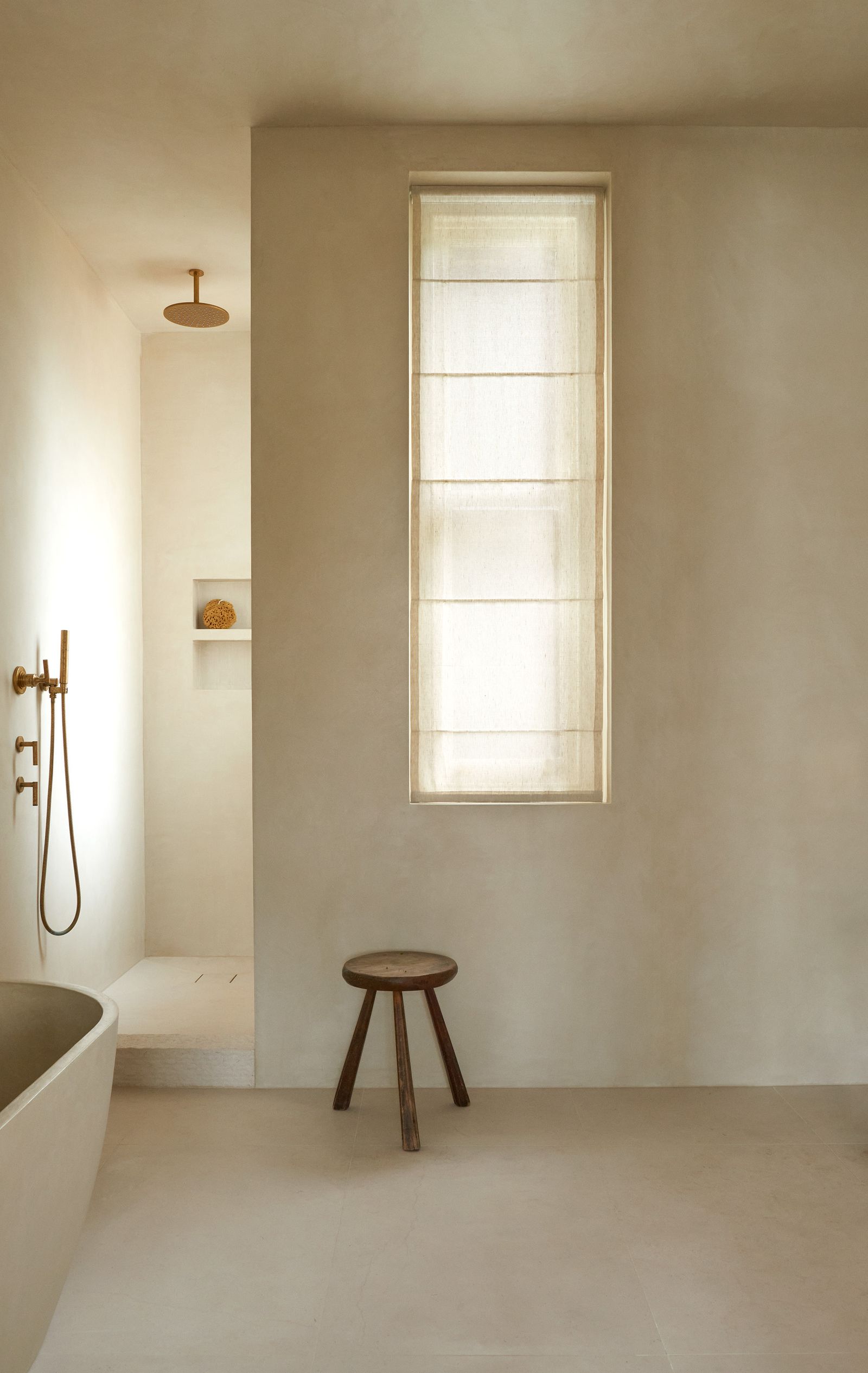
This is a sensibility which is shared by Anahita Rigby, who studied architecture before moving into interior design. “There’s so much beauty in the way things have been done in the past”, she says, “I love Georgian proportions, and I’m always thinking about how to balance interiors and architecture”.
Not keen on the idea of a “minimal” interior, Anahita is passionate about each space being entirely personal to each person. Starting with a neutral, airy space means that “you can have five pieces of furniture or fifty, as long as they encapsulate your personality, they’re guaranteed to look good and make you feel happy”. This idea, says Alice Davies, is key: “It’s important that your home is a beautiful backdrop to whatever you add to it. So if you start with an interior that has a strong identity, it’s hard to edit that as you live in it”.
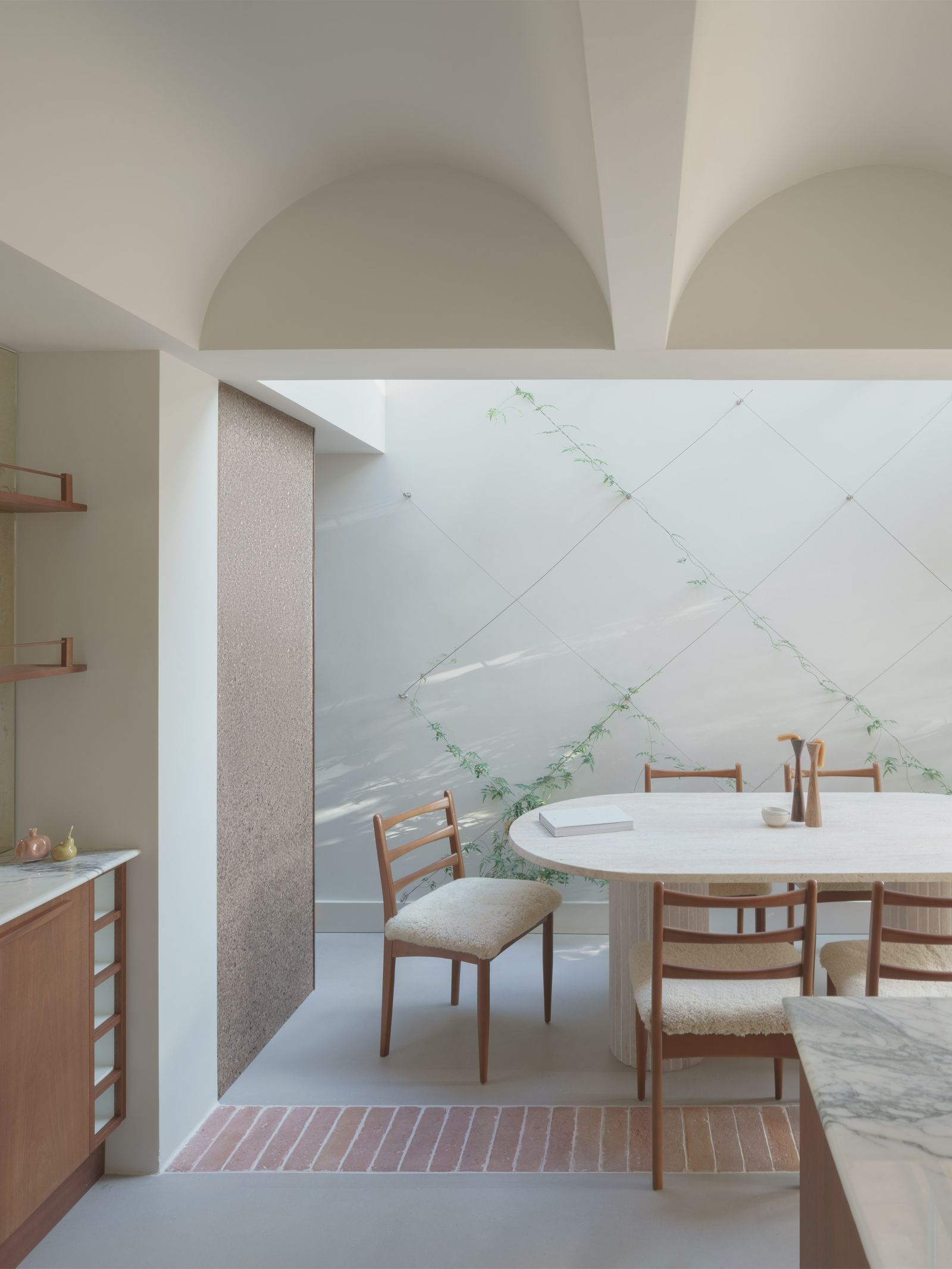
This is an aesthetic we might often associate with the Scandinavians and their cool, furniture-led interiors, so it comes as no surprise that Pernille Lind, whose upbringing in Denmark has been a huge influence on her interiors, belongs to this same school of thought. Her approach is reminiscent of a certain Mrs Kondo, who taught us to get rid of anything that doesn’t ‘spark joy’. Pernille’s technique of finishing a project or a concept, and then removing things one by one “until the balance feels right” is the secret behind her calm and airy interiors.

“It’s important to avoid spaces becoming too bare”, she says, “which is why layers of texture are so important; curtains, rugs and natural materials will all help to delicately balance the lack of clutter or pattern.
“There’s a type of interior design where every single wall is detailed or panelled and every picture is already hung up” says Pernille, “you can’t change that home at any point as each millimetre has already been thought through”. As Thea Speake so beautifully put it, “we don’t need to fill spaces, instead we can let the room itself shine”. It is this mentality that sums up the pared back approach to design - one which creates spaces that breathe, and can be grown into.


