

So often when one considers giving a house a refresh, it's about the kitchen. A kitchen can quickly feel dated, the best and brightest new cabinetry from IKEA becoming finger-smudged and out-of-date in a matter of years. This is environmentally and budgetarily unsustainable. When it comes to style and sustainability, a reclaimed kitchen can be the perfect solution.
London-based design company Retrouvius is now considered something of reclaimed royalty: Adam Hills salvages everything from cheeseboards to museum cabinets for partner Maria Speake to sculpt into timeless and tactile designs to outlast ephemeral trends and frangible materials. “We like to think about the inherent qualities materials have,” explain the Retrouvius team, “both stone and salvaged hardwoods are water resistant, for example, so work well in kitchens.” But it can also be about expanding a material's horizons, too, they explain. Wood with an unfavourable patina can be sanded down and reimagined. Or why not consider old suede for cupboard fronts?
Whether it's retro-fitting a salvaged freestanding cabinet, or using old or rejected materials to create a unique and beautiful fitted kitchen, reclaimed kitchens are always worth considering. We've scoured through our archives and beyond for reclaimed kitchen inspiration.
A country kitchen by Sarah Delaney


Designer Sarah Delaney ties in contemporary and traditional elements throughout this thatched Oxfordshire cottage. Both the cupboards and island are lined with raw reclaimed oak planks, which are echoed by the rough planked table the owners fell in love with and had shipped back from Spain. The stainless steel splashback and countertops offer a hardy and enduringly stylish juxtaposition against the natural finish of the wood, preventing the kitchen from becoming too rustic. The concrete floor adds to the raw, industrial feel of the space, which provides a nice interplay with the wild gardens beyond.
Three reclaimed kitchens by Maria Speake

This kitchen by Maria Speake of Retrouvius is constructed from reclaimed material, sourced from far and wide. The company – well known for its skilful scavenging – reused materials from the Victoria & Albert Museum and a school science lab. Though the kitchen looks slick and contemporary, it doesn't hide its history. In fact, remnants of the materials' former use are evident and beautiful: “In honour of their previous incarnation, we filled some of them with pages from hand-written archive books rescued from a defunct Savile Row tailors. Each one has a swatch of felt attached and the details of the person who ordered it,” explains Maria.


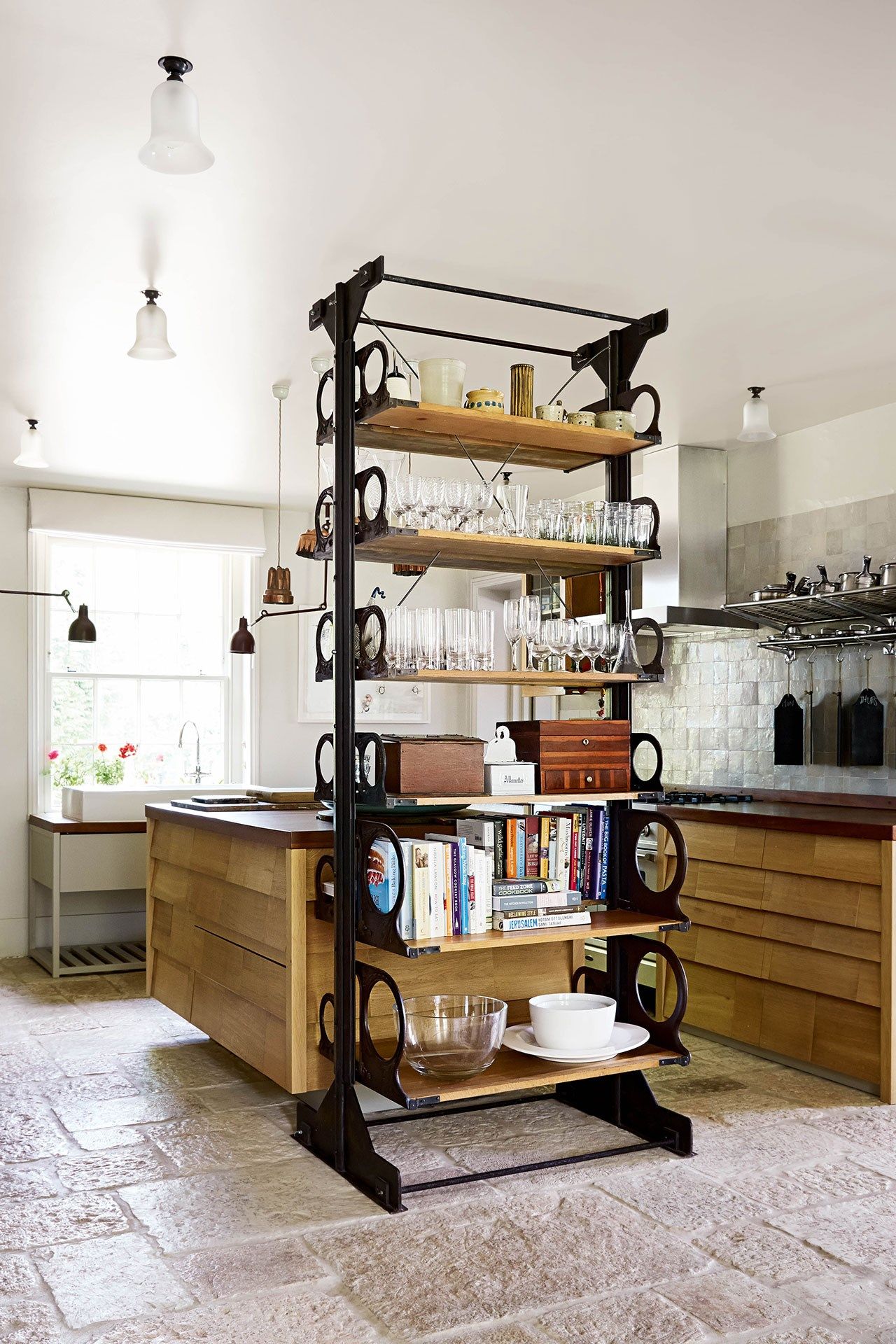
The Georgian farmhouse (pictured at the top of the story) is perfectly primed for a reclaimed kitchen. Here, the raw wood adds to the historic charm of the house, without the tweeness of a full Georgian-style fitted kitchen that is so often seen in renovations of cottages and farmhouses. Retrouvius often use Zellige tiles in tandem with their reclaimed wood, the uneven, vintage feel complimenting the rustic textures of the wood, whilst still feeling polished and refined. Unique, freestanding pieces can easily be rethought to add design interest and useful storage to a kitchen. This unit was sourced by Retrouvius from the Patent Office, whilst the units were made from wood from the Natural History Museum. The dining table was made from iroko hardwood laboratory benches.

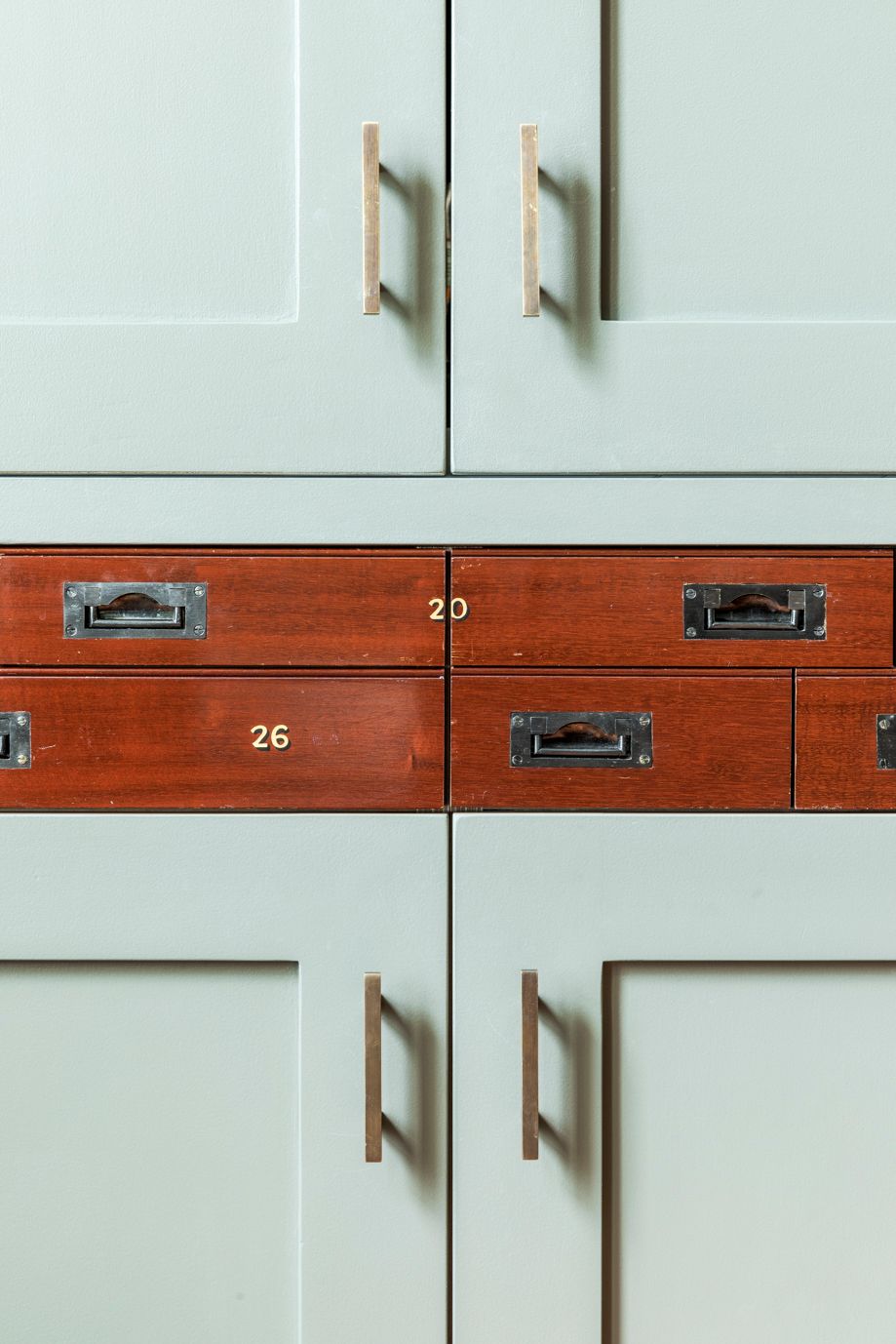
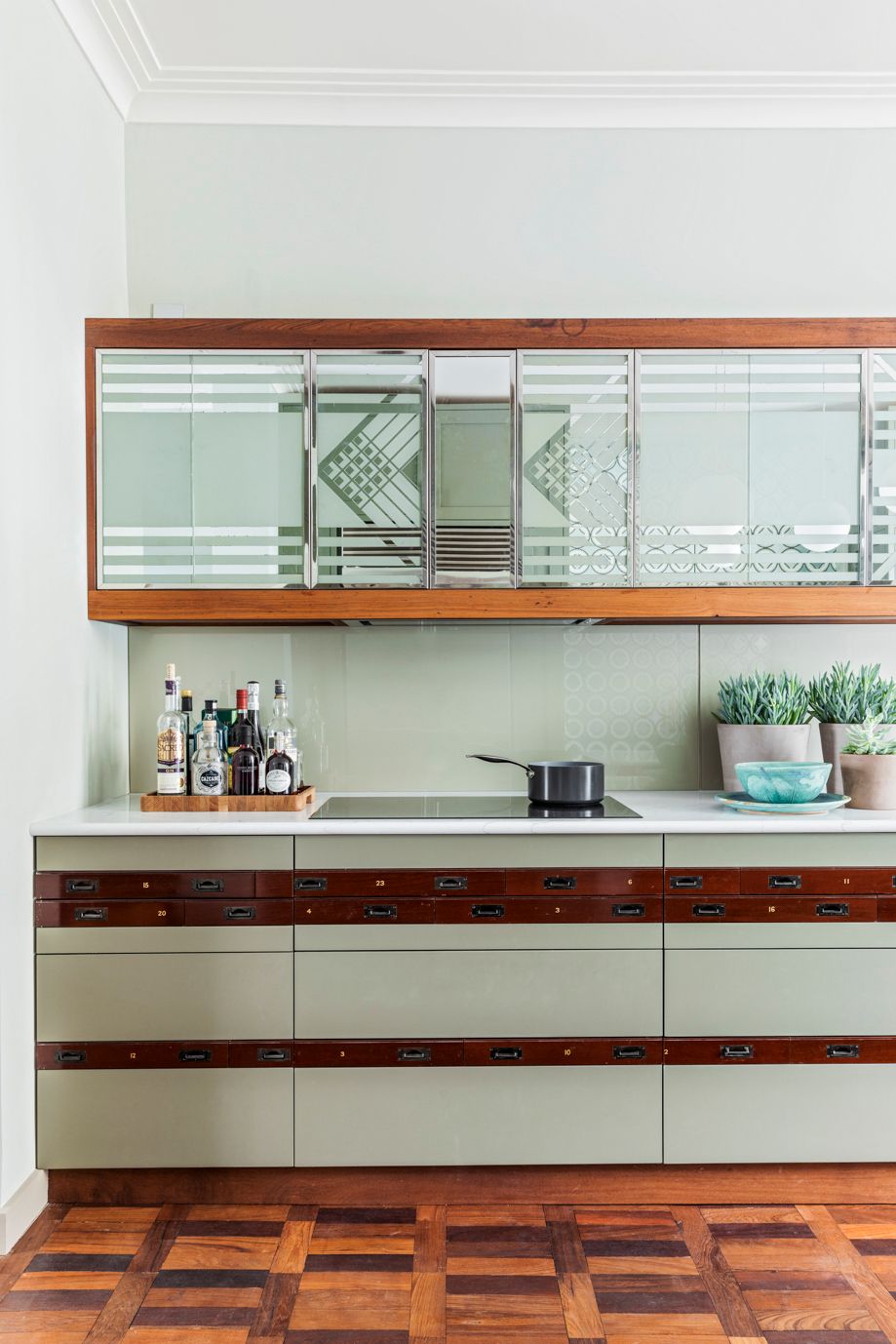
Reclaimed kitchens don't need to feel rustic, rural or industrial. In this London house, Maria has used reclaimed mirrors of Unilever House on London’s Embankment and mahogany museum cabinets to create a polished deco feel. This aesthetic is echoed in the 1920s pastel green of the walls ('Mizzle' from Farrow & Ball). An array of Café Glass Globe Pendant lights from Lampsy hang above the reclaimed museum cabinets.
Keith McNally's London house

It's not just cabinetry and free-standing pieces which can be reclaimed for your kitchen. The former London house of legendary Manhattan restauranteur Keith McNally pairs Vermont pine cabinets with reconditioned tiles, most of which are over 100 years old and come from demolished or refurbished factories. The subway-style tiles complement the New York industrial feel of the copper-covered countertops.
A house in Bray by Christopher Howe

The kitchen extension feels embedded and sensitive in this higgledy-piggledy house in Bray designed by Christopher Howe, largely due to the reclaimed elements. The kitchen island was salvaged from a fishmonger’s and a sink has been added to the eighteenth-century dresser. The wide floorboards throughout the house were sourced from a reclamation yard in Herefordshire, and the kitchen floor was made from cheeseboards sourced in the South of France.


