

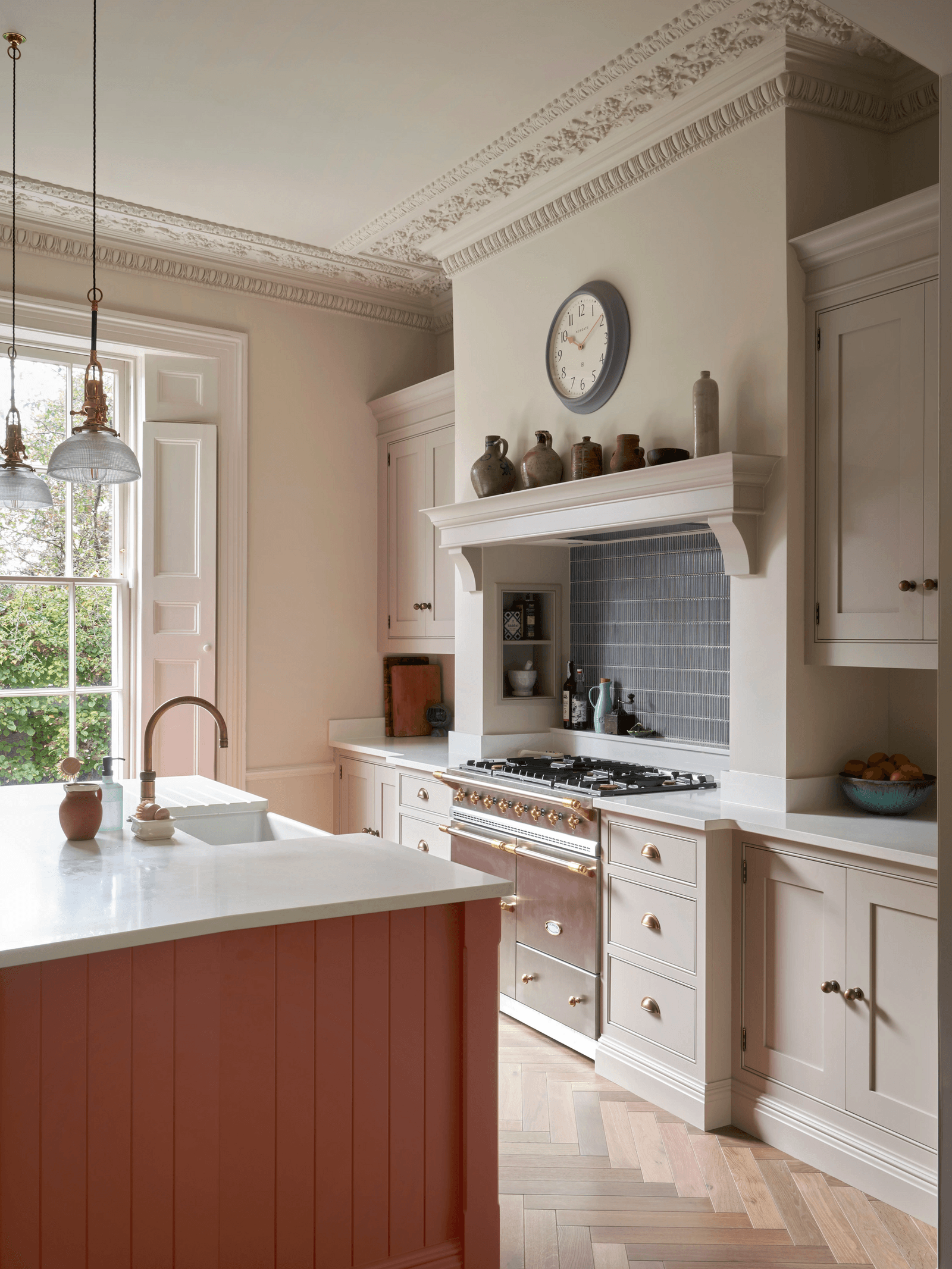
There is a certain alchemy to a well-appointed kitchen. While elements like the colour palette, cabinetry and worktops can often be the central focus, there are many more factors that truly determine a kitchen’s success, as any seasoned designer will attest. A great design is in fact an accumulation of considered choices which, while adding to the overall enjoyment of the kitchen, can often go unnoticed. Poor decisions, however, will invariably have an adverse effect on how the space feels and, crucially, functions. “It is important to think properly about the kitchen design because it can be extremely costly to make changes afterwards,” says interior designer Emma Sims-Hilditch. “The key thing is to make sure it really does function before you even think about the aesthetics of it.”
Rupert Cunningham, architectural designer and director at Ben Pentreath Studio, who was behind the widely acclaimed kitchen at this year’s WOW!house believes part of its success was the lack of wall cabinetry. “Having lots of fitted wall cabinets makes a kitchen feel unpleasant to be in rather than inviting. My approach is to essentially create the same amount of storage, but disengage everything. So I love a really big cupboard that has as much storage as you get in those wall cupboards. Everything is in one place and you can see it all instantly.”
Storage should be designed to support the rhythm of everyday life, agrees Emma. “It is vital to have everything you need at your fingertips. For me that means having the spice drawer right next to the cooker, for instance. Likewise, always have the pans next to the cooker so you can easily pull one out when you need it. It sounds obvious but a common mistake is to design storage too far away from where it is actually needed and then it becomes a daily frustration.”
Pernille Lind, founder of her eponymous London studio and one half of interior architecture practice Lind + Almond, stresses that the right style of storage can be invaluable. “A hidden drawer within deeper drawers is something which works well,” she says. “And utilising corner cupboards with suitable rotating shelves allows you to get to all your items.”

Interior designer Alex Dauley adds: “I always advise clients to opt for drawers as opposed to cupboards. It will enable you to find items more easily and keep the space organised.”
Kitchen islands may have become a source of contention over the past few years, however Alex believes they still have their place. Still, she warns against one thing. “I would never place the sink on the island,” she says. “It invariably becomes messy and cluttered with washing up and so much space is wasted. Instead, consider the island as a free-standing piece with interesting legs, open shelving at either end, different material bold colours or an integrated banquette.”
A major kitchen no-no for designer Tamsin Saunders, founder of Home & Found, is a design that jars with the property’s architecture. “The kitchen needs to have a relationship to the proportion or details of the original house,” she says. “Otherwise it creates a soul-deadening sense of ubiquity. The kitchen needs to feel like it has grown from the house.” It is equally important to think carefully about any building add-ons. “What often ruins kitchens are massive extensions which are completely out of scale, proportion and spirit to the rest of the house,” adds Tamsin. “Bigger doesn’t mean better.”
With so much expense on major elements such as the cabinetry and worktops, it can be tempting to skimp on the smaller details. However Merlin Wright, design director at Plain English, warns against this. “Taps, for instance, are a very hardworking part of the kitchen,” he says. “Cheap ones tend to go wrong quickly so it is important to go for quality. It is the same with fridges and ovens. They need to be invested in because the quality can vary a lot.”

He also recommends natural finishes for cabinetry. “Lacquer finishes to me are a very poor idea,” he says. “Not only are they fixed and can't be changed, they will get damaged and end up needing replacing, which apart from the ecological aspect, is a huge waste of money. Natural stone and hand-painted finishes, on the other hand, improve with age or can be restored.”
Lighting is one of the most transformative design elements in a kitchen, however relying on a single central fixture is a misstep, adds Merlin. “Even the most beautifully designed kitchen can be ruined by poor lighting,” he says. “You should have different types of lighting to create different atmospheres, so more task lighting when you cook, and then softer pendant lighting around the dining area.”
When it comes to tiles, Rupert advises a less-is-more approach. “Most walls in the kitchen don’t need tiling apart from where you actually need them, like around the cooker area. Also think twice about choosing ‘fun’ tiles because they date quickly. It is much better to choose historically accurate ones.”
The most successful kitchens feel personal, he adds. “It needs to be like any other decorated room so it is important to hang art and have antiques there. Always leave space for those because they are what give the kitchen its soul.”


