

About a year ago, the internet was taken by storm with a new decoration theory: ‘the unexpected red theory’ set out that incorporating something red - be it big or small - into any room where it does or doesn't match is the secret to making the space look better. Before long, we were all scanning our favourite rooms for the burst of red that we had missed before, discovering that indeed it is a frequently used and effective decoration tool which simultaneously harmonises and lifts a space. I am here to debunk it.

‘Something old, something new, something borrowed and something blue’: the old adage which instructs brides-to-be on the four key features to incorporate into their wedding day. It is a philosophy which also provides decorative guidance to the interior designer Hubert Zandberg, according to his ‘dos and don’ts of decorating'. The idea that something blue is just as important to creating a balanced and inviting interior as say, an antique or a shiny new piece of furniture, confirmed to me what I have been suspecting for a while: the unexpected red theory is wrong. Blue is the secret weapon, and these designers are proving why.

‘I wouldn’t necessarily have pegged myself a s a blue person, but I’ve recently realised that I include even a bit of it into most of the spaces I design', says Hubert. ‘It is the ultimate versatile colour - can you think of any shade of blue that isn’t beautiful? You can’t say the same about yellow and certainly not red - they can be tricky, divisive and personal. A grey-green can be quite drab whereas a grey-blue can be quite emotional and moody. Even black, with a little added blue, can be brought to life!’ For Hubert, it's not just about how versatile the shade is but how well it works with other colours. He is a firm believer that there is a shade of blue to answer every decorating conundrum: ‘What do you put with chocolate brown? Blue! Green and blue are the perfect marriage,’ he says.
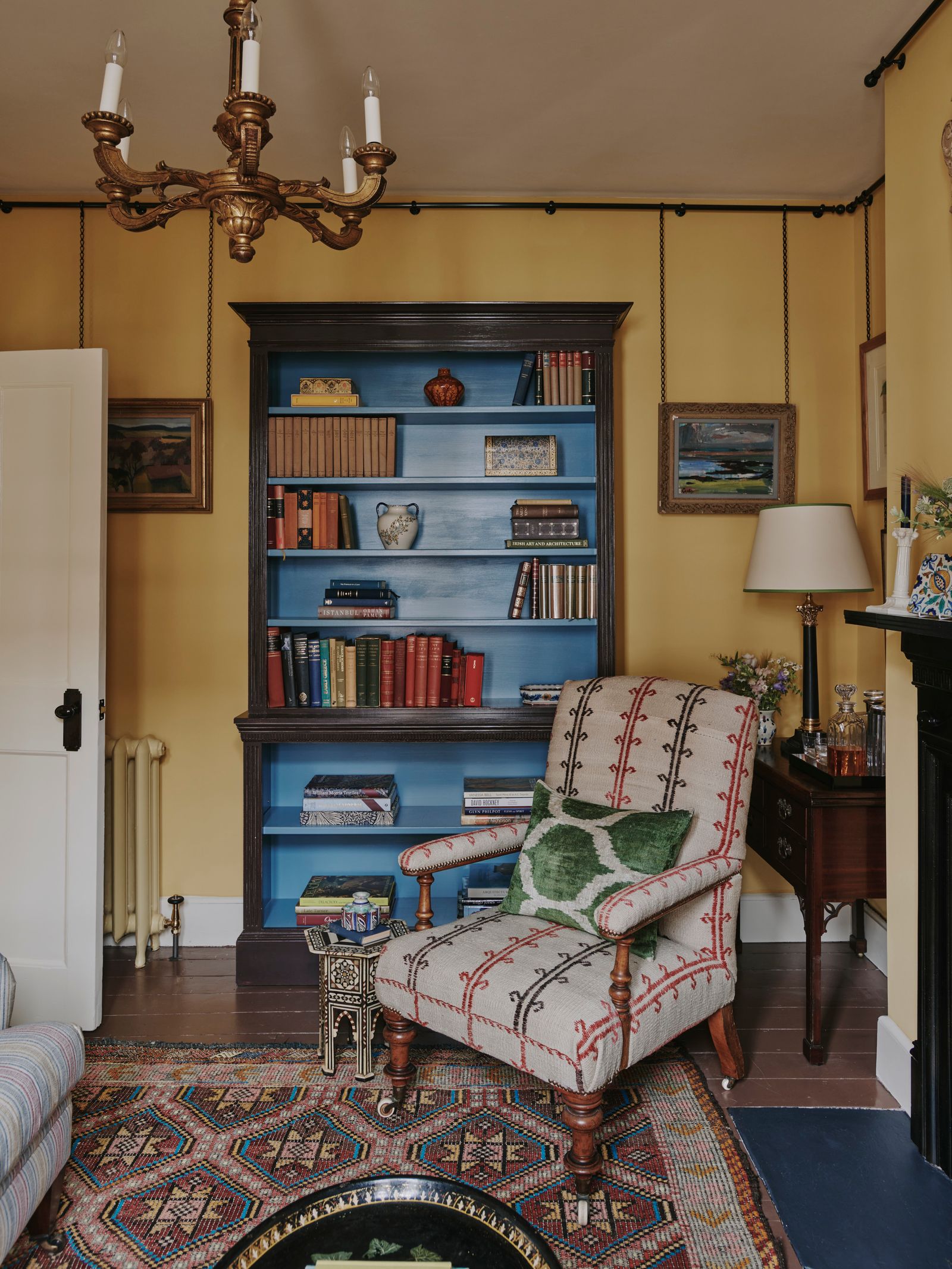

What's more, the the sheer range of blues available means you will always be able to find one which suits the mood you're trying to create – from calming greeny-teals, sophisticated grey-blues to arresting cobalts. There really is no missing link on the blue spectrum. It is, as Hubert describes, ‘a pendulum colour’, which makes it particularly useful for bedroom design: 'there’s this thing about blue being best suited for a bedroom as it neutralises melatonin levels, so it helps you sleep but in the morning it is energising. It works both ways,' he says.
Also falling in line is Natasha Quick. In a recent Notting Hill project, a serene scheme made up of neutral walls, antique furniture, where green is the dominant colour, a pair of footstools upholstered in The Yarn Collective's mohair velvet stand out: offering a change of pace and lift to the space. ‘It's probably the most popular colour in the world. Unlike other colours, blue never goes out of fashion. It has the potential to be cold so I often find that too much blue can be dangerous, but a small pop of it in a warm room is really invigorating,' she explains.
Like Hubert, it's the green-blues that Natasha is particularly drawn to, picking out Farrow & Ball's ‘Dix Blue’ as one of her favourites. ‘My mum’s sitting room is painted in it, and every time I walk in there I feel energised'.
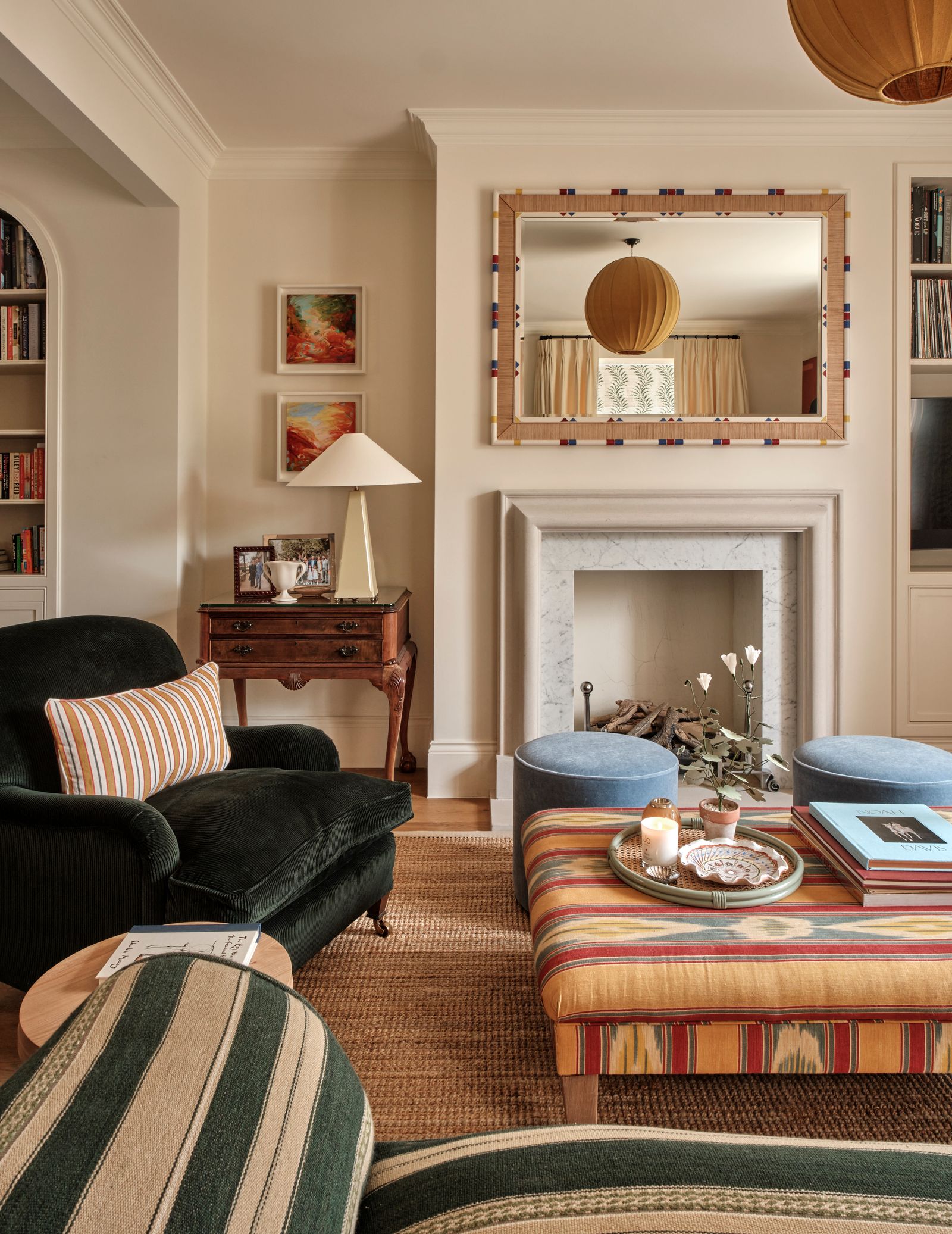
Olivia Outred is another devotee, and maintains that an unexpected burst of blue is a brilliant addition to any room. ‘It’s both disruptive and complementary: it goes so well with lots of colours but when it's unexpected, it can be a brilliant non-matching element to throw in,' she says. For Olivia, a surprise blue element helps to achieve the much coveted ‘lived-in’ look, and helps to ‘give an interior a sense that it has developed over time, as it stops things being too matchy-matchy'.
Olivia points out that it is this history of blue which makes us to drawn to it. ‘It was one of the first colours that we could create using woad dye’, she explains. ‘So we have this historic association that we are referencing, of paintings and delft tiles, whether we realise it or not’, she says.
It may not be immediately obvious to you, but I suspect if you were to revisit the interiors you like the most, and look carefully, you will see an unexpected, but most welcome burst of blue. It may be small, but its impact is immeasurable.


