
The best 1990s interiors from the House & Garden archive

I recently went to the Museum of the Home in East London, where, among the displays, they have a ‘Rooms Through Time’ series. It includes dioramas of an ornate 1870 Victorian parlour, a 1937 living room with grisly middling modernism and a 1970s front room feat doilies and loud carpets. Whilst these were all interesting, one room stopped me in my tracks: the 1998 loft-style apartment. Owned by a fictitious couple, they are hosting friends on Friday night. Even without actual people, you can feel their presence and that distinct turn-of-the-21st-century ambiance: sitting on the dusky blue sofa, they play music on a Casio stereo which sits on the light wood bookshelf. Under the mezzanine bedroom, on the kitchen counter Nigella Lawson's 1998 How to Eat is open (are they having the pea and lettuce soup or linguine with clams?) next to a chrome pepper grinder by Habitat. An orchid sits on the industrial, curved window, and the TV, tucked away, is a boxy black cube.
You may not think of the 90s as a heyday of interior design: beige, stainless steel, faux French farmhouse interiors, purple, bean bags, and blonde wood are amongst its many tropes, some of which we might prefer to leave in the episode of Friends. But for me, born in the mid-90s, this home was like the interiors equivalent of a Proustian madeleine, conjuring up a time and feeling I half-remembered. On the hunt for more 90s nostalgia I came across two Instagram accounts: Domicile File (@domicilefile) and Marta Malavasi (@mrtmlv) which post an excellent curation of vintage homes found in magazines. The latter was founded by Marta Malavasi, a Spanish architect and the former by a Hannah Hyden, a PhD student in Islamic art history (who started the account as a distraction from her studies).
They feature many 90s homes, as well as late 80s and 00s (let's call it the long-1990s) that appealed to the same sensibility as the diorama (including many a Donald Judd-esque bright loft-studio space with a mattress on the floor). Yet despite my preconceptions about what 90s interiors are, the more I scroll and save, the less sure I am I know how to define them. At times they feel futuristic and functional, with a touch of the surreal (such as Sylvie Fleury's ‘Bedroom Ensemble’). And-or they feel whimsical and anachronistic (see Lorenzo Prando and Riccardo Rosso's Milan apartment, where a Renaissance painting sits next to a Memphis bed on wheels). Indeed, the 90s was caught between the opulent excess of the 80s and the more pared back 00s, Marta explains over email: ‘the era of white, purity and balance.’ What does comes through in the homes featured is the personality. ‘Homes that feel like someone's,' says Hannah. ‘In the eighties and nineties what you see is an interest in cultivating personal style.’ Marta agrees: ‘Be brave and be yourself.’
Instagram content
Despite the Y2K trend that is currently dominating fashion, 90s and 00s interiors are generally still less popular than those of the 70s and 80s. ‘The hashtag for nineties and noughties interiors is, like, nonexistent,’ says Hannah. However she believes that certain trends are due a comeback, particularly the use of colour: ‘Citrus colours […] like lime and tangerine and hot pinks which have been out of circulation for a while – or just purple in any variety.’ And for the DIYers: ‘sponge-painting – that washy painting which is very grunge-meets-medieval,' Hannah adds. Marta notes some other 90s tropes that will or won't be making a comeback: ‘some trends nowadays would be considered insane – for example carpets on walls.’ An East-meets-West aesthetic, or use of African sculptures, for good reason, will also unlikely find its way onto magazine pages today.

‘It is interesting to look back at what curators in the late 90s thought would be the defining style of the time,' says Louis Platman, who has closely researched the 1998 diorama, which was first installed 25 years ago. 'For the most part it is very constructed – pretty much everything that's in there was made in the nineties, whereas no one's home is actually totally period appropriate,' he says. Industrial-style loft conversions became popular in a post-Thatcher Britain, particularly in areas of London formerly populated by factories – such as Hackney, when the Dockyards closed – and invaded by ‘yuppies – people who were successful in the post-industrial economy,' says Louis. Whilst it was not initially indicated, the museum's curators always intended for the imagined couple to be gay (a lack of labelling which has now been corrected). When updating the installation in 2021, he put a call out on Twitter for objects to add – which led to the addition of specific VHS tapes on the bookshelf.
Instagram content
Indeed, perhaps the interiors objects that define different eras the most are not decorative, but the most functional, technological ones – such as the boxy monitor mentioned above. Hannah says that the images people respond to her most on Domicile File tend to have a piece of bygone technology in it. ‘I post something with an old TV and people are like, “oh a TV!”' Whereas people keep a sofa or a table for many decades, we replace our electronics with more alacrity. ‘There’s a novelty to how people configure their space with a certain piece of equipment or a sound system,' adds Hannah.

Louis says the plan for the Museum of the Home is to make the room more interactive, with features such as ‘slotting a VHS into a tape player’. Although hard to believe, for anyone under the age of 20 ‘this will be something they have never done before,’ Louis notes. For others, however, it will be merely an embodied memory, or an interaction with objects that they still dearly cling onto: ‘I often overhear people say “oh I own that,”’ Louis says of the loft apartment: 'so how can it be in a museum?’
The best 1990s homes from the House & Garden archive
 Tim Clinch1/19
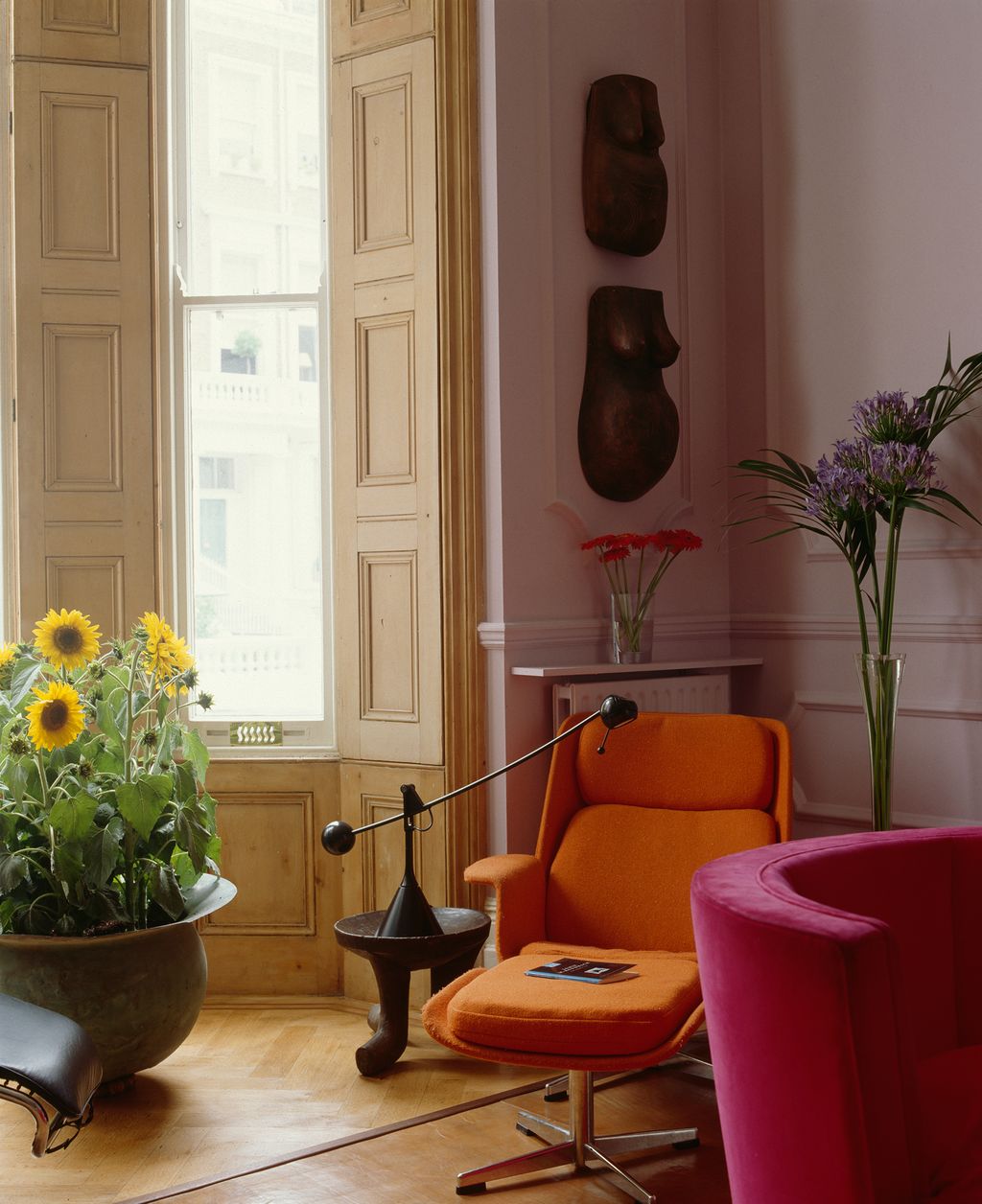
The late food columnist A.A. Gill's flat, photographed in 1997 is full of personality and then some, and through out flirts with the bizarre and the surreal. In the drawing-room. walls painted pale lavender-mauve provide a coolly sophisticated foil for more intense jewel shades: the bright orange of the armchair and rich cerise velvet of the round-ended sofa from The Conran Shop. Uncurtained windows impart a simple, modern note. The tribal body masks are Tanzanian.
 Tim Clinch2/19
In the sitting room-study the large portrait of Stalin is from Russia, and the cushions feature Mao.
 Tim Clinch3/19
Wood and chrome stools in the green-painted kitchen came from Heal's.
 Fritz von der Schulenberg4/19
Photographed in 1995, Kelly Hoppen's flat is a smart space of reverie. In the dressing room, the curtains and pull out double bed are in striped fabric by Bennison. A Celadon pot sits beside the bed.


 Fritz von der Schulenberg5/19
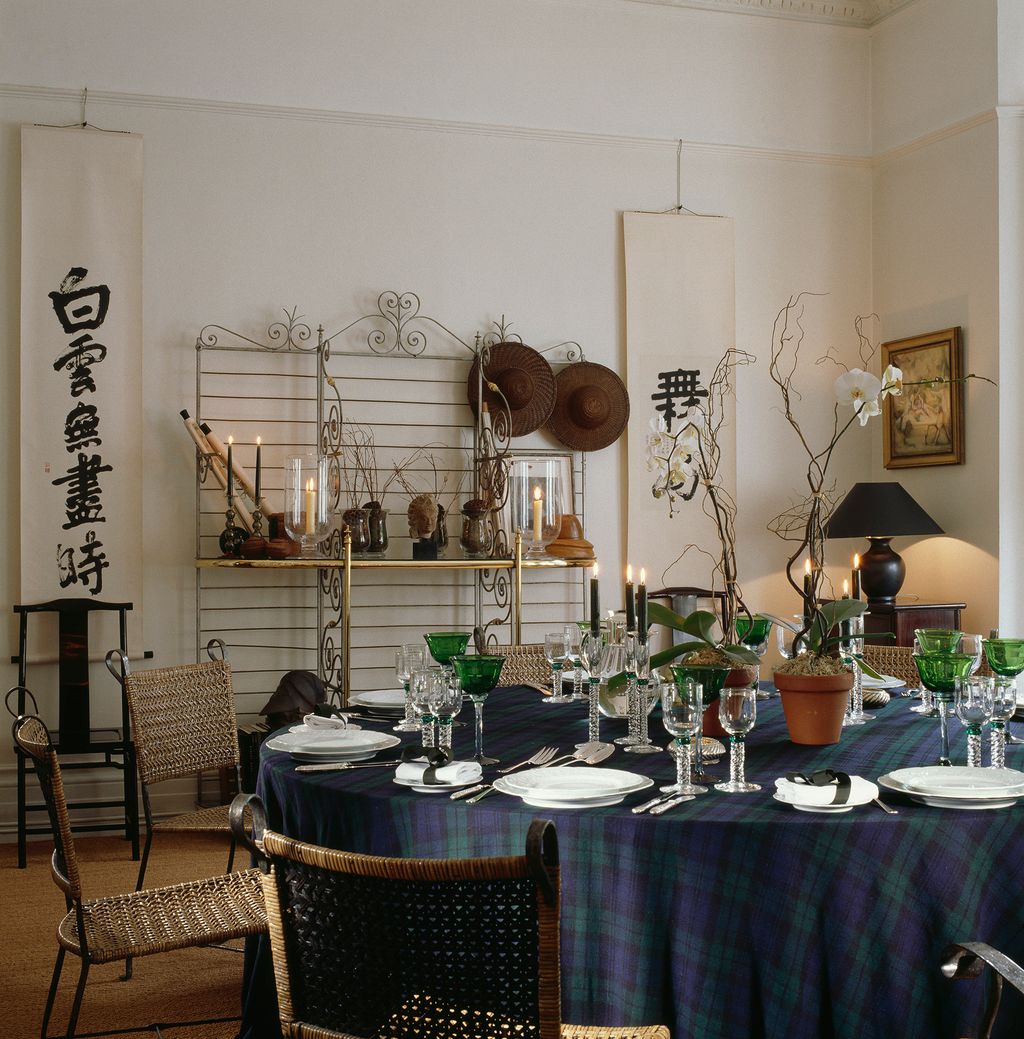
In typical 90s east-meets-west style is the dining-room: the metal 'wicker' chairs, made in the Philippines, contrast with the Black Watch tartan tablecloth from McArthurs.
 Tim Beddow6/19
Not every 90s home in the House & Garden archive feels particularly 90s. Take Ven House, which featured in the magazine in 1997, and was restored to its opulent grandeur during the decade. In the drawing room, a pair of nineteenth-century torchères in the form of classical figures flanks the door to the terrace. On the far wall hang portraits, left, of the Duc de Villars, one of France's great generals, and, right, possibly of Mademoiselle Mertain, Voltaire's reputed mistress, as Cleopatra. The Baltic cascade chandelier is c. 1800; the ceiling is by architect Decimus Burton. It looks very different today.
 Tim Beddow7/19
Within the pavilion, the predominantly Louis XV-style furniture is upholstered in white, yellow and red. George II mirrors hang above white-painted side tables of the same period. The painted and grained tripods are twentieth-century.
 Tim Clinch8/19
Lady Wakefields house in Spain, photographed in 1997. In the 'big' room, Nijar pots and an antique Islamic tile grace a chest from Damascus; Syrian copper dishes occupy a shelf above a masonry banquette. A Granada bowl sits on a low table in front of two olivewood rocking chairs.


 Tim Clinch9/19
Looking from the sitting-room through the kitchen to the 'big' room at the end. A Lebanese iron cross hangs above the arch; to the right are two pictures by Yves Baume.
 David Montgomery10/19
Chester Jones's smart London house. The sitting room on the first floor was built as an artist's studio; tall windows overlooking the garden flood the room with light. A folding horsehair-lined screen is hung with prints and drawings, nineteenth-century style.
 David Montgomery11/19
Chester Jones designed the chair and matching footstool, which are covered in the same ticking - by Christopher Howe (now discontinued) - that Chester used for the curtains. Orchids line the window sills next to the incongruous plant choice: a sculptural cactus. One the home's other most 90s signifiers is the Koi Carp in the garden.
 James Mortimer12/19
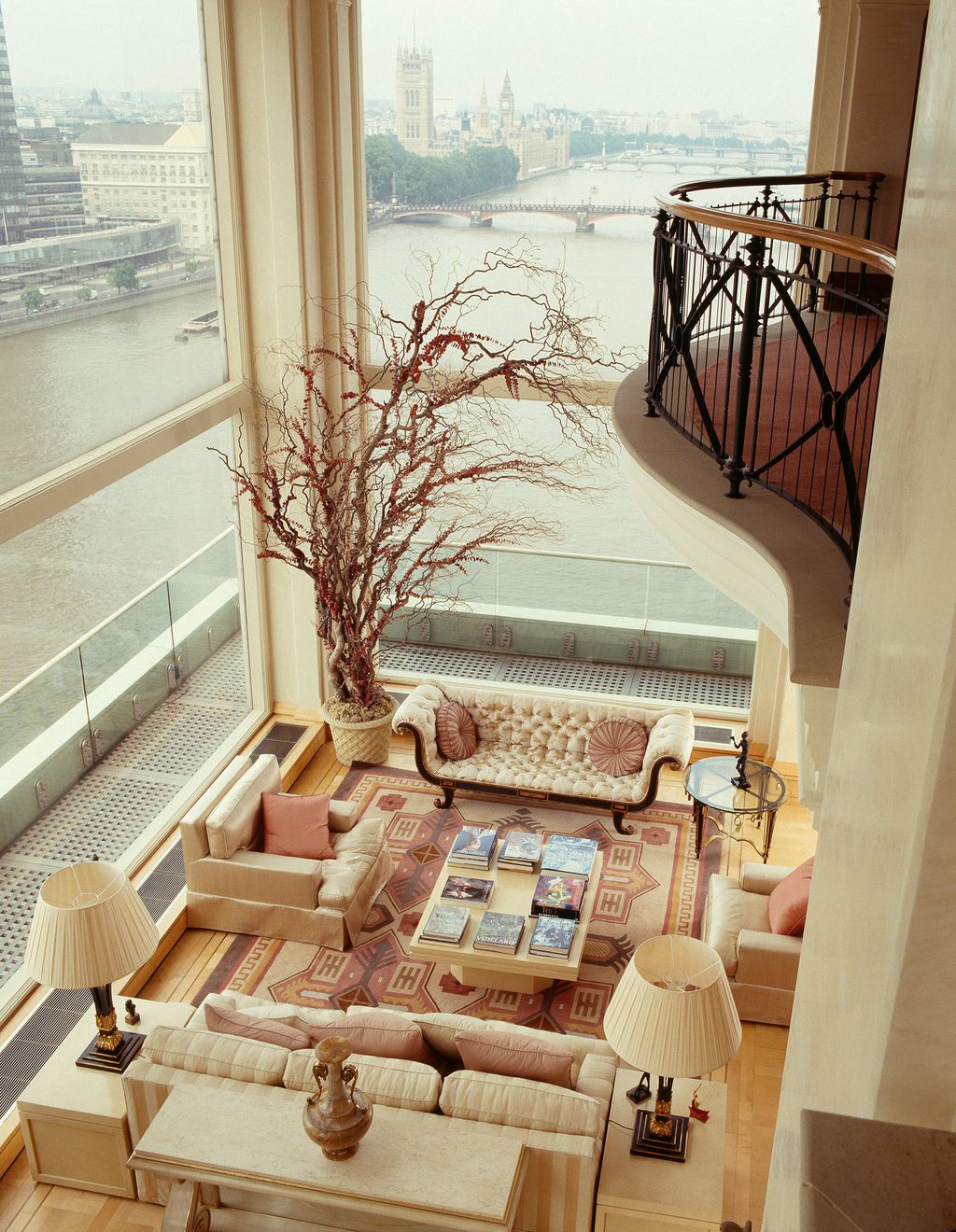
With its grandstand views over London, and playboy-feel Jeffrey Archer's flat in Westminster, photographed in 1995, is a little Donald Trump. According to the original caption: ‘The furniture in the reception area below was specially scaled: the Regency-style sofa was remodelled by Pygmalion, who also designed the other sofas, made by Howard Chairs.’


 James Mortimer13/19
Jeffrey Archer's kitchen, however, is on the quieter, more minimalist side. Staged with fresh bread, greenery and a bowl of lemons.
 Christopher Simon Sykes14/19
Legendary former editor of Vanity Fair, Graydon Carter's New York home photographed in 1996, is a charming family pad, with a bike in the hall giving it the feeling of a rom com.
 Christopher Simon Sykes15/19
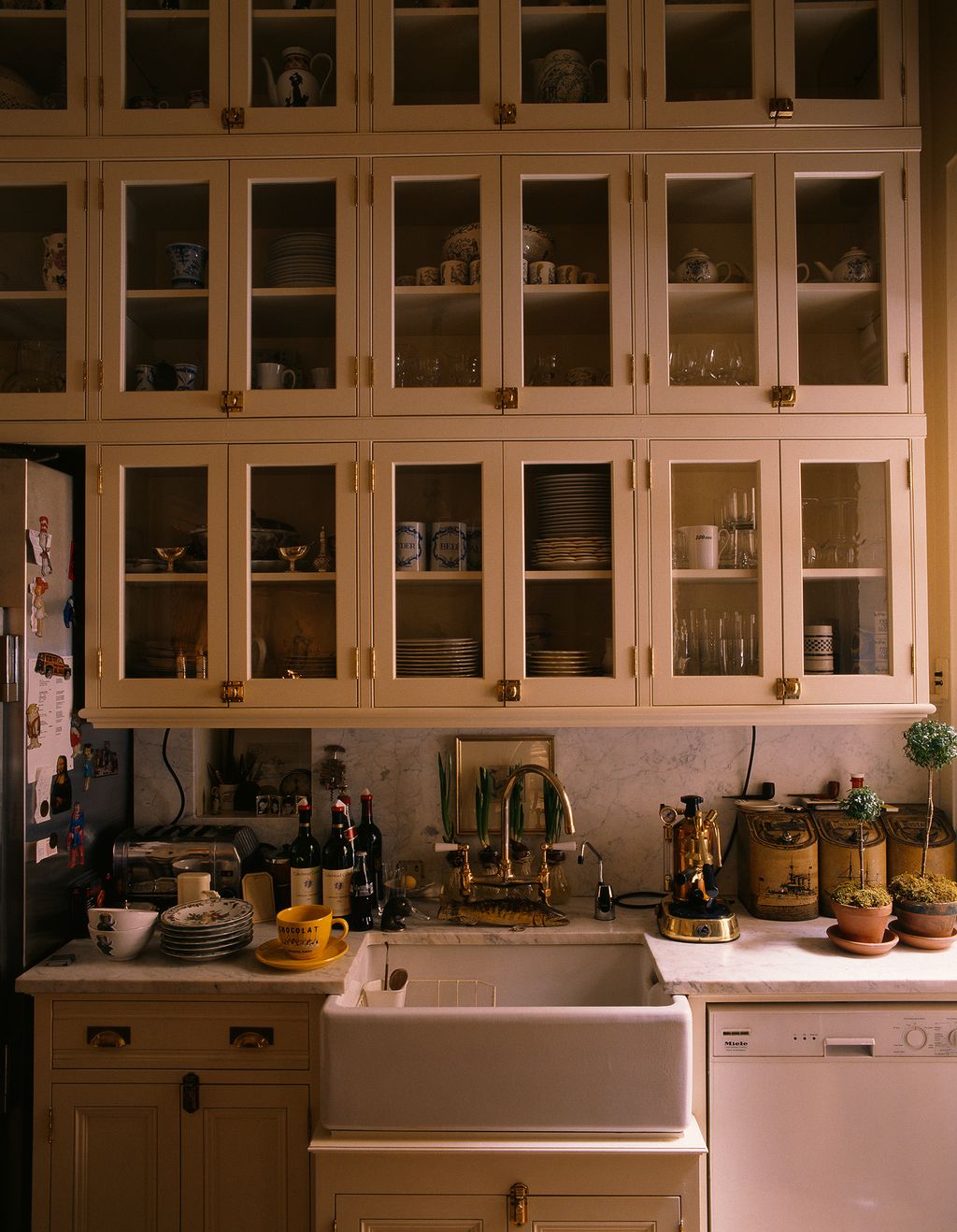
The kitchen was redesigned by Basil Walter, who preserved the original glass-fronted cupboards.
 16/19
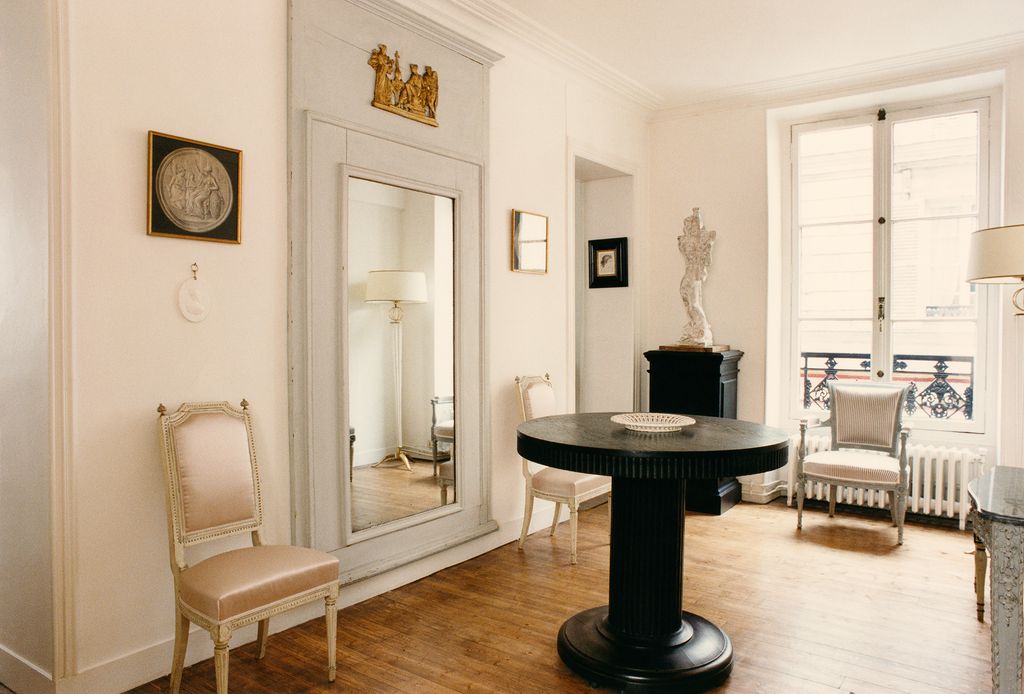
16/19Andrew Gn's Paris flat, photographed in 1996, shows the designer as a francophile – with a minimalist, old-meets-new take on Versailes interiors, yet Andrew has other ideas, too: 'Its style is in honour of the Eighties, when I grew up' Andrew jokes.


 17/19
17/19The reception room with its Louis XVI and Directoire furnishings. The chairs are upholstered in subtle oyster-pink, beige and taupe satins.
 Tim Clinch18/19
Published in the year 2000, this house by Kit Kemp is certainly a product of the 1990s, with its light coloured, beachy woods and rusticism. The curtains in the sitting room are 'Palm Tree' by Chelsea Textiles, the floor matting from Crucial Trading. Sofas covered in Brunschwig & Fils's 'Bichon' chenille plaid face one another across a Philippe Hurel coffee table.
 Tim Clinch19/19
The bright shades of pinks also feel of the period. Pear paintings by the American artist Steven Bear hang above a tray table from Nicholas Haslam. The sofa is covered in 'Comoglio' by Pierre Frey .


