
A 19th-century house in Hampstead is restored with reclaimed treasures and vintage finds

We tend to think of Hampstead as a pretty 18th-century village on the top of a hill, but from the 1850s onwards, its centre was extended with great swathes of speculative housing. This was built for the rapidly expanding population of professionals who wanted to get away from the smoke and smog of central London. These houses – mainly terraced or semi-detached – were almost invariably constructed from the pale yellow stock brick that gives north London its rather gritty feel. By present-day standards they were big, designed for large middle-class families with several servants, and most of them were divided into flats during the 20th century.
That was the fate of the present example, built in the 1860s, which had been converted into a warren of bedsits. Turning it back into a single house could have been a herculean task. Luckily, its new owners, an American family who have lived in London since the Nineties, had got to know Maria Speake, the co-founder of Retrouvius (and House & Garden’s Interior Designer of the Year in 2019), and enlisted her help. The results speak for themselves.
MAY WE SUGGEST: A London house layered with history by Maria Speake of Retrouvius
The owners first came across her design and reclamation company in 2006, when they were renovating an Arts and Crafts house, also in NW3. ‘Five years later, we contacted Maria for advice about a second house we were about to buy – a plot with planning permission for a Frank Gehry-esque metal-clad, modern build,’ the wife explains. ‘Maria visited the site and spent several hours asking us about our vision for the house. Afterwards, she determined that it wasn’t a project for us. We took her advice and walked away. Maria kept us from making a big mistake and possibly saved our marriage. After that, we both knew that she was the only designer we would ever want to work with.’
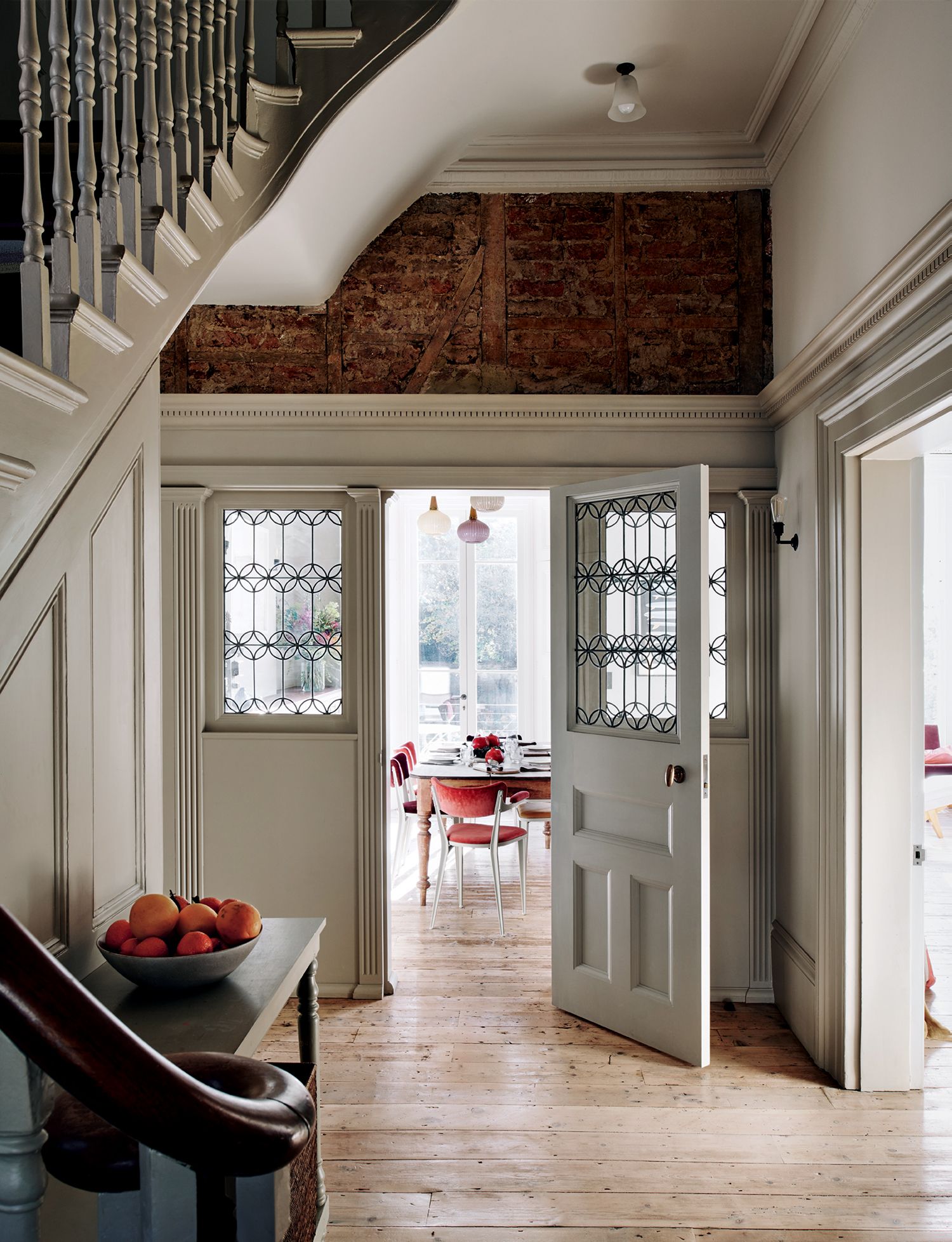
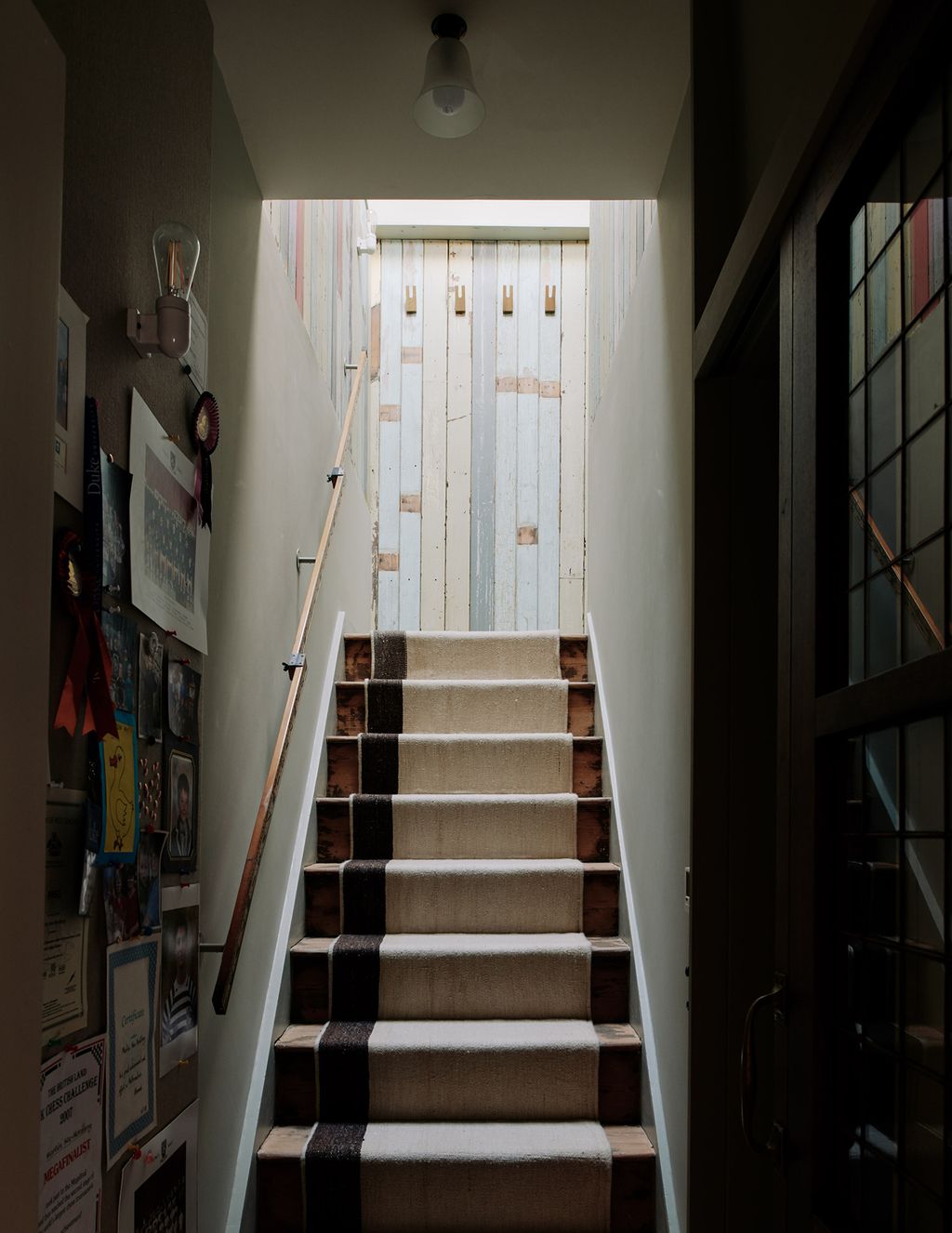
The refashioned house has five storeys, including the basement and the attic. An entrance lobby heads into the staircase hall, off which is the L-shaped kitchen-dining room. The staircase has a striking feature of its own: on the wall of the ground floor and between the first and second floors, the plaster had blown, so it was stripped off, leaving the original Victorian timber-braced brickwork exposed. As the wife says, ‘Like most renovations, there were many surprises along the way. We had the full gamut – from floor-to-ceiling damp in the cellar, a leaky roof and a few spots of asbestos, to wonderful surprises, such as tantalising fragments of wallpapers from different eras, including an original design by William Morris. Our building team said it was highly unusual to have such intricate and high-quality masonry in a house. It would have felt scandalous to replaster over it.’
Double doors with leaded-glass panels (made to match the lobby doors) lead to the kitchen and dining area overlooking the garden, while another door opens into the drawing room. Here, as throughout the house, the original features have been preserved, including the plaster cornices and limed-pine floorboards. Rather than attempting to recreate a period interior, however, Maria and her team at Retrouvius have adopted the mix-and-match approach that has served them so well elsewhere. The dining table, for example, is the owners’ own, but the chairs are a Forties design – the ‘BA3’ designed by Ernest Race – re-covered in different coloured corduroys, and the pendant lamps above are vintage Danish, sourced from the Belgian dealer 20eme Siècle. In the drawing room, contemporary sofas and chairs from Caravane flank a ‘Hue’ rug from The Rug Company, with a Fifties Italian ceiling light and, on the wall, a family heirloom: a framed quilt made by the owner’s great-grandmother in Minnesota using scraps of silk left over from the linings of fur coats.

MAY WE SUGGEST: A farmhouse restored with soul by Maria Speake of Retrouvius
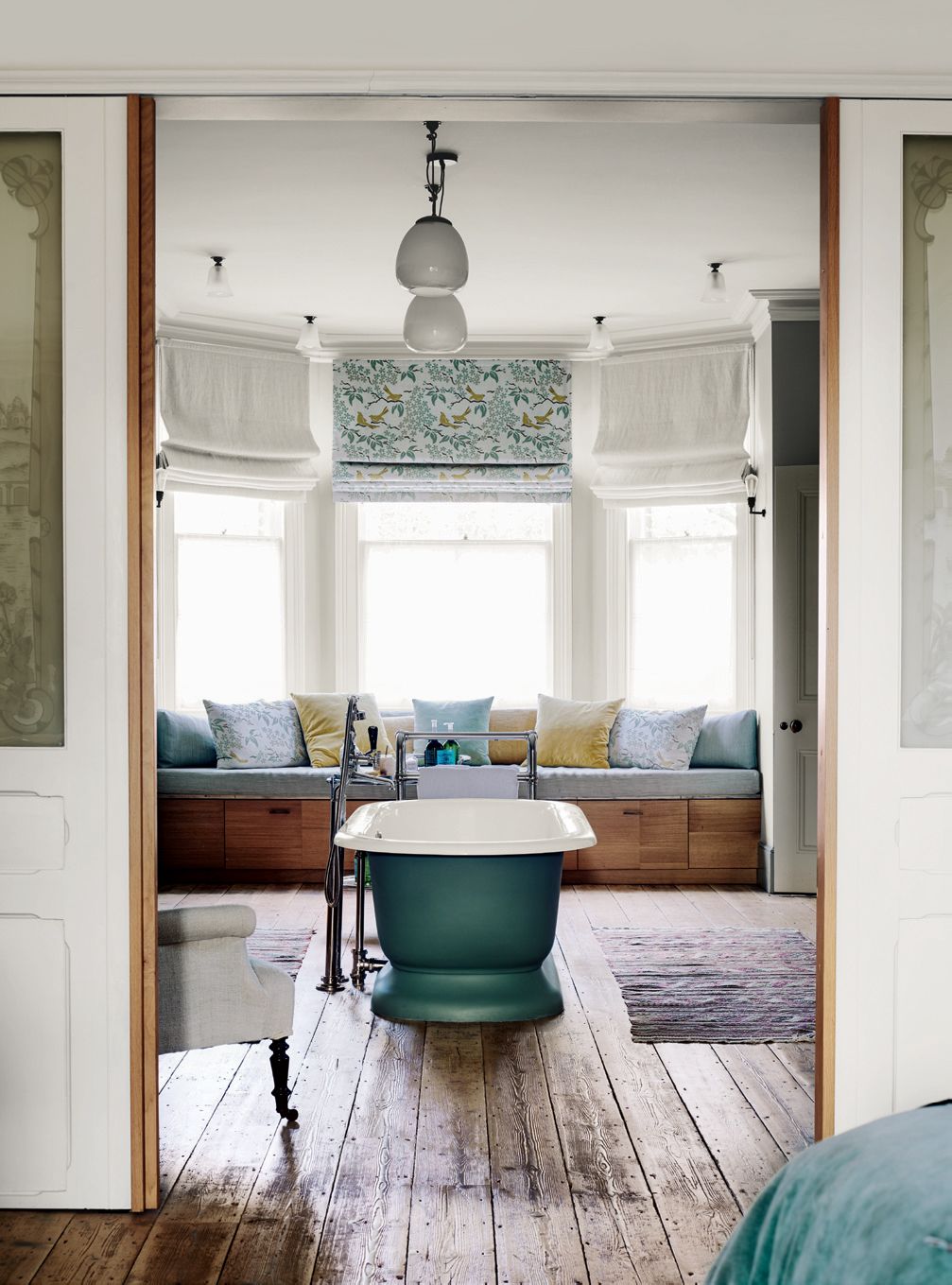
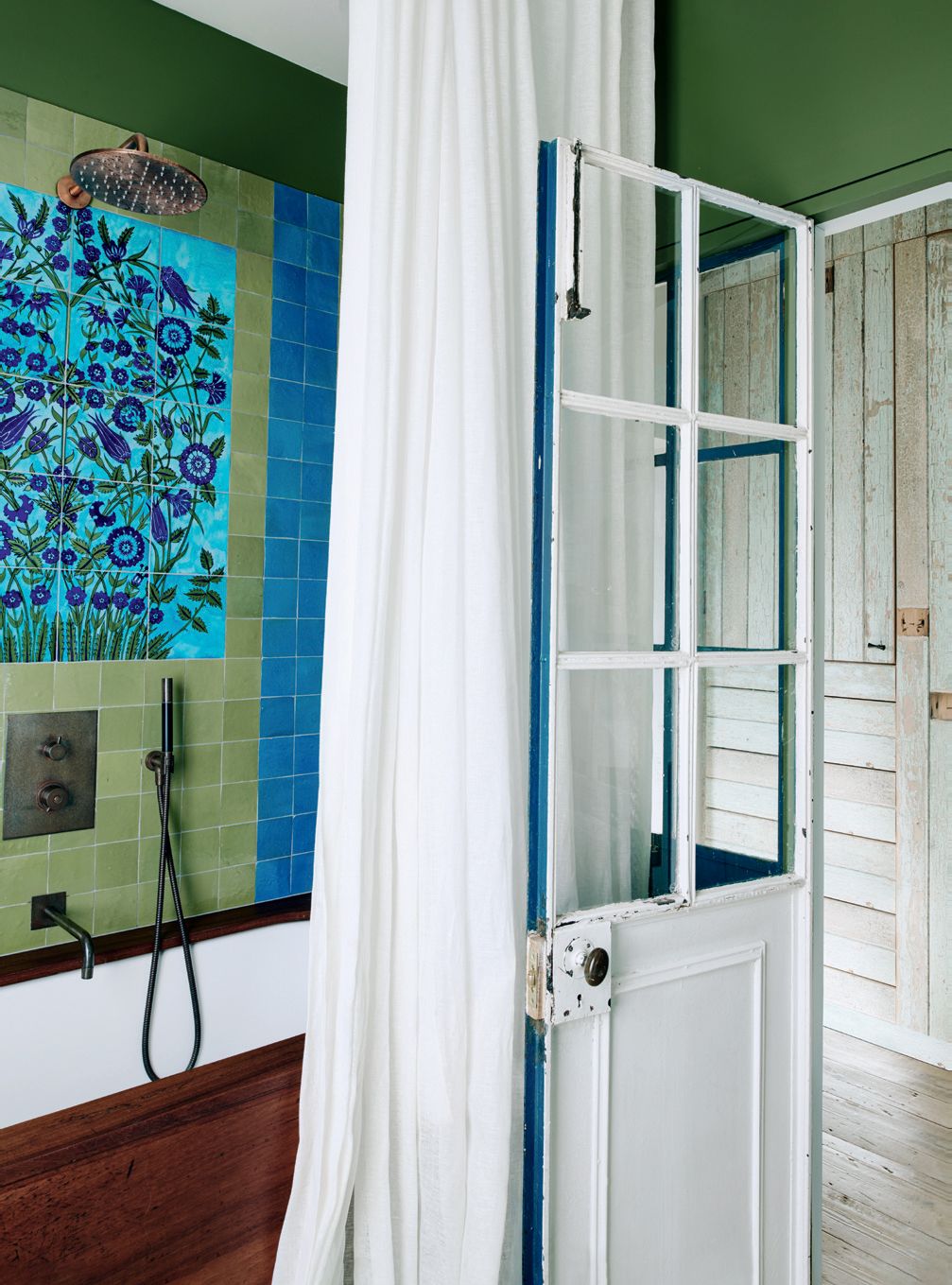
The first floor is given over entirely to the main bedroom, with a generous bathroom at the front and a study to one side. In the bathroom are bespoke wardrobes created from artdeco glass panels rescued from Unilever House, EC4, set within a linen-upholstered framework, and finished in reclaimed iroko hardwood. There are also salvaged elements in the bathroom on the second floor: its Crittall doors, with their original paintwork, enjoyed a former life at the London School of Economics. Even the bath surround is in reclaimed iroko wood – though the vintage-looking tiles above it are actually a modern design by Emery & Cie.
For Maria, this project was a reminder that ‘reusing materials isn’t just about the green side of things, which is what we usually focus on, but also about the human stories behind them – like the quilt that the owner had inherited from her great-grandmother’. She adds, ‘We always have to factor in that people might want to change the interiors in years to come. We try to make sure that the underlying quality is as good as possible, so it’s easy to replace or repaint things without having to bugger about with the actual fabric of the building.’ That is a philosophy worth salvaging.
 Michael Sinclair1/14
Leaded glass panels and doors, made to match the original doors on the other side of the hall, balance the space and offer privacy for the dining area while allowing natural light into the hall.
 Michael Sinclair2/14
Vintage Dutch chairs and Scandinavian stools from Paere Dansk were re-covered in colourful corduroy. The ‘Join’ coffee table is by Fritz Hansen. Retrouvius sourced the vintage glass pendants above the island.
 Michael Sinclair3/14
A vintage Danish pendant from 20eme Siècle hangs above the dining table and the ‘BA3’ chairs by Ernest Race covered in different corduroys.
 Michael Sinclair4/14
A ‘Hue’ rug from The Rug Company picks up on the pattern of the framed heirloom quilt on the wall. The orange velvet sofa and chair from Caravane contrast with walls in Paint & Paper Library’s ‘Thames Mud’. The ceiling
light is an Italian Fifties design.


 Michael Sinclair5/14
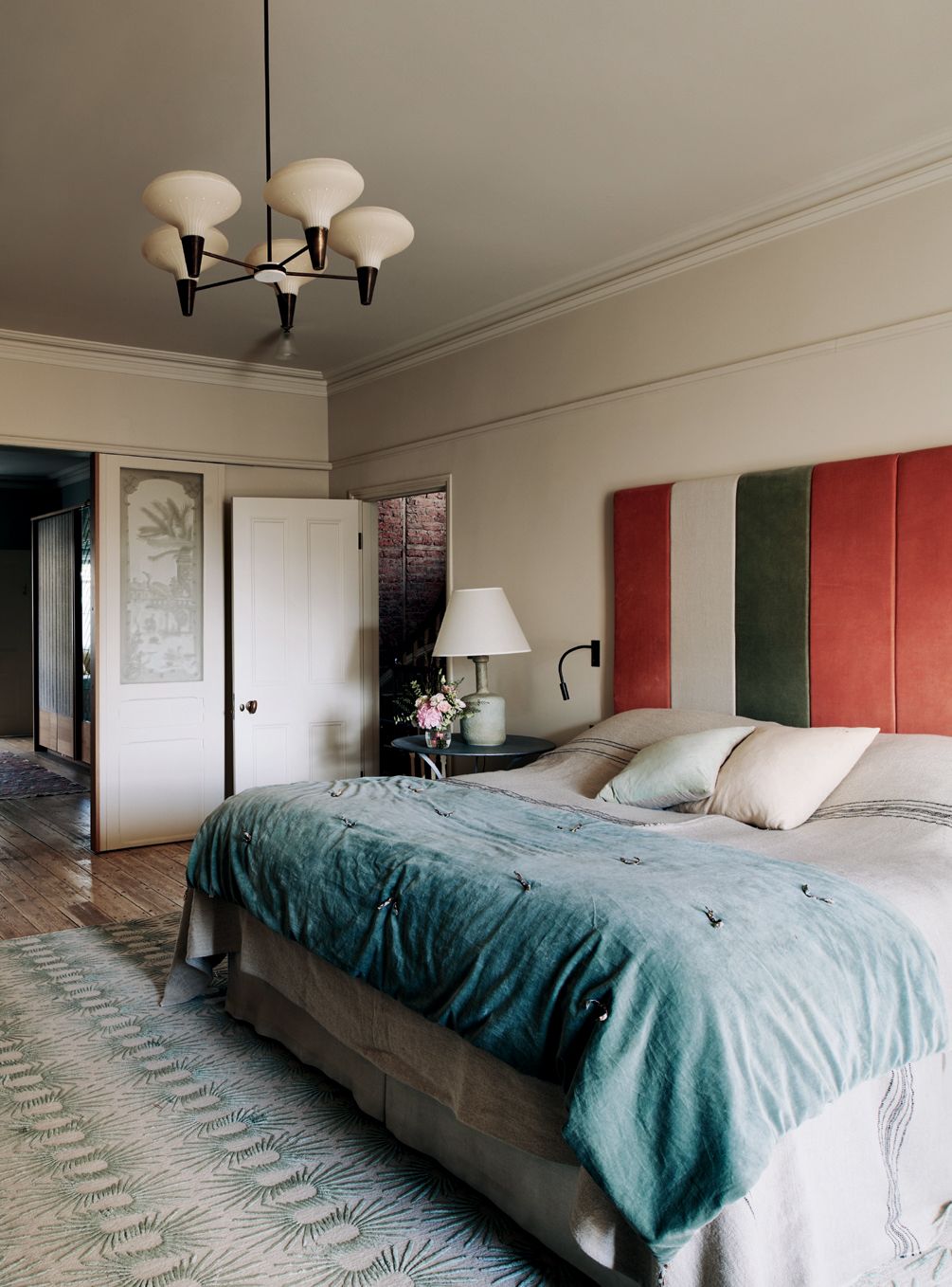
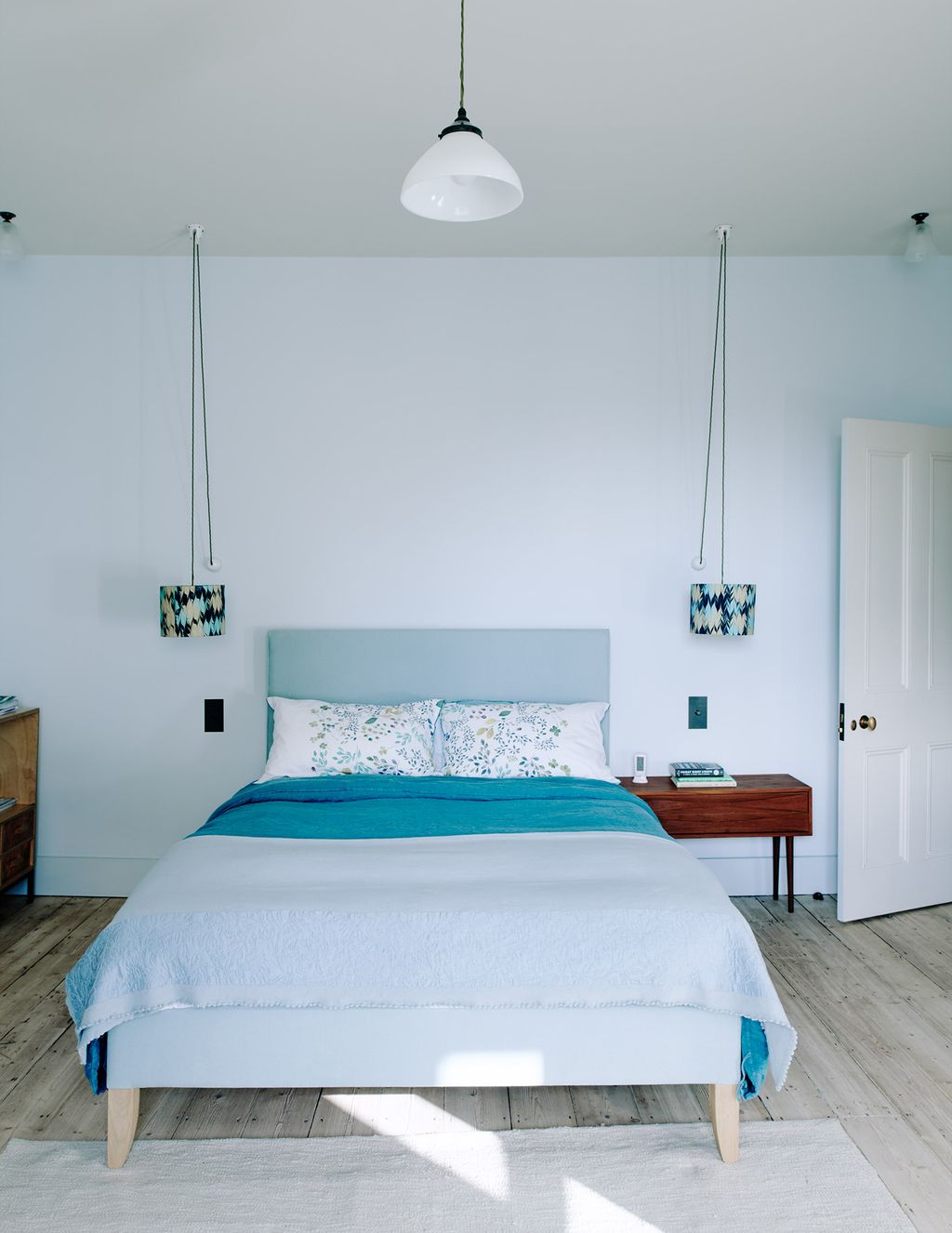
The headboard is made from hand-dyed velvet panels. A Sixties ceiling pendant hangs above Neisha Crosland’s ‘Hedgehog Sea’ rug from The Rug Company. The en-suite bathroom is accessed through old Dutch etched-glass sliding doors.
 Michael Sinclair6/14
A central blind in ‘Birds’ by Galbraith & Paul, from Tissus d’Hélène, echoes the colour of a ‘Lonsdale’ bath from The Water Monopoly.
 Michael Sinclair7/14
The wardrobes were created from art-deco glass panels salvaged from Unilever House, linen upholstered panels and reclaimed iroko.
 Michael Sinclair8/14
The plaster had blown on the staircase wall between the first and second floors, so it was stripped off to expose the Victorian timber-braced brickwork. A map that was a wedding present from the owners’ best man hangs above an Arts and Crafts chair.


 Michael Sinclair9/14
 Michael Sinclair10/14
 Michael Sinclair11/14
A panel of ‘Faux Iznik’ tiles framed by zelliges, all by Emery & Cie, line the wall above the bath, which has a reclaimed iroko surround. The Crittall doors were salvaged from the London School of Economics.
 Michael Sinclair12/14


 Michael Sinclair13/14
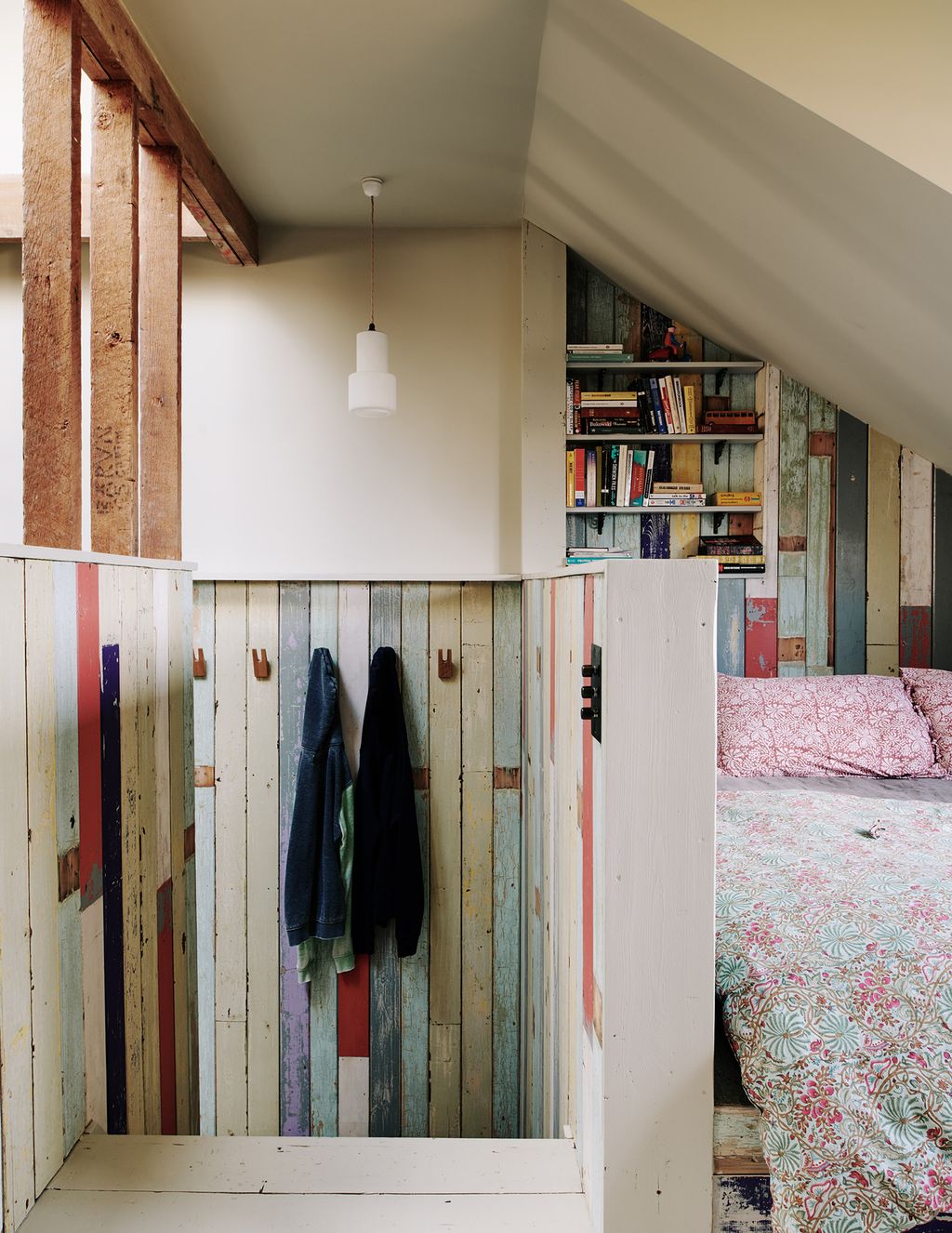
A mix of reclaimed boards have been used on the walls of the attic bedroom.
 Michael Sinclair14/14


