
A one-of-a-kind Georgian townhouse restored and updated to its owner’s unique vision

“I really wanted to find a wreck. And this was a wreck and a half.” It’s clear from talking to him that Kerem Ozelli was nothing if not ambitious when he approached the renovation of his Grade Two-listed townhouse on West Kensington’s Holland Street. Having worked on a number of different flats in New York and London on an amateur basis, by 2016 he knew that he wanted to develop a whole house on his own terms from scratch. And he got his way.
Kerem looked at a number of houses, but most of what he saw was already done up; the 2,500-square-foot, four-storey house on Holland Street, by comparison, was ancient. “The special thing was that when I got it, it had changed very few hands. There was no proper electricity, no proper heating.” He recalls that it was inhabited by “an old lady who was probably in her 80s who literally lived in two or three rooms.”
Everything else was untouched. Later research that Kerem undertook unearthed the story of John Jones, a man who bought a tract of land near the newly built Kensington Palace around 1722: “All around it was farmland. The first street that was built was Holland Street.” Kerem’s house is one of the originals from that development, its completion dating to 1728, and he could tell – in many of the rooms, there was an elevation variation between the ceiling and the floor of up to 17 centimetres (“Take a tape measure!” Kerem jokes. “Look at it!”).
His first thought, he readily admits, was: “Okay, let’s just rip it apart.” But the listing of the fabric of the building meant that he could hardly touch much of the house; even a “horrible” extension dating to 1925 proved a struggle to win planning permission over, though it was eventually removed and replaced. Instead, Kerem realised that he needed an expert architect to help him transform the space. Despite his declaration that he “doesn’t believe” in interior designers, he called around a number of architecture firms to sound them out about the project. After being unimpressed with a number of pitches – “I wanted to get someone who knew how to renovate” – he was recommended London firm Michaelis Boyd by a friend, and emailed them using the firm’s “Contact Us” form on their website. “What I liked about it was that Tim [Boyd] himself wrote back.” They took a walk around the house together and Tim started sketching out some ideas. “I said, that’s my guy.”
Work began on excavating the existing lower ground floor, extending the building at the back and on the sides, and rejigging all five floors, as well as replacing services and fittings. At the same time, Michaelis Boyd used reclaimed bricks, lead roofing and stained pine to maintain the historical character of the house. “The project was very hands-on,” Kerem recalls. “It was pretty much bare-bone.” Even the paint used in the house had to be in character – Kerem went to a specialist paint mixer in Belgium called Pure & Original. “They make it like they made it 300 years ago. I had a specialist painter almost living with me for three, four months.”
While the renovation was ongoing, Kerem was deciding on his own interior design scheme, visiting exhibitions and galleries for inspiration. His own art collection includes a range of 20th-century British abstract art, encompassing pieces by Scottish artists Alan Davie (“He painted like Pollock, standing up”), William Scott and Craigie Aitchison, and the photographer Harry Benson. Describing himself as “quite passionate about design,” Kerem came up with a number of his own idiosyncratic designs for the house, including the squared metal towel rails hanging above the bath, and the vast majority of the furniture. “From the dining table, to the beds, to the sofas – all that stuff is basically my design.” What wasn’t designed was picked up from antiques shops in Hammersmith, Pimlico and on Old Brompton Road.
Functionality, he explains, was at the heart of what he wanted to do. During the design process, Kerem visited a couple of historic Georgian houses in Spitalfields for inspiration and information about his own. “In one of the houses, the husband and wife were like, ‘We’re living in the 1700s.’” They were putting buckets under leaking roofs, at peace with the ramshackle history of the place. But Kerem was unconvinced. “It hit me; I’m like, ‘What the hell? Times have moved on.’” And so he decided to bring in “all the luxuries, all the technology” of modern life. So, while the physical material of the house is in keeping with its original fabric, fibre optics run invisibly throughout, he says.
The result is a house that is as individual as its owner, unlike any you’ll find in London. Venerable even before the modern, art-informed renovation began, it has now been proudly brought back to life.
 Paul Massey1/19
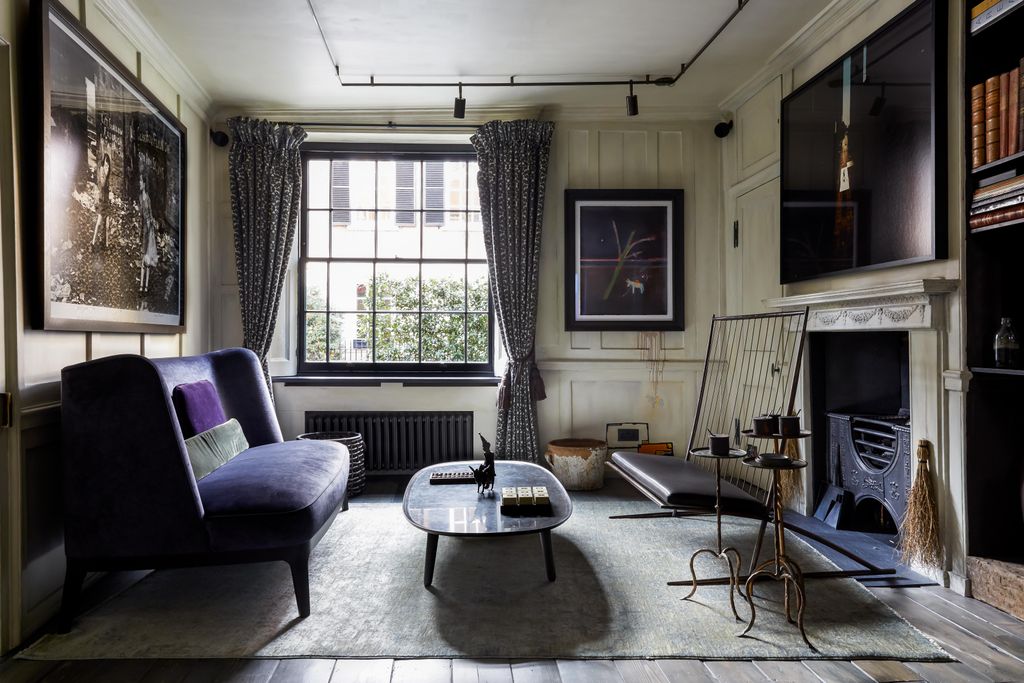
The fabric for the curtains are from The Royal Collection. The bench on the right was created by the Sculptor Philolaos Tloupas in the 1960s. “He was commissioned to create furniture pieces by the prominent American art collectors J. Speed and Martha Carroll,” explains Kerem, who acquired two of the twelve pieces in existence. The bench was purchased in New York.
 Paul Massey2/19
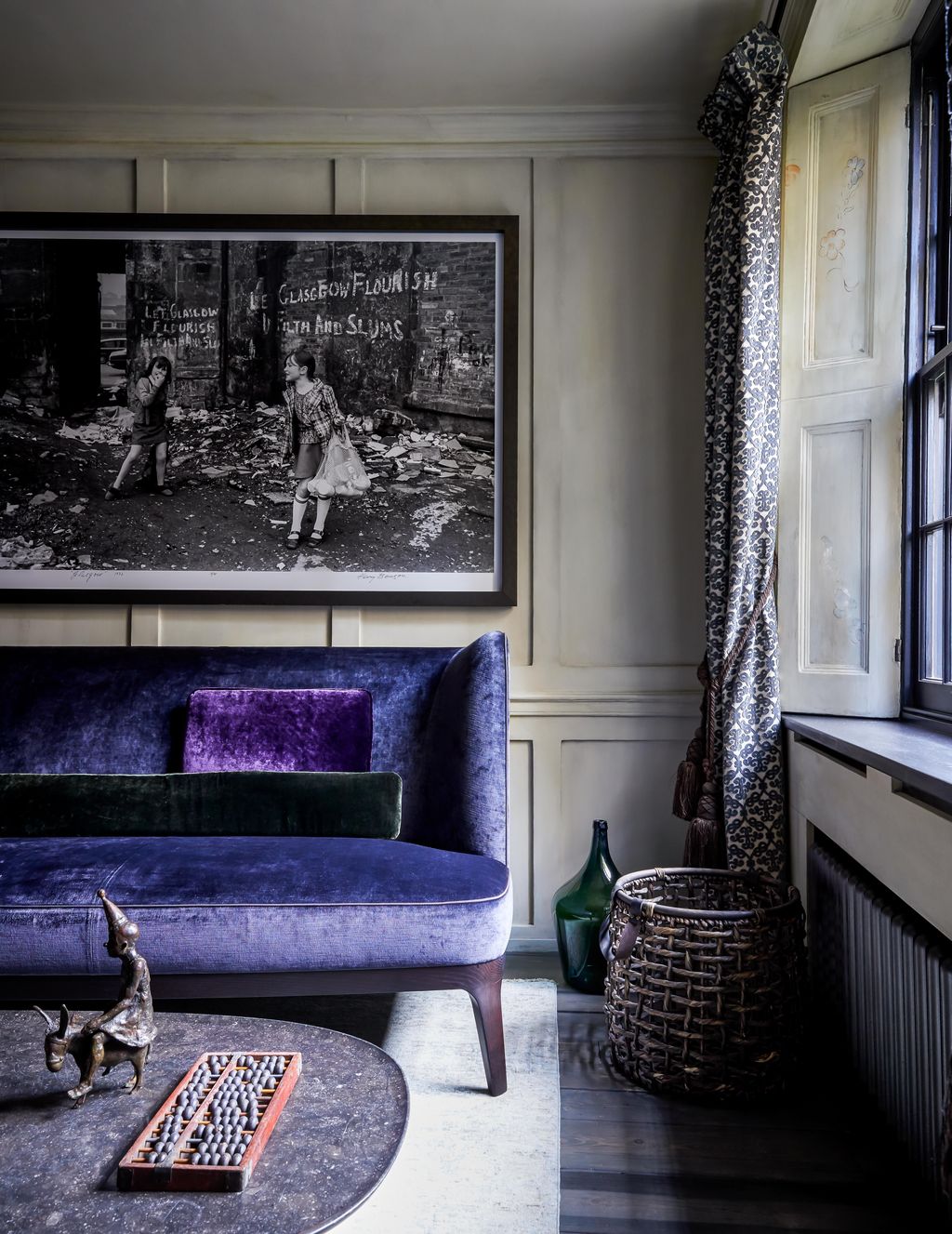
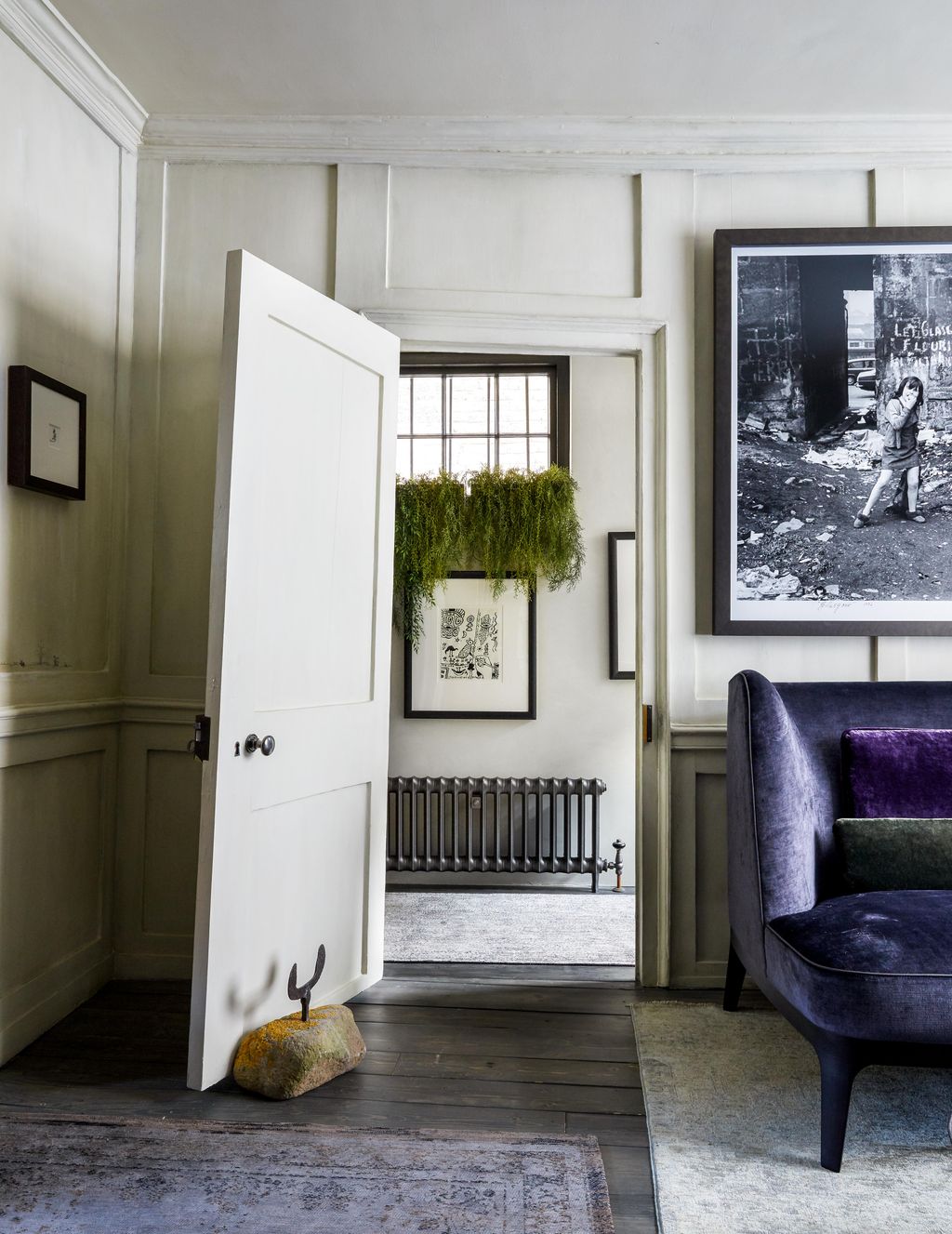
The photo on the wall is by Scottish photographer Harry Benson; Kerem bought it in New York. It was taken in 1972 in Glasgow, where Benson was born in 1929.
 Paul Massey3/19
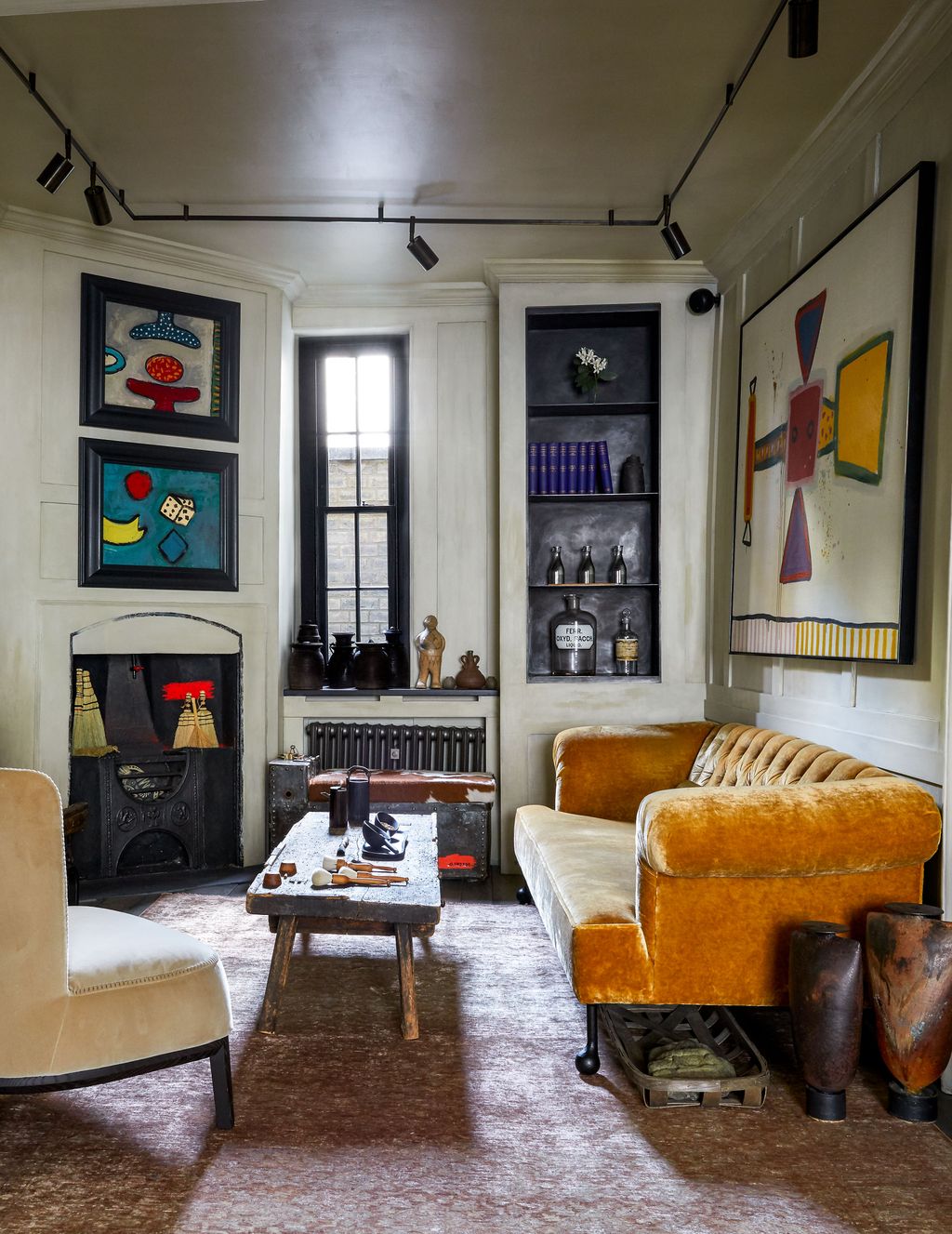
The art pieces are by Alan Davie (1920-2014). “Alan was one of the first abstract artists in the UK,” Kerem says. “He painted almost until his death. His works between the period 1958-1962 are considered of his best and most valued. The three pieces here are from this period.”
The coffee table is an 18th-century cobbler’s workbench. “Two people would sit at either side of the table with a shared drawer (for sharing tools) which slides out on each side,” Kerem explains.
The sofa is his own design – the legs are solid cast bronze by Taylor Brooks. The fabric is from The Royal Collection.
 Paul Massey4/19
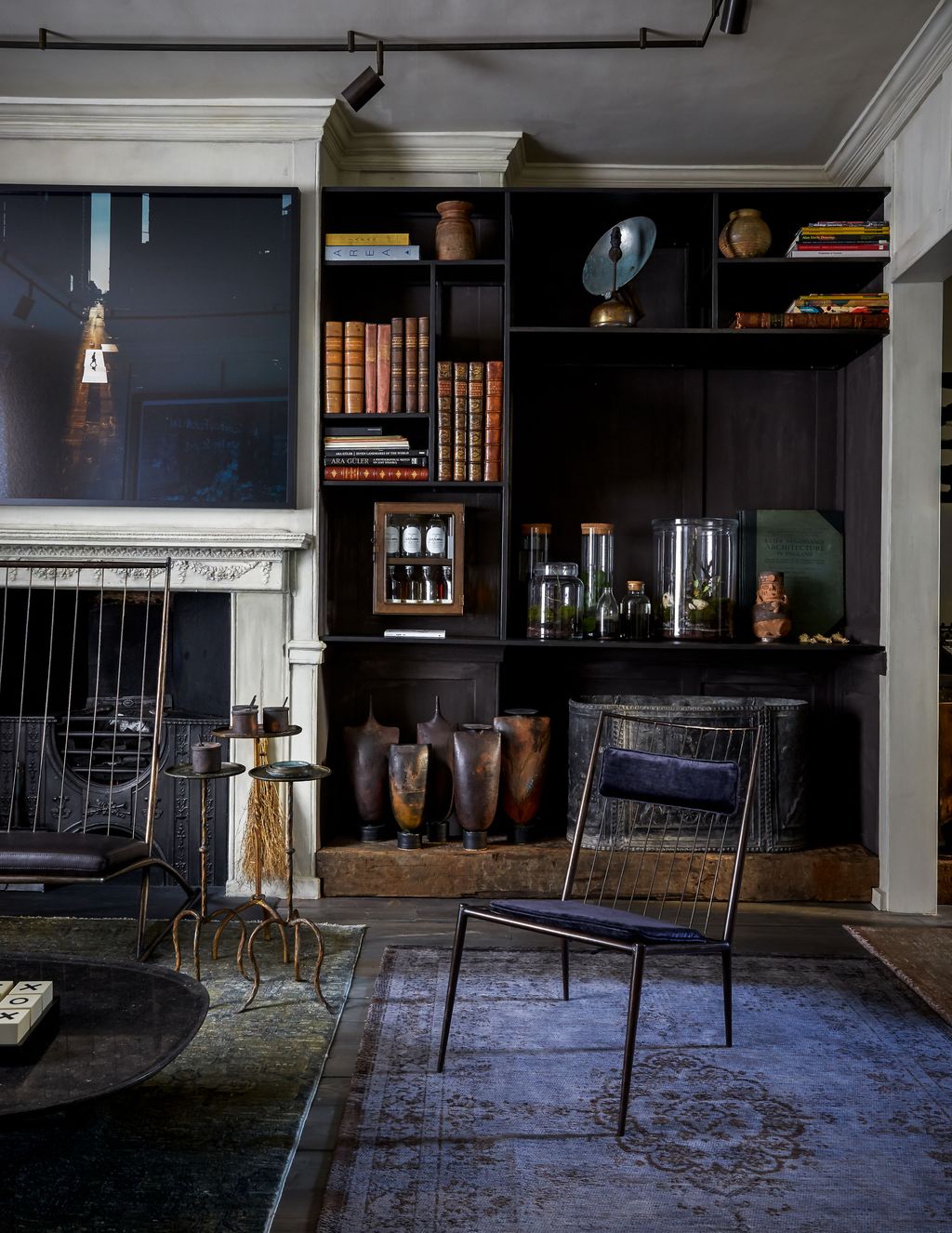
Like the bench on the left, the chair is by the same artist, Philolaos Tloupas, and was purchased in Paris, where the artist lived most of his life.
The shelves are Kerem’s own designs, credited to Dzyne Group, the design company he incorporated when designing for the house. All the metalwork was made by Taylor Brooks in the UK.
All the fireplaces, doors, panelling, stairs, door locks and 80 per cent of the timber floors are all original (circa 1730), meticulously restored by specialists. The other twenty per cent – the missing and or badly damaged floorboards – were supplemented with 300-year-old vintage pine sourced in the UK.


 Paul Massey5/19
When Kerem bought the house, there was a disparity of 17cm in some of the rooms between floor and ceiling
 Paul Massey6/19
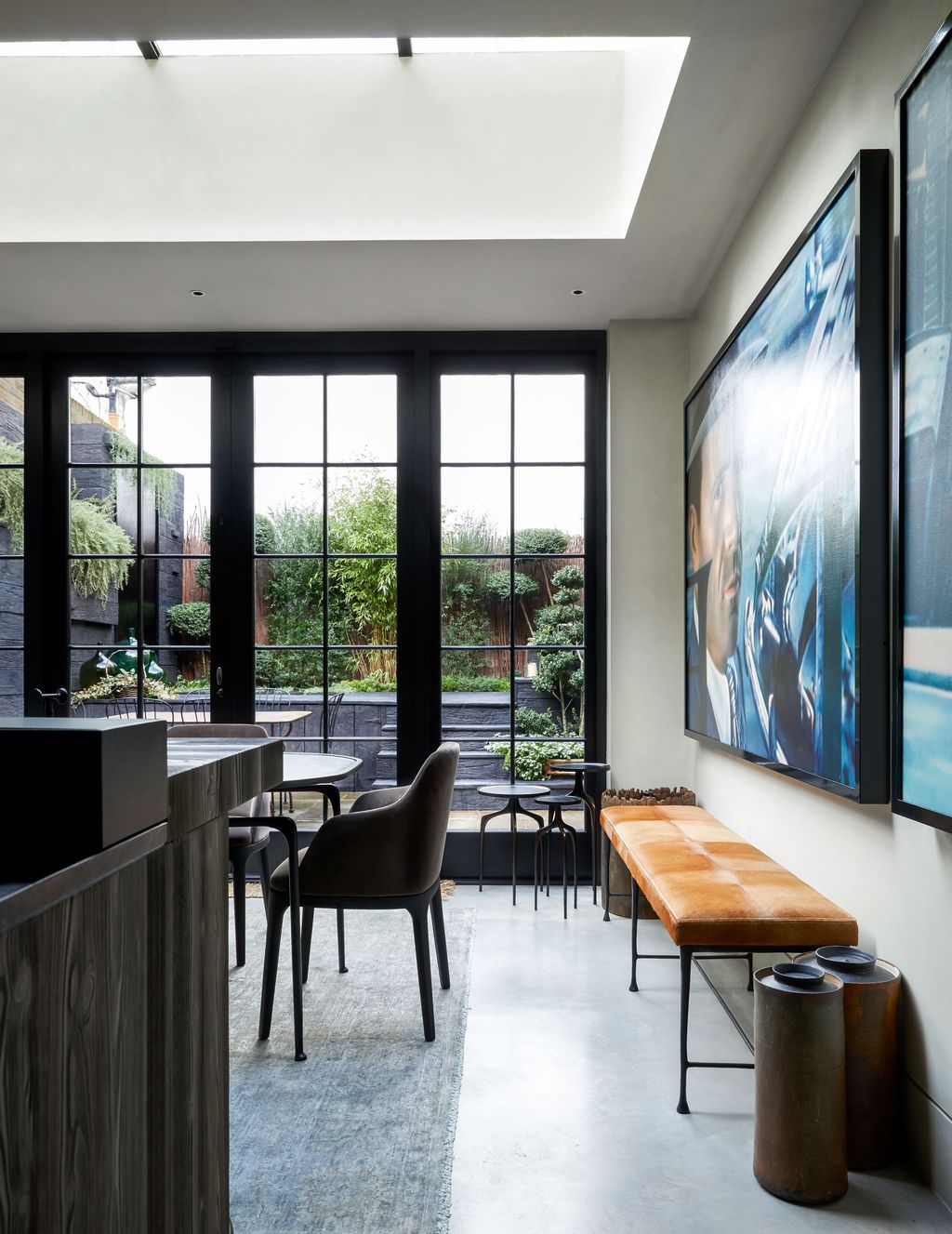
The lower ground floor of the house was excavated to provide additional ceiling height, and the kitchen is in a new addition to the 1730 house. Four large, floor-to-ceiling French doors and a skylight above the dining area allow ample amounts of light into the space. The seat on the right is a Giacometti Bench by Christian Liaigre.
 Paul Massey7/19
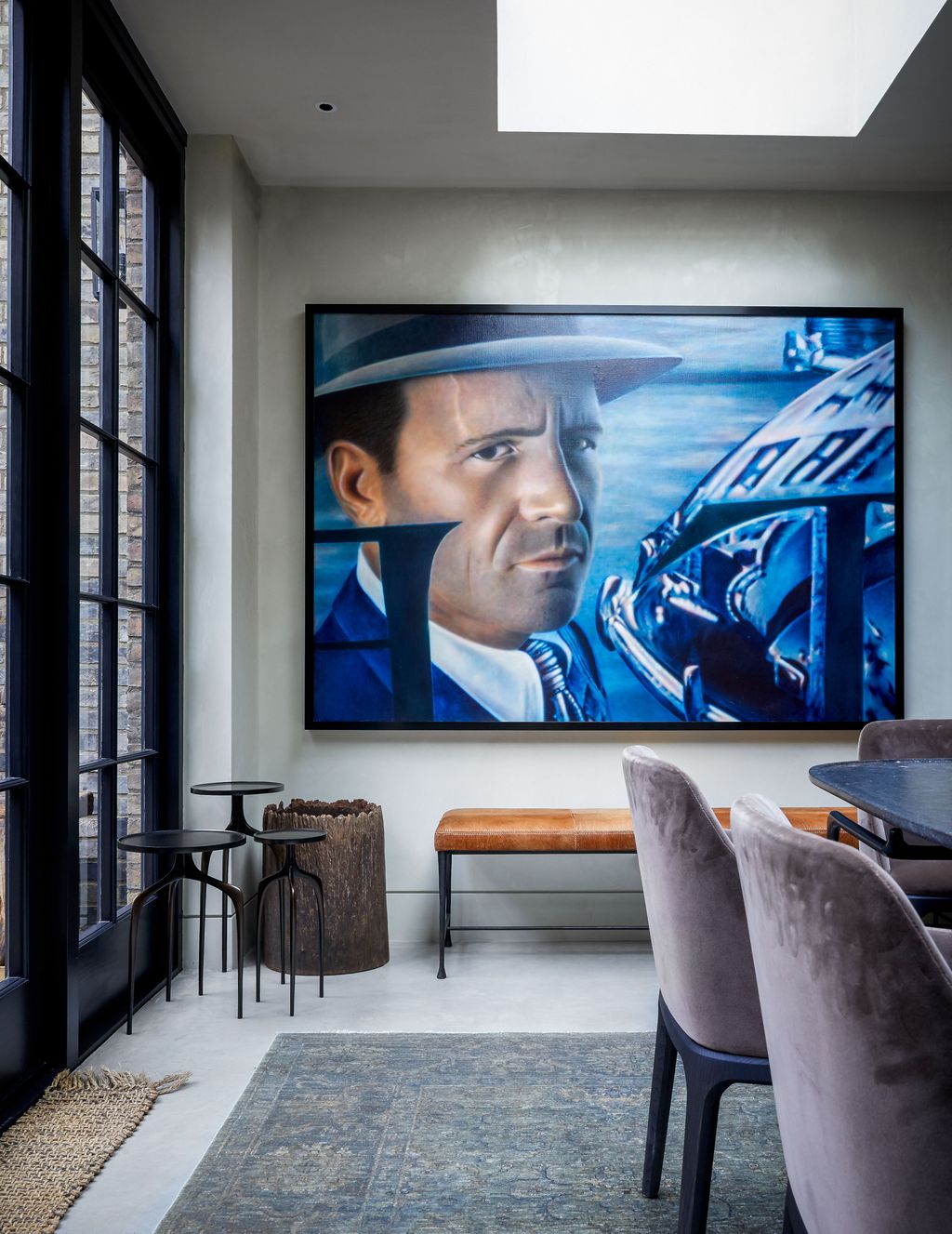
The paintings in this room are by Peter Bradke (born in Berlin in 1947). They are oil on canvas, mostly self-portraits, with a highly cinematic feel. Bradke as was a friend of Kerem’s family in New York, and he maintained a studio in Soho, Manhattan. The tables are designed by Ty Best, cast in solid bronze in Montana, USA. Kerem met the artist in London in 2017.
 Paul Massey8/19
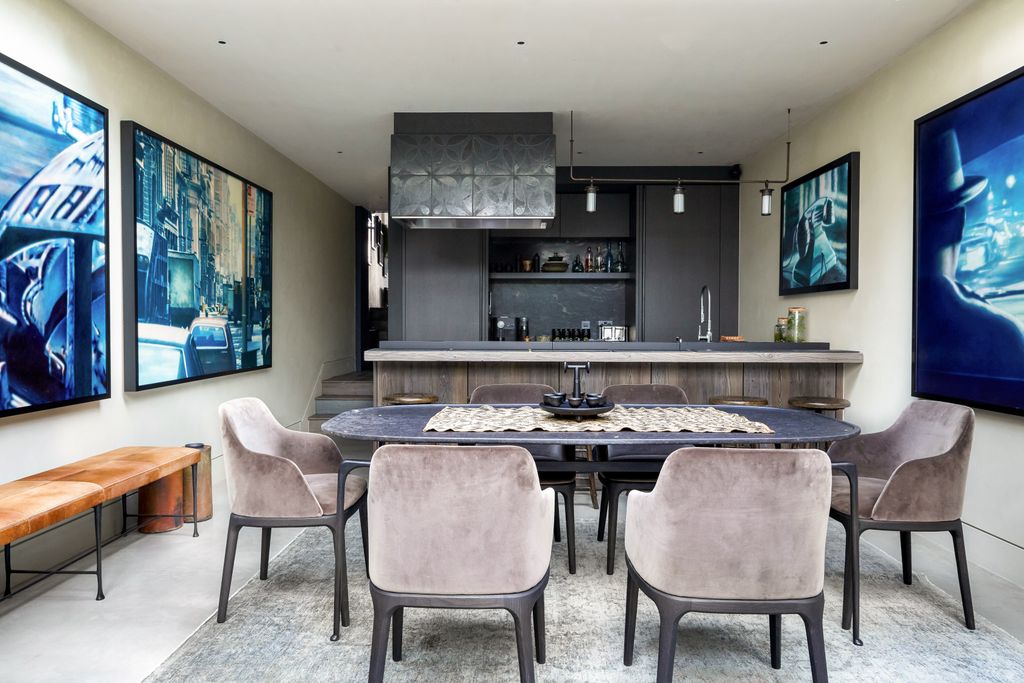
The dining table is Kerem’s design. The legs are bronze, fabricated by Taylor Brooks, while the table top is 20mm fossil stone, routed at the top. The chairs are from Poliform.
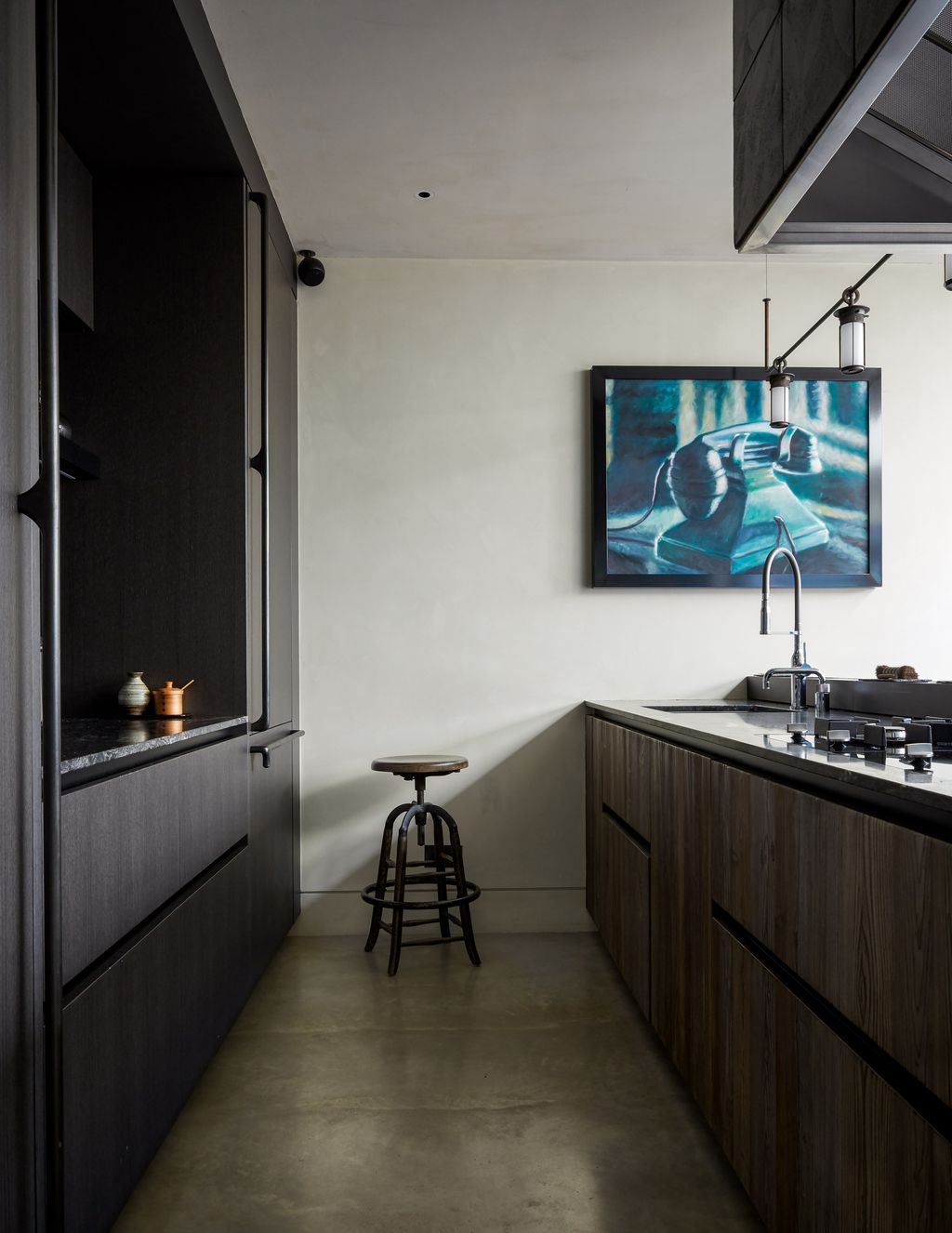
Michaelis Boyd worked with Taylor Brooks to design and fabricate custom black steel handles for the cabinetry doors concealing the fridge and ovens. The extractor is clad in handmade Karak tiles. This sits beside the Parachilna Bai III Chandelier, designed by Neri and Hu.


 Paul Massey9/19
 Paul Massey10/19
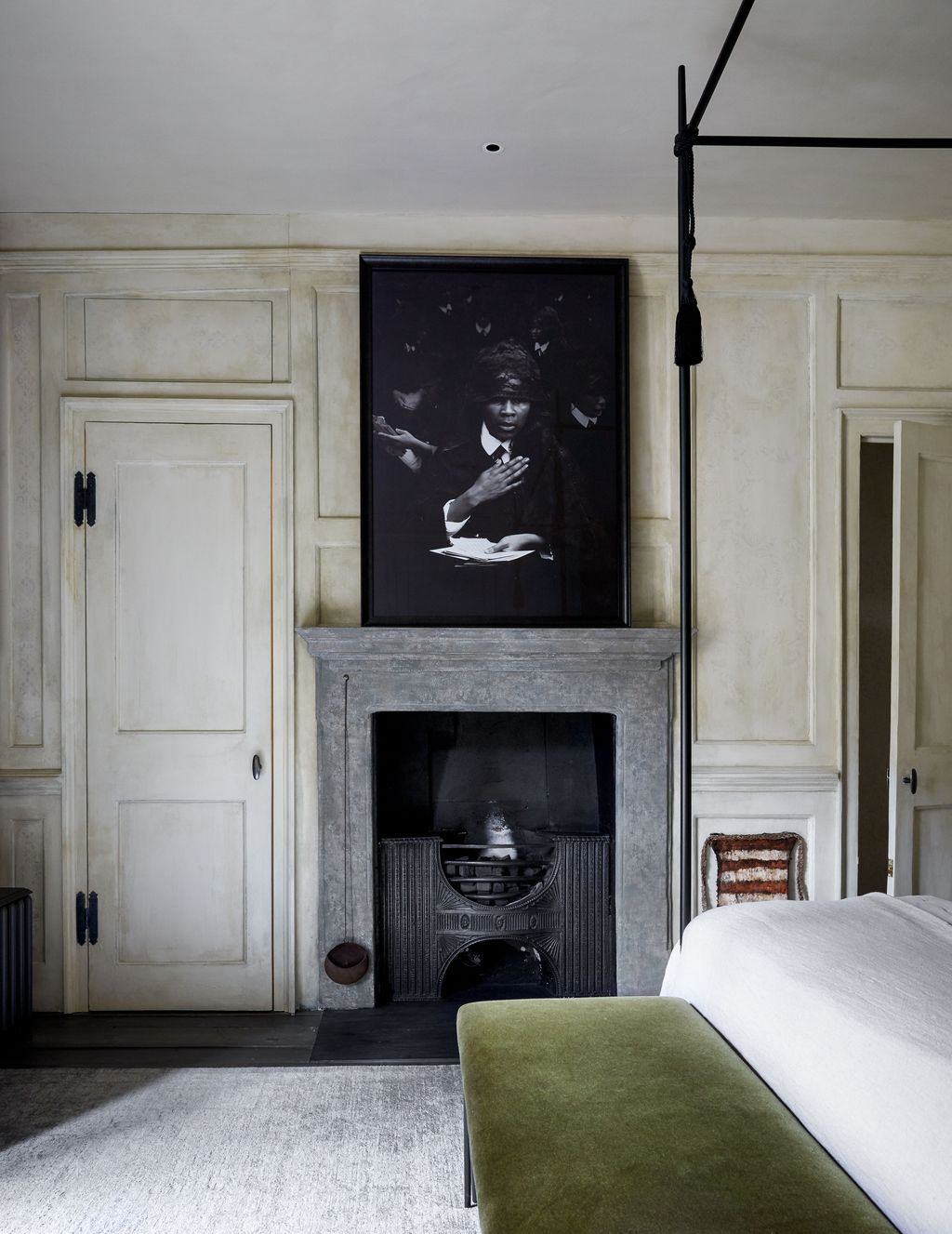
This is the master bedroom; the door on the right leads into the master bathroom.
The photo is by “a fairly unknown South African artist”, says Kerem. He bought it in Cape Town.
All the fireplaces are original. “Notice the subtle specialist painting around the fireplace and all the walls. I had specialist painters on the premises for a few months, adding subtle accents all around the old house.”
 Paul Massey11/19
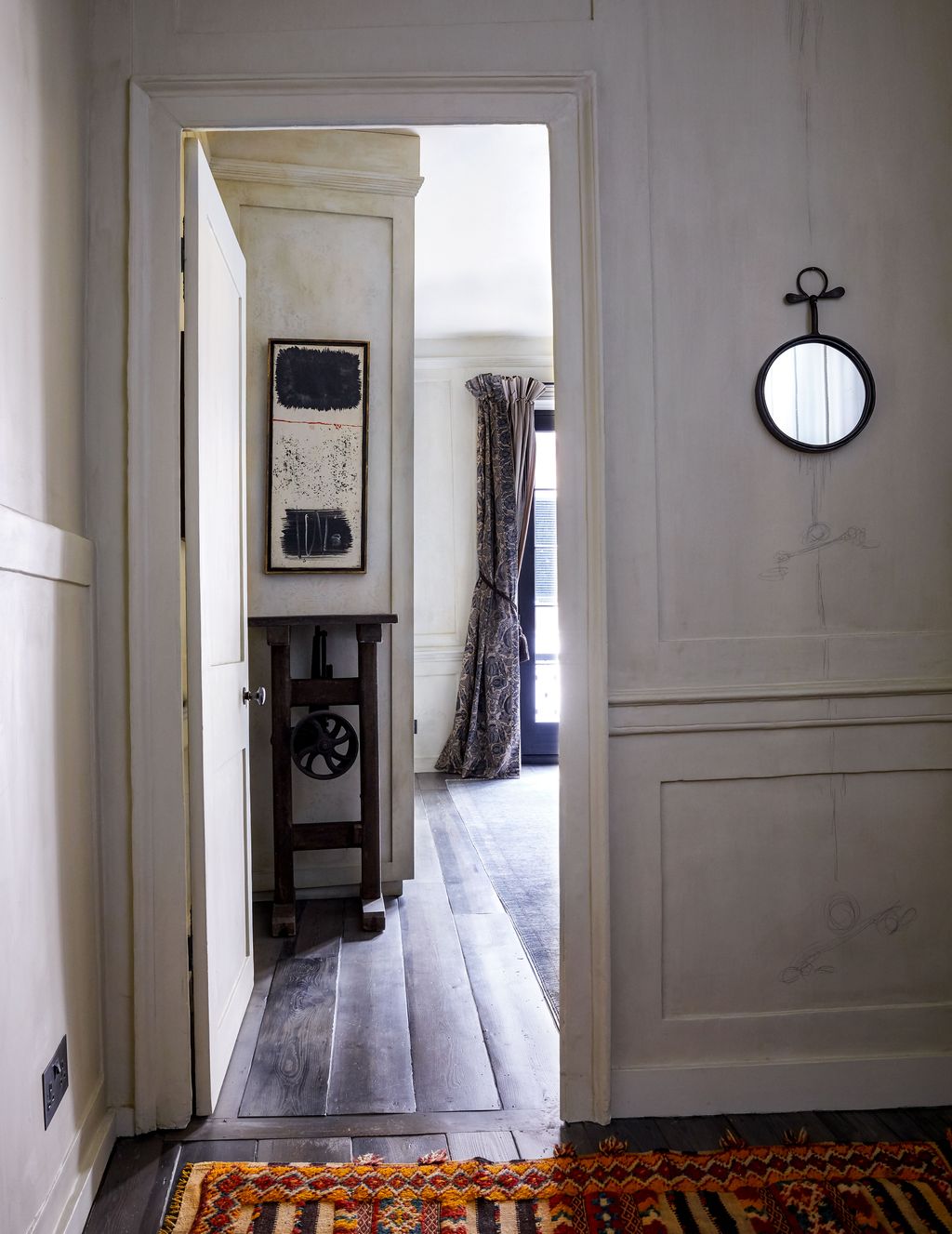
Throughout the house, the walls are finished in a palette of polished plaster, Moroccan lime and chalk paints.
 Paul Massey12/19
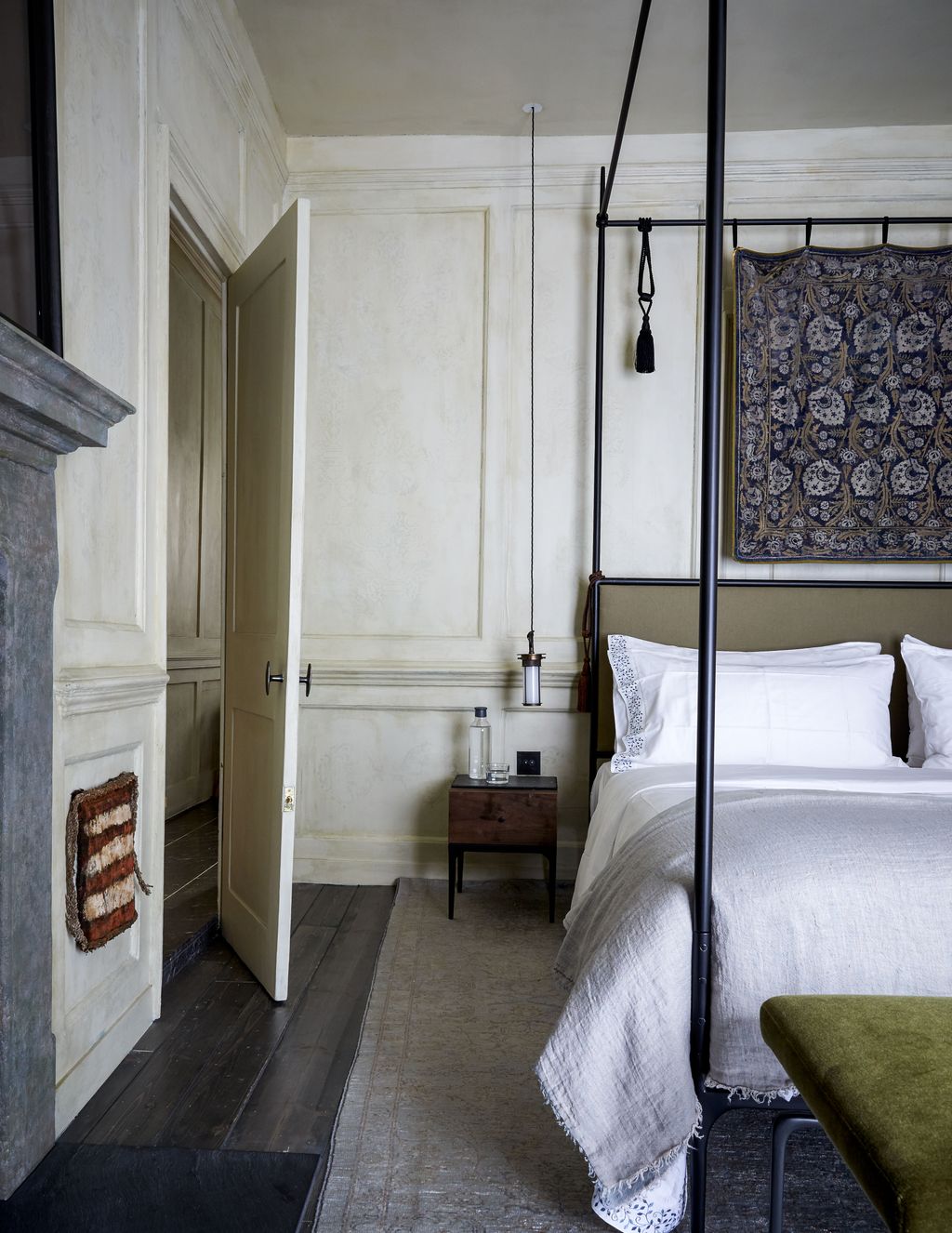
The tapestry hanging from the headboard and the curtains are both 1925 Mariano Fortuny originals with his insignia in the back, bought in Venice.


 Paul Massey13/19
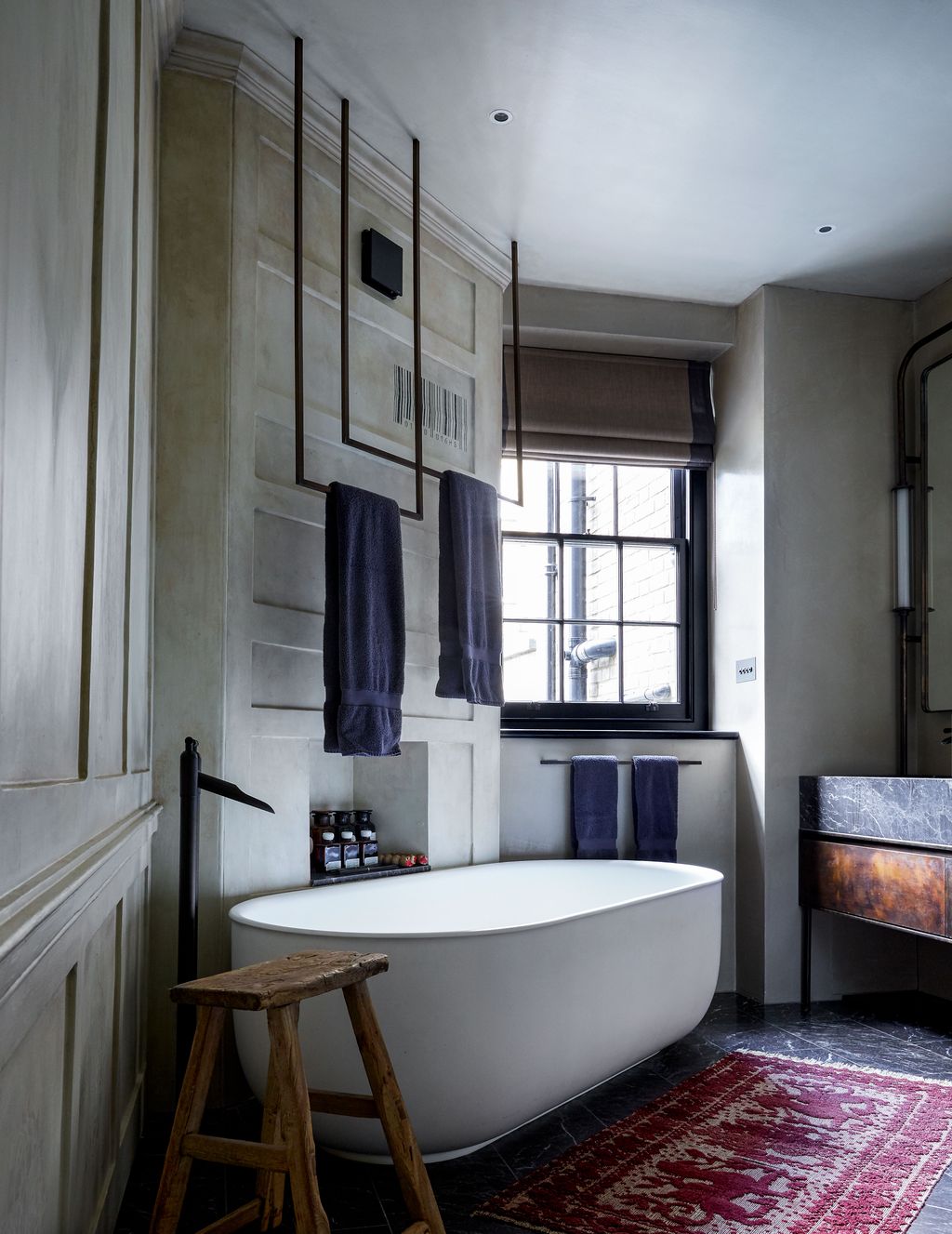
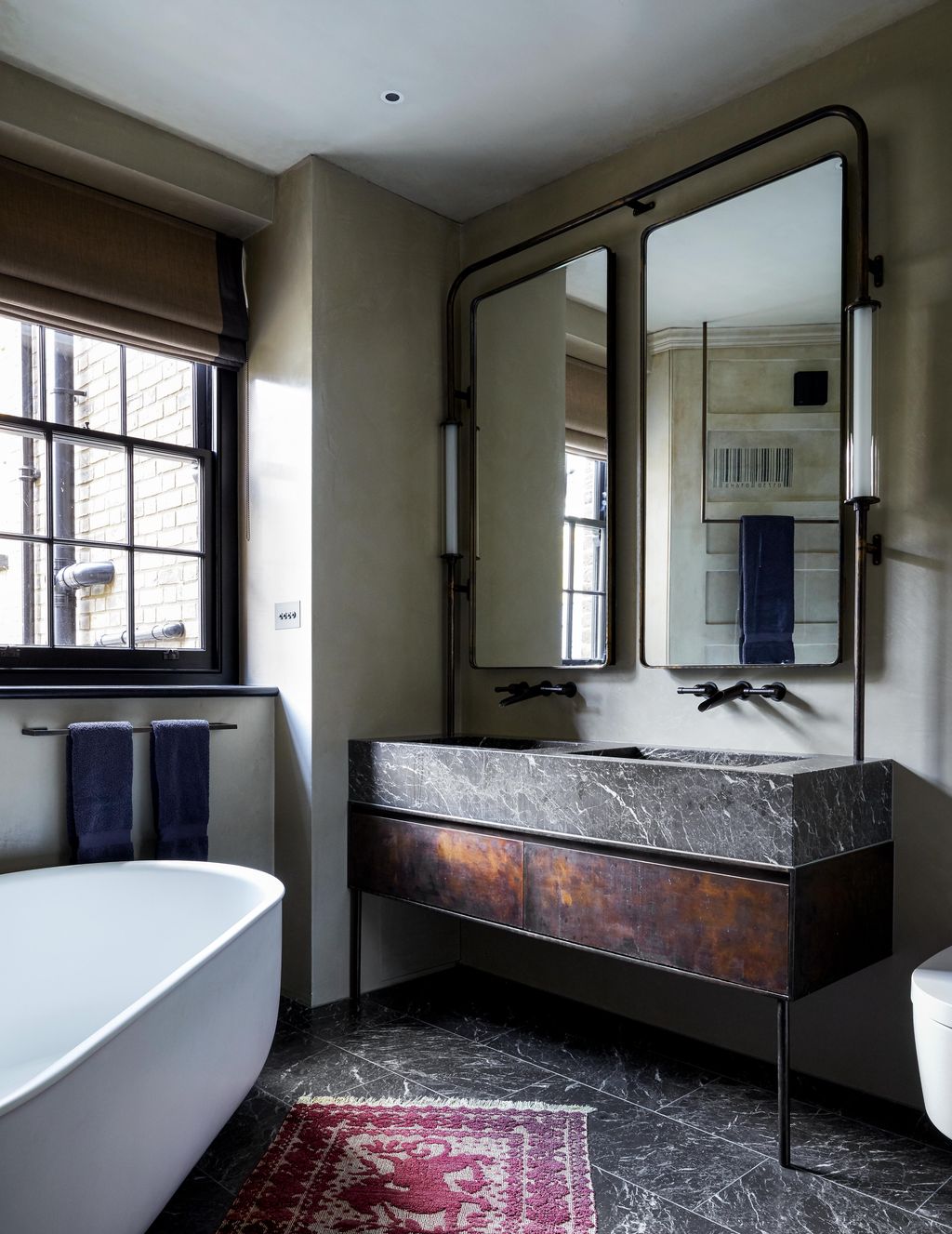
In the master bathroom, the bath is by Inbani. The rug is antique Persian. The bath tap is from Sonoma Forge in San Francisco. The towel rails, vanity unit and lights are Kerem’s design.
 Paul Massey14/19
The custom-designed vanity is also made from Black Olive marble and surrounded by an elegant bronze frame built by Taylor Brooks, which houses bespoke lighting.
 Paul Massey15/19
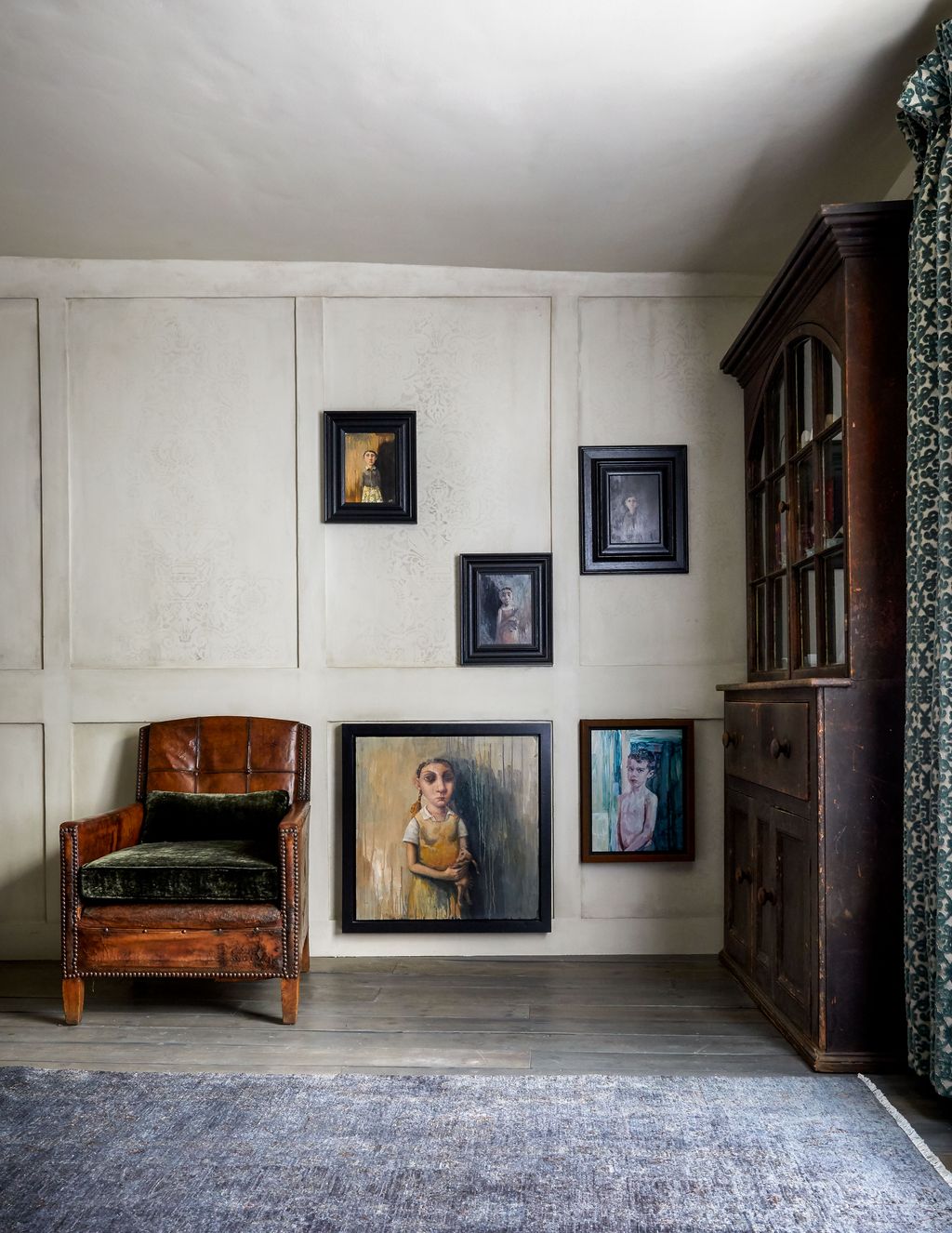
The four paintings are by Bobbie Russon. “The boy on bottom right is a young artist I sponsored,” says Kerem. The dresser is from Provence, circa 19th century, and the chair is early 20th century. Kerem bought it from an antique dealer on Lillie Road in London.
 Paul Massey16/19
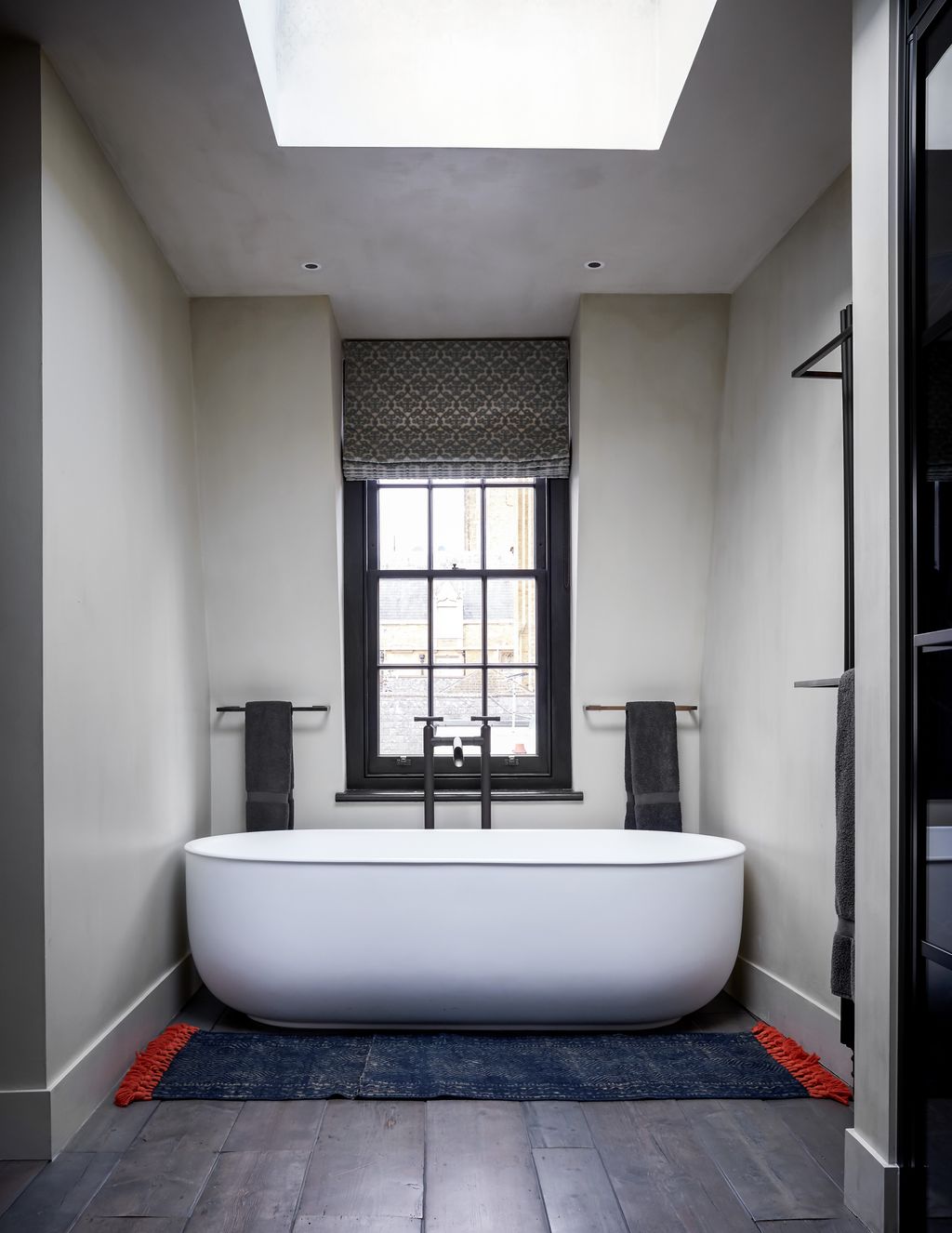
The top floor of the house is a light and airy bedroom and bathroom. A large skylight floats above the centre of the space framing the bathtub. The bath is by Inbani, and the rug is from central Anatolia.


 Paul Massey17/19
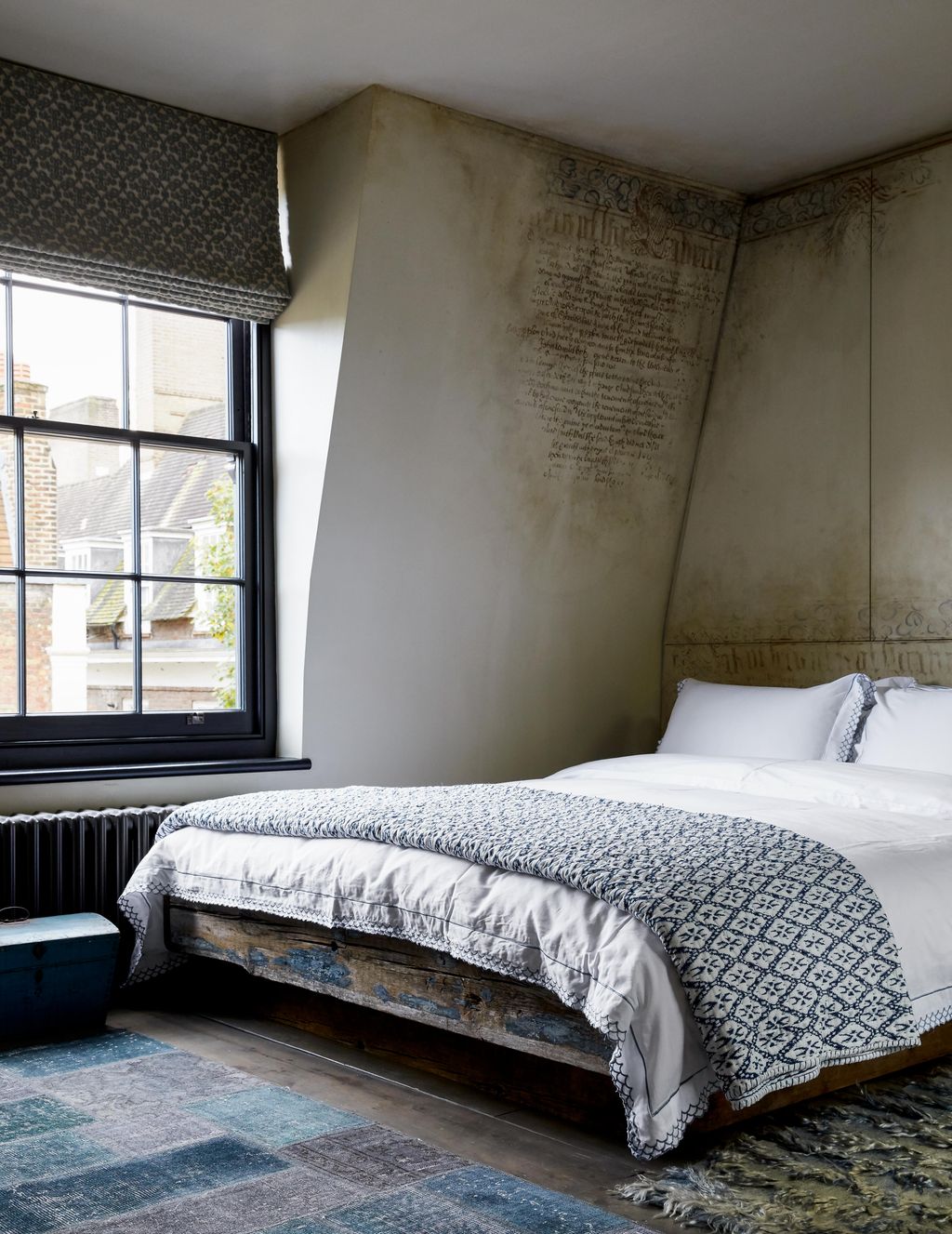
In Kerem’s daughter’s room, the curtains are by The Royal Collection. The specialist painting on the wall is inspired by an antique manuscript he found in Provence. The bed and bedside tables are his design – the bed is made from distressed 18th-century timber.
 Paul Massey18/19
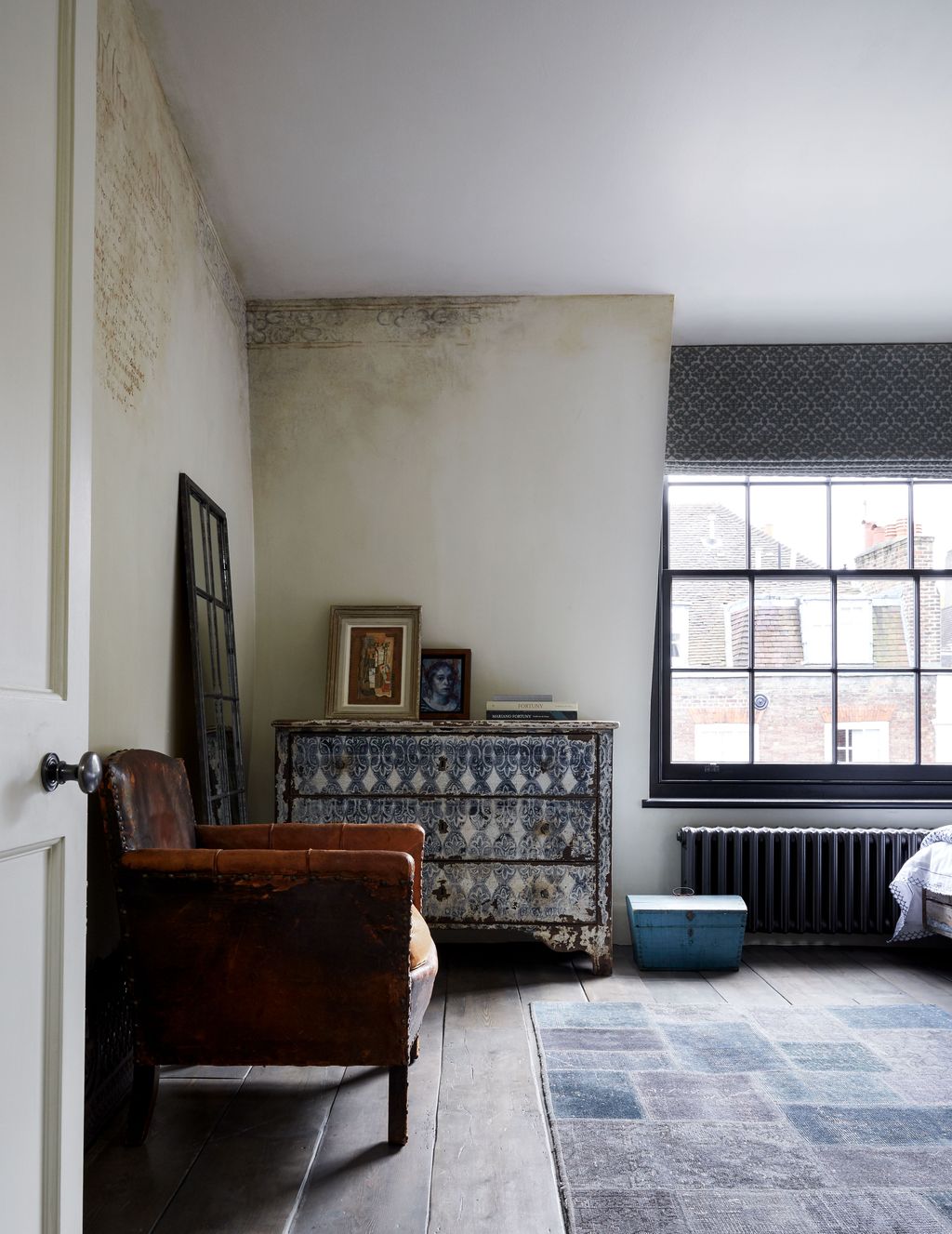
The chest of drawers is antique, from Provence.
 Paul Massey19/19
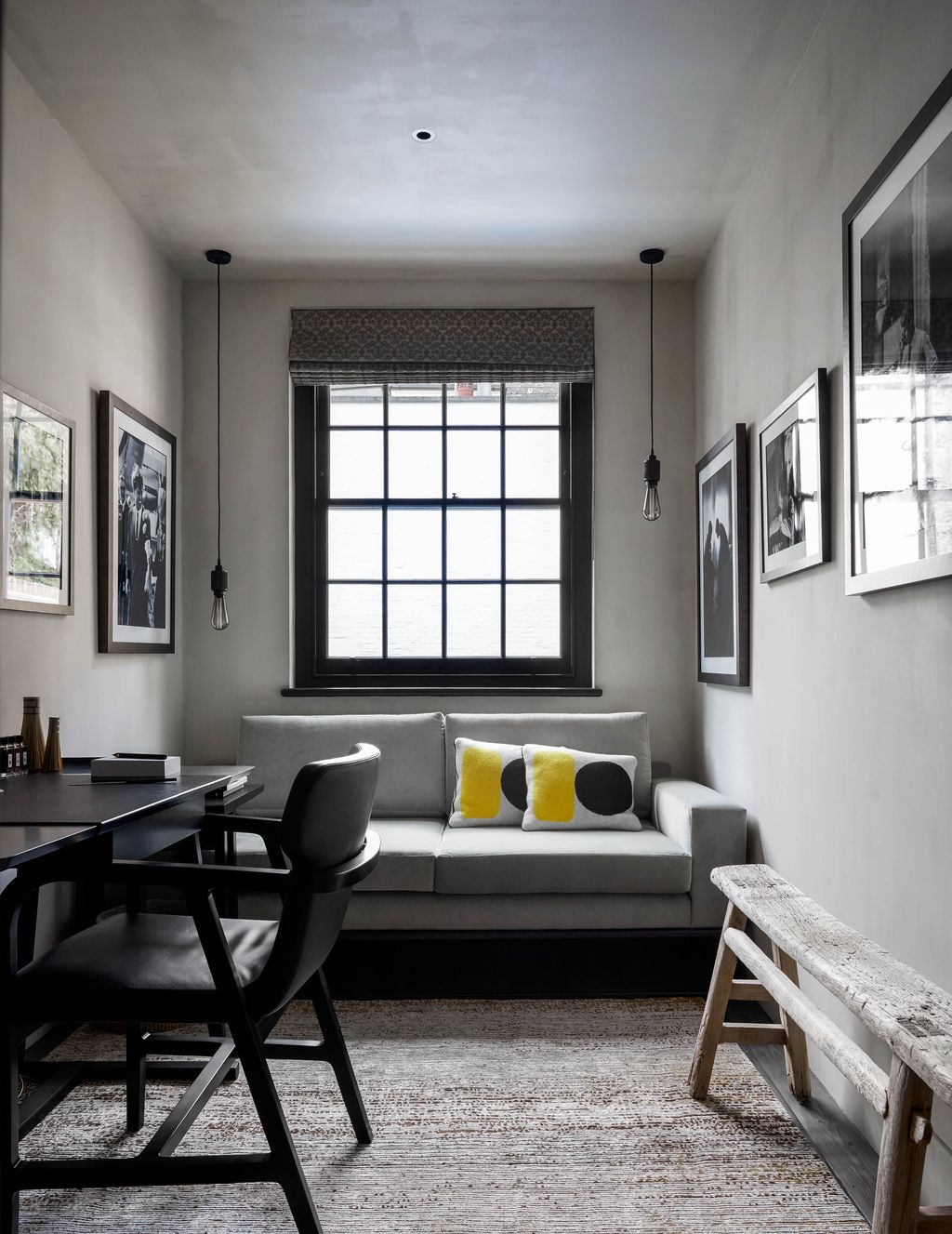
“My study is dedicated to Robert F Kennedy,” Kerem explains, “and hosts an extensive collection of original photographs. Most of them are by Harry Benson. The one on the far left is by Bill Ray – I had purchased it personally from him before he passed away in 2020. Harry Benson was on site when RKF was assassinated and captured this tragic moment in history.”
The sofa is Kerem’s own design. The desk and chair are by Maxalto.


