
An Arts & Crafts house on the edge of London with an interior to suit its literary past
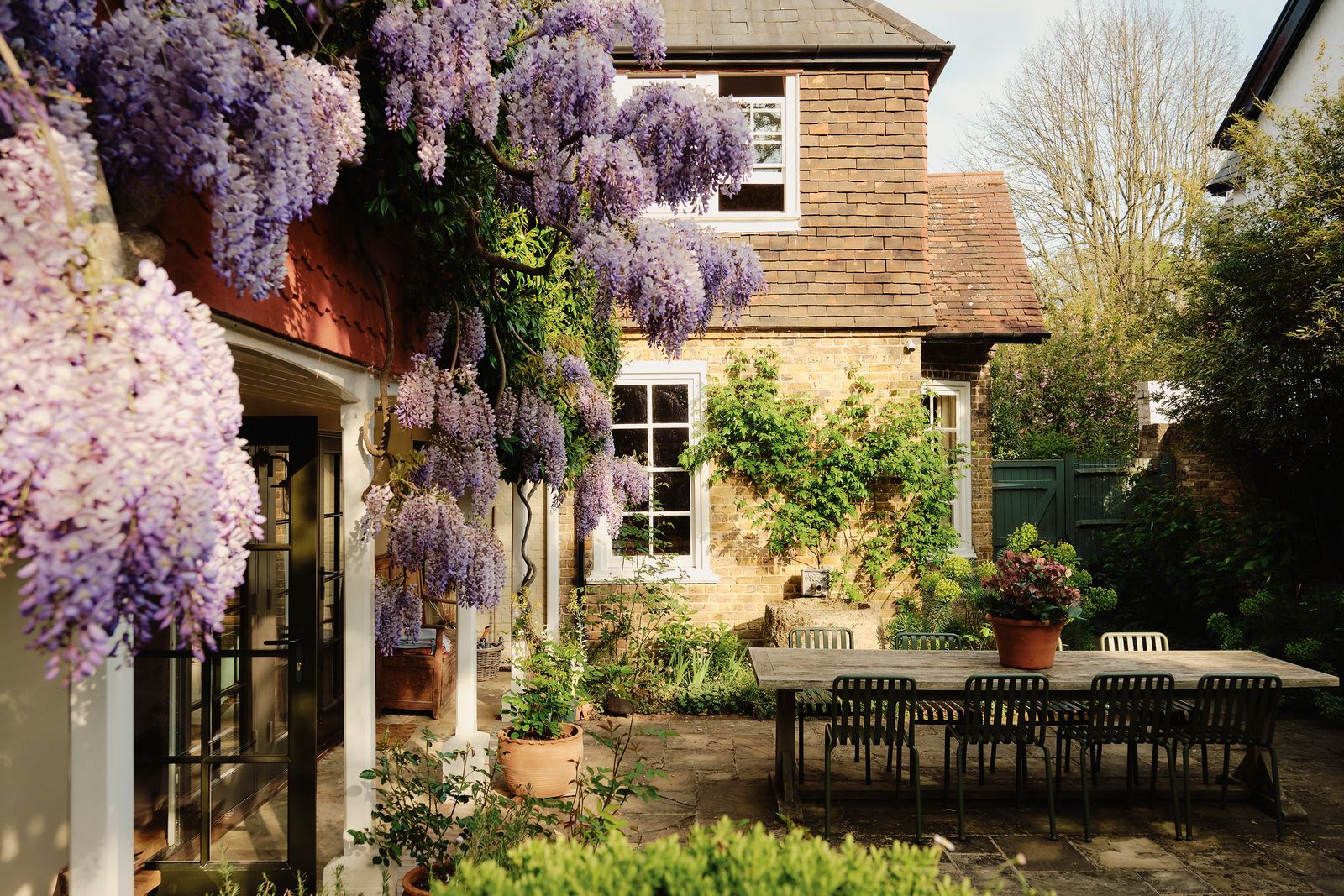
The publisher Rebeka Russell has always been intrigued by the way houses and locations can ‘seep’ into a writer’s imagination. It is one of the reasons why she set up her independent imprint Manderley Press which specialises in hardback new editions of literary classics featuring distinctive settings: towns, landmarks or historic buildings.
Fittingly, Manderley Press, which she began in 2021, also operates from an historic location, Rebeka’s south London home. The yellow-brick, wisteria-laced villa she shares with her husband Mark and two daughters, was built in 1868 for the novelist William Hale White with interiors advice from William Morris, the designer and founder of the influential Kelmscott Press. Rebeka likes to picture Morris (whose mill was also nearby) ‘popping in for tea’ to discuss furnishings and fabrics.
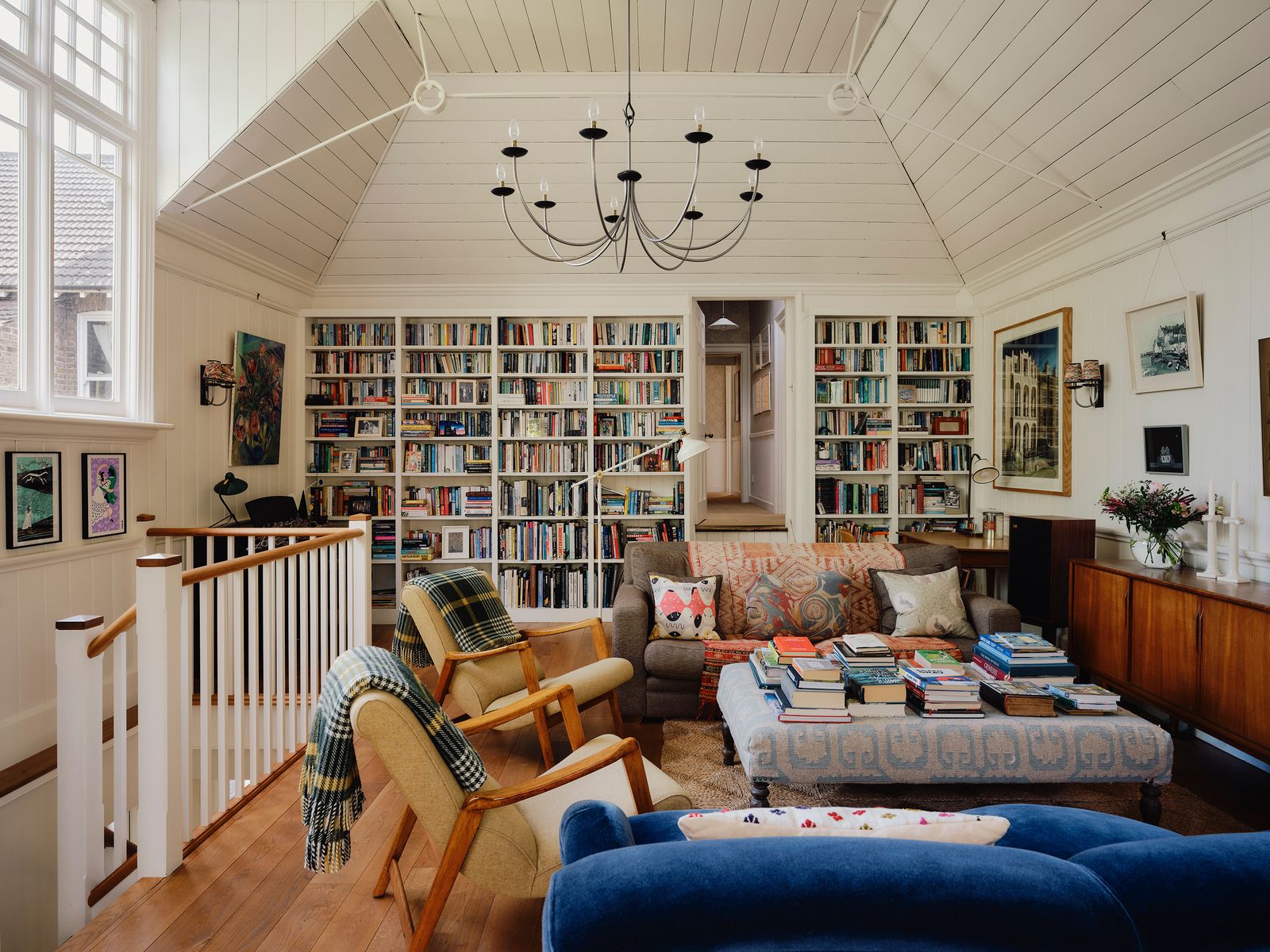
Although Hale White is hardly read these days, Rebeka, a former editor at Thames & Hudson and the National Gallery, was drawn by the building’s literary and architectural associations. ‘I grew up in Whitby – the inspiration for Bram Stoker’s Dracula – surrounded by historic houses and architecture. Visiting an old house, touching its walls, that’s my conduit to the past,’ she says.
Instagram content
After moving here in 2013, she began to research the history of her home in letters and diaries. ‘I found out that Hale White wrote a letter to The Times complaining about the damp in his former home – and the shoddiness of contemporary building methods.’ It prompted a response from the writer and critic John Ruskin. He suggested that Hale White commission leading architect Philip Webb to build him a ‘comfortable modern’ house in the Arts and Crafts style.
Rebeka discovered Webb’s architectural drawings for the house at the Victoria and Albert Museum. They depict the internal chimneys which he designed to conserve heat inside the building. This was new. Webb, who also designed William Morris’s Red House, in Bexleyheath, was ahead of his time. ‘It was the eco-house of its day.’ Hale White also became a member of SPAB – the Society for the Protection of Ancient Buildings, established by Webb and Morris, which still operates today. ‘When I discovered that I felt I had a responsibility to change as little as possible.’
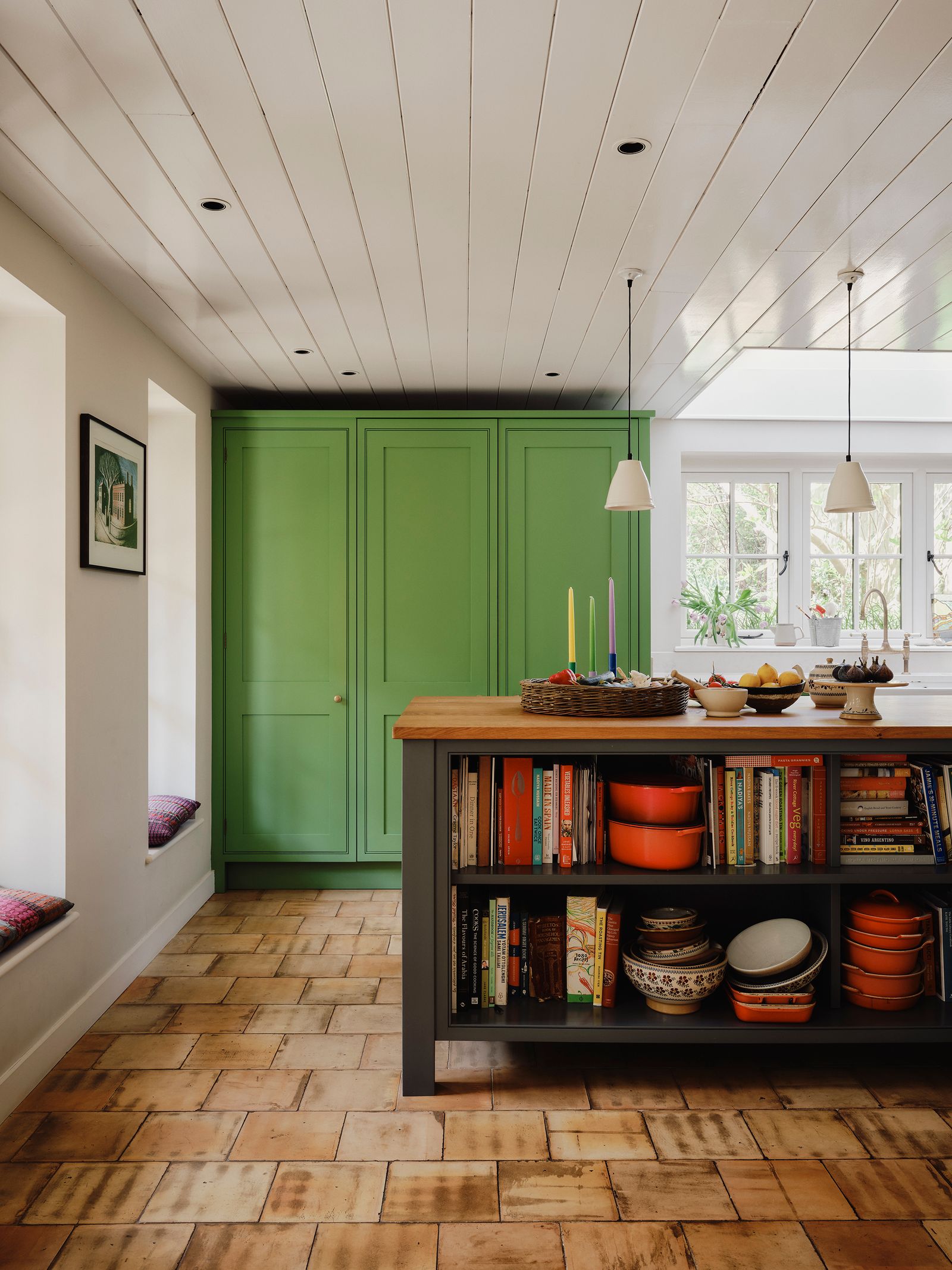
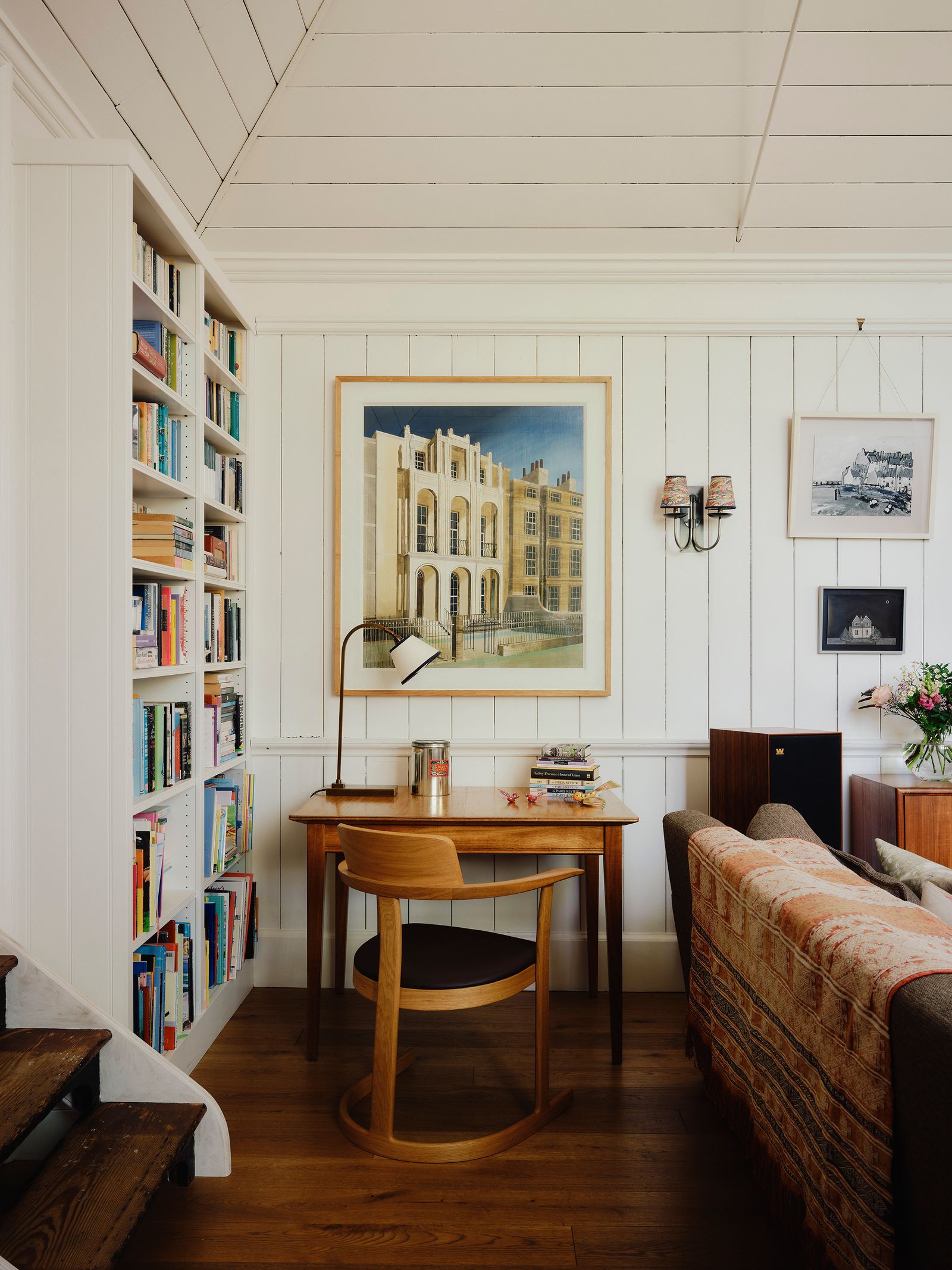
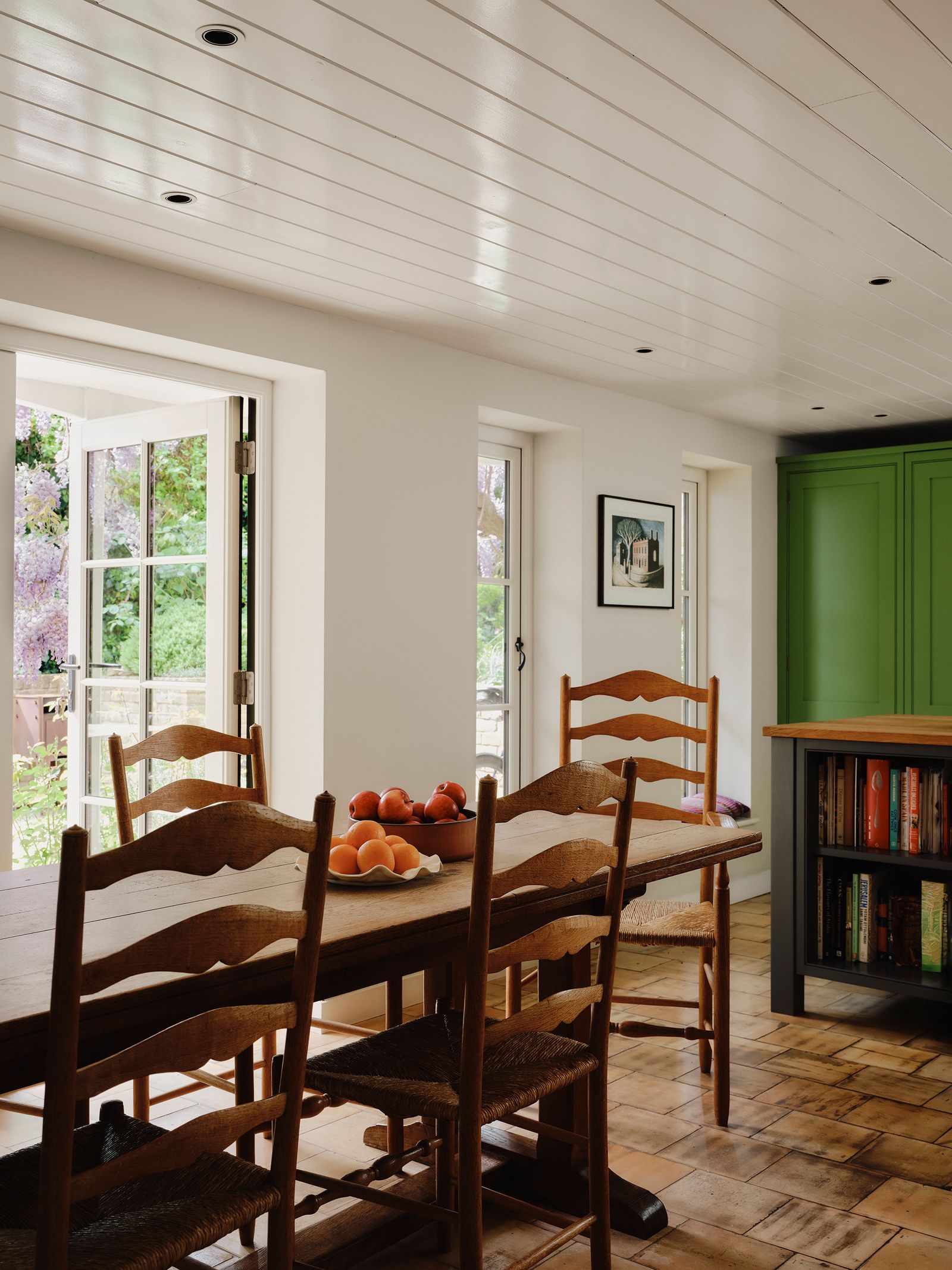
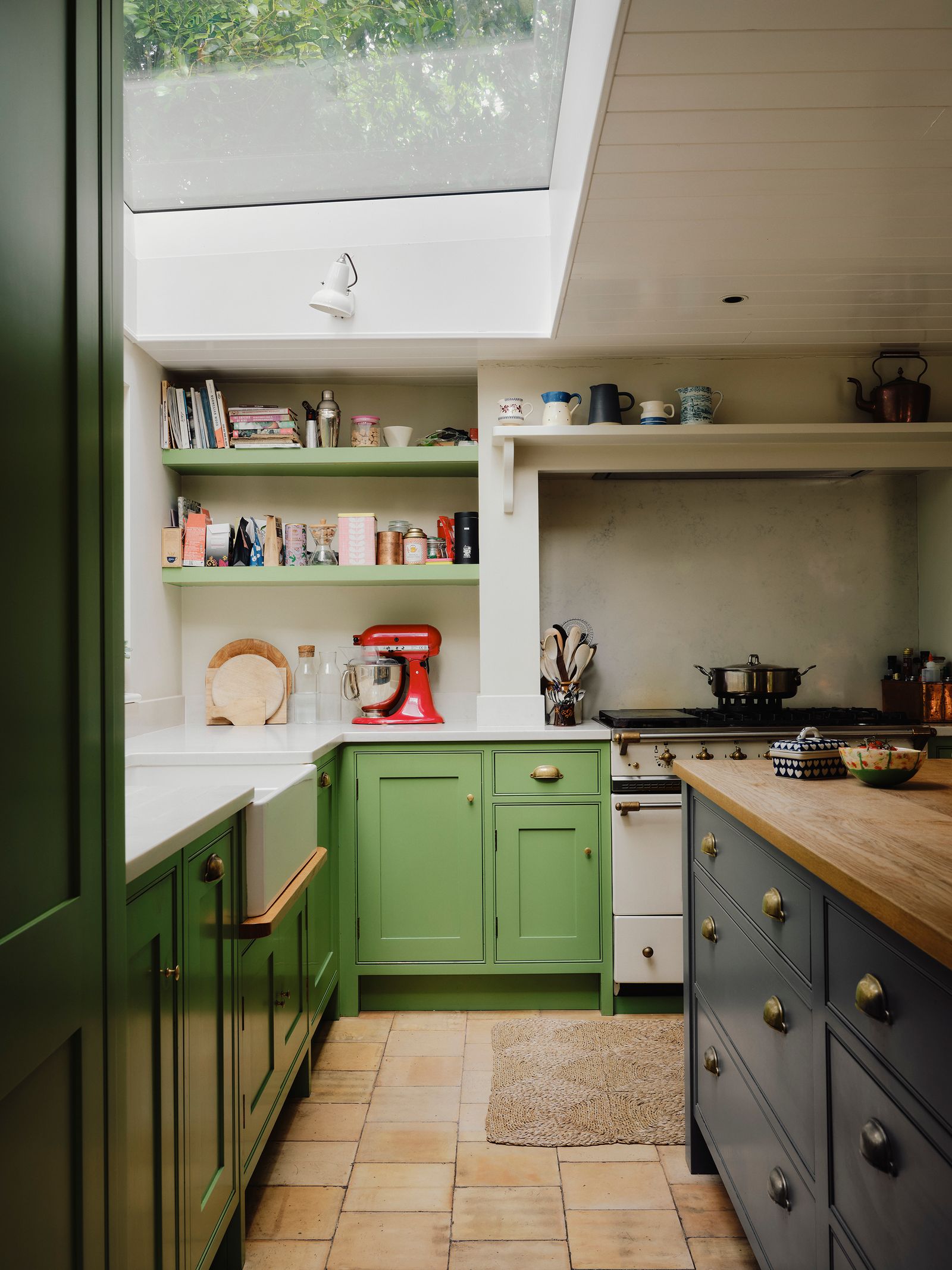
For advice, she turned to two experts in the period: the architect Elspeth Beard and Ben Pentreath. It was Elspeth who designed the new, leaf-green kitchen, positioning the skylight for views of the gingko tree, a present - ‘according to a wild, wonderful legend’ - from Morris. ‘It bursts into a mass of bright-yellow blossoms in summer: glorious.’ Rebeka chose the French reclaimed concrete tiles for their patina. Nearly all the artwork in the house depicts places – or buildings – which have a personal connection. The print by British artist Ed Kluz, known for his imaginative reinterpretations of historic buildings, depicts novelist John Fowles’s former home, Belmont, in Lyme Regis. Now a Landmark Trust property, ‘and a holiday favourite.’
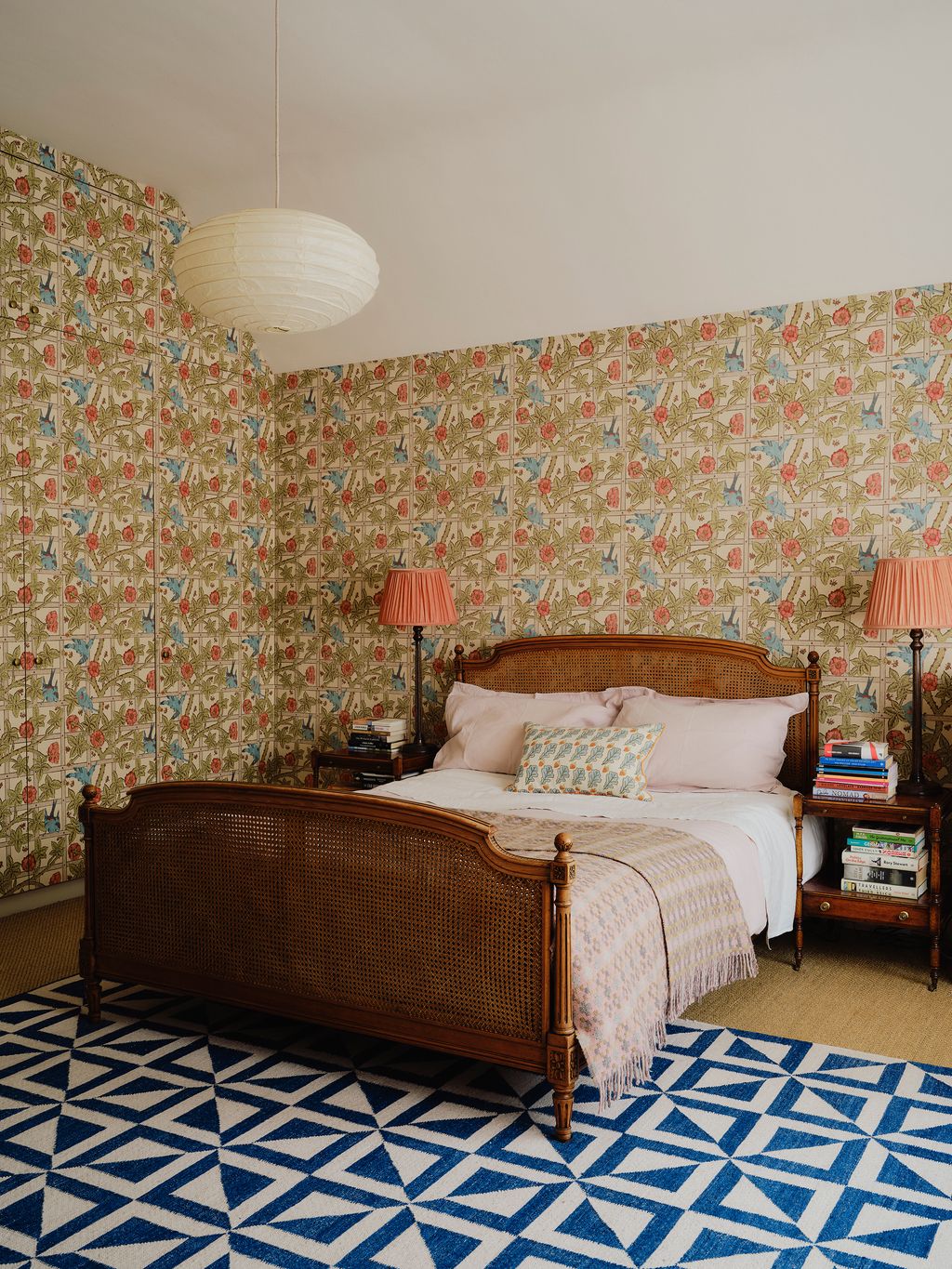
All the wallpapers are by Morris & Co apart from the CFA Voysey print (sourced from an American company which owns the copyright) in the compact shower room. ‘We know that the original interiors were by Morris & Co so it’s probable that Hale White used his wallpapers. They were certainly in production in 1868.’ In the main bedroom, the Trellis wallpaper was designed in 1862. The pattern was inspired by the garden at The Red House with bird drawings by Webb. Likewise, all the furniture and furnishings might have come with the house. A settle and rush-seated chair or the set of heavy, crewel work curtains, salvaged from a country house, which fitted perfectly.
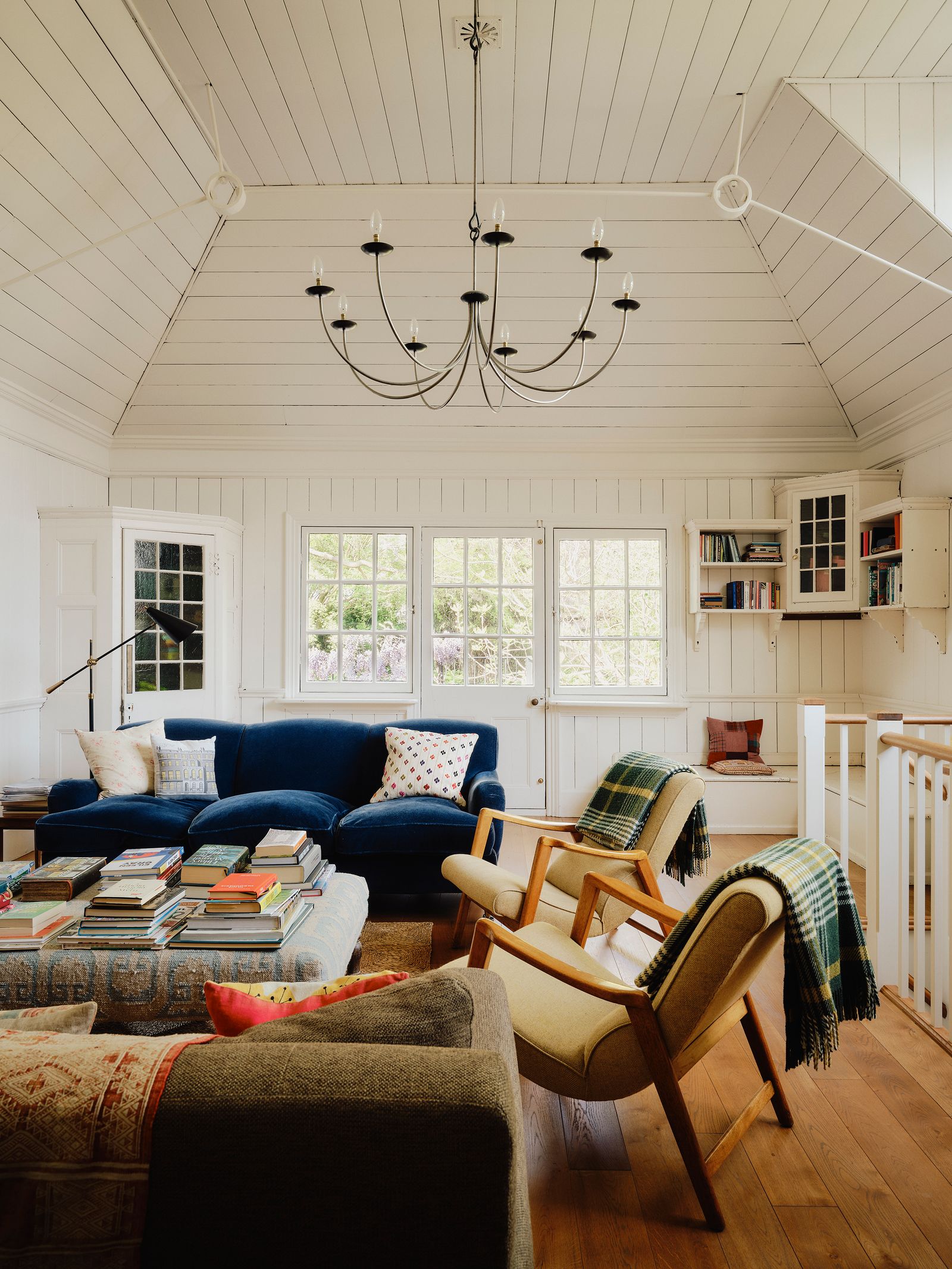
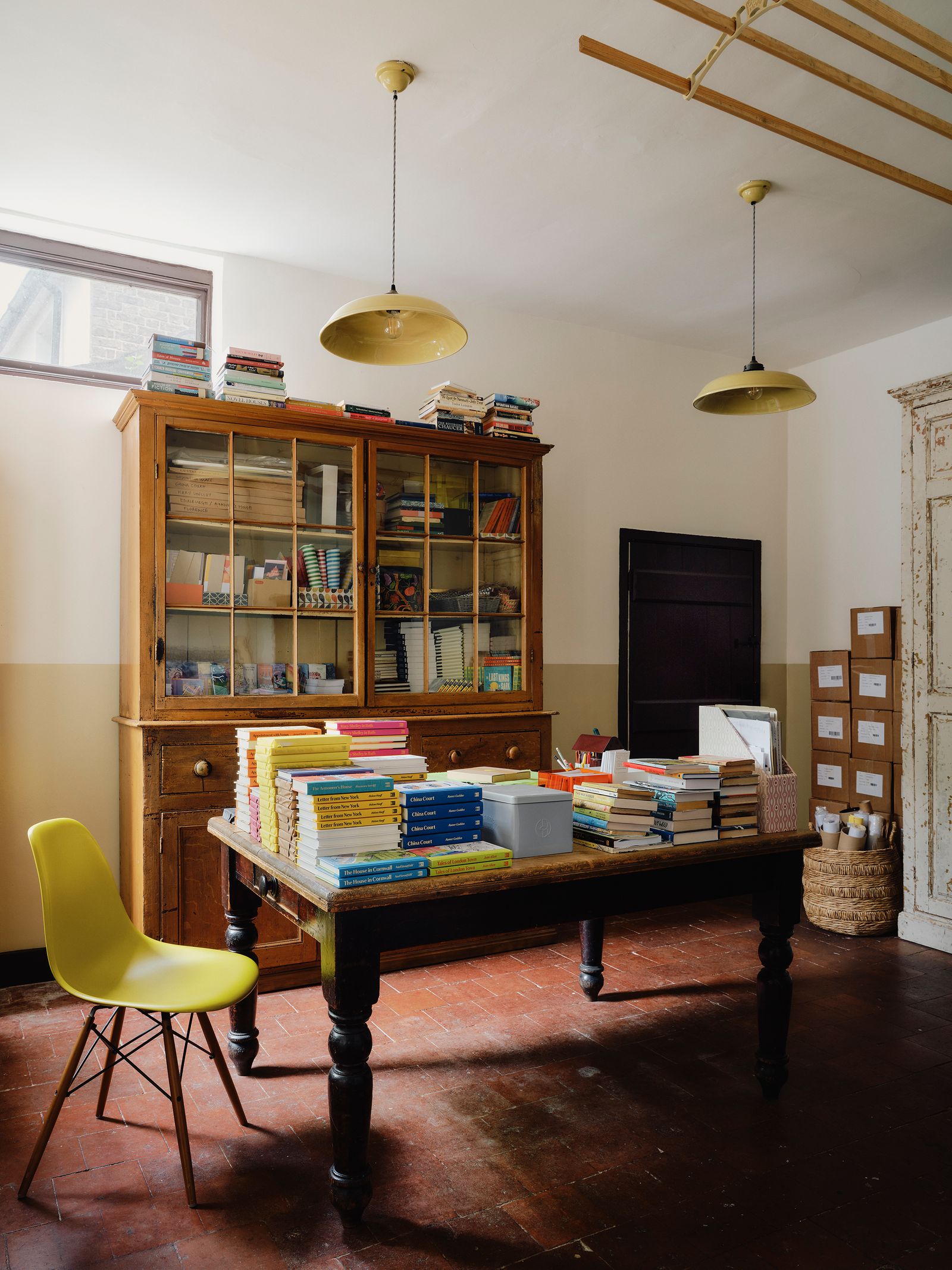
The double-height family room at the back of the house was probably added around 1899 and has remained almost unchanged since then. ‘It was used as an artist’s studio and later a printing works.’ It was Ben who designed the bookshelves which span one wall. In keeping with Hale’s preference for the ‘plain’ and unfussy, he suggested that they paint all the woodwork the same shade of white. The only exception is the former scullery where they broke rank. The deep chocolate paintwork was inspired by a visit to Webb’s masterpiece, Standen, in West Sussex.
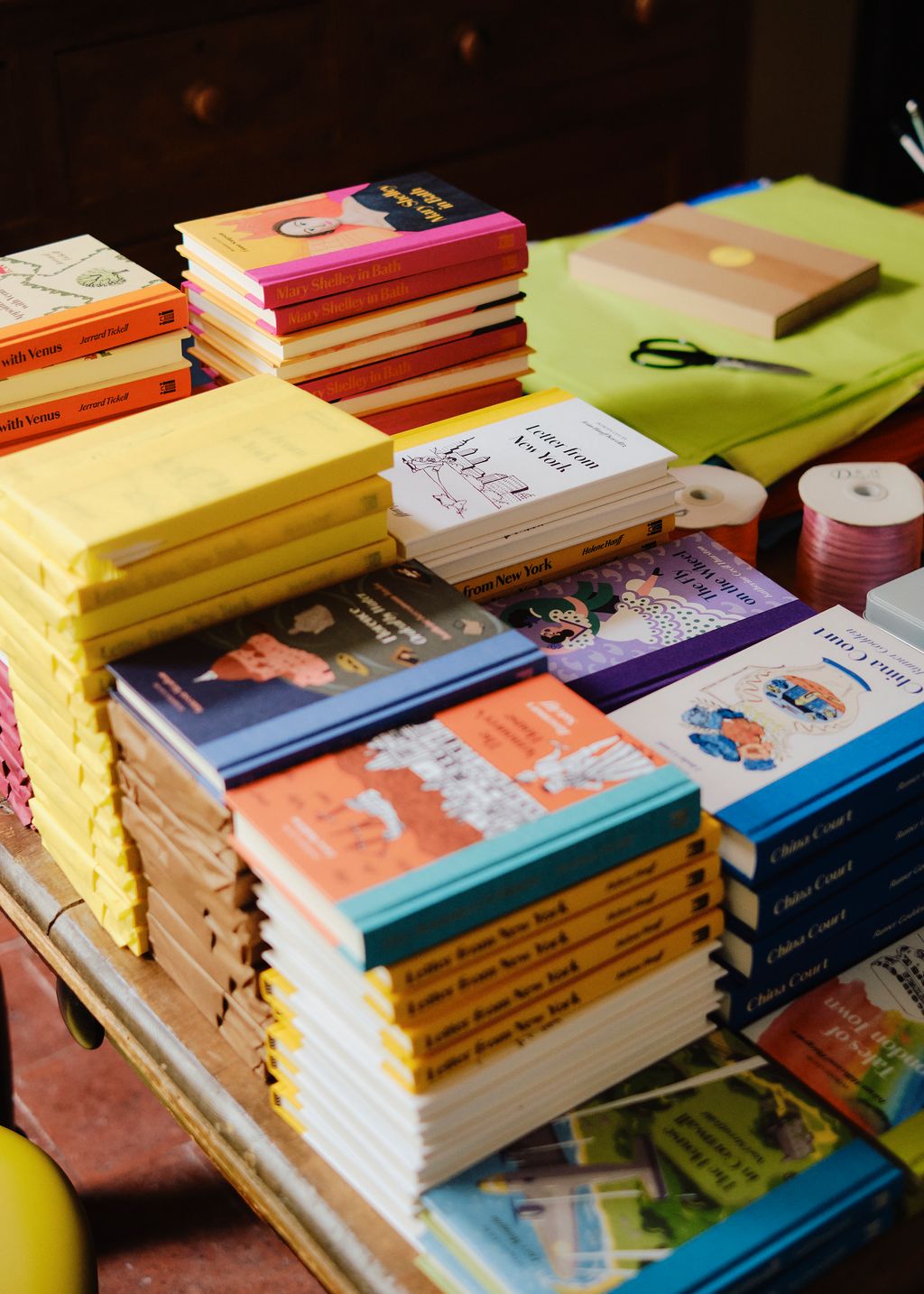
Rebeka likes to imagine that some of the ‘spirit’ of the house crept into Hale White’s writing. Its aesthetic atmosphere has undoubtedly inspired her craft-led publishing business. The cloth-bound books, printed in the UK on thick, creamy paper with illustrated covers and spines, are aimed at bibliophiles. Every detail is considered. ‘I believe you should be able to judge a book by its cover. If you are going to charge a premium it has to look good, feel great - and read well.’
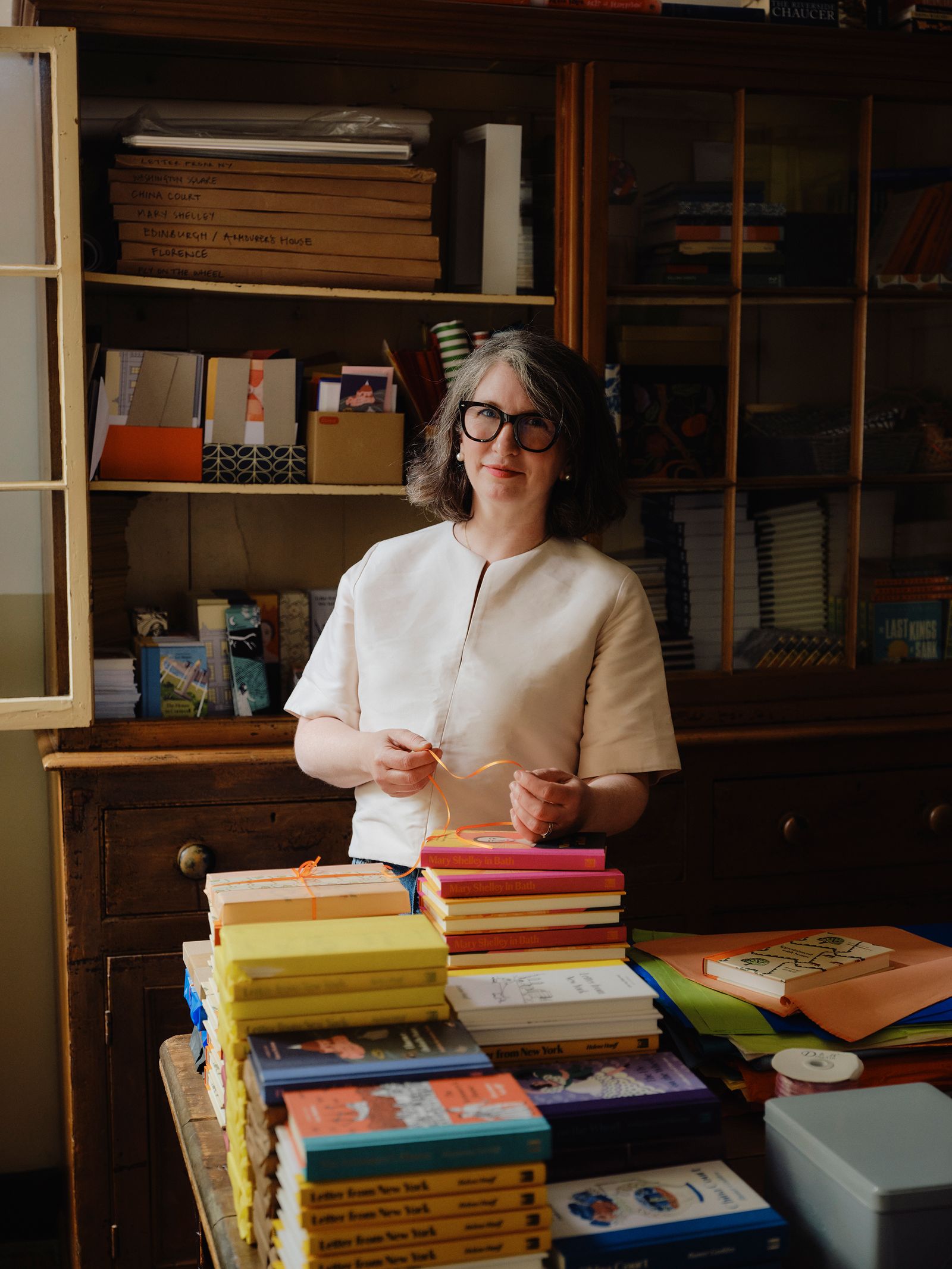
Manderley unites all the things which have interested her since childhood; ‘Books, history, writers – historic houses.’ The name of her venture came easily. ‘Daphne Du Maurier’s Rebecca is one of my favourite books. So many of us know the first line: ‘Last night I dreamt I went to Manderley again.’ The house is like a character in that book.’
Every edition is a collaboration with artisans, designers, illustrators – and authors. Jamesian expert Colm Tóibín wrote the introduction to a reprint of Henry James’s Washington Square. For the best-selling Edinburgh, by Robert Louis Stevenson, it was local resident Alexander McCall Smith. The list now includes 13 titles – and they are coming thick and fast. A forthcoming edition of Ramond Briggs’s semi-autobiographical The Strange House includes marbled endpapers created by designer Myfanwy Vernon-Hunt. ‘I’ve been called a heritage publisher. I prefer the word heirloom. I hope they’re books you will want to keep – and hand down.’ Morris et al would have approved.
 Dean Hearne1/14
Manderley Press titles in the office.
 Dean Hearne2/14
A kilim rug from Tinsmiths warms up the the entrance hall, while Adam Dant’s 900 Years in 900 Stories – a Barts Heritage Commission to celebrate 900 years of St Bartholomew’s Hospital in London – hangs on the wall. The upholstered Victorian bench was sourced online from an old country house in Yorkshire.
 Dean Hearne3/14
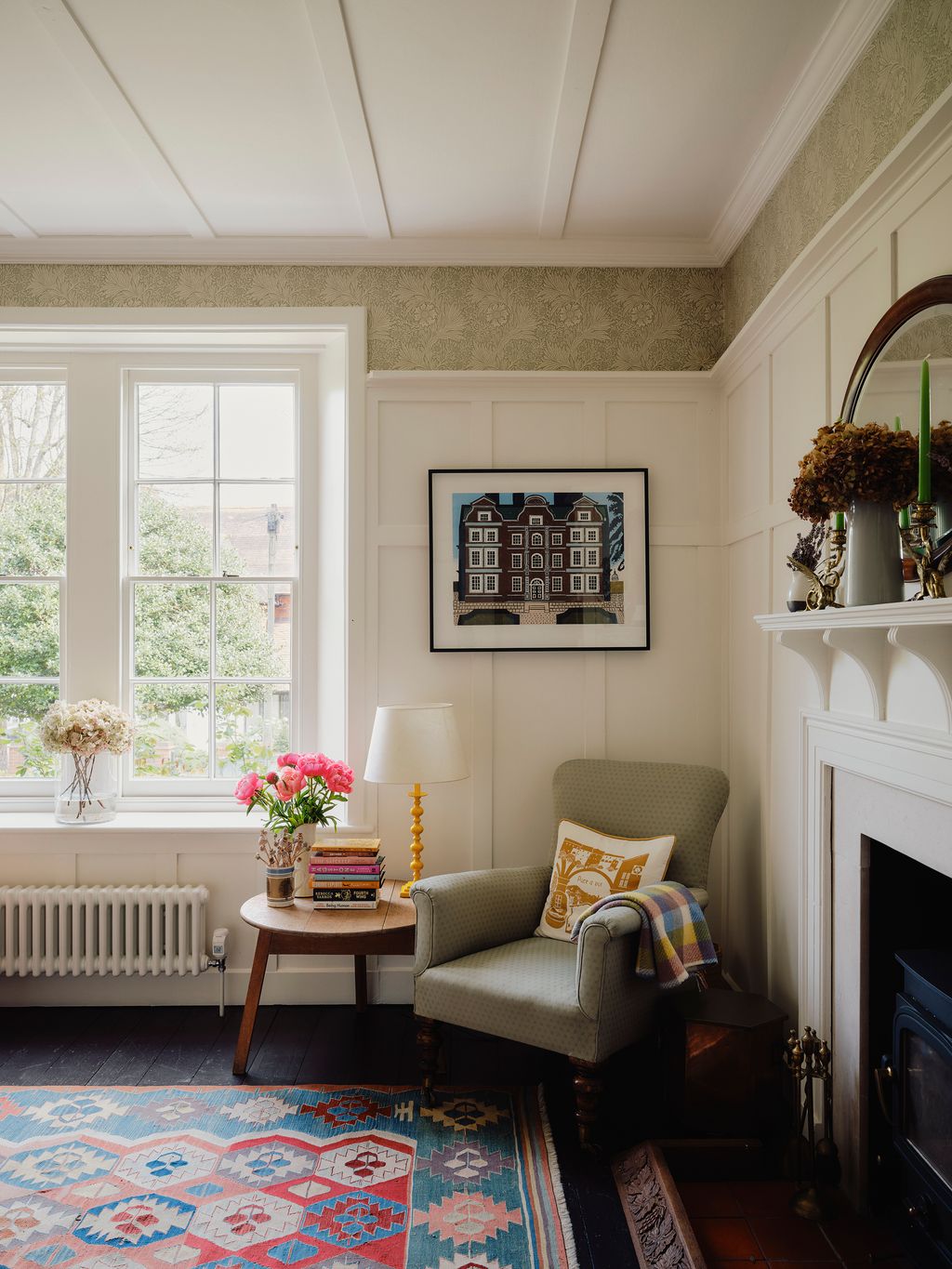
A framed print of Kew Palace by Edward Bawden CBE RA (1903–89) hangs above the armchair on this side of the entrance hall.
 Dean Hearne4/14
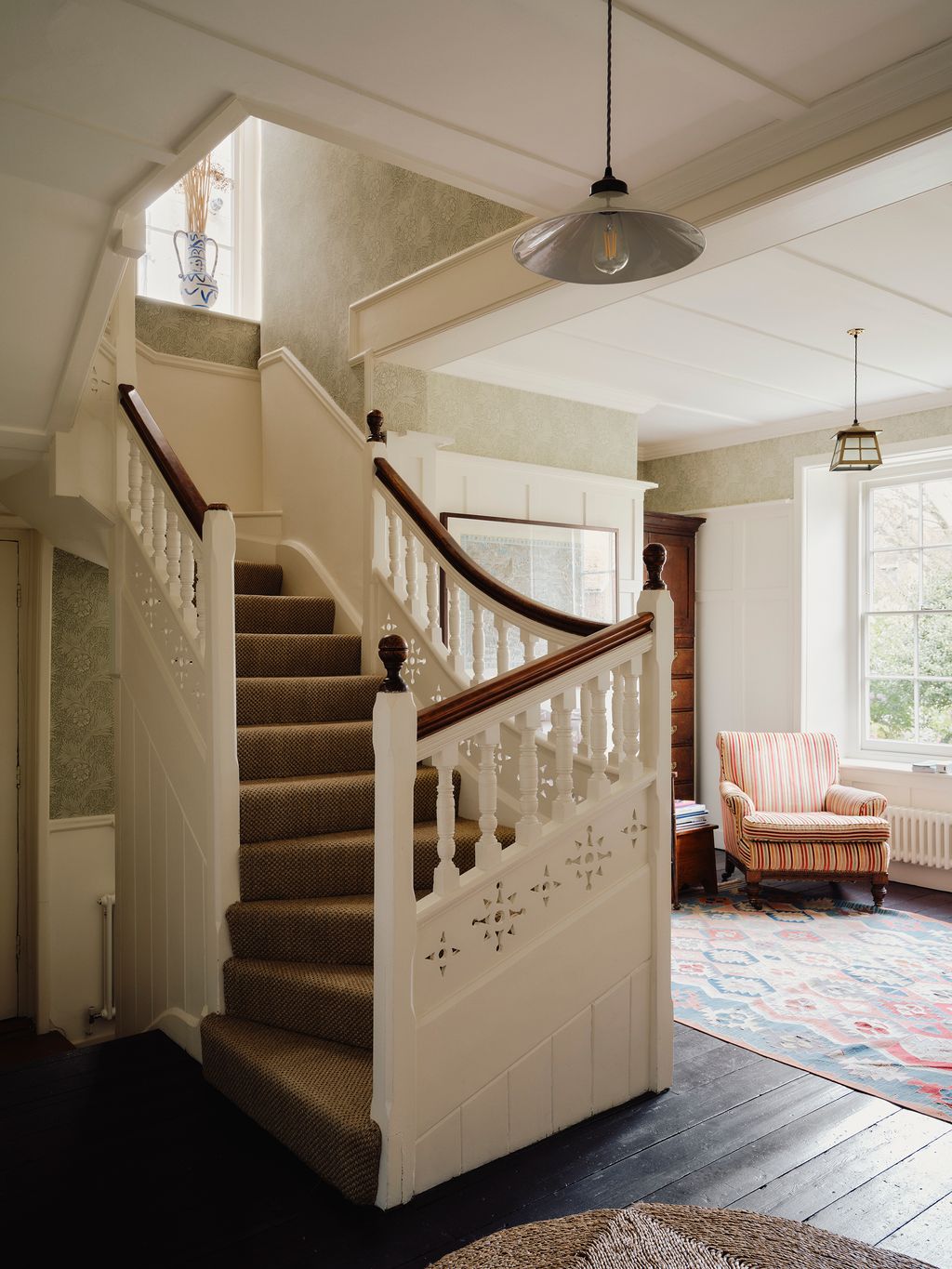
A view of the Edwardian staircase, added around 1899, which leads from the upstairs to the wood-panelled entrance hallway. The original floorboards are painted in Farrow & Ball's ‘Mahogany’. The wallpaper, a William Morris print – Marigold, in Artichoke – links the downstairs hallway to the corridor upstairs. The wood work and panelling throughout the house is painted in Farrow & Ball's ‘Pointing’, to complement the wallpaper.


 Dean Hearne5/14
The wallpaper in the main bedroom was chosen to celebrate the house’s architect – Philip Webb – who designed the birds that feature in this William Morris print named Trellis (in the Vanilla/Plaster colourway). A rug from The Conran Shop offsets an antique bed and chest of drawers from Miles Griffiths Antiques, with a cushion by Molly Mahon in ‘Oak Block’.
 Dean Hearne6/14
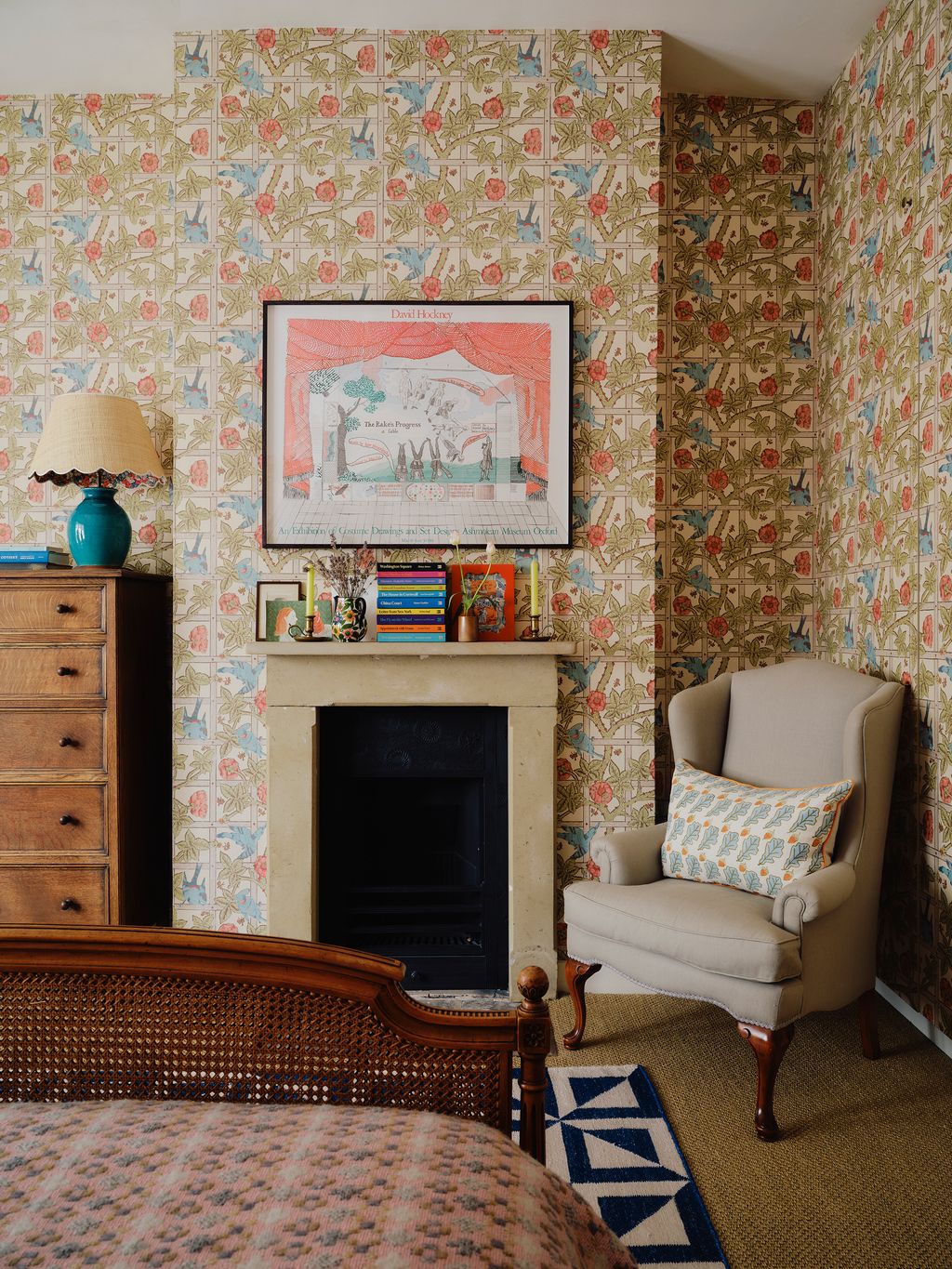
An antique armchair – a present from a friend who brought it over from San Francisco in the 1980s – has been recovered in grey linen. The Matilda Goad scalloped print-lined raffia lampshade is from Liberty. Above the fireplace, the David Hockney poster was found in Salts Mill in Saltaire, West Yorkshire; it is accompanied by works from artists Daisy Harcourt, Isabel Greenberg and Annabel Pearl, with a serpentine frame by A. Prin / Benedict Foley, and a stack of Manderley Press books.
 Dean Hearne7/14
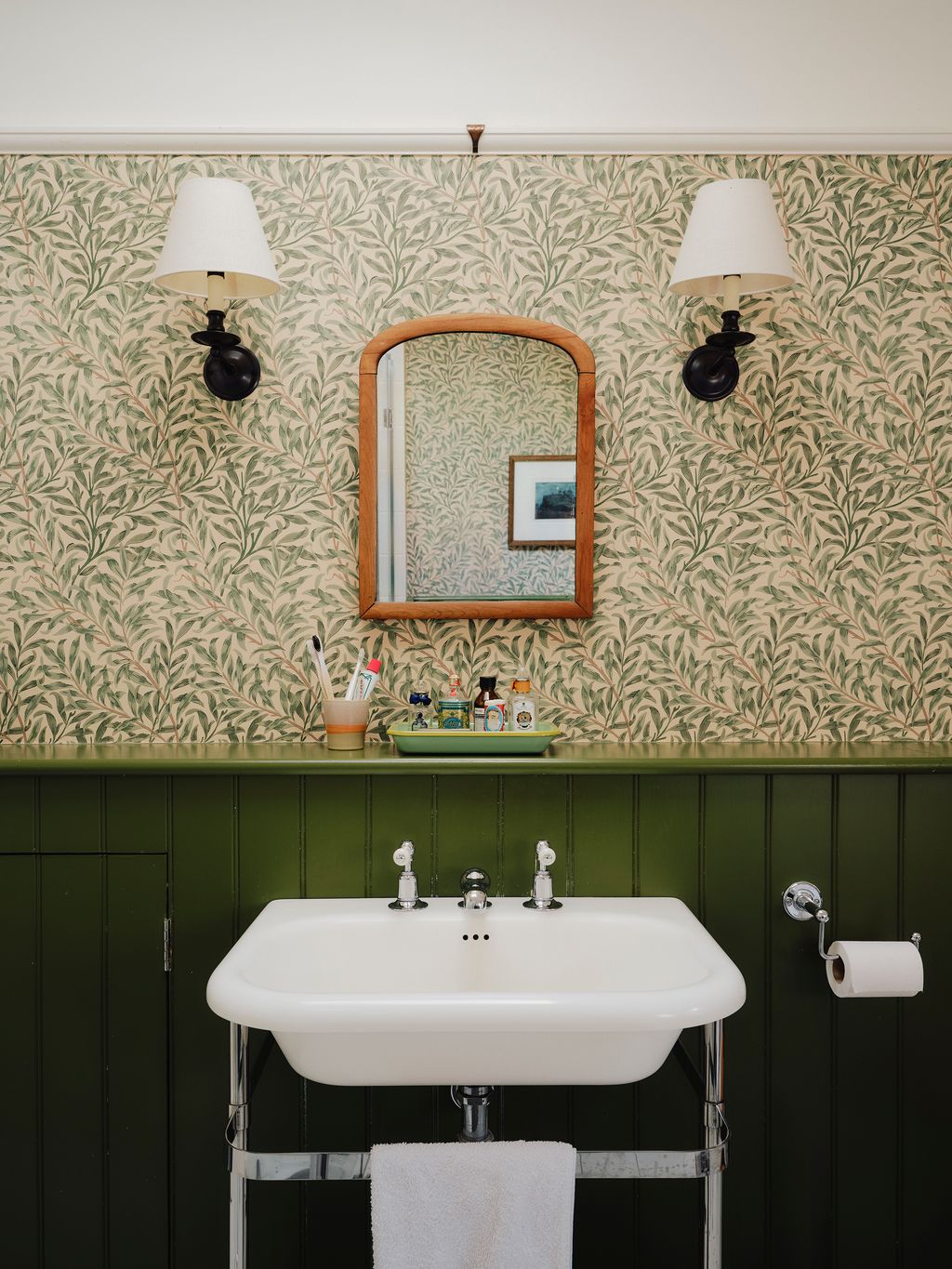
The bathroom combines William Morris ‘Willow Bough’ wallpaper with woodwork painted in Little Greene's ‘Olive Colour’. Burlington sanitaryware is accompanied by Hector Finch bathroom wall lamps on either side of an old family mirror, which, like the antique arts and crafts low, rush-woven chair, originally belonged to Rebeka’s grandparents. A print by Eric Ravilious hangs on the far wall of the bathroom ('Pharmaceutical Chemist Print' from the 1937/8 High Street series).
 Dean Hearne8/14


 Dean Hearne9/14
A view from the master bedroom of the hallway and the family bathroom, encompassing three William Morris wallpapers: ‘Trellis’, ‘Marigold’ and ‘Willow Bough’.
 Dean Hearne10/14
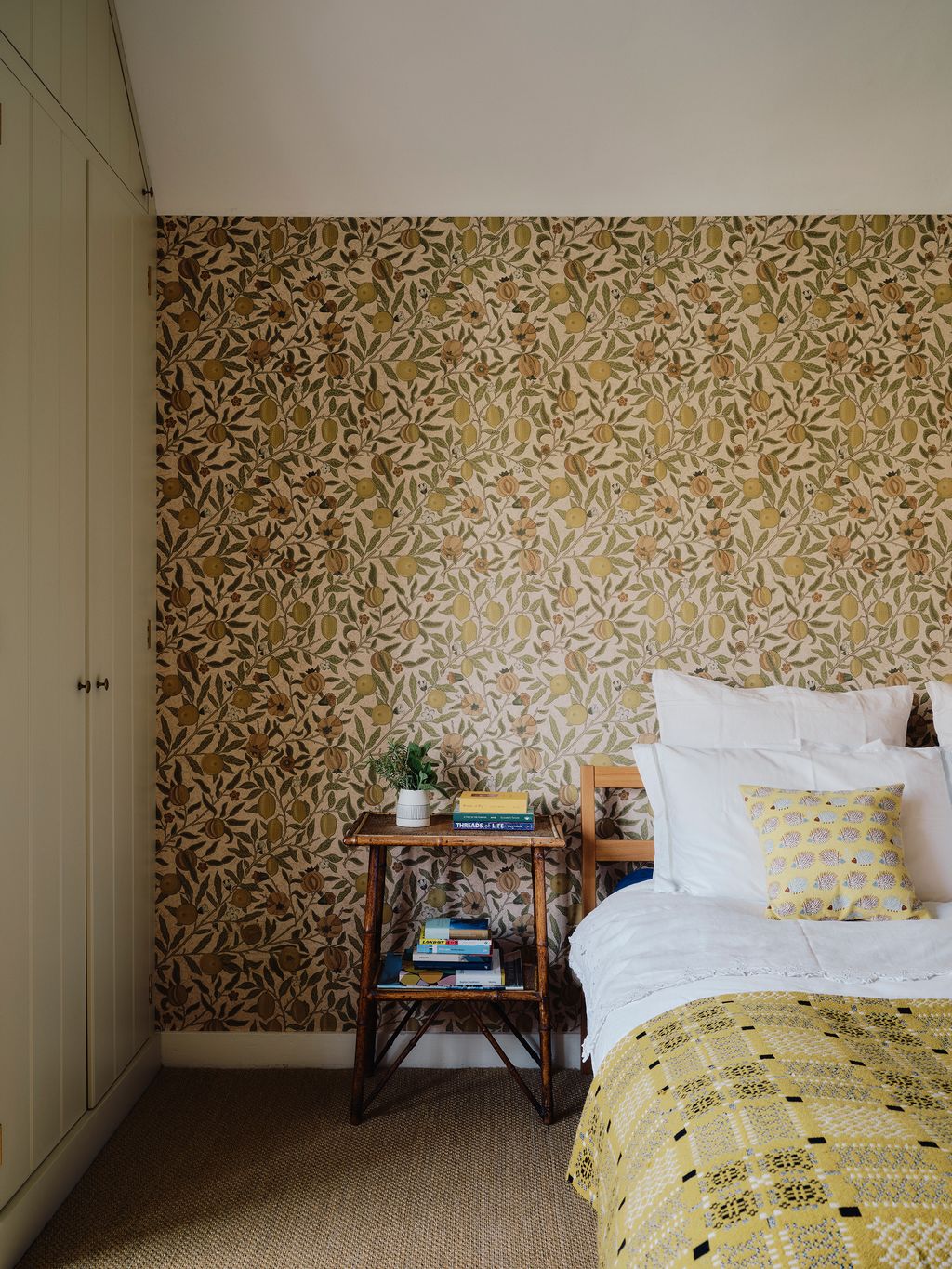
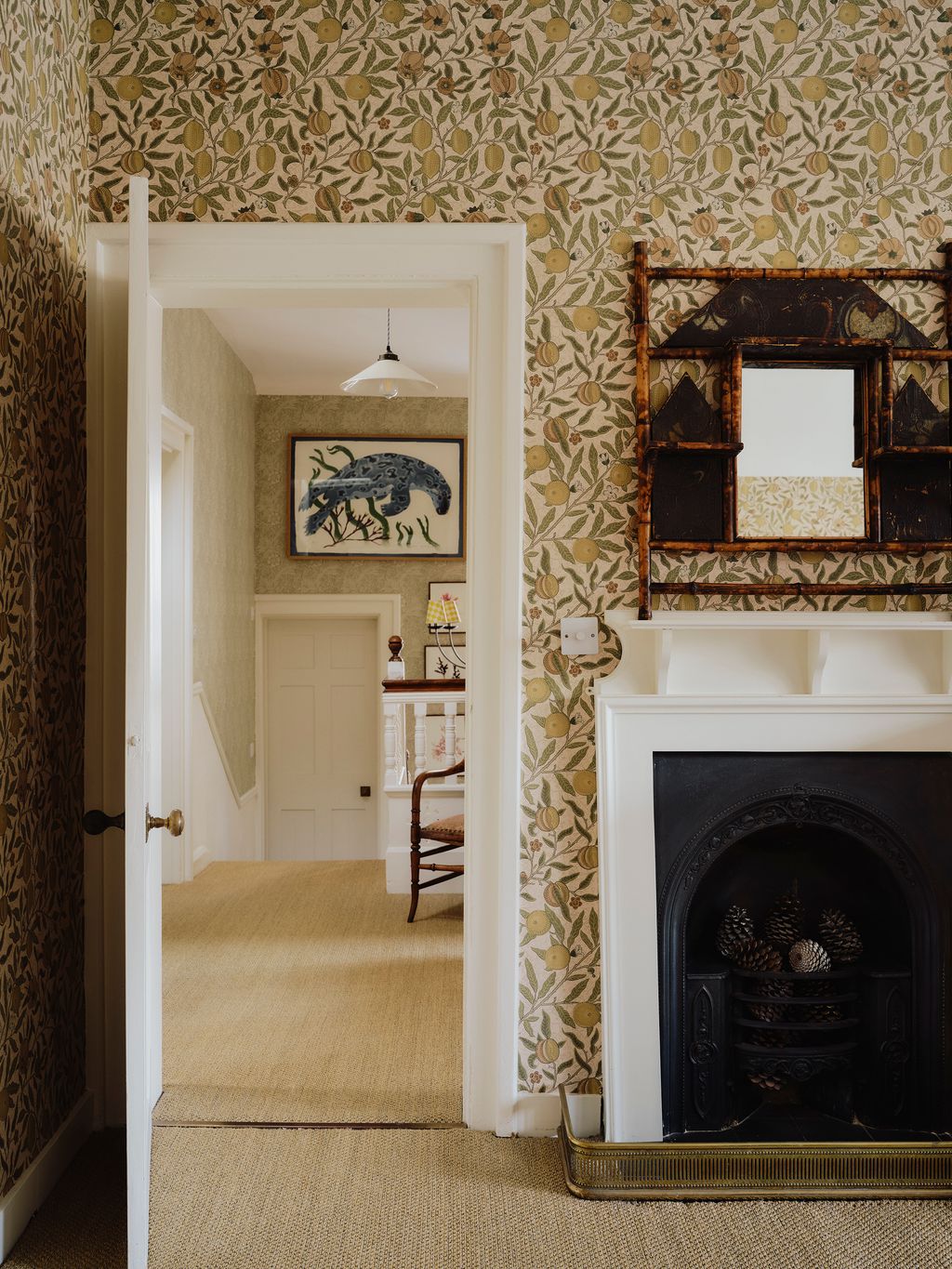
The guest bedroom is papered in William Morris ‘Fruit’ pattern in Limestone/Artichoke. A vintage bamboo nightstand, antique French bed linen, a handmade cushion by Mark's mother, and a Welsh Melin Tregwynt blanket complete the picture.
 Dean Hearne11/14
A glimpse into the hallway from the guest bedroom. A stencil print - Curious Grey Seal by Mick Manning - hangs above the stairs.
 Dean Hearne12/14
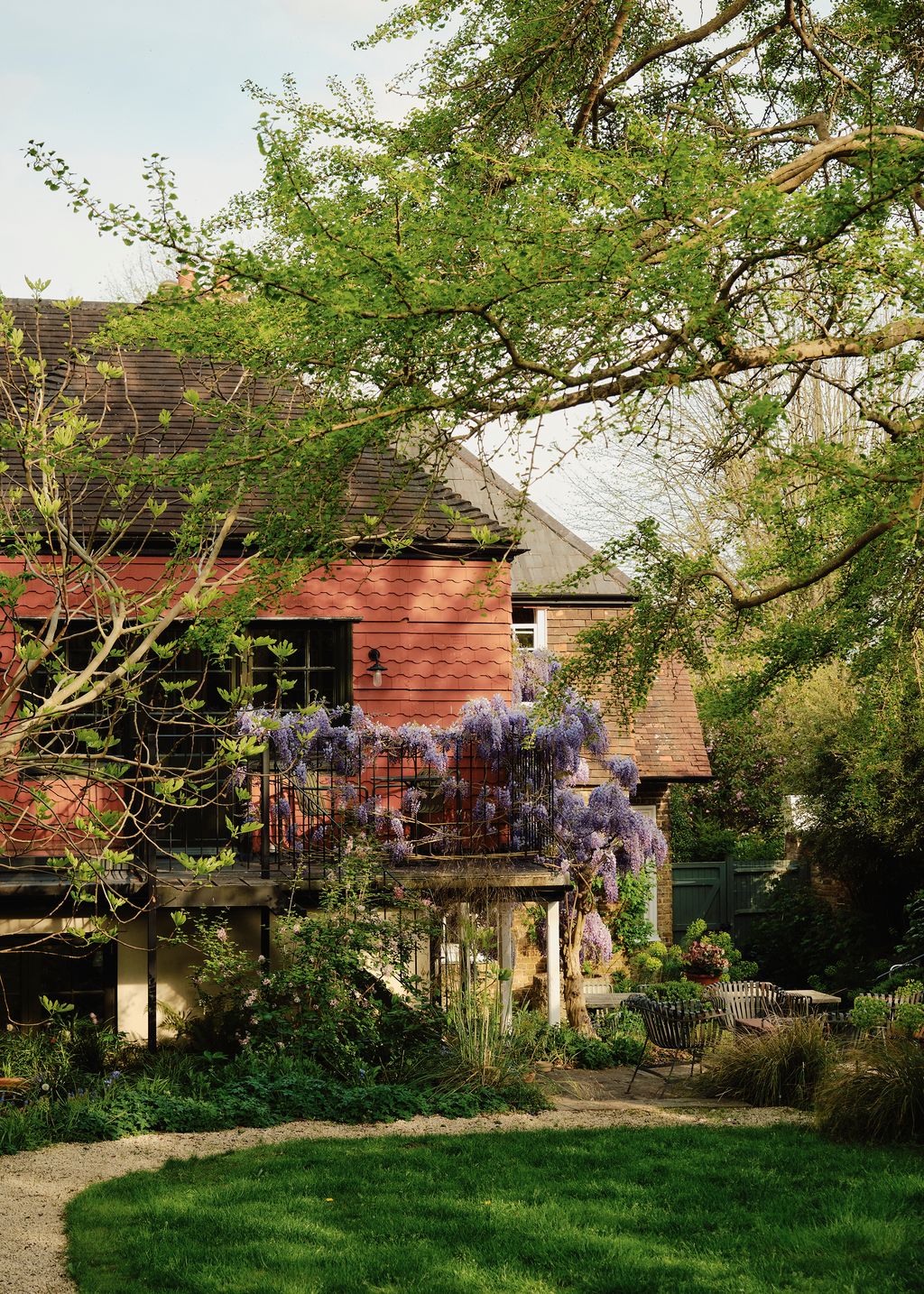
Looking back towards the house from the garden. The structure immediately in front is the studio space.


 Dean Hearne13/14
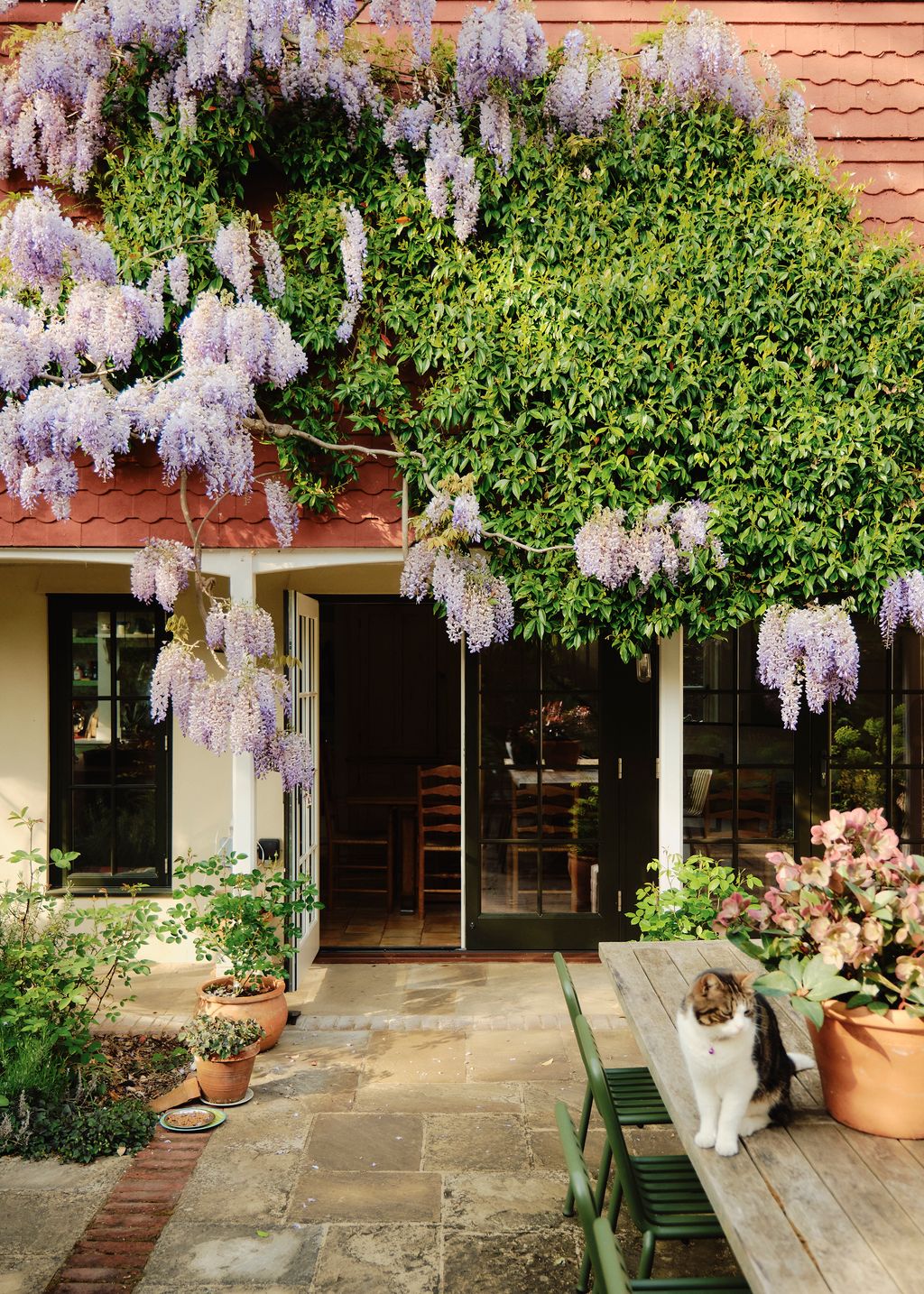
A glimpse of the kitchen through the open doorway.
 Dean Hearne14/14
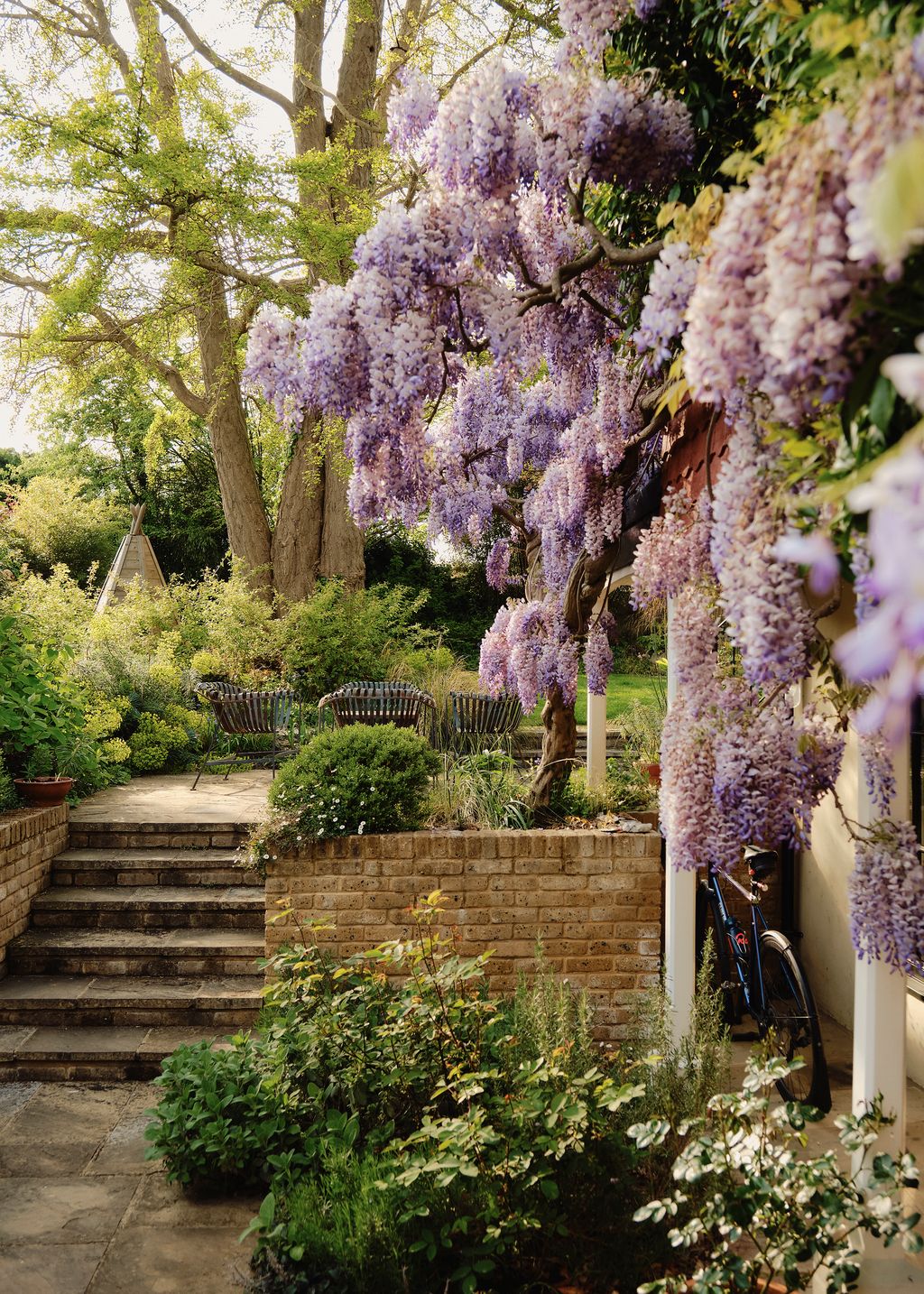
Rebeka and her husband commissioned Debbie Roberts at Acres Wild to redesign the courtyard and gardens, which surround the pre-existing Victorian gingko tree (rumoured to have been a gift from William Morris).


