

Children and beautiful interiors aren’t renowned for being a perfect mix. Firstly, there’s the issue of much of their paraphernalia not being overtly attractive (witness the Lego Death Star: a giant lump, nearly a metre high and wide, of battleship-grey plastic). Secondly, there’s their inability to put stuff away. Nobody thrills at a teenage bedroom featuring clothes and schoolbooks arranged in festering mounds, mille-feuilled with empty Hoola-Hoop packets, apple cores, and banana skins – or at damp towels on beds, shoes and coats abandoned wherever, and homework scattered between rooms.
Occasionally we wonder if we’ve failed at parents, at least when it comes to instilling an appreciation for order. Can’t our offspring see the merit in not starting every Monday panicking over lost music books, and lack of clean PE kit? Or is it, in some instances, a case of inappropriate design? One of the challenges with children is that their needs and passions pivot fast, and the cupboards that worked perfectly for Lego might not fit the record collection, while a desk can easily be consumed by a sudden interest in skincare that leaves little space for school science projects. Is it possible that good design can help a child be tidier? And, alongside, what else could we be doing?
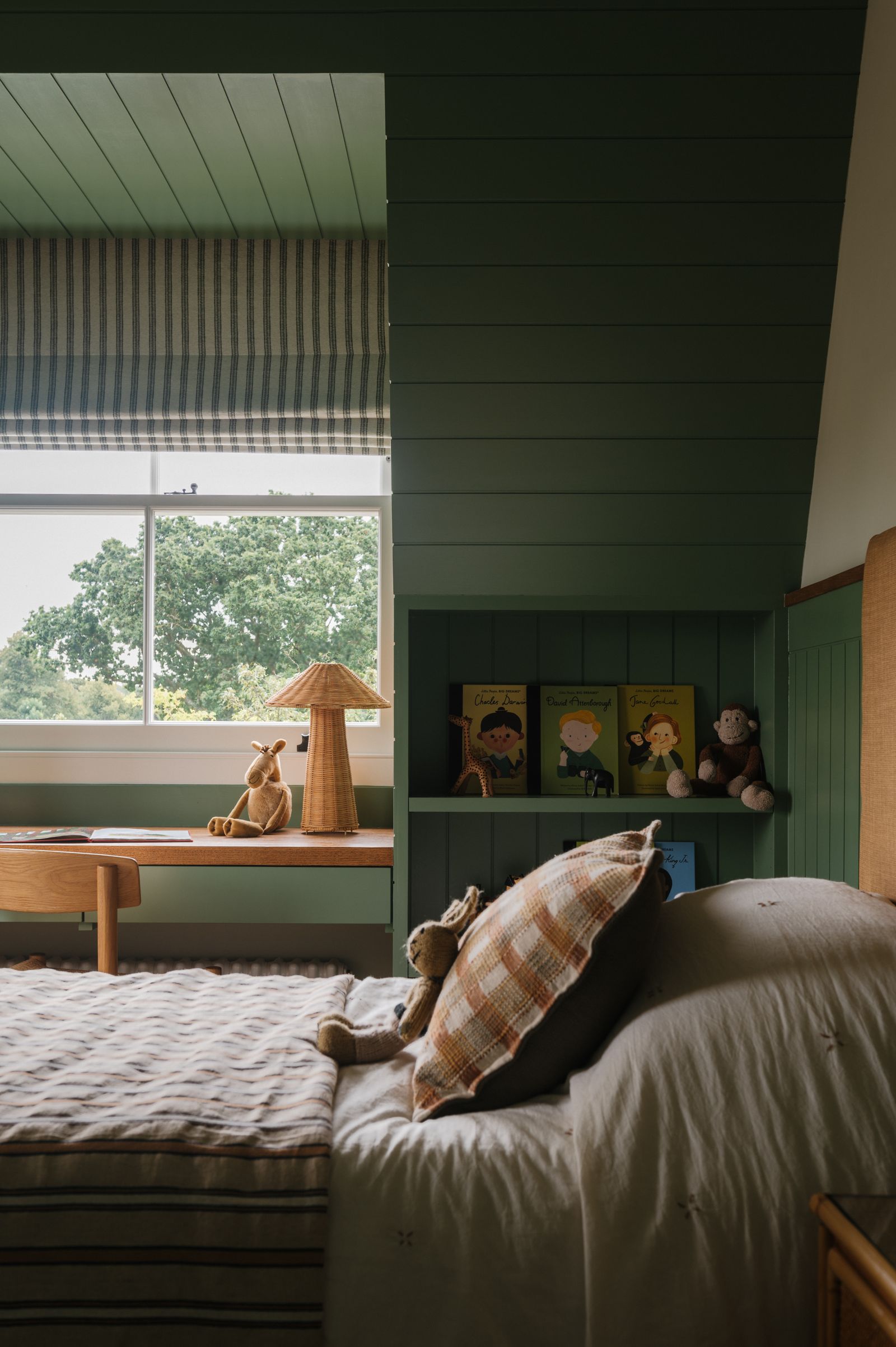
Child psychologists are unanimous in their advice to start young, create consistent routines, model the ideal, and simplify the process by ensuring that everything has a place. Chloe Willis, an Associate Director at Sibyl Colefax & John Fowler, agrees: ‘design isn’t just aesthetics, it’s making sure the infrastructure for daily life exists, and works.’ And what is definite is that bad design can make children untidier. It is irritating to have to put clothes in a laundry basket on a different floor, and it’s hopeless expecting small children to put things away on shelves they can’t reach.
Tiffany Duggan of Studio Duggan tells of designing toy drawers for beneath a cabin bed, and Georgie Wykeham of Georgie Wykeham Designs recommends storage baskets at a low level, labelled with images of what is meant to go in them. Both Georgie and Tiffany also moot low, open shelves for books, teddies, and other precious knick-knacks. For another recommendation from child psychologists is to involve children in organisation, and Hattie Hansard of Joanna Wood reminds us that some love arranging their belongings, and pride leads naturally to care. There may, however, be some controversy over what is deemed ‘precious’, and aesthetics can be a stumbling block, especially for the preternaturally stylish. The advice is to respect a child’s opinion, even regarding the ‘beauty’ of free toys from a McDonald’s Happy Meal - or, as they get older, a collection of empty, and supposedly limited edition, Prime bottles. (Both true stories. Both the children of interior designers.)
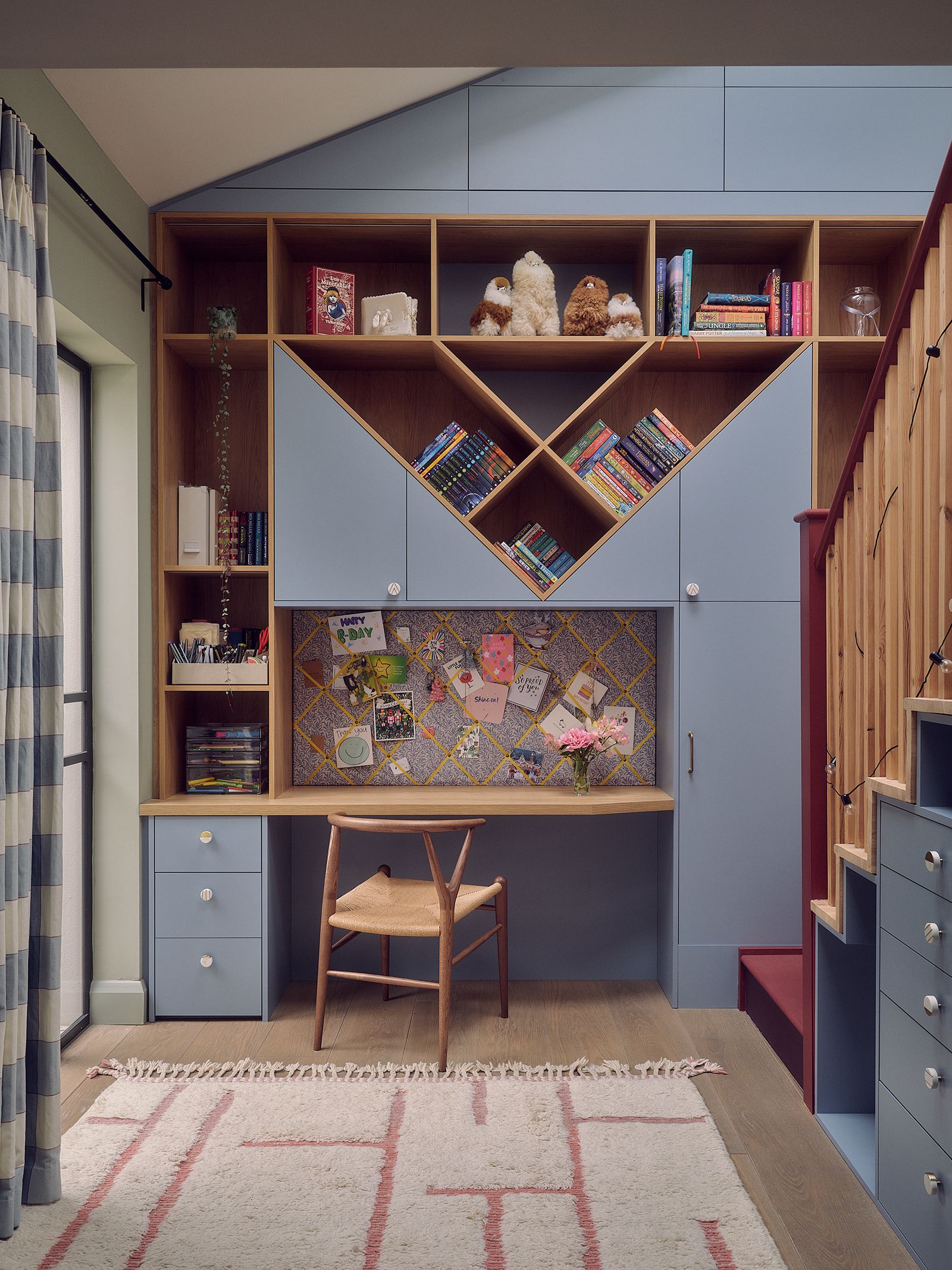
There are further considerations in a similar vein. It’s normal, as a parent, to want to hang on to our children’s youth, as well as a pretty ruffled valance on an exquisite four-foot-six four-poster, and a decoratively painted child-sized desk. And yet, alongside allowing for developing taste, Louise Wickstead of Sims Hilditch suggests that ‘once they’re teenagers, their desk should be a standard size.’ Moreover, it needs to be sturdy enough for purpose, have sufficient room for books and files – and a stapler and a hole-punch – and be located where it’s going to be used, which might not be a bedroom. In which case, it’s better to plan for that than be exasperated by ink stains on an ottoman. Lucy Hammond Giles, a director of Sibyl Colefax & John Fowler, designed desks in her kitchen for her children, ‘because they aren’t ready to commit to the idea of sitting to do something without being able to escape to the fridge or outside to play with the dog – and I’m sure the ability to easily flee ensures a faster return to their work.’ To note is that looks can be considered, once function is met: those desks of Lucy’s are ‘beautifully smart, formed in timber and painted in the darkest Farrow & Ball Railings blue, edged in pine. They feel very deliberate and echo our kitchen shelves.’ Similarly, a pin board for invitations, exam timetables, and gigs-we’re-not-sure-they-should-go-to can be made more appealing by being covered in an elegant fabric.
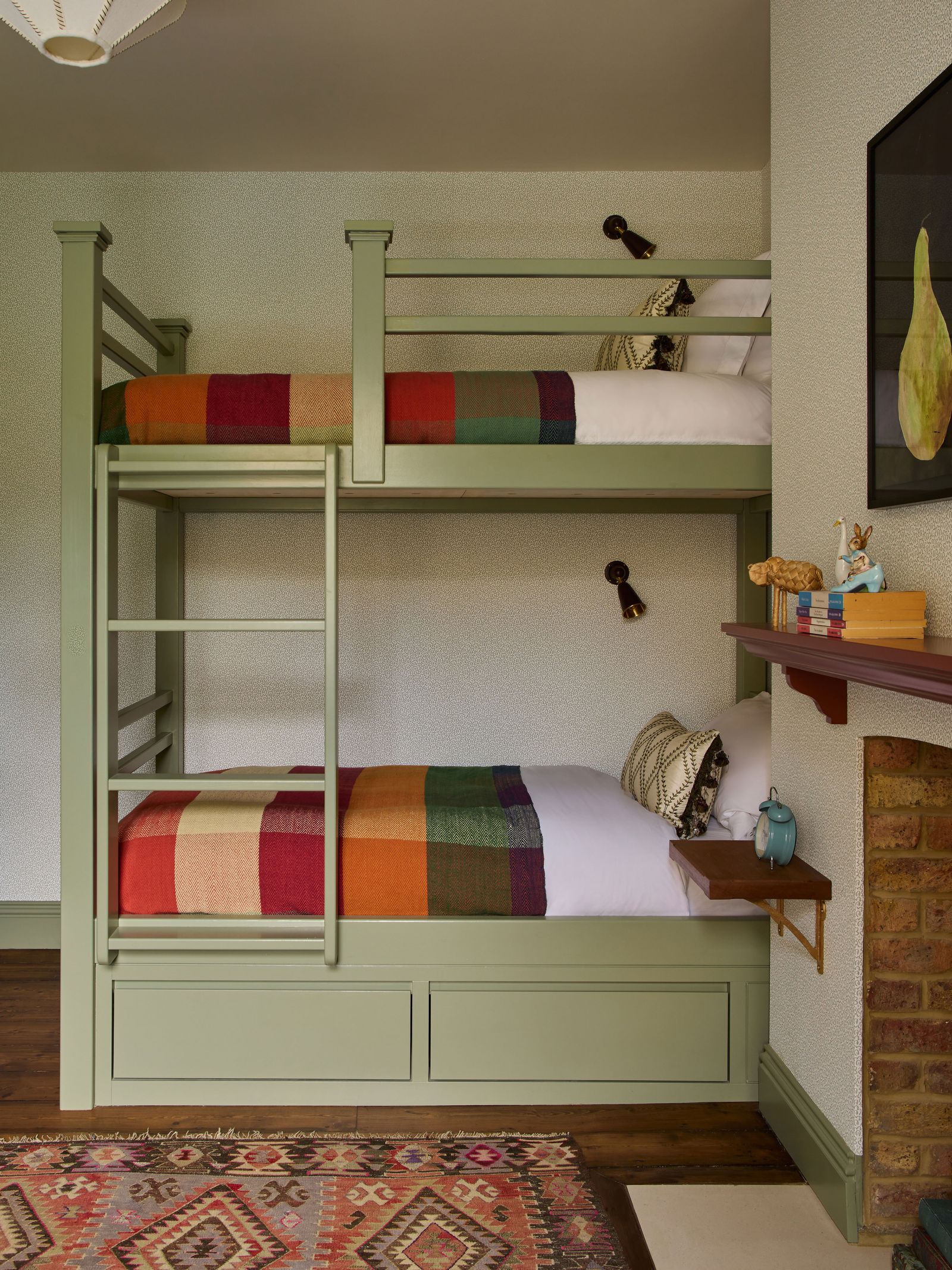
Chests of drawers, cupboards, and bookshelves also all need to be of appropriate scale. If going for bespoke built-in, Nicky Mudie of Violet & George urges the building of ‘more than is enough’, because everything is always going to multiply. Though, with that, regular clear-outs are essential and need to happen more often than we’d approach the same in our own bedrooms, on account of children’s aforementioned tendency to grow out of clothes and games, and abandon musical instruments, ballet, and desire to be a marine biologist.
But what is frustrating is that we can do all of this – and provide hooks on the backs of doors, towel rails in easy reach, and put wastepaper baskets in every available corner - and still encounter the scenes described in the first paragraph. For what good design doesn’t account for, agrees Alexandra Tolstoy, is that some children simply have no appreciation for order, regardless of the number of times we sang the ‘tidy up’ song with them when they were little. And this is where the advice changes. The fashion designer Roland Mouret described some mould-growing yoghurt pots, abandoned between books and guitar picks on my 15-year-old son’s bedroom shelves (‘better than a dead mouse!’ said Alexandra, with feeling) as ‘creative process’. And I remembered an essay that novelist Zadie Smith wrote for The New Yorker, that recalled a time when she was a similar age to my son: ‘I lived . . . in a filthy pit of my own creation. Sometimes when I am ranting at my children about the state of their rooms, I suddenly remember what I used to think whenever my mother came in and tried to complain about the bowls of old food stored under my bed, and the cigarette butts put out in the bowls of old food, and the candles I liked to burn and melt into the damp carpet. (Sometimes if I got bored of a glass of water, I would just pour its remnants onto the floor.)’
It suggests two things: hope for the future – Zadie’s bedroom doesn’t look like that now – and that the chaos could be a necessary stage in the life of a creative. And here, good design can definitely be a solution, albeit in a slightly different manner. ‘Make sure that their bedroom door is really beautiful – maybe sound-proofed baize,’ says Lucy. ‘And resign yourself to keeping it shut.’


