

Cecil Beaton’s magnificent mise-en-scènes extended across photography, film – and into interiors. At the 18th Century Ashcombe House in Wiltshire where he lived in the 1930s, he slept in a red and gold carousel-inspired four-poster bed designed by Rex Whistler, surrounded by murals featuring circus figures in trompe l’oeil niches by himself, Rex, Lord Berners (on whom Nancy Mitford based her character of Lord Merlin) and other artists. His Syrie Maugham-influenced studio-cum-sitting room had curtains made from hessian sacking studded with 300,000 pearl buttons, and the bathroom was covered with ink outlines of guests’ hands, so Cecil could lie in the bath and ‘compare Siegfried Sassoon’s thumb with Sacheverell Sitwell’s.’ But, interior design is ‘the most fugitive and fragile of art forms,’ noted historian Steven Brindle, and none of it exists now. The house suffered bomb damage during World War Two, the ceiling of the famed Circus Room fell in – and, in 1945, Cecil was forced to give up the lease altogether.
%2c)
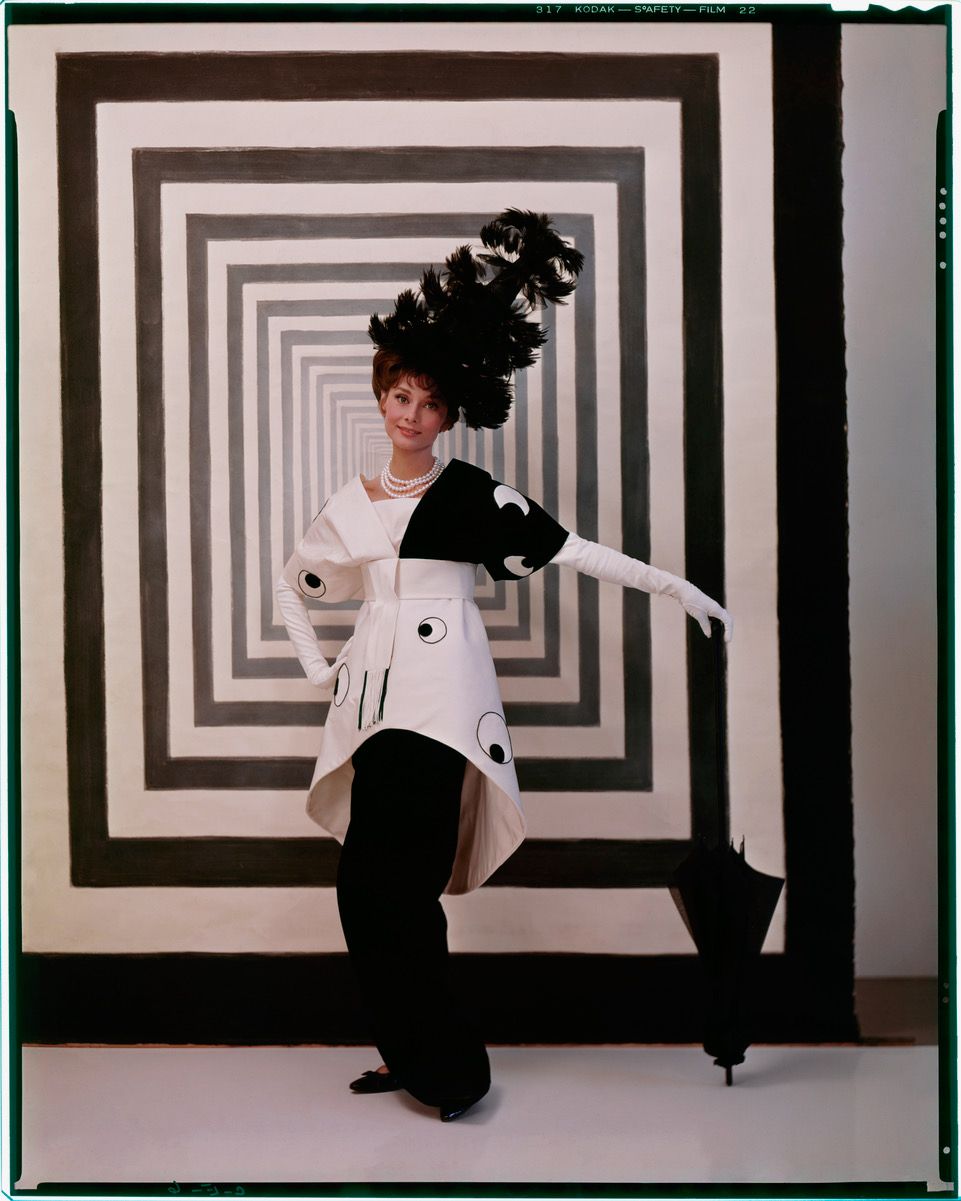
Fortunately, other strands of Cecil’s extraordinary creativity have fared significantly better. And this autumn we’re being offered opportunity to explore his ingenious world via a glorious exhibition at the National Portrait Gallery. Curated by Robin Muir, a long-time contributor to House & Garden’s sister magazine, Vogue, it demonstrates how Cecil elevated fashion and portrait photography into an artform, while developing a new aesthetic that combined wit and sparkling frivolity with beauty and elegance in a manner that always seemed fresh. It also looks at the studied artifice on which the triumphs were built: ‘I don’t want people to know me as I really am, but as I’m trying and pretending to be,’ Cecil said, while still a child. ‘What Cecil wore, what he possessed, what friends he treasured, what he was surrounded by – all were paramount to his sense of self,’ explains Robin. And this included the aforementioned interiors: ‘His homes, whether owned or rented or the many hotel suites he was given carte blanche to transform into that inimitable Beaton-esque style, these became extensions of his persona, reflections of a carefully curated self-image.’ Occasionally, these spaces even provided backdrops. Hence, between superbly ethereal images of high-society, royals, and Hollywood stars, we are afforded occasional glimpses of lost rooms that, as they evolved, mirrored Cecil’s professional progress. And, with words, we can expand the view.
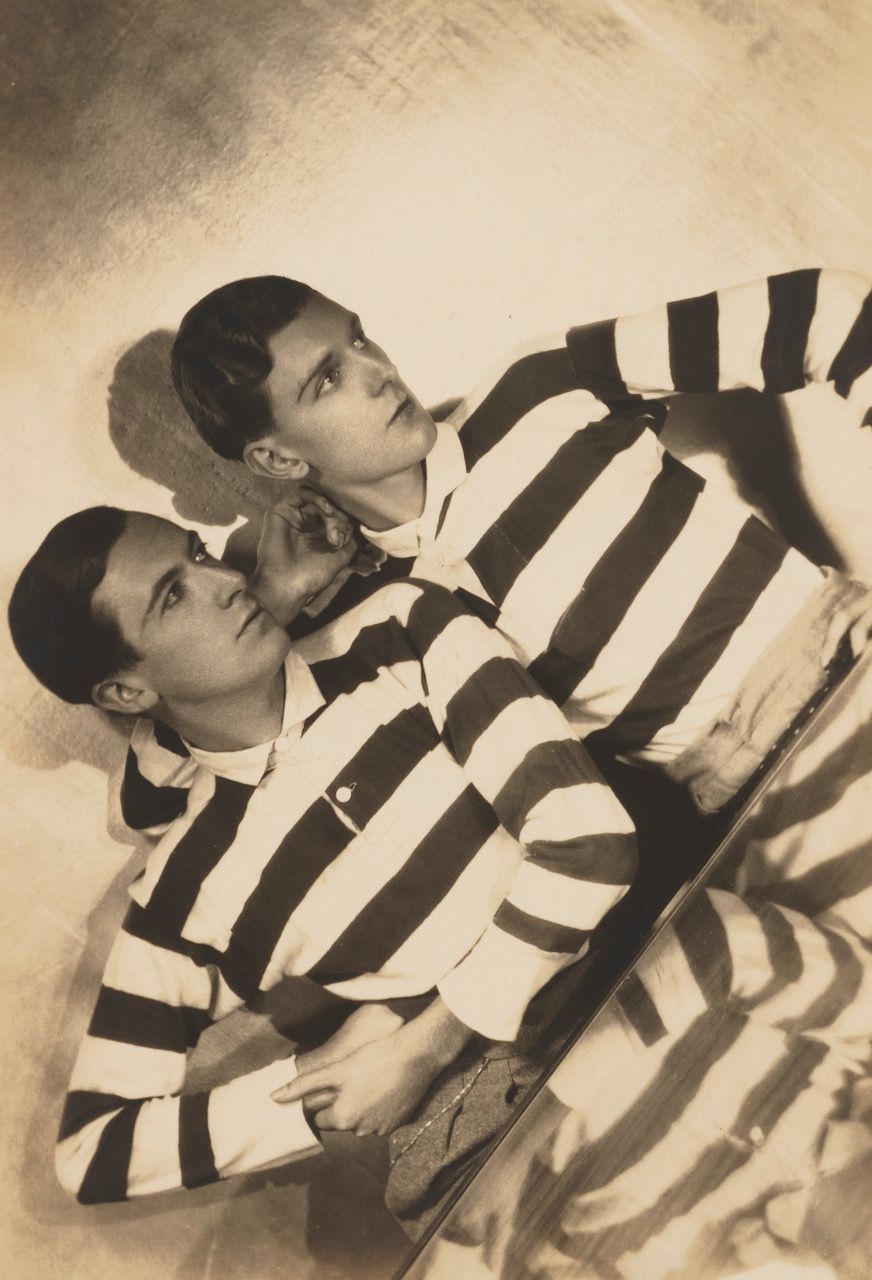
The construction began early. Arriving at Cambridge in 1922, at a time when lingering proclivity for grandeur and revivalist styles were meeting Bloomsbury, Ballets Russes reveries, and the beginnings of modernism, Cecil set about becoming ‘a rabid aesthete with a scarlet tie, gauntlet gloves, and hair grown to a flowing length.’ In London, he bequeathed his bedroom in his parents’ house peppermint pink walls overpainted with large fleur-de-lys in light caramel and pistachio, pale pink furniture, and a four-poster bed dressed in scarlet silk, stencilled in gold, and given a bright pink satin bedspread. The carpet was peacock blue, the window frames yellow, and red-gloss oilcloth was used for the curtains. The room was photographed for Eve magazine – for interior decoration was increasingly being considered a branch of fashion, as well as a means of self-expression, and Cecil, by now, was part of a young aristocratic and artistic set renowned for decadence, hedonism, fancy dress, and wildly flamboyant parties that were a complete about turn from the solemnity of the previous decade. Other members numbered Nancy Mitford, Stephen Tennant, the Sitwells, Evelyn Waugh, Rex Whistler, and Oliver Messel; the Daily Mail called them the Bright Young Things, and Cecil documented them, both in London and at their grand country homes. His first exhibition, at the Cooling Galleries on New Bond Street, took place in 1927 – Cecil was 23-years-old. That same year, he began working regularly for Vogue, and established his own studio.
In 1929 Cecil went to Hollywood to photograph film stars and was immediately captivated. ‘Oh, the glamour and romance of owning a mock Russian palace! I would like to live in scenery; to have the doors painted to look like wood and to have the columns empty,’ he wrote in his diary. Elsie de Wolfe, most famous of the American interior designers, gave him an exhibition in her 5th Avenue showroom. With his star firmly in the ascendent, and desiring a country house of his own, in 1930 he took on the lease of Ashcombe in exchange for fifty pounds a year and extensive renovations – and began decorating in earnest.
Cecil explained his prime sources as ‘the pink and silver churches of Bavaria, the exquisite decoration . . .in the Nymphenburg Palace, and the luxurious frivolities of stucco cherubs frisking among garlands of flowers and arabesques. . . I thought only in terms of the Rococo.’ He shopped avidly: a diary entry from Vienna notes ‘antiquaries were ransacked for cheap baroque chairs and consoles.’ From Venice, he sent home ‘life-sized cupids, masses of silver and gilt candlesticks, silver bird-cages, glass witch-balls, engraved mirrors, shell pictures and crumbling Italian consoles.’ Beyond the rooms described in the first paragraph was what the writer Edith Olivier called the Virgin Room, which had white glazed walls and a single fore-poster dressed in white satin. Then there was the Marie-Antoinette Room, with walls covered in a pink glazed tartalan over pink linen, an ostrich-plumed four-poster dressed in pink satin, a white carpet, and furniture upholstered in pink and silver brocade.
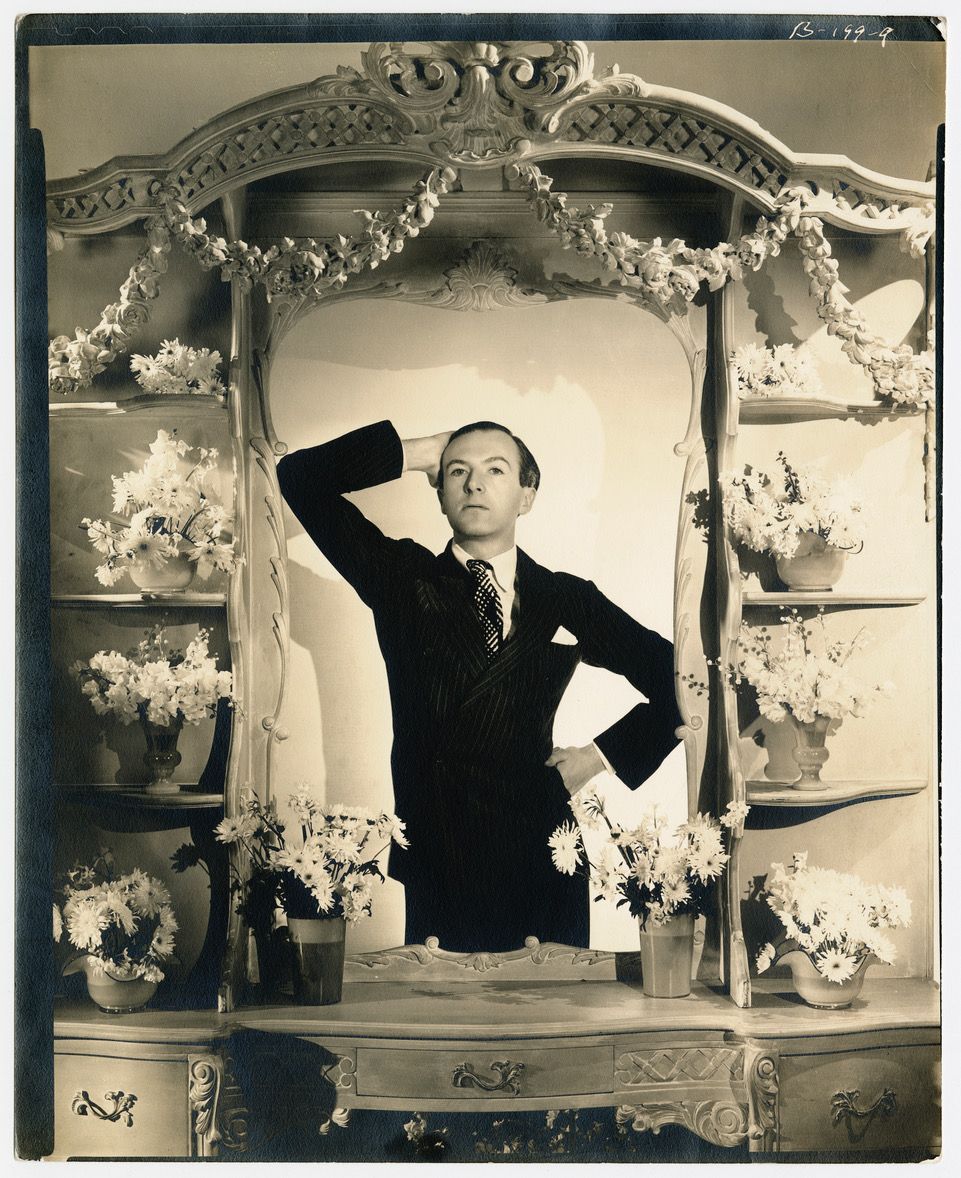
By 1939 his glamorous cast of subjects had extended to take in major artists of international renown, and members of the royal family. He bought a house in London, and, after the war, installed schemes that demonstrated his growing gravitas. There were ‘black-velvet walls with silver-gilt leather boarders, Alberto Giacometti bronze lamps, and Jean-Michel Frank’s plaster lanterns which hung above angular banquettes and chairs covered in clashing pink and orange, sky-blue and turquoise tweeds and silks,’ describes Nicky Haslam (who, following Cecil’s death in 1980, rented the house, ‘daring décor still in place.’)
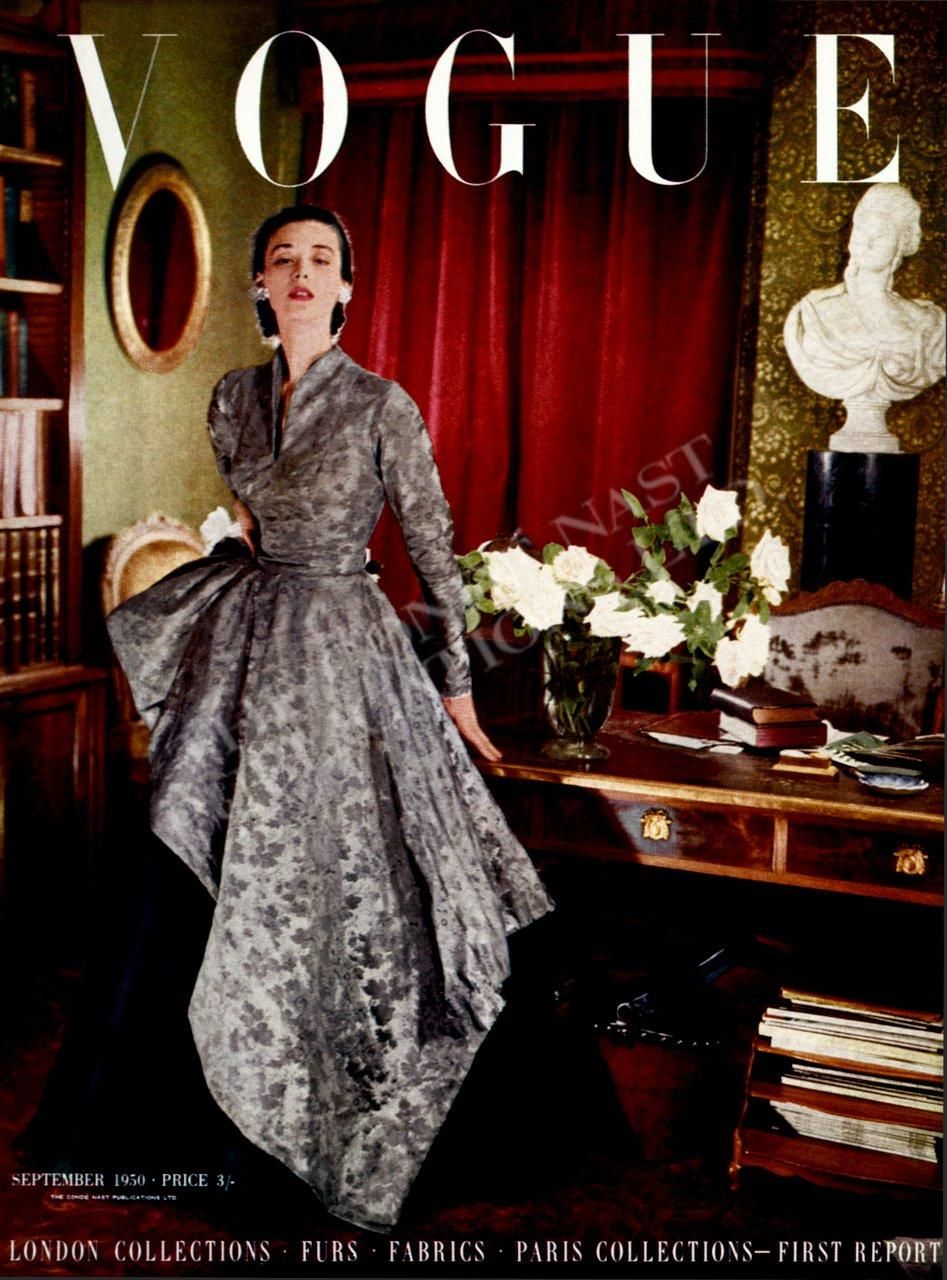
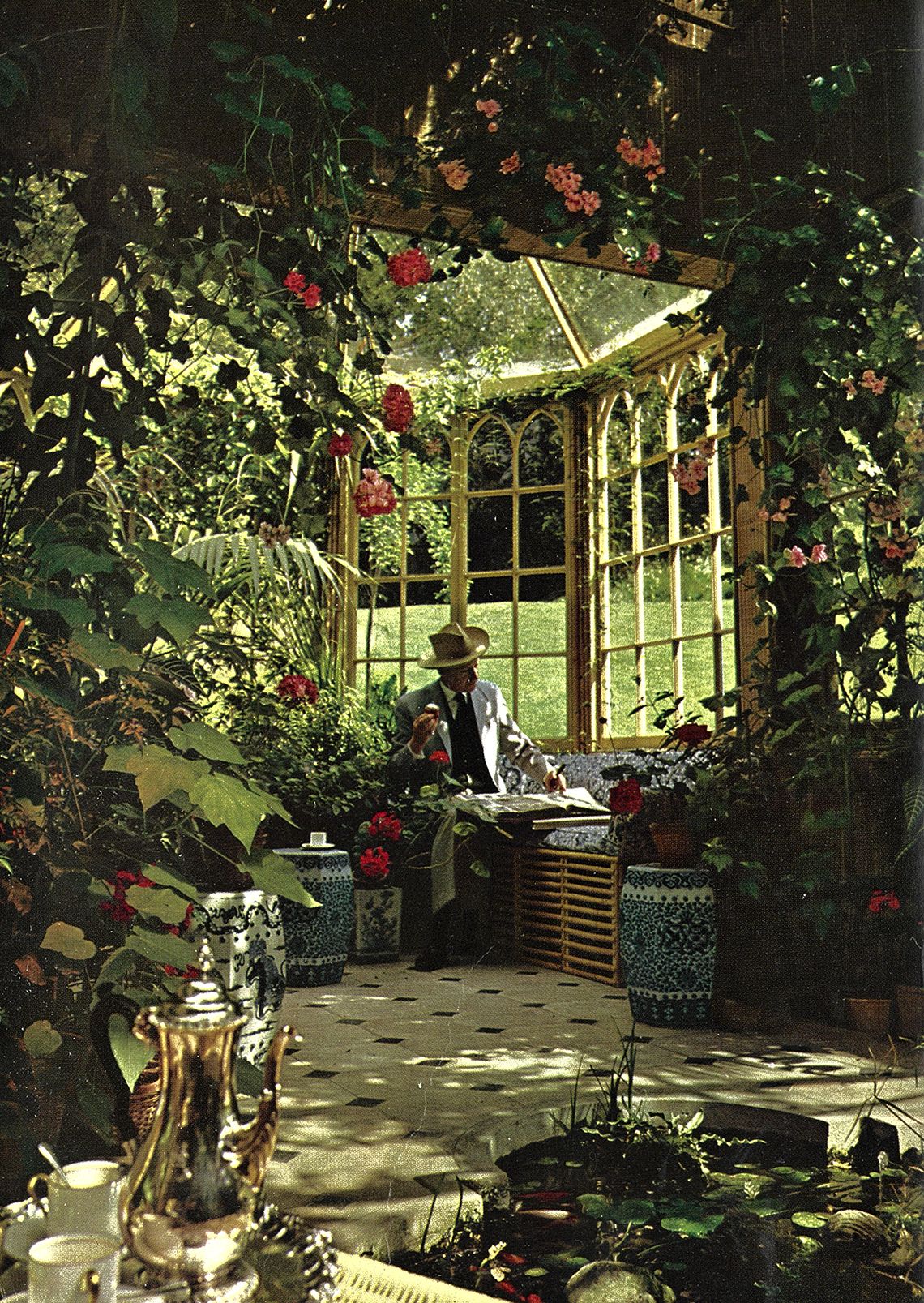
And in 1947, Cecil bought Reddish House, the replacement for Ashcombe. Although, when his Ashcombe furniture arrived from storage, he took one look at it before labelling it ‘frivolous junk’ – and sent it all to Caledonian market in London. Felix Harbord was employed to effect some structural changes, and Rococo was replaced by museum-quality French furniture and art, funded by Cecil’s success as a costume and set designer for films (which earnt him three Academy Awards, and four Tony Awards). The entrance hall at Reddish was described by this magazine, in 1966, as ‘a rare kind of grandeur in miniature, little seen in England at any time, but frequently to be found in the villas of the Italian Renaissance.’ Opening off it was a study-cum-sitting room containing a writing table which formerly belonged to Lady Juliet Duff and reputedly, before that, to Charles Maurice de Talleyrand-Périgord, Napoleon’s chief diplomat – a British Vogue cover from 1950 shows the American model Dorian Leigh standing in front of it, wearing a Victor Stiebel evening dress. There was a conservatory, furnished with plants and wicker furniture, and a drawing room that housed enormous Meissen porcelain jars, an inlaid Louis XVI desk with ormolu mounts, a collection of art by, among others, Rex Whistler, Graham Sutherland, and Henri Le Sidaner – and white and gold Corinthian-capped columns as satisfyingly film set-empty as Cecil’s 1929 Hollywood-inspired dreams.
%2c%25201948.%2520Original%2520colour%2520transparency.%2520The%2520)
Decades on, the exhibition proves the lasting appeal of Cecil Beaton’s world, and gives us visuals to accompany Nancy Mitford and Evelyn Waugh’s literary immortalising of the Bright Young Things. At the same time, contemporary homes demonstrate our ongoing appreciation for fantasy, whimsy, Venetian grotto chairs, gilding, trompe l’oeil, and more. Luke Edward Hall is among those who have cited Cecil as inspiration (and do check out the National Portrait Gallery shop, where Luke-designed Cecil-related merchandise abounds) – we might also name Nicky Haslam and Beata Heuman, while Veere Grenney owns one of Cecil’s vases. But perhaps the greatest lesson from all of it is that we should embrace our desires – and, whatever the scale, harness interior design for the creation of a haven of individualism.
Cecil Beaton’s Fashionable World is at The National Portrait Gallery until January 11 2026; npg.org.uk


