
The enduring appeal of the Bloomsbury look
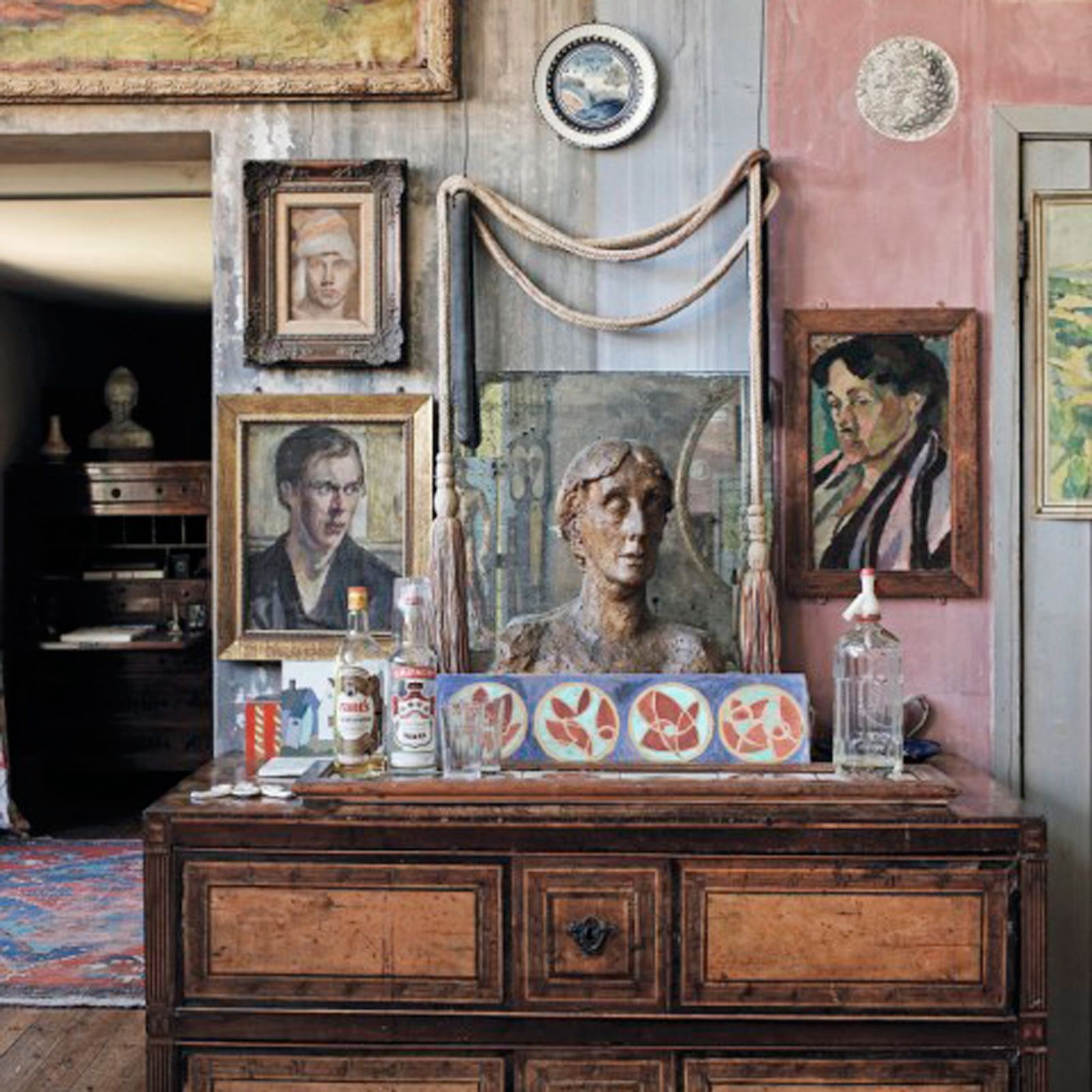
The legacy of the Bloomsbury Group has been felt across a wide swathe of Britain's cultural world ever since their radical innovations in art, literature and design shook up the staid world of Edwardian England in the early 20th century. When it comes to interiors, the strikingly original designs at Charleston, the former home of Vanessa Bell and Duncan Grant, and the playful, inventive output of the Omega Workshops, are still highly influential, with their painterly sensibility and freedom of expression.
The Workshops were founded by Roger Fry in 1913, and in their short existence (they closed in 1919), their daring pieces for the home had an impact that can still be felt today. A wide range of artists and craftsmen contributed to the studio's output over these six years, blurring the boundaries between art and design with their bold colours and expressive imagery. Vanessa Bell and Duncan Grant painted furniture and walls with joyful, abstract patterns, came up with interior schemes, and designed pieces based on their paintings. Many such pieces ended up at their Sussex home Charleston when they moved there in 1916, and are now part of the museum's collection.
The designs of the Omega Workshops were highly popular within the group's intellectual circle–Virginia Woolf, George Bernard Shaw, H.G. Wells, W.B. Yeats and E.M. Forster all bought pieces–but they were also to have a striking impact on what came later, setting the example for a free and individualistic approach to interior design that was a far cry from the world of Victorian solidity that preceded it.
MAY WE SUGGEST: The interiors of Charleston: the house the Bloomsbury Group turned in to a living work of art
The interiors of Charleston, where practically every surface is covered in hand-painted designs, has also been hugely inspiring to generations of artists and designers. We love seeing hand-painted furniture, doors, murals and fireplaces in the houses of people we feature, like the cheerful fireplace in Molly Mahon's Sussex cottage, and the exuberant patterns Beata Heuman often uses in her projects. The smaller objects designed for The Omega Workshops also see their descendants in a new generation of hand-painted accessories, like interior designer Gavin Houghton's decorated plates and the designs of Luke Edward Hall, that reject formality and seriousness for a lighter, wittier mood.
Tess Newall, a decorative artist whose sensibility owes much to the the Bloomsbury aesthetic, notes that part of the appeal lies in the sense that everyone can take the same kind of artistic approach to their own interiors. "The events of the past year have meant that we need to feel inspired by our homes more than ever before. The Bloomsbury Group lived and worked in a very intimate environment, similar to how many of us now find ourselves. Their surroundings were intrinsic to not only their practice - in that most of the objects they used were made or decorated by them - but to their discussions, thoughts and (I imagine) mood. They didn't take themselves or their work too seriously, and many of the results are imperfect, which lends a charm that no machine-manufactured product can have."
But does all this imitation raise questions about artistic integrity? It's a concern for Cressida Bell, the granddaughter of Vanessa Bell and a successful decorative artist and designer herself. "I think there can be a sense in which people use the Bloomsbury idea of looseness and freedom to do slightly shoddy, slapdash work. As with artists like Matisse and Picasso, it takes a huge amount of skill, discipline and practice to create that kind of effortless aesthetic - it's not actually effortless at all. Charleston is wonderfully liberating, and it's fantastic that people come away from a visit thinking 'I'd like to do that myself,' but the commercialisation of it is not always successful." It is perfectly possible, however, as Bell notes, to be inspired by the Bloomsbury look and also create something that has its own skill and discipline behind it. "I think Cambridge Imprint, who have designed some products for the Charleston shop, make delightful things, with a real sense of proportion and detail."
The enduring legacy of the Bloomsbury aesthetic undoubtedly lies in that very freedom and effortless appearance that is so hard to recapture. Even if imitations of the look aren't always able to live up to their originators, the sensibility that emanated from Charleston and the Omega Workshops are a constant reminder to bring a little playfulness into our spaces.
 Owen Gale1/17
In her Sussex cottage, Molly Mahon has painted the fireplace in a style reminiscent of nearby Charleston.
 Rachel Whiting2/17
This wardrobe from The Dormy House has been hand painted with Dulux paint by the artist Cressida Bell.
- © The Estate of Duncan Grant. DACS 2019 / The Charleston Trust.3/17
Collage, Duncan Grant, design for a fire screen panel for the Omega Workshops, 1916, mixed media and gouache on board.


 5/17
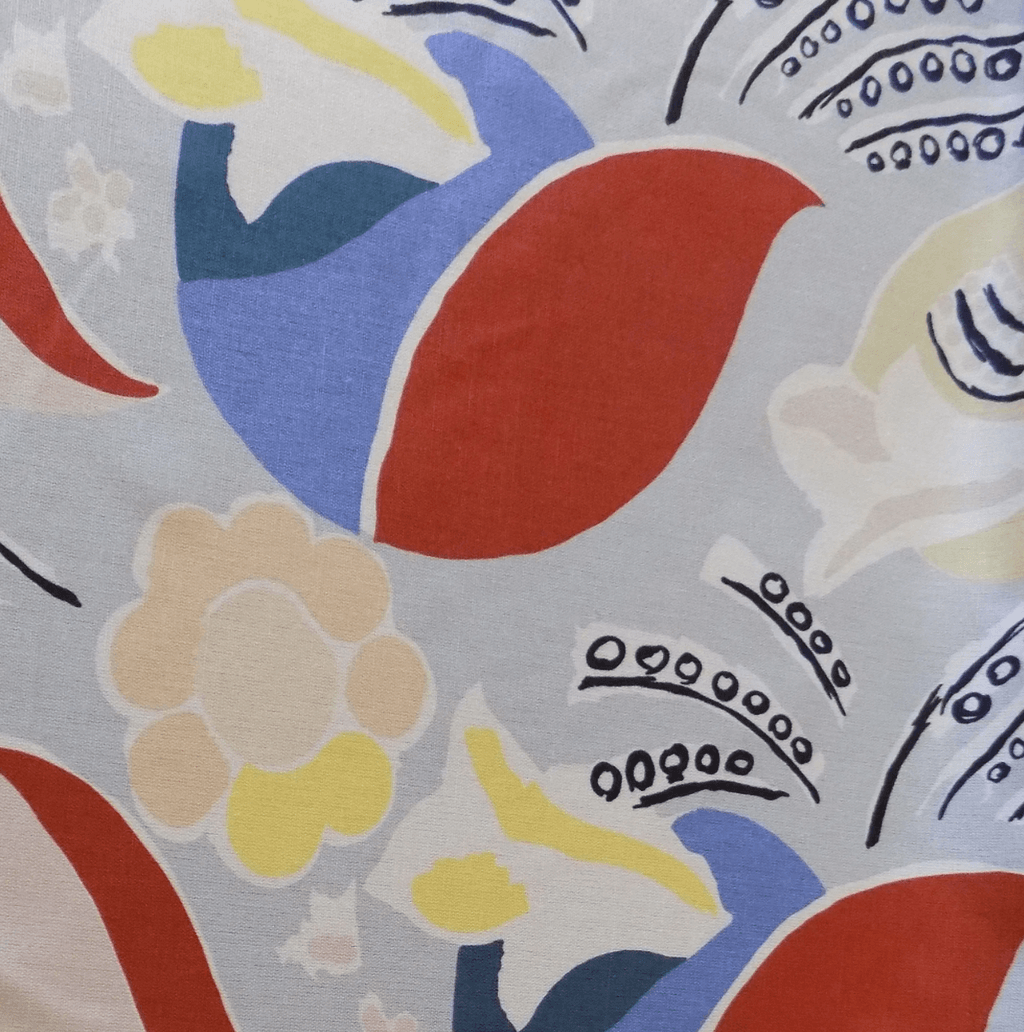
5/17'Queen Mary' fabric, designed by Duncan Grant, £55 a metre from Charleston Farmhouse.
- © The Charleston Trust6/17
Opening room of the Omega Workshops, 33 Fitzroy Square, London.

- © The Samuel Courtauld Trust, The Courtauld Gallery, London8/17
Design for Lalla Vandervelde's Flat, 1916, Roger Fry.


- © The Estate of Duncan Grant. DACS 2019 / Victoria and Albert Museum, London9/17
Oil painting on panel, signboard for the Omega Workshops, Duncan Grant, 1913.
- © Victoria and Albert Museum, London10/17
Furnishing fabric Amenophis Besselievre; Omega Workshops; Roger Fry, Maromme, 1913. Printed linen.
- © The Samuel Courtauld Trust, The Courtauld Gallery, London11/17
Design, Omega Workshops (1913 – 1919), gouache and oil on paper.
- © The Estate of Duncan Grant. DACS 2019 / Victoria and Albert Museum, London12/17
Invitation card to an exhibition at the Omega Workshops Ltd by Duncan Grant. Mid-1910s.


- 13/17
Lampstands with geometric decoration, designed and made by the Omega Workshops, 1913-1919. © Victoria and Albert Museum, London
- © Victoria and Albert Museum, London14/17
Tray by Henri Gaudier-Brzeska. France, early 20th century.
- © Victoria and Albert Museum, London15/17
Teacup and saucer, tin-glazed earthenware, designed by Roger Fry, made at the factory of Carter, Stabler & Adams for the Omega Workshops, ca. 1914.
- © The Estate of Duncan Grant. DACS 2019 / The Samuel Courtauld Trust, The Courtauld Gallery, London.16/17
Plate with overglaze painted sailing boat design, Duncan Grant, 1913-14.


- © The Charleston Trust. Photograph by Penelope Fewster17/17
Omega chairs and table in the Dining Room at Charleston.


