


That form (decoration) follows function (purpose) was one of the principles of Modernism – the movement that began its rise to prominence about a hundred years ago (Le Corbusier and his cousin Pierre Jeanneret opened their Paris studio in 1922) and promoted sleek lines and the elimination unnecessary embellishment. Its impact has been far-reaching: many are those who aspire to modernist homes, mid-century furniture, and a clean elegance to their interiors. And yet, alongside, a growing wave of maximalism has seen others among us ignore modernist principles altogether, not just by way of a headlong return to frills, flounces and Rococo flourishes, but by installing non-functioning fireplaces, mouldings that – technically – jar with the architectural style of the house, and even lighting that doesn’t actually light up. (Yes, I have a pair of ceramic sconces in my bathroom, complete with pleated silk shades – but no bulbs, because they’re not wired in and never will be.)
Knowing that Bauhaus-appreciating purists wouldn’t approve of such pretensions of grandeur is one thing, but if you read through various tomes on decorating by chintz-embracing 20th-century greats, it’s clear that they’d have been horrified too. In Decorating in Fun! Dorothy Draper advocated for “removing purposeless frills”- by which she meant excess mouldings. And, “how can we develop taste? Some of us, alas, can never develop it, because we can never let go of shams,” wrote Elsie de Wolfe in The House in Good Taste – a sham being a thing it is not purported to be. What’s more, there are contemporary decorators who agree, among them Roger Jones, Director and Head of the Antiques Department at Sibyl Colefax & John Fowler, who says “In general, I try to respect the integrity of the architecture and avoid anything that is stagey or sham; I would be uncomfortable placing an object that doesn’t work as it is meant to somewhere just for effect.” So, have some of us gone too far? And might it be useful to reconsider the relationship between form and function, and perhaps find some new rules for the 2020s?
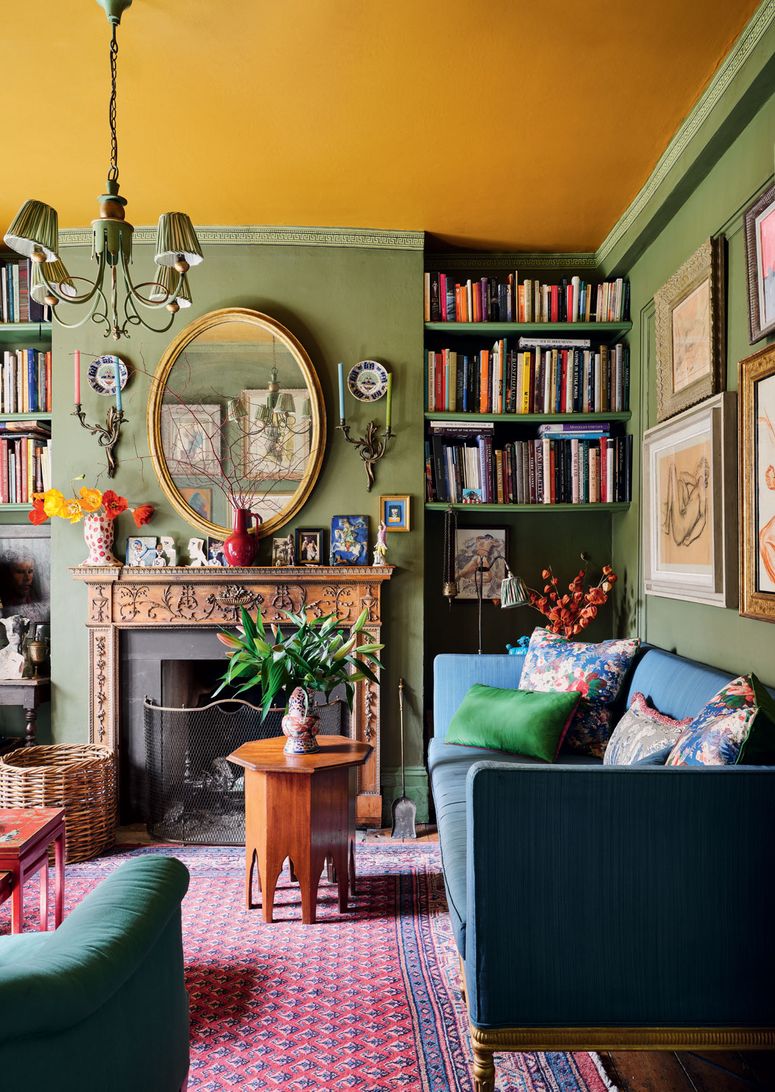
We need to start by acknowledging that most of us, at least in the UK, don’t live in modernist houses; there are more homes in this country built pre-1900 than post, and, pre-modernism, architectural style was expressed through mouldings – though arguably, even modernism complied, expressing its style through lack of mouldings, and many are the Victorian and Edwardian houses that were stripped bare. Happily, due to the brilliance of such companies as Jamb, Atkey & Company, George Jackson Limited and Stevensons of Norwich, we can buy replacement fireplaces, skirting bords, picture rails, cornicing and ceiling roses, and there’s much advice available on choosing the appropriate mouldings for your period property. On the other hand, using such mouldings in more contemporary circumstances has generally met with widespread disapproval, particularly when the fireplace doesn’t even work. “Many years ago, I visited a flat in a very smart 1960s apartment block overlooking Green Park in London,” recounts Roger Jones. “The flat had been decorated for its American owners by a celebrated French interior decorator who had installed a fake marble fireplace on a blank wall facing the plate glass windows. I vowed I would never do such a thing myself.” More abruptly, “do not retrofit mouldings into a modern house,” says the architectural historian Charles Brooking. And, “it gets very murky,” warns Rupert Cunningham, Director of Ben Pentreath’s architectural practice.

‘Murky’, though, is a good word, for there exist recent examples that show that it can be done with some aplomb. “We’ve got enormous pediment doorways in our [Edwardian] house, they’re wildly impractical and unnecessary, but they add drama and excitement,” says Angus Buchanan of Buchanan Studio, who found the neoclassical architraves at a salvage yard. Patrick O’Donnell, brand ambassador for Farrow & Ball, has painted a trompe l’oeil pediment above his bedroom door - in a 1930s suburban house. And Roger Jones has just done what he said he never would: “my clients wanted a room that looked like a traditional English library – with a fireplace - so I felt justified in breaking my own rule,” he explains. Tiffany Duggan of Studio Duggan has also added fireplaces to rooms that don’t have a chimney breast, pointing out that fireplaces add a focal point – and Roger reminds us that “artificial fires, fuelled by gas, ethanol or electricity, are much more realistic than they used to be.” Evidently, in 2023, it is perfectly okay to disguise a spade as a shovel – or a 1970s ex-local authority flat as a Georgian rectory - if that’s what you’d like to do. “Decorative details that don’t work can still make you happy,” points out Bridie Hall. (And would Cecil Beaton’s drawing room at Redditch House been as beautiful had Felix Harbord not added niches and white and gold Corinthian-capped columns, that were most certainly not load-bearing?)
But, says Tiffany, who has also installed candle lit wall sconces “that look lovely but don’t provide a huge amount of light”, while all that is “par for the course in creating beautiful, well-proportioned decorated spaces, I wouldn’t buy an uncomfortable sofa or armchair just because I liked the look.” Which is an important codicil to the spade-shovel point. Brandon Schubert has spoken of his irritation with “cute café curtains” on bathroom basins that have “an upstand that pops over the top of the marble surround, becoming filthy as soon as anyone brushes their teeth.” It’s pretty, but it is an impediment to living, and that is not what we’re after – which is why I tired of my twelve-year co-existence with an ‘ornamental’ heated towel rail (it never heated up), not to mention the ‘ornamental’ dishwasher (also, this is why I knew when installing my sconces that they would never actually work – except that they do, for I’ve been introduced to rechargeable light bulbs. Evidently, many are we who are bad at rewiring.)
This leads on to Bridie’s ornamental gym, which took up a whole room, and perhaps this another instance where it is worth revisiting the rules of modernism, and the emphasis on practicality and usefulness, i.e. function over form. The gym went unused, “because the equipment was too big for the space, but I tried to shoehorn it in because I was trying to slot my old life into my new life.” Not dissimilarly, I have two guest bedrooms, with appealingly upholstered headboards, frilled valances and skirted dressing tables, created because historically the rooms were designed as bedrooms when the house was built c. 1890. However, two is also the number of nights that they’ve been simultaneously occupied this year. “I turned my guest bedroom into a lovely dressing room,” says Bridie (I’d love a sewing room.) Additionally, she sold the gym equipment, and instead has given herself a drawing room (in which she draws; it’s not a second sitting room) and “I now live in and use every part of my home. We’ve got to get rid of rooms which are decorated for a lack of purpose,” she continues – which is definitely a tenet that both modernists and the greats would have approved. As Edith Wharton wrote in the eternally relevant The Decoration of Houses, “the golden mean lies in trying to arrange our houses with a view to our own comfort and convenience.”


