
It would probably be a bit of an exaggeration to say it has been the bane of my life, but I have, on occasion, gotten a little miffed that when frying an egg or frying anything really, the oil pools awkwardly at one side of the pan. It’s not the pan itself, or the hob. It’s the flat. It is on a slight tilt so the kitchen has a sloping floor. I had begun to see it as just a quirk of living in a post-war block with plenty of other charming troubles until I started to become worried, dramatically imagining my home toppling into the nearby park like a chunk of iceberg into the ocean in an Attenborough documentary. When is a sloping floor or a titled house merely an endearing quirk to live with and when is it a serious problem that requires work?
This is actually not an uncommon concern because sloping floors are not an uncommon problem. It turns out that in many properties around the country, particularly older ones, there are several others making do with wonky shelves and slowly migrating furniture. There are a few causes. Paul Hardman, founder and director of Hardman Structural Engineers, cites ‘the growth of trees close by in underlying clay soils (oak trees can cause problems up to 30m away); damaged drains, particularly in granular soils which can wash away fines in the soils and excavation works on adjacent sites’ as potential reasons. This can lead to subsidence, when the ground underneath a property begins to shift and sink away causing issues with the building’s foundations. This is on the severe end of the scale.
Then there is settlement, often confused with subsidence, which is a downward shift of the whole building normally in the first few years, as it settles into the ground. ‘Sometimes, it can be down to the actual floor itself but that is rarer, really,’ says David Hills, Conservation Architect and Heritage Consultant at Roger Mears Architects. ‘Sometimes floors can deform, the joists can deform but on the whole it's to do with structural movement of walls.’
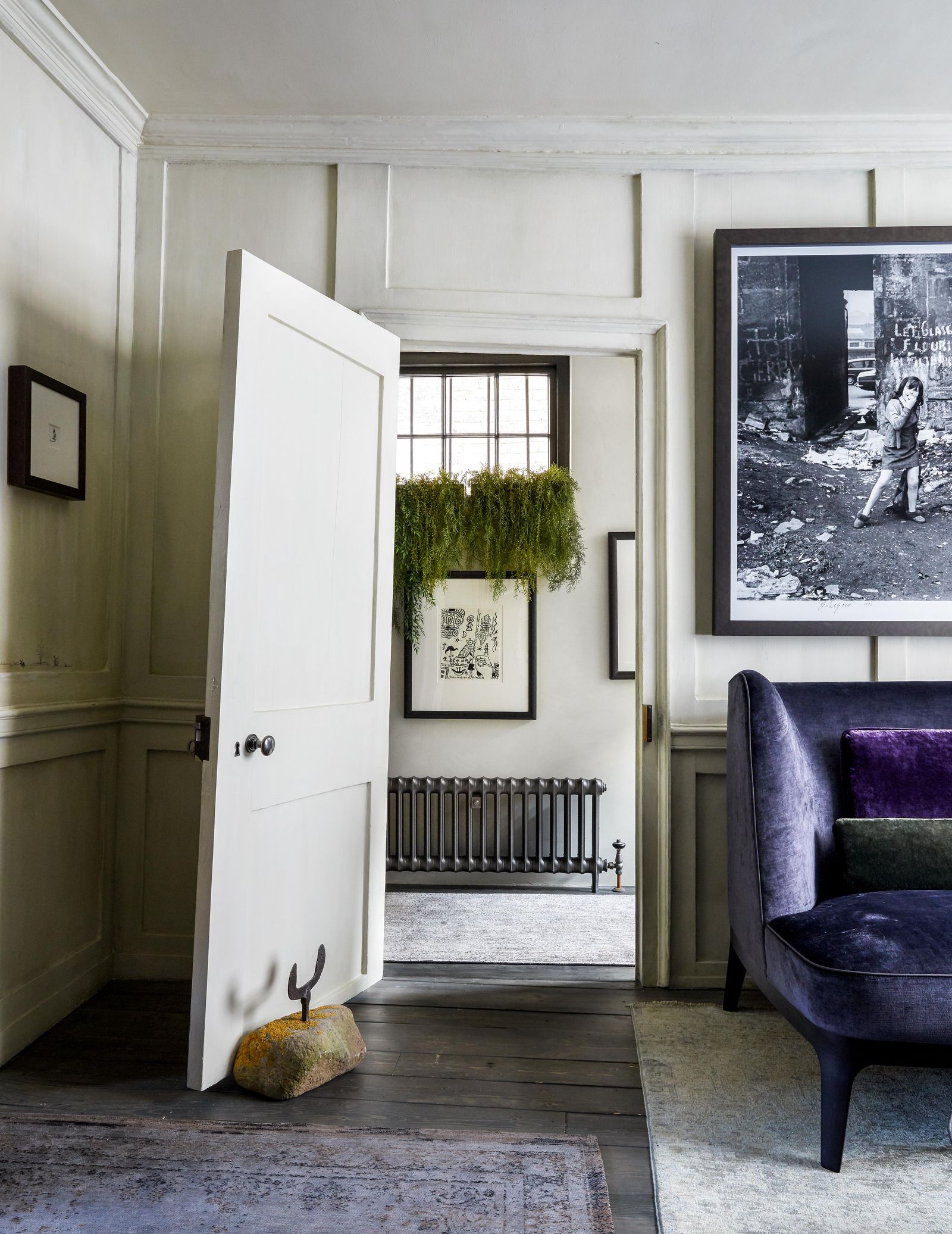
Sloping or even sagging floors as well as cracks around windows and door frames can be signs of issues. Property consultants CJ Bloor suggest that if the cracks are fine and the gaps less than 5mm, this can be a normal settlement that occurs after a build. It could, however, be a sign of something a little more serious if cracks continue to widen over time, or doors begin to stick. One might be able to keep at bay the visions of catastrophe by considering the timeline of such occurrences. ‘Slight settlement occurring over, say, thirty years is quite different from the same thing happening in a very short period of time,’ says Paul.
But if there is cause for concern, it is always best to get a professional opinion. ‘If you've got something that is noticeable underfoot, and it's a struggle walking around the place, which is it sometimes, then it's definitely worth getting someone to look,’ he says. A consultation with a structural engineer or a surveyor costs on average roughly £1000 and they can be called in whether you’re about to purchase a property, have just moved in, or have been living there for years.
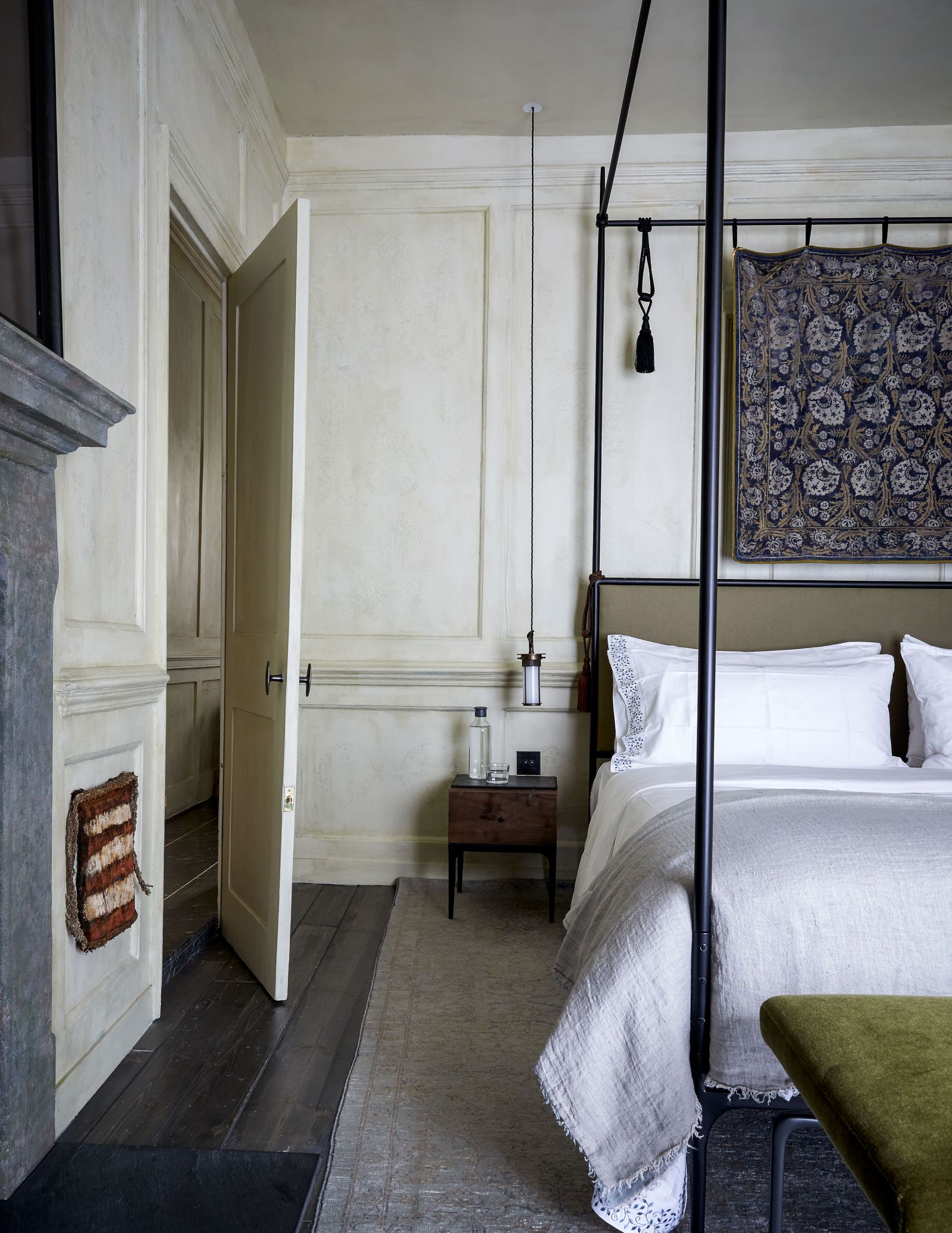
House & Garden previously featured the Georgian townhouse of Kerem Ozelli which he had bought as a wreck. There were rooms where the elevation variance between the floor and the ceiling was as much as 17 centimetres. He ended up calling in architects and designers Michaelis Boyd who helped him rejigg the floors in five rooms, but the formerly wonky frame of the house is reflected in the slightly warped doors, a charming nod to time’s effect on the property, while the home itself is a little more practical for modern living.
For David, conversations about whether or not to fix sloping floors come up often. Floor shims, for example, can be laid over subfloors or uneven joists before new flooring is built on top, to help level everything out. His advice, however, is to accept it. ‘Learn to live with it, it's part of the character of the property that you’ve got,’ he suggests. ‘It'll almost invariably cause more issues if you try to straighten things out. Just go with it.’
By more issues, he means the chain reaction of adjustments that may come as a result of well-meaning intentions to fix the floors. ‘There's a knock-on effect of playing around with floor levels.’ he warns. ‘It’ll start to affect doors, you'll have to undercut doors so they can open over the top of inserted floors so overall it probably causes more problems that it solves.’
So what do you do if you come to the conclusion its better to live with the tilt? ‘Handled thoughtfully, these quirks become part of a home’s charm rather than a distraction from it,’ says Steven Rodel, Creative Director at Guy Goodfellow. ‘The key is always to work with the character, not against it. A slope, after all, is simply part of the story of an older building.’
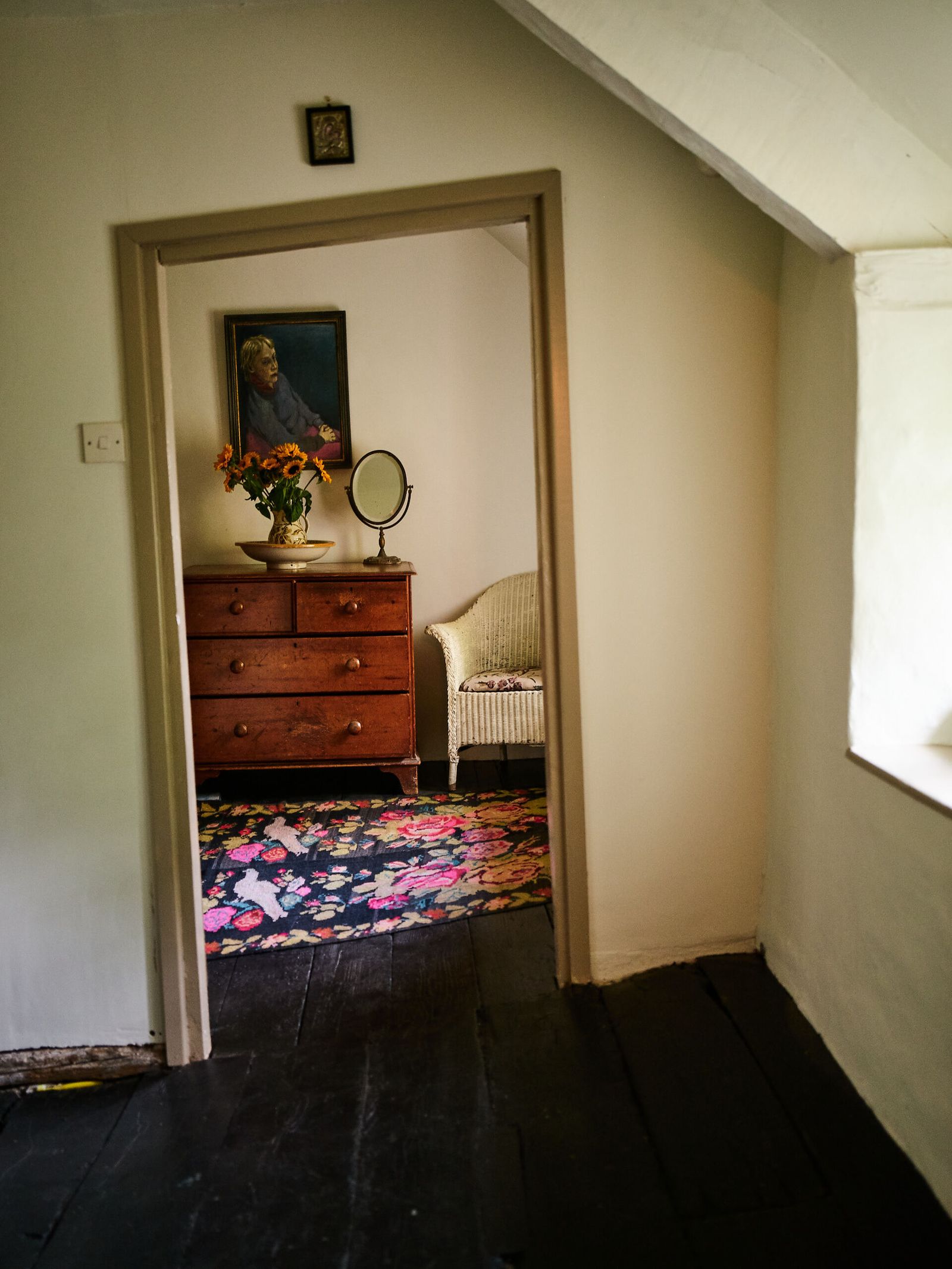
For Steven, the way forward is to plan a room with the goal of giving the ‘illusion of balance.’ This means opting for bespoke and adaptable pieces, ‘for instance, subtly building up the back legs of furniture or scribing joinery to follow the existing floor levels [which] ensure everything feels stable and deliberate.' Tricking the eye by ‘placing larger, heavier pieces at the lower points of a room’ or using pattern to downplay irregularities is an option, as well as, conversely, fully celebrating a leaning floor. I am reminded of the angled door frame in the Welsh house of craftsman Rollo Dunford Wood which brings greater attention to the sloped floor beneath it. It's an approach that seems to celebrate that slightly imperfect housing is part of Britain’s architectural DNA.


