


For the past few decades, chintz has been somewhat unfairly branded as dated. The excessive swags, tassels and ruffles of the 1980s still give many of us the chills and IKEA’s famous 1996 ‘chuck out your chintz’ campaign signalled the end of the road. Chintzy became a byword for gaudy and naff, and despite the headway made by early disrupters such as House of Hackney, who have been championing contemporary chintz since 2011, the passé reputation from its Laura Ashely era was hard to shake off.
It’s an injustice really, to allow one decade of questionable taste to rewrite the way we think about a fabric with such a storied history. This isn’t the time for a deep-dive but chintz originated in India and was introduced to Europe in the 1600s (chintz derives from the Hindi word ‘chint’, meaning spotted, speckled or sprayed). It began as a woodblock-printed textile of any design – not necessarily floral – with a smooth, shiny front and a dull back. At one point chintz was banned and later, the Victorians used it in abundance as it could be wiped clean. Now, chintz is used as a more general term to describe any kind of floral pattern on fabric or wallpaper, irrespective of its texture or finish.
When the cottagecore aesthetic began to gather momentum five years ago, chintz was seen in a fresh light, plus creatives with influential followings such as Amanda Cutter Brooks, Paula Sutton, Willow Crossley and Luke Edward Hall made traditional prints and a busy, layered home feel desirable again. But what if you don’t have a storybook farmhouse or the guts (or desire) to fill your home with floor-to-ceiling art and a mishmash of print? How do you use chintz in any home and make it feel relevant and timeless? Dear reader, we’ve enlisted the experts...
Interior designer Jessica Buckley advises choosing your fabric carefully, “The type of chintz you select is crucial to the making or breaking of a scheme. Choose a classic chintz such as Colefax and Fowler’s Bowood, or perhaps something a little less well-known, but always look for a fineness in the printing and a beautiful soft glazing, rather than the stiff chintzes of the past, which can be tricky to work with. Many chintz fabrics have several different colours in the design, allowing you a broad palette to work with, but don’t be too slavish in trying to keep everything perfectly matched. It’s also a good idea to introduce different patterns to sit alongside, so that the overall look feels evolved and relaxed, rather than too perfect”.
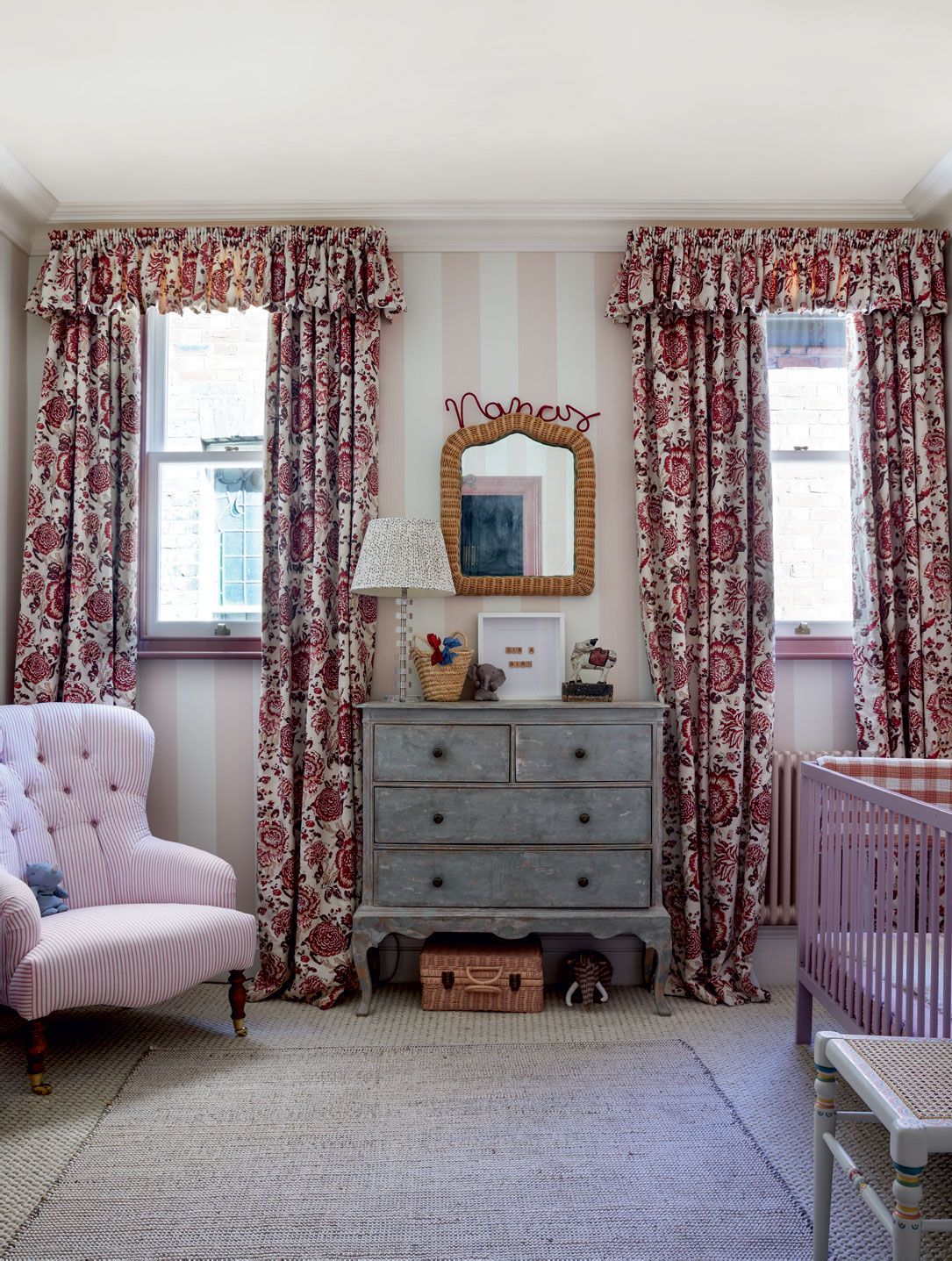
Jessica is an advocate of full-throttle chintz, but it’s important to know where to stop to avoid entering into a time-warp. She adds that “in the 1980s, chintz was used everywhere. By all means go for the ‘full look’ using the same chintz on your walls, curtains and soft furnishings, but draw the line there. Keep the curtains simple: no swags or tails, and avoid further decorative flourishes such as bullion trim on sofas or frilly gathered pelmets. We recently used a beautiful chintz in a bedroom for curtains, plus the same chintz for the headboard and valance. A matte wall colour and and other patterned fabrics in the room kept a feeling of balance”. Stylist Sarah Corbett-Winder agrees that chintz is best when it’s offset with another pattern, “When it comes to chintz, more is more, but I also think it needs something to give it a contemporary edge. Personally, I would always include stripes for a contrast”.
Studio Faeger founder Victoria Barker is on the same page and keeps her classic chintz rooted in the present by clashing it with contrast fabrics and always investing in quality over quantity. “Chintz is my absolute favourite, I have an all-time love for it and the way it transforms a space, but the beauty of chintz is its richness, which comes from its intricate layers of printing. Don’t ever go 'cheap' on chintz, as you’ll lose that all-important depth and it will end up looking twee and slightly dishonest. If it’s too expensive to fork-out for a lot of fabric, buy two metres of a beautiful chintz for a little slipper chair and balance it with a relaxed corduroy or slubby linen on your larger furniture pieces or curtains, then layer it with a clean striped cushion”.

The designer shares some of her favourite tricks that keep chintz looking interesting and tasteful in a young, contemporary home. “I often layer chintz with a cleaner, more dominant stripe, especially if it's an antique chintz with a sun-faded look. A rich black and white ticking or broad stripe can add the freshness that it needs. Block prints or little pukka prints also help bring chintz to life – they’re less expensive and often a smaller scale, which balances the larger florals and swirls of a true chintz. I find that marrying a chintz armchair with a block print on a cushion or blind – rather than a matching chintz – works really well.
Victoria advises that “breaking it up is always best for a modern look. Try adding a plain linen trim in a contrast colour to the skirt or piping of chintz upholstery. Another great trick is covering an armchair in chintz and doing the seat cushion in a brighter leather. 36 Bourne Street have the most beautiful selection of super-soft goat hides in the most stunning colours. My favourite combination is Jean Monro’s 'Willa’ in red with a 36 Bourne Street goat hide leather in 'duck egg' or 'poppy'. It’s a very clever chintz in that it can also also bring richness and dominance if you balance it with deeper-coloured plain fabrics such as linen or corduroy, it will create a cleaner, more masculine aesthetic”.

Founded in the 1930s, Sibyl Colefax & John Fowler has been synonymous with the English country house aesthetic – of which chintz is a key ingredient – for nearly a century. Emma Burns, their Co Managing Director, explains their historic connection to chintz, “At a time when homes were imposing and furnished with damasks, it was John Fowler and his taste for humble fabrics – plains, stripes, toile de Jouy and glazed cottons known as chintz – who initiated the association between our firm and the Indian-derived fabric. In later years, our Chairman Tom Parr declared he wanted Colefax to be “synonymous with chintz” and in 1973, he opened The Chintz Shop on Ebury Street, launching our first off-the-shelf fabric collections”.
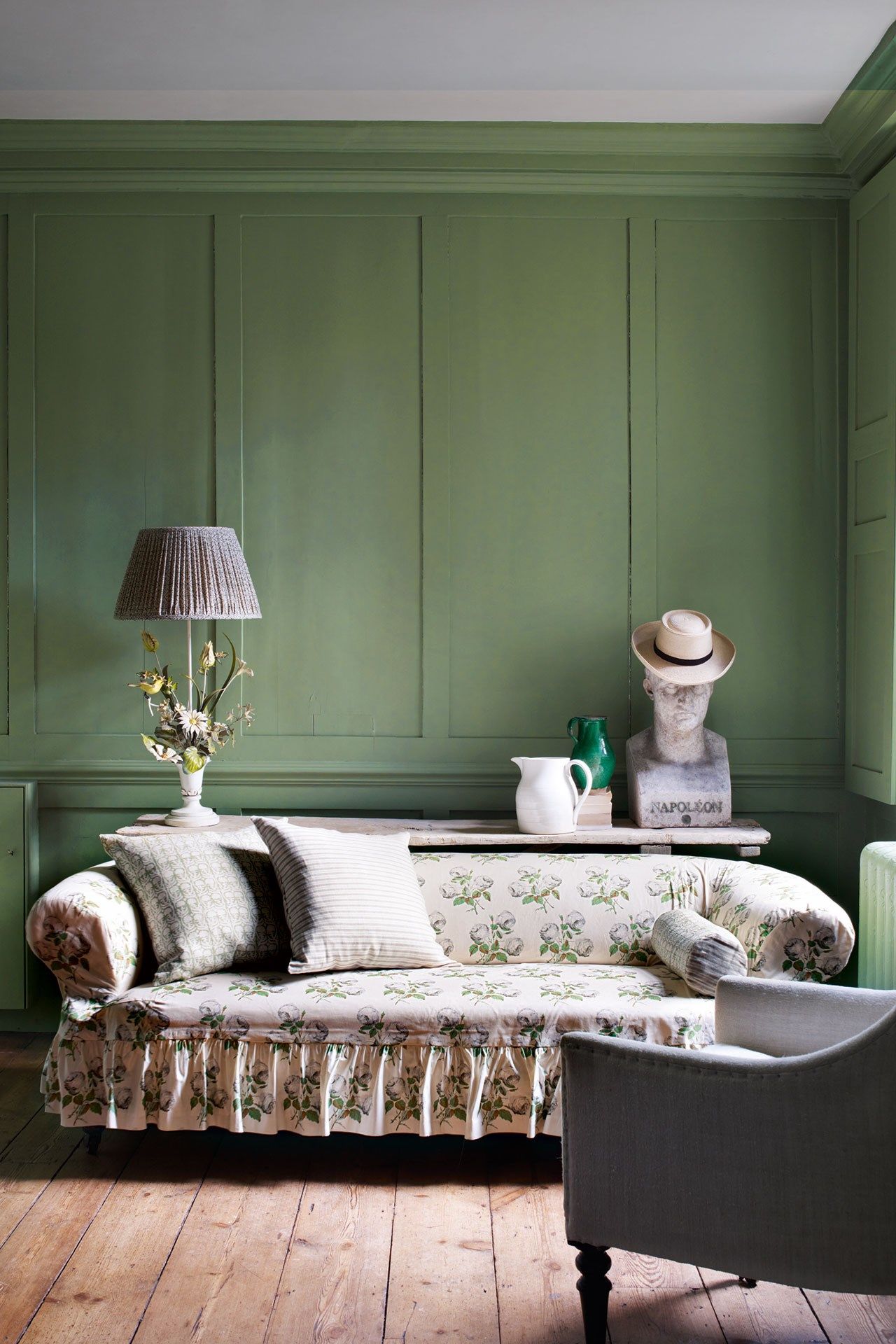
Emma adds, “We recently re-introduced Indian Fuchsia, which is a delicate all-over floral. In recent years, we’d find ourselves trawling eBay for Indian Fuchsia remnants, so we knew it was the time to revisit. Although an overall pattern, it is by no means an obvious or blowsy floral, making it very usable for today – it stands apart thanks to its unusual dark ground and punchy palette. Roger Jones, Decorator and Head of the Antiques Department at Sibyl Colefax & John Fowler recommends “using a pretty floral chintz on an armchair or sofa – enough to make a statement but not to be overwhelming. Chintz using sparingly can bring an interesting and unexpected element to a contemporary interior”.
Tamsin Saunders, founder of Home & Found, is another huge advocate of traditional chintz, but explains that it’s all about using it in a way that is both practical and complementary to the surroundings. Especially when connecting a room to the garden outside, or to soften a room using vintage textiles. Tamsin says “If, like me, your favourite room is the garden then chintz is a great way of bringing the outside in. It can be used in all sorts of fun ways and the vast range of scales and patterns is what keeps it feeling so fresh. The trick is, as ever, to avoid what everyone else is doing”.
Unlike those still suffering with chintz PTSD after growing up in houses reminiscent of a magic eye painting, Tamsin has fond memories of the florals of her childhood. “The houses I first fell in love with were the huge, slightly draughty and much-trampled country houses of distant aunts, where we used to sit and have tea and scones on ample chintz-covered sofas in front of the fire. Everything was and felt reassuringly solid, in a no-nonsense kind of way. Those types of homes weren’t over the top or frilly, but they were practical, as pattern is very forgiving and it’s far less dominating that a single solid colour. It also gets better with age”.
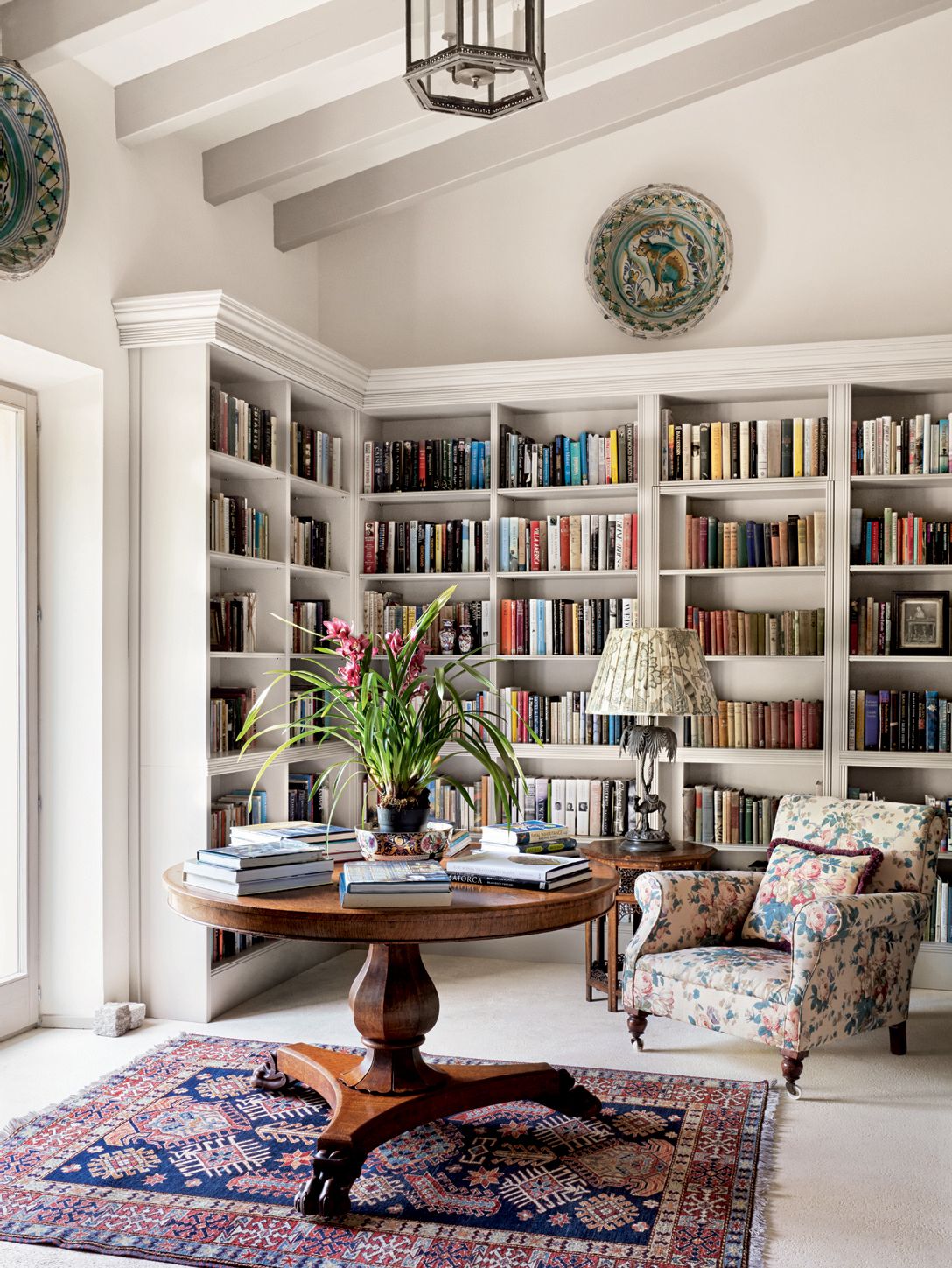
For a traditional chintz, the interior designer recommends Geoffrey Bennison’s fabrics. “His chintzes range in scale and the colours are wonderful – they feel naturally faded, as if they’ve always been there but never dated. I used his lilac fabric in the drawing room of an Arts and Crafts house in Hampshire, to bring the wisteria climbing the walls inside. Chintz also feels just as good by the sea. I used vintage Jean Monroe fabric for curtains in a cottage in Cornwall. I like the way fabrics of that age feel restrained and almost thrifty – the Make Do and Mendness of them is so charming”.

If you live in a more contemporary home with no original features and walls splashed with florals are too much, Tamsin suggests you start with something more subtle. “Try chintz on blinds instead of curtains – it will feel modern and it’s less overwhelming in a smaller room. You could also experiment with smaller scale chintz for lampshades. Lighting can have a completely transformative effect on a room, even without switching it on. Interesting, beautifully painted floral plates are another way of adding chintz-style colour and pattern without committing to fabric”. Olive Wakefield, founder of Pieces is in agreement that chintz can work in any home if you scale it back, “Chintz gets a bad rep, but it doesn’t have to mean migraine-inducing, layer upon layer of print and pattern. To keep the look feeling fresh and not too overwhelming, I would choose one focal point such as a statement wallpaper or a single piece of upholstery and let it sing, whilst keeping the rest of the room relatively muted. If you can’t resist florals but you don’t want a traditional print, there are many designers such as Josef Frank, Lake August, Common Room or Ottoline Devries who offer a more modern, minimal take on a traditional flower motif – especially for wallcoverings.”
Interior designer Sophie Rowell, founder of Côte de Folk believes that chintz is best used instinctively rather than following any particular formula, instead working with the room, the client and the purpose of the space to decide what feels right.“In one project recently, I chose neutral walls and allowed a bold pattern to take centre stage on the upholstery, with other complementary block colours in the room, but no competing pattern. Then in another project, I used a single busy House of Hackney print on a sofa, walls and ceiling because it was a tiny sunroom overlooking a garden and it felt right to use florals in a playful way”. Designer Alice Palmer agrees that “Making chintz feel contemporary is less about the pattern itself and more about the way it’s used in a room. A very traditional chintz curtain could feel dated against a pale wall, but pairing it with a bold colour can feel much more characterful. I like a full-on approach when it comes to chintz. Layer it, contrast it and even cover the ceiling with it. Go big with the amount of pattern – if you’re daring with chintz, the room won’t look dated.”


