
How to stick to your budget when renovating a house
In the last 23 years of Channel 4’s Grand Designs, the programme where intrepid individuals attempt often elaborate home-builds, more than 80% of the featured projects have gone over budget – some by millions. Issues with rising interest rates, re-mortgaging, and spiralling costs for labour and materials are nothing new, and yet they do seem particularly exacerbated right now.
Of course, most of us are not attempting a Grand Designs-worthy build, but the issues are as applicable to extensions for which you’ve just got planning permission for (and have to execute before deadline), as well as simpler renovation and redecoration projects. It’s galling, for example, when you’re more interested in curtain fabric, to discover you can’t afford the 18 metres of GP&J Baker Magnolia that you need for the bay window in your sitting room, because you’ve had to spend so much on insulation – a home necessity which you can’t even see (and a situation I’m only too familiar with, due to my own renovating of a wreck in these circumstances exactly). So, are there ways and means to manage this situation better?

Over the past ten years, the interior designer Laura Butler-Madden has renovated and decorated several properties – and is currently in the midst of another. “If you really have bought an actual wreck, you’ve got to prioritise structure,” she points out. “And then move in as soon as you can, because it is possible to live in an ongoing project — and you’ll save a fortune on rent.”
If you are working with an architect, “watch how they’re designing something,” says Laura, emphasising the difference between need and fantasy. “By all means make sure that you’ve got something that looks beautiful, but know that something in a standard size – for example doors – will be cheaper than a non-standard alternative. Not absolutely everything has to be bespoke. And there’s a reason that ‘standard’ exists – ‘standard’ works, and the proportions are attractive.” (Returning to Grand Designs, it’s often the obsession with non-standard that leads to the fifth year in a caravan.)
There’s no single answer on whether you should get a quote for a whole job or pay tradesman a day rate. Usually, larger jobs adhere to the first rule, and smaller ones to the second. “If you want to know exactly what you will spend, then a contract and a fixed quote is safer,” says Laura. “However, the price is usually slightly inflated so that a builder covers themselves in case something takes longer.” We, for example, recently had the front of our house repainted because water was getting in behind the old paint – the wrong type of paint, so the bricks couldn’t dry out – and a damp house is more expensive to heat than a dry house. It was irritating, because I had not budgeted for this surprise issue – but in paying the painter a day rate we saved £500 on what he had originally estimated, which was 10% of the total cost (we needed scaffolding). Though, “if they’re people that you haven’t worked with before, you do need to be around to check that they’re there when they say they are,” advises Laura. And, however honest the intentions of either party, two sets of hours noted are generally better than one.
Of course, the cheapest option is to do it yourself, which saves another fortune – and there are a variety of straightforward DIY jobs that many of the House & Garden team have done themselves, from demolition to tiling.
Then, “know how much things cost,” says Laura. “If you know that digging a trench for wiring will take half a day at most, and you also know that a mini-digger costs £300 a day to hire, you’ve got a come-back when you’re quoted a totally disproportionate £8,000 to do the job.” Whether quotes will come down from where they are right now, as mortgage rates appear to be doing, is anybody’s guess – the only thing we do know is that timber and steel prices are dropping. (It’s apparently linked to a slower building trade in America.)

Laura’s next major point is “don’t think you have to do it all immediately. There’s a social media-driven competitiveness that does not need to be pandered to. It might look like the home-influencers you follow are constantly renovating and redecorating – but there’s often a very different reality behind the squares.” Certainly, speaking to the interior designers on the House & Garden Top 100 list, it’s by no means unheard of for projects to take two years or more, and taking more time means “you’ll probably end up with something much nicer than if you rush it,” says Laura. “Houses evolve over time, as you learn how rooms work and function,” echoes Matilda Goad, who spent at least two years doing her house in London. “You shouldn’t be in a hurry to create the perfect home – and the research, and getting to grips with your taste, is really enjoyable.”
Once you’ve realised that you don’t have to do it all straight away, you can prioritise. The bad news is that insulation really does matter – but if you’re desperate for furnishings, you can find a way. I’ve still got one bathroom that needs absolutely everything, including a floor, but we have another that is done, which is sufficient for now – and we have curtains. “It’s better to do one bathroom well than two cheaply,” says Laura. “And then you can save up for the other.”
But, while there’s certainly an argument for ‘do it once, do it well’, equally don’t be afraid of using what Matilda calls ‘placeholder items.’ If you are putting together a bathroom and know that you want lights on either side of the mirror, wire them in at the time (it’ll be much more expensive to come back to it, further down the line) even if you haven’t yet found – or can’t afford – the sconces of your dreams. “Not everything is going to be perfect, and that’s going to be part of the charm,” says Matilda.

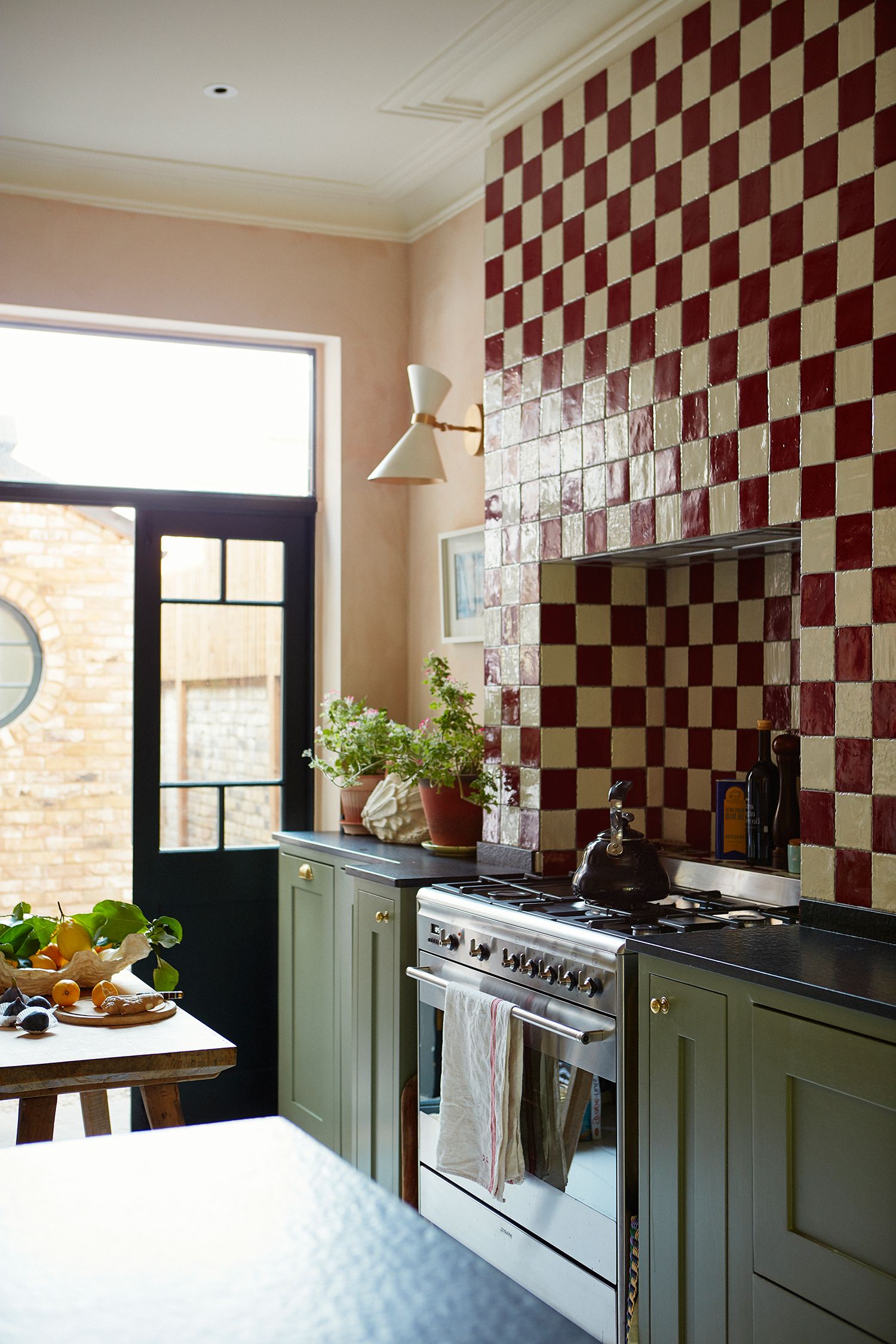
“Remember you don’t always have to gut and replace, just because other people are,” says Laura. “If the existing kitchen is in good repair, and you like the layout, you’ll save a fortune if you re-use it and spruce it up rather than replacing it. You can change the colour of the cabinets, change the hardware – but all of that is cheaper than putting in your own.” Or at least, it will keep you satisfied you until you can afford to put in the kitchen you really want.
Similarly, your furnishings don’t have to be new, or made especially for you. Matilda is a fan of antiques fairs and auction houses, and there numerous Instagram dealers of vintage and antique, including 1980s Jane Churchill upholstered headboards and Colefax & Fowler-covered sofas and chair; I’ve found a great deal of treasure via AMB Antique and Vintage, Gail O’Reily, and Natalia Violet Antiques. You might even find lengths of the fabric that you’ve been lusting after, for much less than they would cost new – and remember curtains can be cut down, given different headings or a new leading edge. They can even be given whole new panels, which is how Maria Speake of Retrouvius created her curtains. This approach is significantly better for the environment, too.
There are certain big-ticket items that are expensive, no matter what. Bespoke joinery is one, carpeting is another. Regarding the former, Matilda, in her pantry, has used shelves with a fabric skirt, “which was cheaper than building doors.” And arguably, it’s much prettier. Similarly, Sarah Vanrenen suggests using rush matting in squares that you can tie together to get the size you want; “it looks chic, and is much cheaper than carpets or rugs,” she says. (It’s certainly miles better than the marquee carpeting we put down in our bedroom fourteen months ago as a necessary placeholder, and which is still there, in all its hideous industrial blue glory.)
Laura always tries to minimise tiling in a bathroom, which is more expensive than painted wall. “Yes the shower needs to be tiled, but you don’t need to go up to the ceiling around a bath,” she remarks. Equally, consider the space that you’re tiling before deciding which tiles to use. I fell in love with Balineum’s Lioness & Palms tiles, at £33.60 each – so have used them for a splashback above a basin, and thus only needed five. For the kitchen, I’ve used Topps Tiles that were 80p each.
Finally, know that a lack of budget is an opportunity. “If money is no object it’s kind of boring. I think that if I were able to buy whatever I wanted, my taste wouldn’t be so interesting,” says Matilda. Words to live by, for the cash-strapped with grandiose plans.

Comments
Back to Top


