
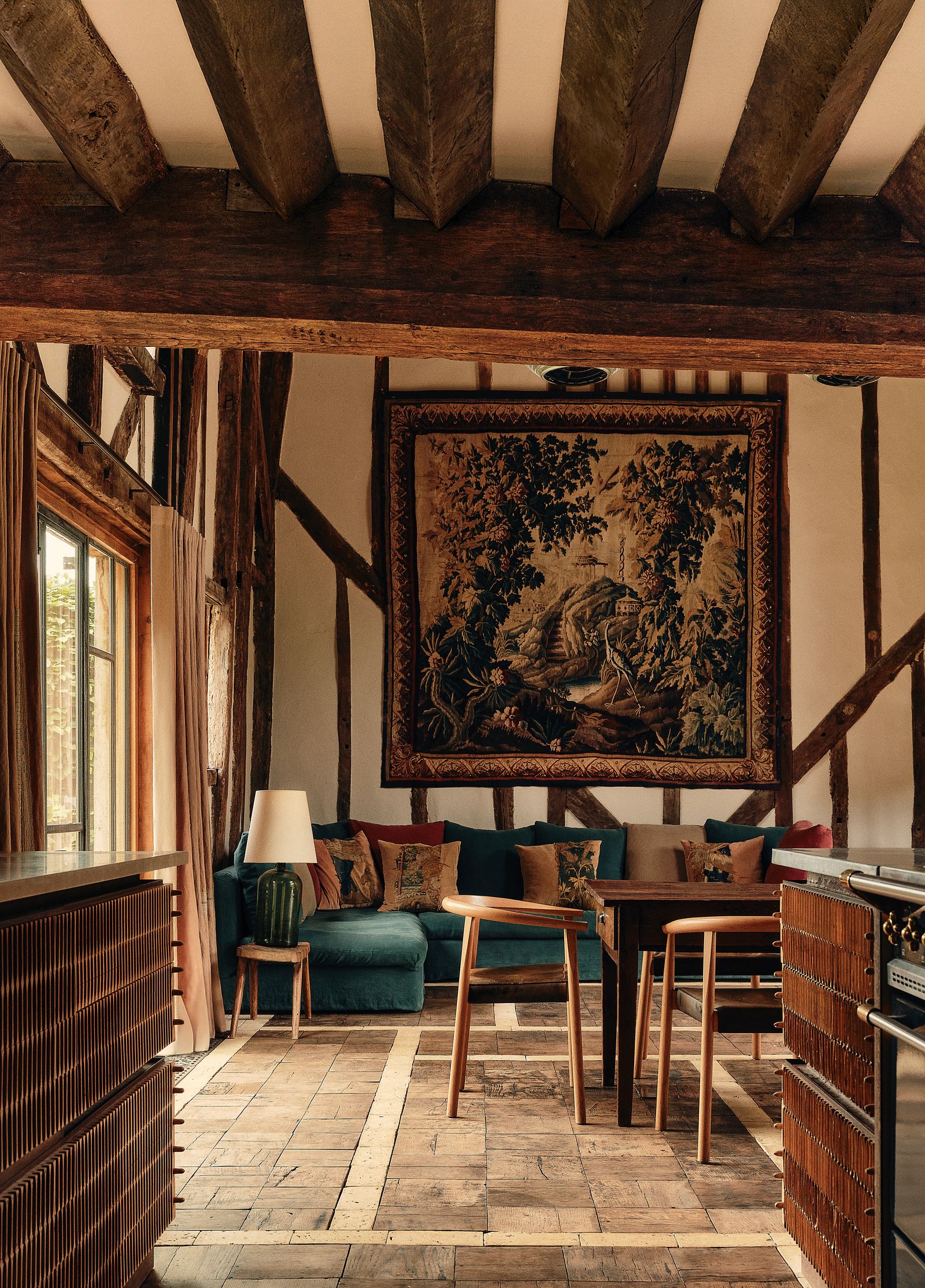
Don’t forget that textiles make great artworks
Textiles and tapestries are much more cost effective in comparison to traditional framed works of art. They’re easy to install and using them as artwork avoids faff about deciding which pictures or paintings work together. It also minimises fixings into plaster walls.
Don’t be scared to mix timbers
Dark tropical hardwoods with the warm golden glow of maples is just beautiful. And do use unfashionable timbers – opting for salvaged timber encourages you to use woods that were common in various different periods, which creates a much more interesting and varied look.
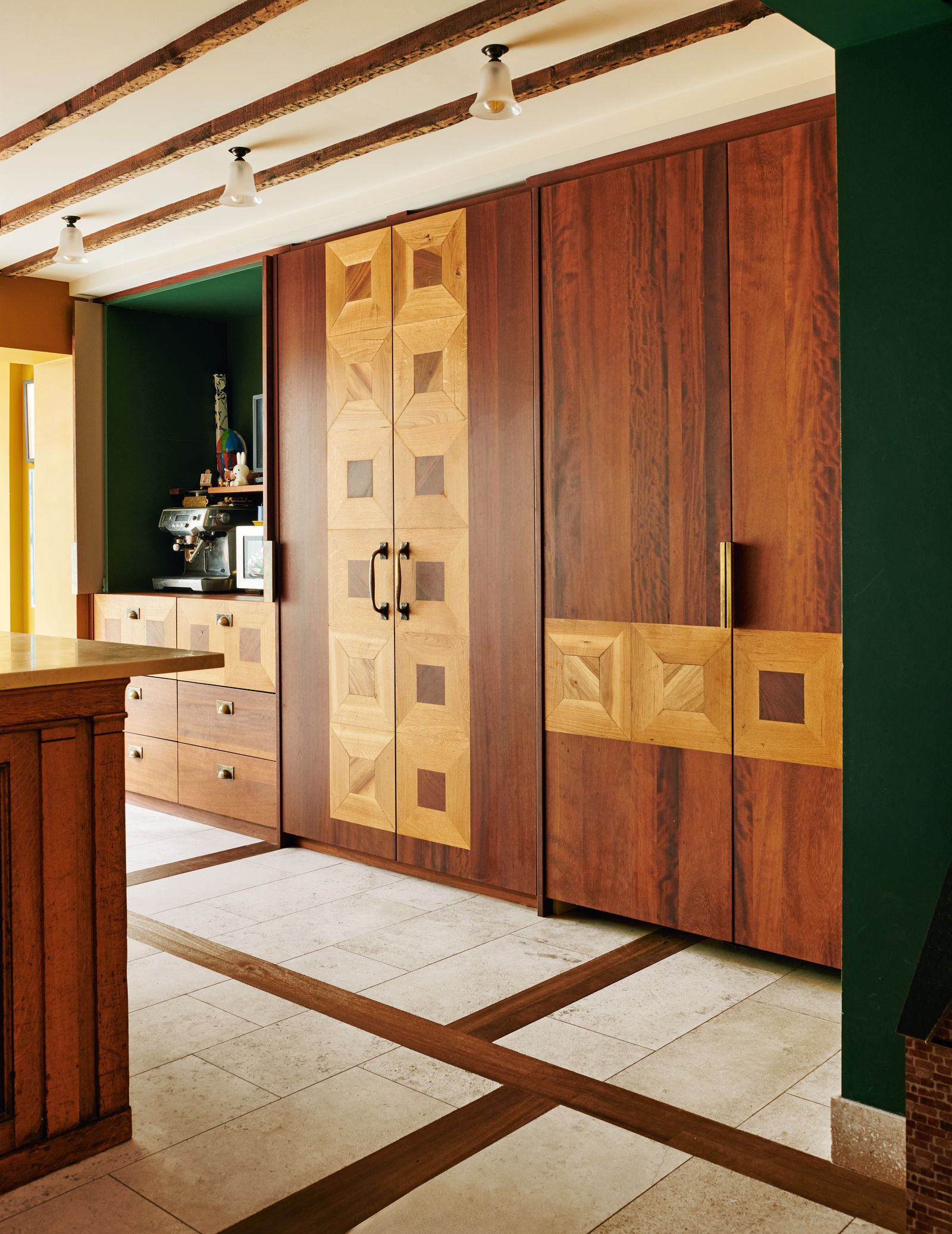
Do unify collections of elements to make a whole
When salvaging and repurposing, more than one type of item can be used to create a single new piece, as long as they have a coherent and harmonious feel. A particularly good example can be seen in the sitting room of photographer and curator Steve Lazarides’ London home, where we combined hand rails as drawer fronts, sea defence timbers and cabinet doors to create a new wooden wall unit.

Do make pieces of furniture that can be taken with you
Avoid wall-to-wall fitted furniture. Separate elements of joinery that can be used together or independently are ideal for every room in the house, and make moving house much easier.
Don’t be afraid to visually lose a fireplace
In Victorian houses where marble or slate fireplaces still dictate so much, we often consider visually losing the fireplace as part of the wall, by painting it out with the walls. Our inspiration for this is the German model and artist Veruschka, known for painting her own body to blend in with foliage, trees and buildings.
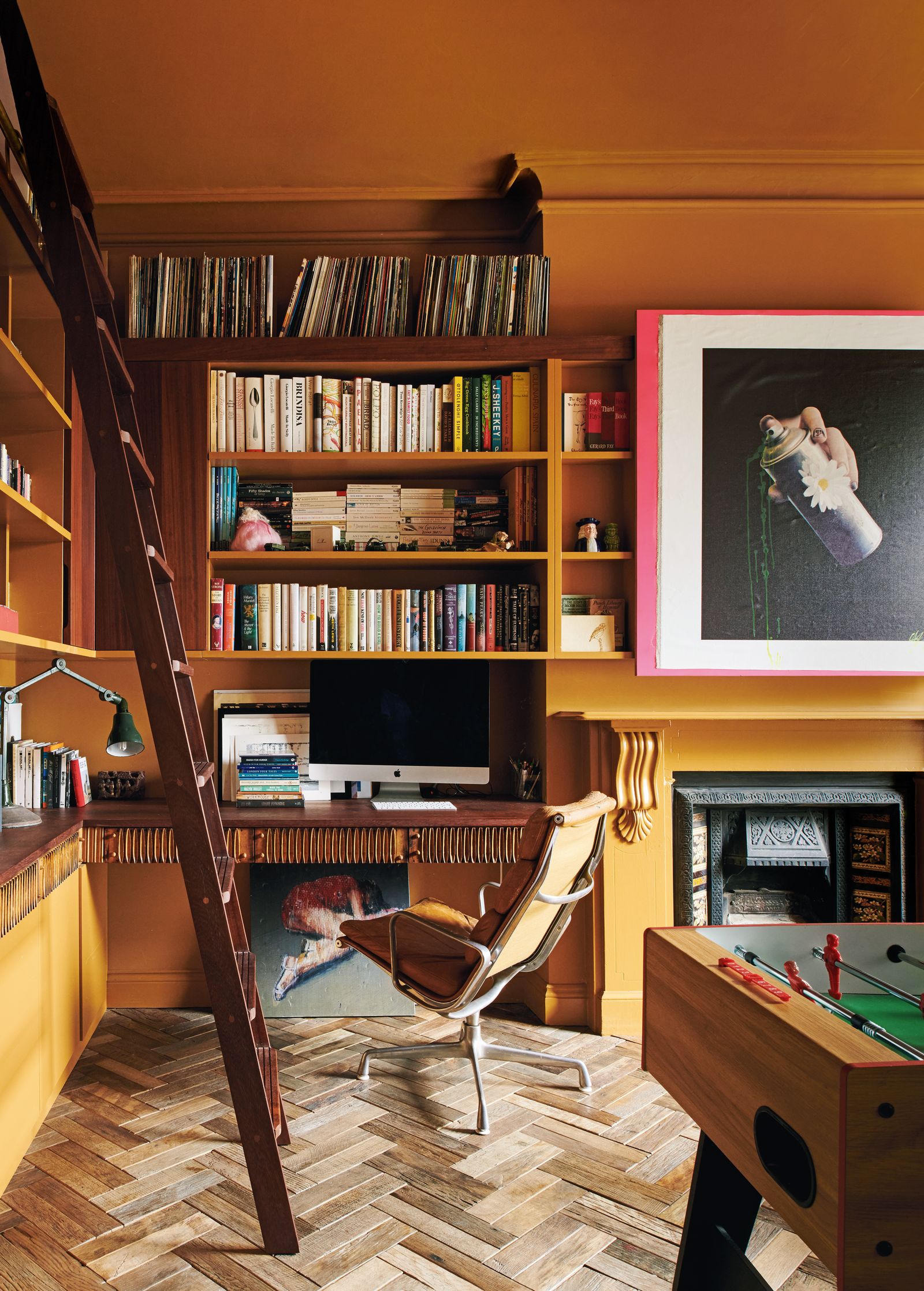
Don’t overlook free materials
Reuse what is there in a completely different context. An old floor on one level might become wall panelling on another — and given a lick of paint who would know?!
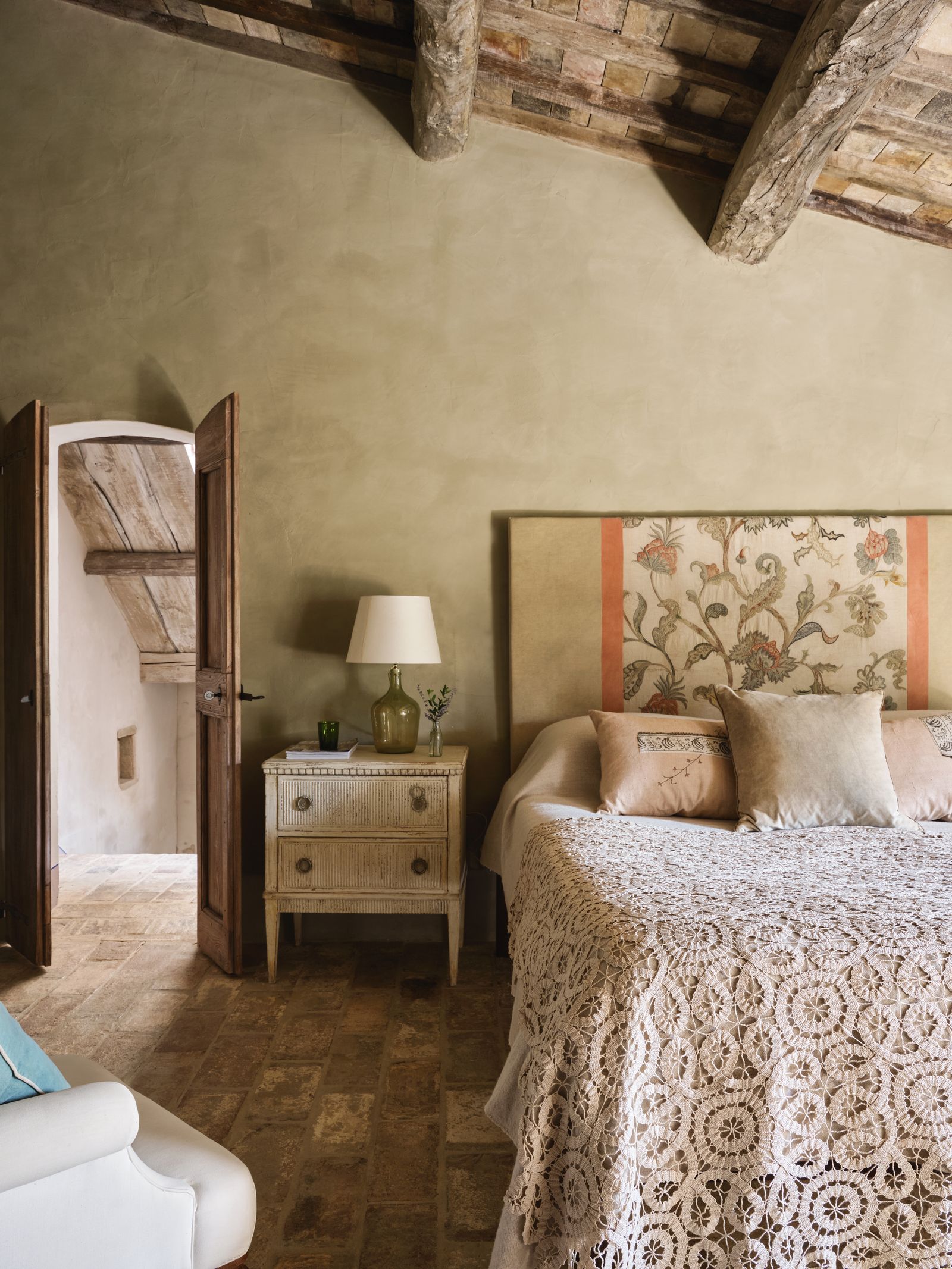
Do build up from something smaller
A textile fragment of crewelwork holds a world of information within it – the hands that made it and the dyes used to colour the threads. A ‘scrap’ like this can inform the whole room design. We did this in the bedroom of an Umbrian farmhouse, where a piece of crewelwork used the headboard went on to influence the rest of the scheme.
Don’t be afraid to use rugs on headboards
On the subject of headboards, repurposed rugs are another great option for covering them. Not only are they cost effective and hardwearing, but there are also so many different colours and patterns available that will add to the overall room scheme.
Do use old glazed cabinet doors as framing devices
Again, this is a practical and cost effective way of framing a beloved children’s doodle. We’ve even flipped the backs of frames to reveal their annotations and used old order sheets from a Savile Row haberdashers.
Do consider small shared spaces
I love this a solution for children’s bedrooms, in particular, using box beds and bunk beds. Keeping sleeping areas nice and compact allows daytime living to get the space it needs.
Don’t scrimp on landings
These are important non-territorial spaces, allowing for overspill and different types of chat. Give generously especially in smaller houses – and add somewhere comfy to nap or slouch.
Don’t cover up a building’s history
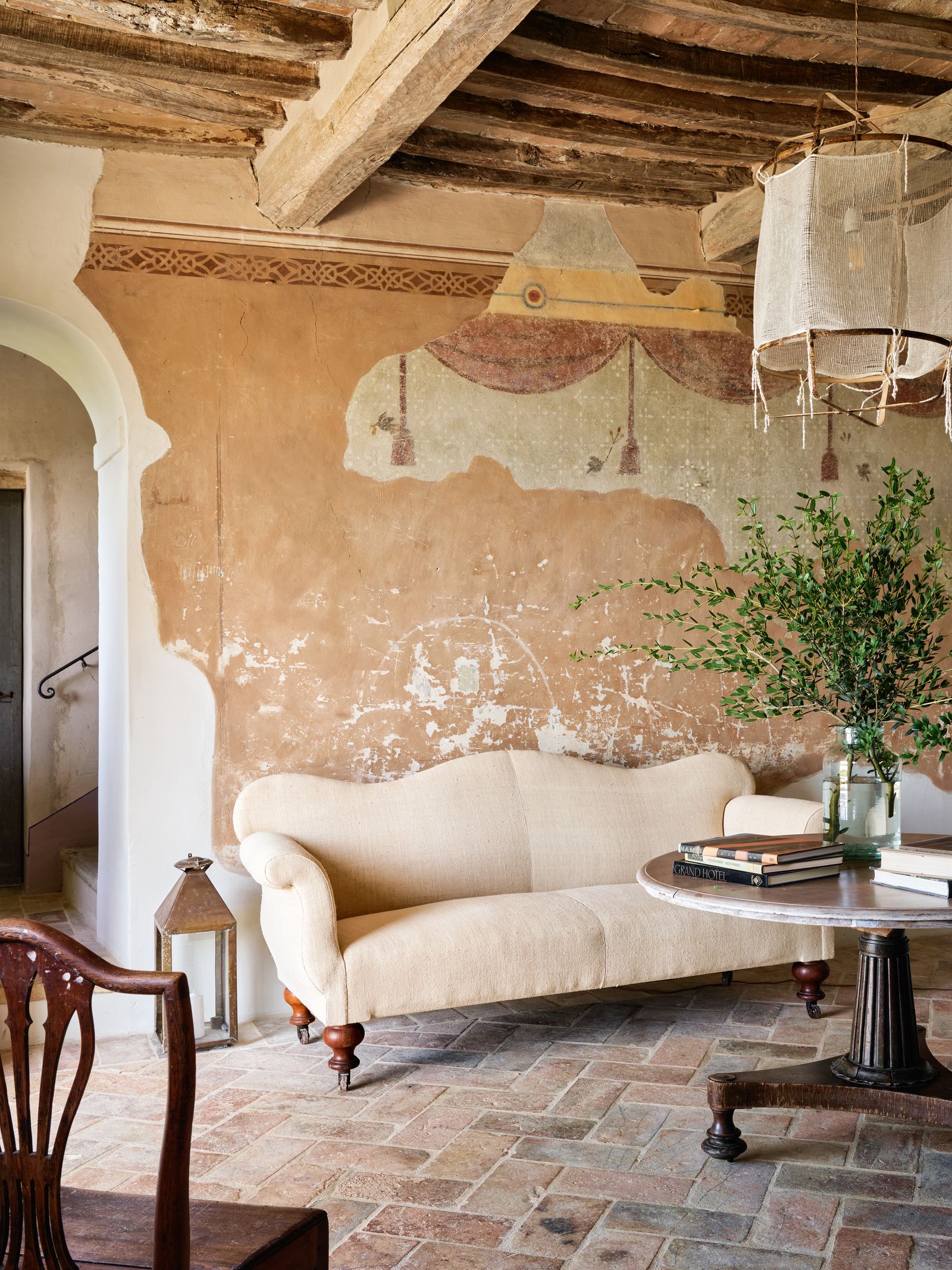
Buildings hold all sorts of mysteries. Why cover up layers of paint? Accumulated overpainting of skirting and doors can be sanded irregularly, revealing the myriad of colours beneath and creating an almost marbled effect. Equally stimulating can be hidden over painted wall murals and frescoes, a sneak peak into more adventurous decorative times, as per our project in Umbria.
Don’t waste the final 10%
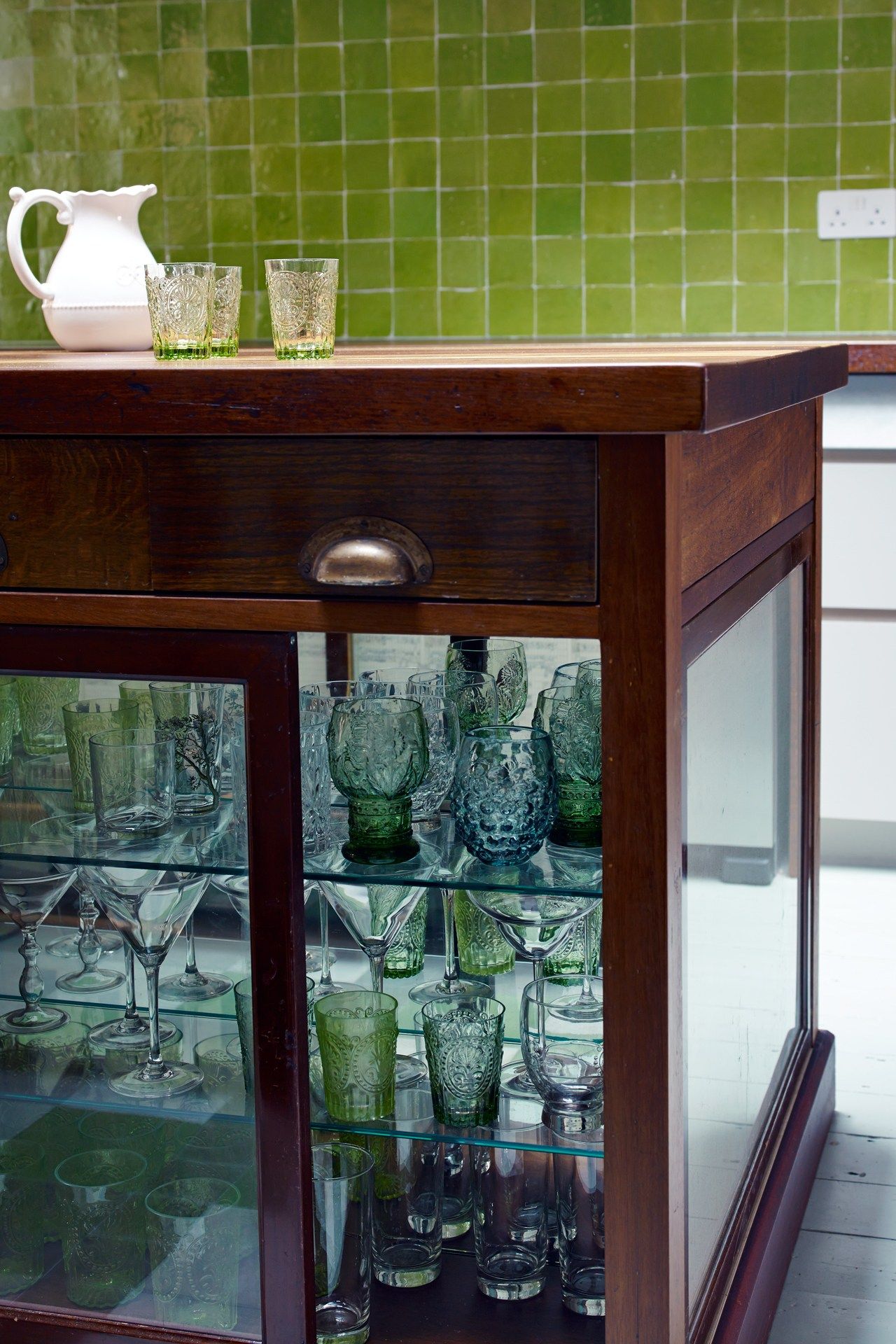
How many ‘spares’ are actually required? These random elements accumulate at the end of a project – what does or doesn’t happen with them? Usually there’s enough to make a splashback or a strip inserted into flooring or to run vertically up into joinery. It just requires a little creative thinking to give an off-cut a new and interesting role in your interiors.
Do try to minimise the cuts
Whether you are using textiles, timber or stone, try to keep edges raw and uncut where possible. A rough ragged edge of marble holds a wealth of visual joy and tactility, as does the selvedge edge of a textile.

Do add a twinkle
Consider adding a twinkle as a practical solution, such as mirrors to lift and reflect or cabinets that are back glazed to uplift glassware held within.
Do think ahead to the ‘unpickability’
For things to be as sustainable and adaptable as possible, things need to be able to be relatively undone. With this in mind, you should always use screws over glue.
.png)


